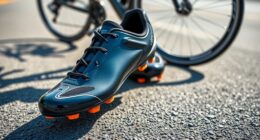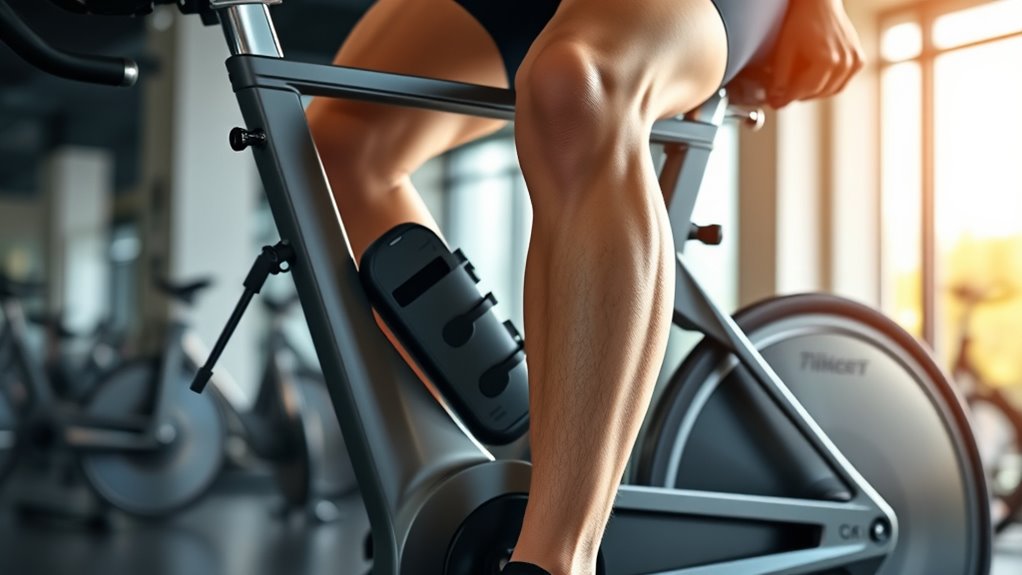
Pedal float is essential for knee health because it allows your knees to move naturally and keeps you comfortable during cycling. When your float is properly adjusted, it helps prevent unnatural knee angles and reduces joint stress, lowering the risk of injuries over time. Experimenting with your pedal setup and cadence can make a significant difference. Keep going to discover how fine-tuning your pedals can keep your knees safe and improve your cycling experience.

Get sports gear delivered free with Prime
- Fast, free delivery on millions of items
- Prime Video, Amazon Music and more included
- Member-only deals all year
Key Takeaways
- Proper pedal float allows natural knee movement, reducing the risk of joint strain and injury during cycling.
- Adjusting pedal float helps maintain correct knee alignment, preventing unnatural angles that can cause discomfort.
- Maintaining appropriate cadence and resistance supports optimal knee biomechanics and minimizes joint stress.
- Customizable pedal setups facilitate proper knee tracking, promoting long-term knee health and cycling efficiency.
- Correct pedal float usage reduces overuse injuries, enhances comfort, and enables safer, sustainable cycling practices.
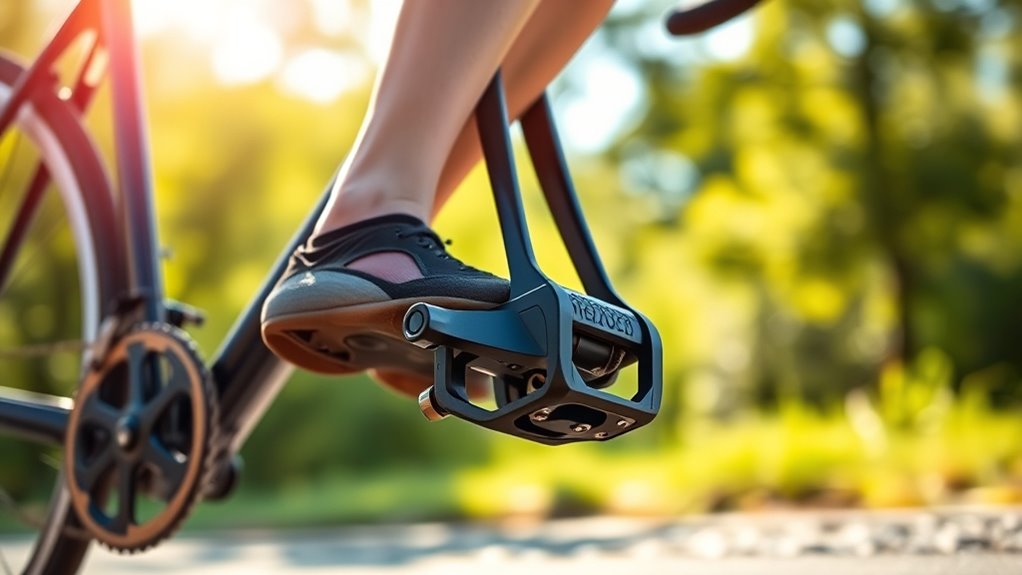
If you cycle regularly, understanding pedal float and its impact on knee health is essential. Pedal float refers to the small amount of lateral movement your foot has while the pedal is engaged. Many cyclists overlook this feature, but it plays a pivotal role in preventing knee strain and injury. When you’re riding, your knees are constantly moving through a natural range of motion, and having some float allows your knees to align more comfortably with each pedal stroke. If the float is too restricted, it can force your knees into unnatural angles, increasing stress on the joint and surrounding tissues. Conversely, if there’s too much float, it might lead to instability and inefficient pedaling. Striking the right balance can make a significant difference in knee comfort and long-term health.
Proper pedal float helps knees move naturally, preventing strain and injury during cycling.
Adjusting your cadence and pedal resistance can help optimize pedal float for your body. Cadence adjustments—how fast you turn the pedals—affect how your knees experience movement and pressure. A higher cadence typically results in smoother, more frequent pedal strokes that evenly distribute force, reducing strain on any single joint. Lower cadences, especially when combined with high pedal resistance, can cause your knees to work harder and potentially increase the risk of overuse injuries. Pedal resistance, which you control through your bike’s settings or terrain, influences how much effort you need to apply to turn the pedals. If resistance is too high, you might find yourself forcing your knees into awkward positions, limiting float and increasing joint stress. Keeping resistance at a comfortable level encourages natural knee movement and allows your float to function properly. Additionally, choosing modern cycling gear designed to support proper joint alignment can further enhance knee safety.
To optimize pedal float, consider how your adjustments in cadence and resistance interact. When you increase your cadence, you often reduce the force needed per pedal stroke, fostering a more natural knee motion. Lowering resistance similarly makes it easier for your knees to move freely through their range of motion without undue strain. If you notice discomfort or pain in your knees, it might be time to fine-tune these settings. Many modern bikes and trainers allow you to customize pedal float or use clipless pedals designed to offer more or less lateral movement. Experimenting with these options can help you find a setup that minimizes knee stress while maintaining efficient pedaling. Remember, the goal is to enable your knees to move smoothly and naturally, preventing injury and promoting endurance.
Ultimately, paying attention to pedal float, along with thoughtful cadence adjustments and pedal resistance, helps you ride more comfortably and safely. Your knees will thank you as you ride longer and stronger without discomfort or injury. By understanding how these elements work together, you can make informed changes that protect your joints while improving your cycling experience.
adjustable pedal float for cycling
As an affiliate, we earn on qualifying purchases.
As an affiliate, we earn on qualifying purchases.
Frequently Asked Questions
How Does Pedal Float Affect Long-Term Knee Joint Stability?
Pedal float improves long-term knee joint stability by reducing stress on your knees, thanks to better biomechanical effects. When your pedals allow some float, your joint alignment stays more natural, minimizing uneven wear and tear. This flexibility helps prevent overuse injuries and maintains healthier knee function over time. By promoting proper biomechanics, pedal float supports your knee’s stability, making your cycling more comfortable and reducing the risk of long-term damage.
Can Improper Pedal Float Cause Early Knee Arthritis?
Improper pedal float can lead to poor knee alignment, increasing stress on your joint and potentially causing early knee arthritis. When pedal ergonomics aren’t adjusted correctly, it forces your knees into unnatural positions during pedaling. Over time, this added strain damages cartilage and accelerates arthritis development. To protect your knees, make sure your bike’s pedal float is properly set and matches your natural movement, reducing undue stress and promoting healthier joint function.
What Pedal Float Setting Is Safest for Knee Rehabilitation?
The safest pedal float setting for knee rehab is a moderate one—think of it as giving your knees a gentle hug rather than a bear hug! You want perfect pedal alignment, so your knees track smoothly over your toes, and your saddle height should be just right—high enough to avoid strain, but not so high that your hips rock. Keep it balanced, and your knee recovery will be riding smoothly in no time!
Does Pedal Float Influence Overall Cycling Efficiency?
Yes, pedal float can influence your overall cycling efficiency. When you adjust pedal float, it affects your cycling posture and pedal alignment, helping you maintain a more natural and comfortable position. Proper pedal float allows your knees to move freely, reducing strain and fatigue, which can improve your power output and endurance. However, too much float may cause instability, so find a balance that supports ideal pedal alignment and smooth pedaling.
How Do I Adjust Pedal Float for Optimal Knee Comfort?
To adjust pedal float for knee comfort, start by ensuring your cleat alignment is correct, aligning your knee over your pedal during each stroke. Then, set your pedal resistance to a manageable level, avoiding excessive effort. Fine-tune the float to allow natural knee movement without feeling forced or strained. Regularly check your setup, making small adjustments to find the sweet spot that minimizes knee pain and maximizes comfort.
Conclusion
Think of pedal float as the gentle breeze guiding your bike’s sail—too little, and you strain against the wind; too much, and you lose control. Finding the right float is like tuning a fine instrument, keeping your knees in harmony and your ride smooth. When you master this balance, you’re not just pedaling—you’re orchestrating a symphony of movement that protects your knees and keeps you on the road longer. Embrace the float, and let your journey flourish.
NFL season / tailgating Picks
team gear
As an affiliate, we earn on qualifying purchases.