
Motor wattage alone doesn’t determine how fast or far your e-bike can go. Instead, factors like battery capacity, rider weight, and overall design really influence performance. A larger battery provides more energy for longer rides, while heavier riders may need more motor power, impacting speed and range. To truly understand what affects your e-bike’s performance, consider how all these elements work together—if you’re curious for details, there’s more to explore below.
Key Takeaways
- Battery capacity (Wh) determines how long the e-bike can sustain motor assistance, influencing overall performance and range.
- Rider weight affects motor effort and battery drain, impacting speed and ride duration.
- E-bike design and component integration optimize efficiency beyond just motor wattage.
- Terrain and rider input (pedaling effort) significantly influence actual speed and performance.
- Motor wattage alone doesn’t guarantee higher speed; it must be balanced with battery size and system efficiency.
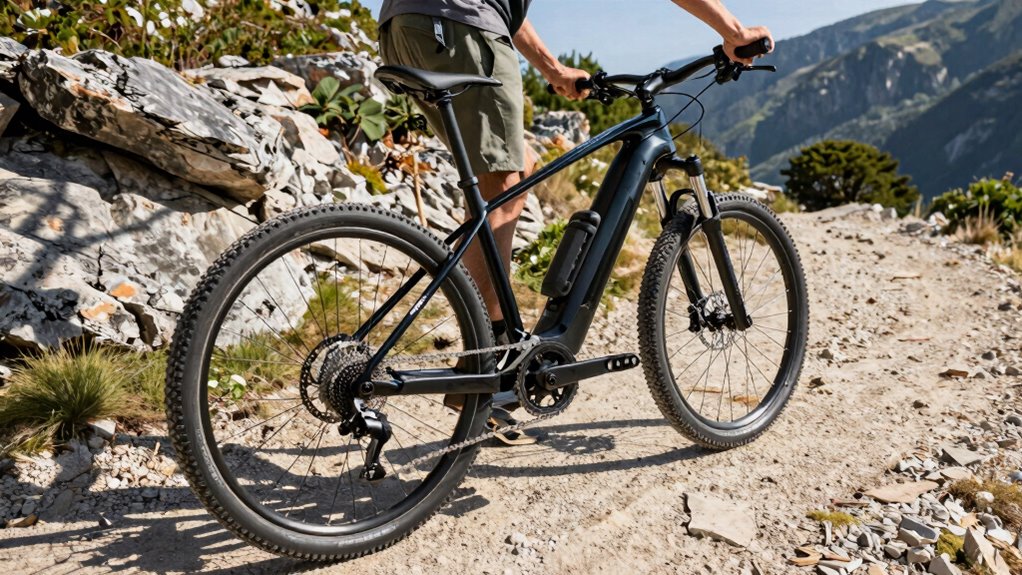
E‑Bike Performance Factors
E‑bike performance depends on several key factors that influence how well the bike operates and meets your riding needs. When you’re selecting or riding an e-bike, understanding these factors helps you set realistic expectations and optimize your experience. Two critical elements that directly impact performance are battery capacity and rider weight. While motor wattage often gets attention, it’s not the sole indicator of how fast or how far your e-bike can go. Instead, consider how these components interplay to determine overall performance.
Battery capacity plays a vital role in how long your e-bike can assist you before needing a recharge. Measured in watt-hours (Wh), a larger capacity means more stored energy, translating into longer rides and consistent power output. If you frequently ride on hilly terrain or plan extended trips, opting for a battery with higher capacity ensures you won’t run out of juice prematurely. It also influences how effectively the motor can maintain speed and assist you during demanding sections. Keep in mind, a bigger battery adds weight, which can affect handling and acceleration, but the trade-off often results in better endurance.
A larger battery capacity offers longer rides but adds weight, affecting handling and acceleration.
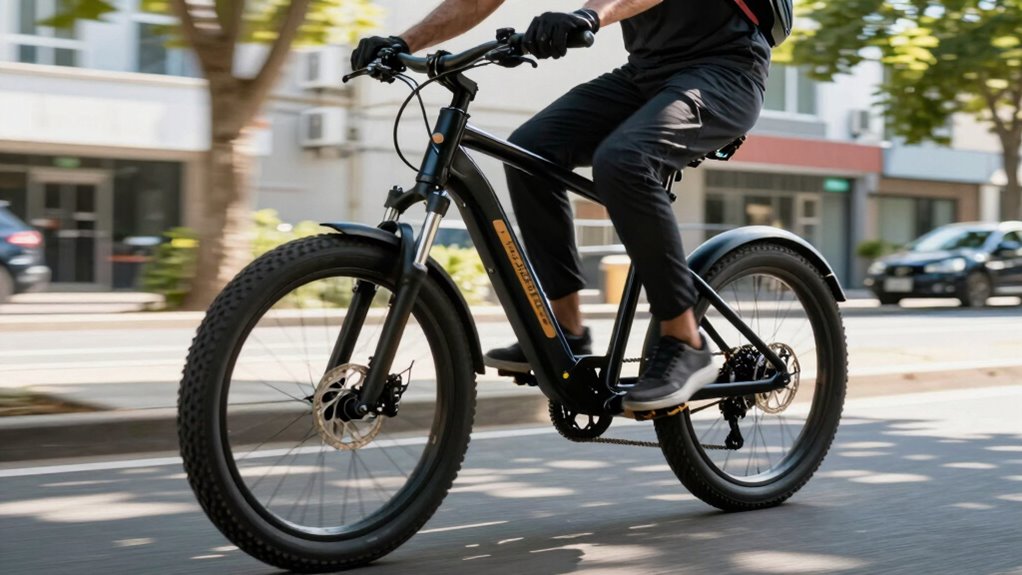
Your rider weight is another crucial factor that impacts e-bike performance. Heavier riders require more power from the motor to achieve the same speed and ease of pedaling as lighter riders. When you’re heavier, the motor works harder to overcome inertia and gravity, especially when climbing hills or accelerating from a stop. This increased effort can lead to faster battery drain and potentially reduce your overall range. Conversely, lighter riders typically enjoy a more efficient ride, with less strain on the motor and extended battery life. Recognizing your weight helps you choose an e-bike with appropriate specifications—like motor wattage and battery capacity—that suit your riding style and physical profile.
While motor wattage is often highlighted, it’s not the only predictor of performance. A high-wattage motor may provide more power, but without a suitable battery capacity or considering rider weight, it won’t necessarily translate to higher speeds or longer distances. For example, a powerful motor paired with a small battery won’t sustain high performance over long rides. Similarly, a lightweight rider on a bike with a high-capacity battery will enjoy better range and smoother assistance compared to a heavier rider on the same bike.
Additionally, e-bike design and how the components are integrated can influence overall efficiency and performance, emphasizing the importance of a balanced setup. In essence, understanding how battery capacity and rider weight influence your e-bike’s performance allows you to make more informed choices. The key isn’t just about the motor’s wattage but about how these elements work together to meet your riding objectives. By paying attention to these factors, you can select an e-bike that delivers the right balance of power, endurance, and handling for your unique needs.
Frequently Asked Questions
How Does Rider Weight Affect E-Bike Speed and Performance?
Your rider weight critically influences e-bike speed and performance. Heavier riders tend to experience slower acceleration and reduced top speeds because weight influence affects how efficiently the motor can propel you. Performance factors like motor power and terrain matter too, but your weight plays an essential role in overall riding experience. To optimize e-bike performance, consider lighter rider weight or choose bikes designed to handle higher weights more effectively.
Can Terrain Type Influence E-Bike Acceleration and Top Speed?
Terrain variation can significantly influence your e-bike’s acceleration and top speed. When you ride over uneven ground or obstacles, you’ll notice slower acceleration and reduced top speeds due to increased resistance and the need for more control. Smooth, flat surfaces allow your bike to reach higher speeds and accelerate quickly. Maneuvering obstacles demands more effort, often limiting your overall performance and making terrain type a vital factor in your riding experience.
What Role Does Battery Capacity Play in Overall E-Bike Performance?
Your battery capacity is like a magic energy bottle that powers your ride for miles and miles. It directly impacts battery longevity, meaning longer rides without recharging. Higher energy density packs more punch into a small space, giving you more range and consistent performance. So, the bigger your battery, the farther you go—making every adventure feel like an epic journey rather than a quick trip.
Do Different Motor Types Impact Riding Efficiency and Power Delivery?
Different motor types considerably impact your riding efficiency and power delivery. For example, hub motors often offer smoother torque distribution and are more efficient at low speeds, making city commuting easier. Mid-drive motors excel in delivering higher torque, especially on inclines, boosting overall performance. Your choice affects motor efficiency, which influences how effectively power is used, and torque distribution, shaping your riding experience and how well your e-bike responds to your input.
How Do Weather Conditions Affect E-Bike Speed and Battery Life?
Weather factors like wind, rain, and temperature directly affect your e-bike’s speed and battery efficiency. Strong headwinds slow you down and drain your battery faster, while cold weather reduces your battery’s capacity, decreasing ride distance. Rain can make riding less efficient and might lead to safety concerns. To optimize performance, ride in mild weather, keep your battery warm, and plan for longer charging times in adverse conditions.
Conclusion
Remember, motor wattage isn’t the only factor that determines your e-bike’s speed. Instead, consider aspects like weight, aerodynamics, and rider effort. For example, if you’re a heavier rider, even a high-wattage motor might struggle to boost your speed on hilly terrain. So, when choosing an e-bike, focus on the whole package rather than just the motor’s power. That way, you’ll find a bike that truly fits your riding style and performance goals.