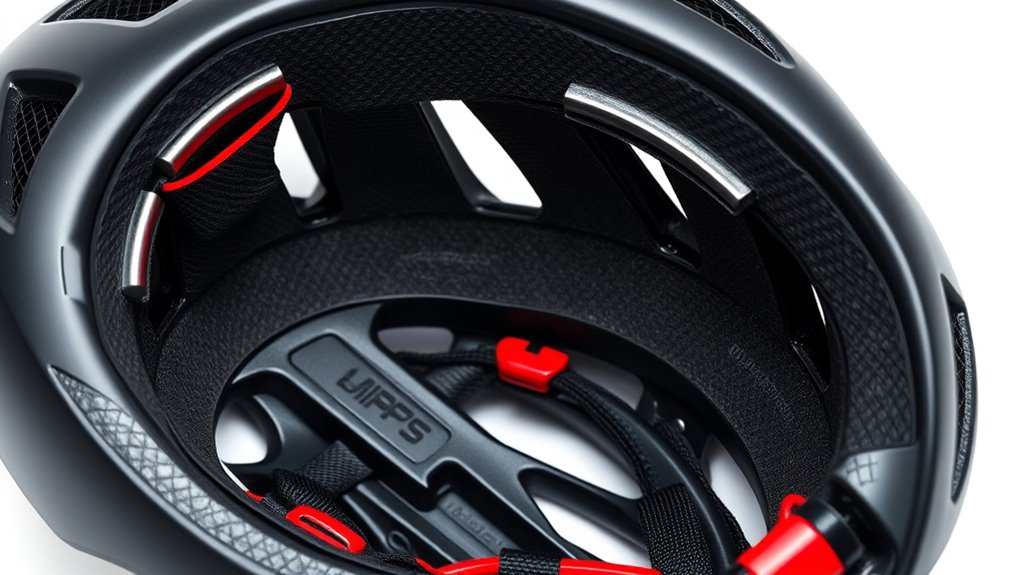
Modern helmet technology combines advanced impact-absorbing materials with innovative ventilation systems to keep you safe and comfortable. Features like MIPS introduce a slip-plane layer that reduces rotational forces during angled impacts, providing extra protection. Engineers also focus on lightweight, durable shells with strategically placed vents for airflow without sacrificing strength. As technology continues to evolve, helmets now offer smarter, safer solutions for your sport or activity—keep going to discover more about these exciting innovations.
Key Takeaways
- MIPS technology introduces a slip-plane layer to reduce rotational brain injuries during angled impacts.
- Advanced materials like multi-density foams and reinforced shells improve impact absorption and helmet durability.
- Modern helmets incorporate ventilation channels and adjustable vents for optimal airflow and user comfort.
- Helmet designs integrate impact resistance and ventilation features to prevent overheating without compromising safety.
- Ongoing innovations enhance helmet safety, comfort, and adaptability for diverse sports and outdoor activities.

Helmet technology has advanced rapidly in recent years, transforming the way you stay protected during outdoor activities and sports. Modern helmets no longer rely solely on basic foam shells; instead, they incorporate innovative features designed to absorb and disperse impact energy more effectively. Impact resistance has become a central focus, with engineers developing materials and structures that better withstand collisions and reduce the risk of head injuries. This means that when you hit an obstacle or fall, your helmet can absorb the shock more efficiently, minimizing the force transferred to your skull and brain. Advanced helmets now use multi-density foams and reinforced shells to provide superior impact protection without adding unnecessary weight. Additionally, ongoing research into helmet materials is leading to the development of even lighter yet stronger composites, further enhancing safety. Another critical aspect of helmet design is ventilation systems. You might think that increased ventilation compromises impact resistance, but modern helmets strike a careful balance. Ventilation systems are engineered to keep you cool during intense activity while maintaining structural integrity. Strategically placed vents allow airflow to pass through the helmet, helping to regulate body temperature and prevent overheating. This is especially important during long rides, hikes, or mountain biking, where heat buildup can become dangerous. Innovative helmet designs incorporate channels and adjustable vents that optimize airflow without weakening the overall structure. Some helmets even feature removable padding with moisture-wicking properties, enhancing comfort and ensuring you stay dry and cool no matter how strenuous your activity. Beyond impact resistance and ventilation, helmet technology continues to evolve with features like MIPS (Multi-directional Impact Protection System). MIPS introduces a slip-plane layer within the helmet that allows the outer shell to slide relative to your head during angled impacts. This sliding motion reduces rotational forces transferred to your brain, which are often responsible for more severe injuries. Many helmet manufacturers now integrate MIPS technology directly into their designs, offering an added layer of protection without sacrificing comfort or weight. The combination of impact-resistant materials, clever ventilation, and systems like MIPS means you’re better protected than ever before, whether you’re cycling, skateboarding, or engaging in other high-impact sports. In conclusion, helmet safety features** are continually evolving, ensuring that your gear adapts to the latest advancements in impact resistance and user comfort. In essence, helmet tech today is about more than just covering your head. It’s about intelligently engineering safety features that adapt to your needs, keeping you cool, comfortable, and better protected across a variety of activities. The continual innovation** in impact resistance and ventilation systems ensures you can focus on your performance without worrying about the risks. As helmet technology advances, you benefit from safer, smarter gear that enhances your outdoor experience without compromising comfort or mobility.
Frequently Asked Questions
Can MIPS Technology Be Added to Older Helmets?
Yes, you can add MIPS technology to older helmets through retrofit upgrades, but compatibility concerns might arise. Not all helmets are designed to accommodate MIPS inserts, so you’ll need to verify if your helmet model supports these upgrades. It’s essential to consult with the manufacturer or a professional to ensure proper installation and safety. Keep in mind that retrofitting could affect your helmet’s warranty and overall performance.
How Does Helmet Weight Change With Advanced Tech?
Think of helmet weight as a balancing act. When you add advanced technology like MIPS, it’s like adding a new gear to your bike — it can make the helmet slightly heavier, but manufacturers design these features to minimize weight gain. Overall, modern helmets with advanced tech aim to stay lightweight, so you get enhanced safety without feeling weighed down, ensuring your ride remains comfortable and agile.
Are There Helmets With Tech for Eye Protection?
Yes, many helmets now feature tech for eye protection through visor integration. You can find helmets with built-in visors or removable shields that block UV rays and wind, enhancing your vision and comfort. Some models even include anti-fog coatings or adjustable visors. By choosing a helmet with integrated eye protection, you guarantee better safety and convenience, allowing you to focus on your ride without constantly worrying about your eyes.
What Is the Lifespan of Helmets With Embedded Tech?
On average, helmets with embedded tech last about 3 to 5 years before needing replacement. Did you know that tech integration can sometimes shorten helmet durability due to battery life or sensor wear? You should regularly check for signs of damage or tech malfunctions, as these impact safety. Proper care extends your helmet’s lifespan, but keep in mind that even the most advanced helmets need replacing over time to guarantee maximum protection.
Do Helmet Sensors Connect to Mobile Apps for Data Tracking?
Yes, helmet sensors often connect to mobile apps for data tracking. When you wear a helmet with sensors, those sensors send real-time crash and impact data to your app via Bluetooth or Wi-Fi. This app connectivity allows you to monitor your riding stats, analyze impacts, and even receive safety alerts. Using these advanced features helps you stay informed about your riding habits and enhances your overall safety.
Conclusion
So, as you step into the world of helmets, remember that innovation isn’t just impressive—it’s essential. With MIPS and beyond, you’re not just protecting your head; you’re pioneering progress in personal safety. Embrace evolving technology, empower your experience, and elevate your confidence. Because when you choose smarter, safer solutions, you’re not just wearing a helmet—you’re warding off worry and welcoming worry-free adventures. Stay savvy, stay safe, and keep pushing forward with cutting-edge helmet tech.