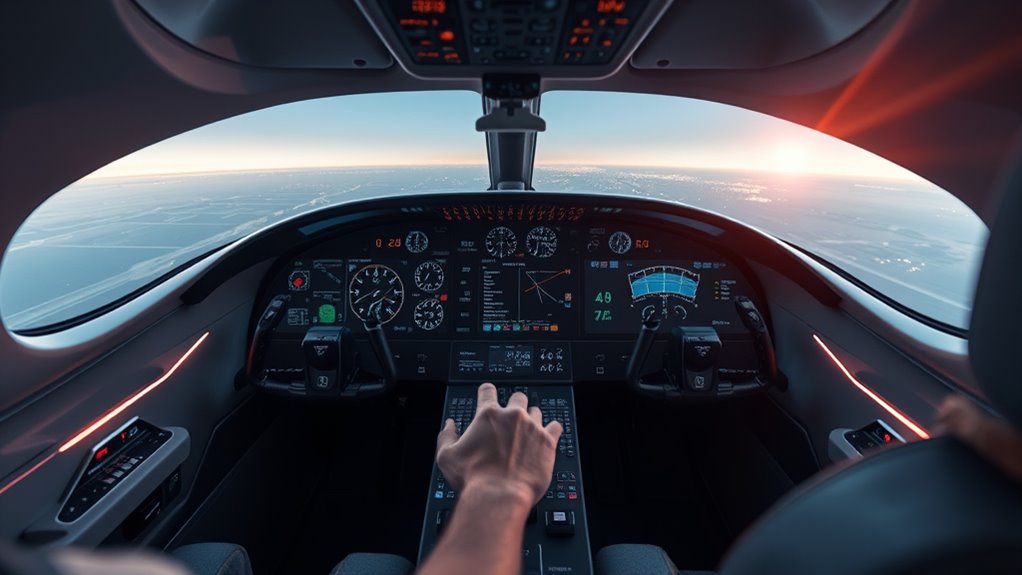

Integrated cockpits improve your flying experience by simplifying controls, reducing clutter, and making systems more intuitive. They lower operational costs and maintenance while boosting safety through better situational awareness. However, they can be complex to troubleshoot and costly to install, requiring thorough pilot training. Over-reliance on electronic systems also poses risks if failures occur. To understand how these pros and cons impact aviation today, explore further insights below.
Key Takeaways
- Integrated cockpits streamline controls, reducing clutter and enhancing situational awareness for pilots.
- They lower maintenance and training costs through digital systems and consistent interfaces across aircraft.
- Advanced interfaces improve safety by making critical data easily accessible and reducing human error.
- Challenges include system complexity, potential malfunctions, and high installation costs requiring extensive training.
- Future developments aim to enhance usability, safety, and resilience, balancing technological benefits with operational reliability.

Have you ever wondered how modern aircraft maximize efficiency and safety? One key factor is the integration of advanced cockpit systems that streamline pilot interactions and improve overall performance. Integrated cockpits combine multiple instruments and controls into a unified digital interface, reducing clutter and simplifying operation. This design enhances cost efficiency because it minimizes the need for extensive manual equipment, lowers maintenance costs, and allows for easier updates through software rather than hardware replacements. By consolidating controls, airlines can also cut down on training expenses, as pilots become familiar with a consistent, intuitive system across different aircraft models.
Integrated cockpit systems streamline controls, reduce costs, and enhance safety through intuitive digital interfaces.
Beyond the financial benefits, ergonomic design plays a *crucial* role in the effectiveness of integrated cockpits. These systems are built with pilot comfort and ease of use in mind, ensuring that information is displayed clearly and accessibly. When controls are logically arranged and easily reachable, pilots can focus more on flying safely rather than fighting with confusing interfaces. This ergonomic focus helps reduce fatigue during long flights, decreasing the likelihood of human error, which is *vital* for maintaining safety standards. The visual displays are typically customizable, allowing pilots to prioritize the most *critical* data, which further enhances operational efficiency and situational awareness.
Additionally, advancements in digital interface design have contributed to making these systems more intuitive and user-friendly, which is essential for quick decision-making in high-pressure situations. However, integrating numerous systems into a single cockpit can also introduce challenges. If the system malfunctions or becomes overly complex, pilots may face difficulties troubleshooting or adapting under stress, which can compromise safety. A heavily digital cockpit might also lead to a reliance on electronic systems that, if they fail, leave pilots with limited options. Additionally, the initial costs of installing advanced integrated systems are high, and training pilots to operate new interfaces can take time and resources.
Despite these concerns, many airlines and manufacturers see the benefits of integrated cockpits as outweighing the drawbacks. The improved cost efficiency and ergonomic design contribute *significantly* to operational savings and pilot performance. The key is in designing systems that are both user-friendly and resilient, ensuring that the advantages of integration are fully realized without compromising safety. As technology advances, these systems will likely become even more intuitive, further enhancing efficiency while maintaining high safety standards. In the end, integrated cockpits are shaping the future of aviation, offering a blend of sophistication, safety, and economic advantage that benefits both airlines and passengers alike.
Frequently Asked Questions
How Do Integrated Cockpits Improve Pilot Workload Management?
Integrated cockpits improve your workload management by enhancing automation efficiency, which reduces manual tasks and streamlines operations. They also boost your situational awareness through consolidated displays, making it easier to monitor flight data and respond quickly. By minimizing information overload and automating routine functions, you can focus more on strategic decision-making, ultimately making your workload more manageable and your flying safer and more efficient.
What Are the Cybersecurity Risks Associated With Integrated Cockpit Systems?
Imagine your cockpit as a fortress; cyber threats are like sneaky invaders trying to break in. You face cybersecurity vulnerabilities and data breach risks that can compromise flight safety. Hackers could manipulate systems or steal sensitive data, leading to dangerous situations. To protect yourself, it’s essential to implement strong cybersecurity measures, regularly update software, and monitor for unusual activity, ensuring your integrated cockpit remains secure against evolving cyber threats.
Can Integrated Cockpits Be Customized for Different Aircraft Models?
Yes, integrated cockpits can be customized for different aircraft models. You have a range of customization options to tailor system flexibility, ensuring the cockpit meets specific operational needs. Manufacturers design these systems to adapt easily, allowing you to modify displays, controls, and software interfaces. This customization enhances efficiency and safety, providing pilots with a user-friendly environment that aligns with various aircraft configurations and mission requirements.
How Do Integrated Cockpits Impact Maintenance Procedures and Costs?
Integrated cockpits simplify maintenance by reducing the number of separate systems, making procedures faster and more straightforward. This leads to enhanced maintenance simplicity, as technicians can troubleshoot and repair issues more efficiently. Additionally, you benefit from improved cost efficiency because fewer parts and streamlined processes lower overall maintenance expenses. Overall, integrated cockpits help you save time and money while ensuring best aircraft performance.
What Training Is Required for Pilots to Operate Integrated Cockpit Systems Effectively?
You need extensive automation training to operate integrated cockpit systems effectively, ensuring you master complex controls and interfaces. This training often includes hands-on simulations, system troubleshooting, and understanding automation logic. You’ll learn to navigate advanced displays and manage system alerts confidently. Mastering these skills isn’t just important; it’s essential for safety and efficiency, transforming you into a cockpit expert capable of handling the most sophisticated flight environments.
Conclusion
In the end, integrated cockpits offer a sleek, modern way to streamline your driving experience, much like stepping into a spaceship of tomorrow. But don’t forget, they can sometimes be overwhelming, like trying to read a map in a hurricane. Weigh the benefits of convenience and innovation against potential complexity. Whether you embrace the tech-forward approach or prefer the classics, remember that every decision shapes your journey—so choose wisely, and enjoy the ride ahead.