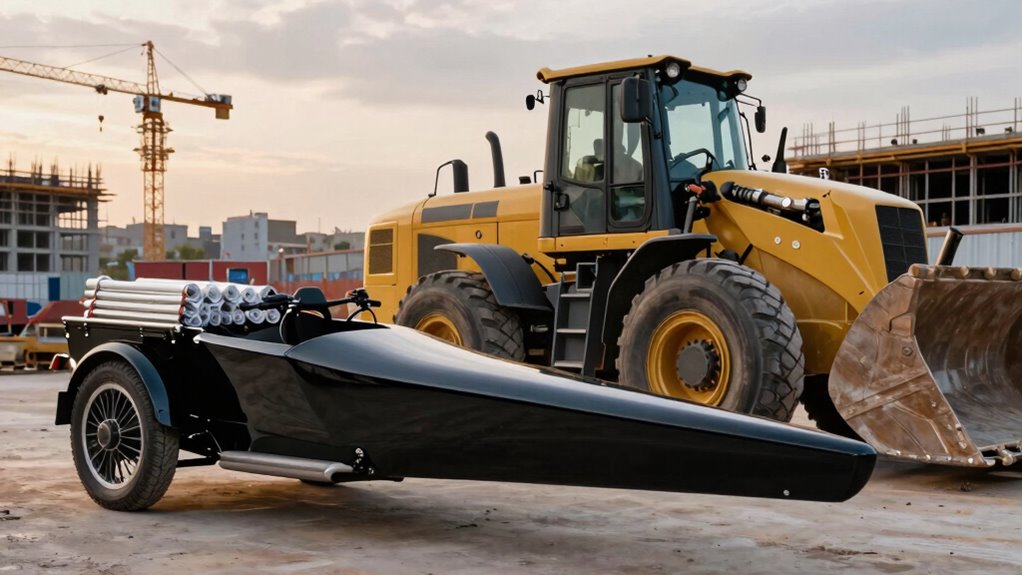

If you prioritize straightforward loading, durability, and ease of maintenance, a longtail might suit your needs best, especially for simple tasks and heavy, rough use. On the other hand, if you need quick, high-volume loading and unloading, a front loader provides fast, efficient handling, but requires regular hydraulic system maintenance. The right choice depends on balancing your operational speed, cargo type, and equipment longevity—continue to explore to find the best fit for your real-life needs.

Get sports gear delivered free — and shop member deals
- Fast, free delivery on millions of items
- Access to Prime Big Deal Days deals on October 6–7
- Prime Video, Amazon Music and more included
Key Takeaways
- Longtails offer simplicity and durability, ideal for straightforward, heavy-duty cargo handling.
- Front loaders provide quick, high-volume loading, suited for time-sensitive or large-scale operations.
- Longtails are easier to maintain due to fewer moving parts and robust design.
- Front loaders require more maintenance due to hydraulic systems but excel in rapid cargo movement.
- Choose longtails for longevity and reliability; opt for front loaders for efficiency in high-throughput tasks.

Are you trying to decide between a longtail and a front loader for your motorcycle or bike? Both options have their advantages, but understanding how they impact loading efficiency and equipment durability can help you make the right choice. Longtails are known for their simple design, which often translates into easier loading and unloading. When you’re trying to load heavy or awkwardly shaped items, a longtail’s extended length and open frame give you more room to maneuver. This setup can significantly improve your loading efficiency because you spend less time juggling your cargo or trying to fit it into tight spaces. Plus, with fewer moving parts and a straightforward structure, longtails tend to be more durable over time. Their robust frames are less likely to suffer damage from frequent use or rough handling, ensuring your equipment stays functional longer. Additionally, the straightforward design often makes repairs and maintenance simpler and more cost-effective. equipment durability is also influenced by the overall design, which can impact how well the cargo carrier withstands regular use. Proper design simplicity can reduce the likelihood of mechanical failures, further extending the lifespan of your cargo carrier. Incorporating material quality into the design can also play a significant role in enhancing durability and performance.
On the other hand, front loaders are typically designed for quick, efficient loading with their hydraulic lifts and sturdy platforms. If you often need to load and unload cargo rapidly, a front loader can be a game-changer. Its design allows you to lift heavier loads more securely, which boosts loading efficiency—saving you time and effort. However, this convenience can come with some trade-offs. The hydraulic systems and moving parts in front loaders require regular maintenance and can be more vulnerable to damage if not properly cared for. Over time, this can impact equipment durability, especially if you work in harsh environments or handle frequent heavy loads. Still, when well-maintained, front loaders offer a reliable, fast-loading solution that can handle high-volume or heavy cargo efficiently. Proper maintenance is essential to ensure the longevity of either cargo format and to keep your equipment functioning optimally.
longtail cargo carrier for motorcycles
As an affiliate, we earn on qualifying purchases.
As an affiliate, we earn on qualifying purchases.
Frequently Asked Questions
Which Cargo Format Is More Cost-Effective for Small Businesses?
You’ll find that front loaders are more cost-effective for small businesses because they offer better cargo capacity and faster loading speed. With a front loader, you can handle larger loads efficiently, saving you time and money. Longtail trailers may be cheaper initially but tend to have limited cargo capacity and slower loading speeds, which can increase overall costs in the long run.
How Do Longtail and Front Loader Trucks Handle Uneven Terrain?
Longtail trucks handle uneven terrain well because of their terrain adaptability, allowing them to navigate rough surfaces with ease. They also promote load stability, preventing cargo from shifting during bumpy rides. Front loader trucks, however, are generally less suited for uneven terrain due to their design, which prioritizes loading efficiency over terrain adaptability. If your routes include challenging terrain, longtail trucks offer better stability and versatility.
What Are the Maintenance Differences Between Longtail and Front Loader Vehicles?
You’ll find that maintenance differs between longtail and front loader vehicles mainly in loading capacity and suspension systems. Longtail trucks often require more frequent suspension checks due to their extended frames handling uneven terrains. Conversely, front loaders, with their heavier loads, demand regular inspections of hydraulic systems and load-bearing components. Both need consistent maintenance, but longtails generally need more attention to suspension wear, while front loaders focus on hydraulic system upkeep.
Can Either Cargo Format Be Customized for Specific Industries?
Did you know that over 60% of cargo vehicles are customized for specific industries? Both longtail and front loader formats can be tailored to meet industry-specific needs through cargo customization. Whether you’re in agriculture, construction, or logistics, you can adapt these vehicles with specialized attachments, compartments, or modifications. This flexibility helps improve efficiency, safety, and productivity, ensuring your vehicle perfectly fits your unique operational requirements.
Which Option Offers Better Fuel Efficiency During Long-Distance Hauls?
You’ll find that front loaders generally offer better fuel efficiency during long-distance hauls because their design reduces drag and improves aerodynamics. With larger cargo capacity, they can carry more in a single trip, saving fuel over multiple loads. Plus, their quicker loading speed minimizes stop-and-go, further conserving fuel. Overall, if you prioritize fuel efficiency, a front loader is often the smarter choice for extended journeys.
Conclusion
Choosing between a longtail and a front loader is like picking the right brush for your masterpiece. Each tool has its own rhythm and personality, fitting different landscapes and tasks. Think of the longtail as the agile dancer, weaving through tight spots, while the front loader stands tall like a sturdy workhorse, ready to move mountains. Whichever you choose, remember it’s about matching your ride to your journey—making every load a smooth, effortless dance across your daily terrain.
NFL season / tailgating Picks
team gear
As an affiliate, we earn on qualifying purchases.