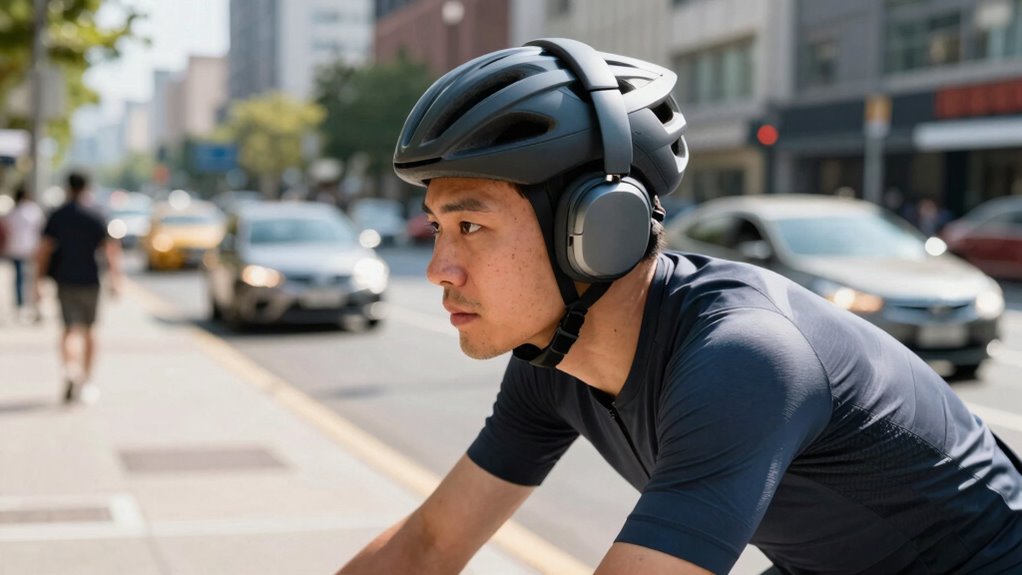

Open-ear audio devices improve cycling safety by letting you enjoy your music or podcasts without blocking environmental sounds like sirens, horns, or approaching vehicles. They sit outside your ear canal, keeping your natural hearing intact and reducing distractions. This helps you stay alert and aware of your surroundings, lowering accident risks. As technology advances, these devices become more discreet and comfortable, making your ride safer. To discover how these innovations further enhance safety, keep exploring the details.

Get sports gear delivered free — and shop member deals
- Fast, free delivery on millions of items
- Access to Prime Big Deal Days deals on October 6–7
- Prime Video, Amazon Music and more included
Key Takeaways
- Enhances awareness of surrounding sounds like sirens and horns, reducing the risk of accidents.
- Allows cyclists to enjoy audio entertainment without blocking environmental cues.
- Improves overall safety by minimizing auditory blind spots compared to traditional headphones.
- Requires proper volume management to balance entertainment and environmental awareness.
- Ongoing technological improvements increase device safety, comfort, and discretion for cyclists.

Have you ever wondered how to enjoy your favorite tunes while staying fully aware of your surroundings on a bike? Open-ear audio offers a compelling solution, allowing you to listen to music or podcasts without blocking out the world around you. Unlike traditional headphones that cover or insert into your ears, open-ear devices sit outside your ear canal, using bone conduction or specialized speakers. This design helps minimize musical distraction, so you can keep your focus on the road, traffic sounds, and other cyclists. Staying alert is essential for safety, and open-ear audio makes it easier to strike a balance between entertainment and awareness.
Open-ear audio lets you enjoy music while staying alert to your surroundings and enhancing cycling safety.
However, integrating open-ear audio into your cycling routine comes with its own set of considerations. Privacy concerns can arise, especially if you’re listening in busy areas. Open-ear devices broadcast sound outwardly, which means others nearby can sometimes hear what you’re listening to, and you might also be more conscious of your surroundings. While this transparency can be a safety feature, it can also feel intrusive if you’re in a quiet or private setting. You might worry about others overhearing your conversations or audio content, or you could feel exposed if you’re listening at high volumes. Managing volume levels and choosing discreet devices can help address these privacy issues, allowing you to enjoy audio without feeling overly exposed or disruptive to those around you. Additionally, advancements in open-ear technology are making these devices increasingly discreet and user-friendly. These innovations are also helping to improve sound clarity and overall comfort, making them more appealing for everyday use.
From a safety perspective, open-ear audio enhances your situational awareness, giving you the ability to hear sirens, horns, or approaching vehicles while still enjoying your music. This improved awareness can reduce the risk of accidents caused by auditory blind spots common with traditional headphones. Plus, because open-ear devices don’t block your ears, your natural hearing isn’t compromised, which is essential when navigating busy streets or crossing intersections. You can stay connected to your environment without sacrificing the enjoyment of your favorite tunes, making your rides safer and more enjoyable. Additionally, the technology behind open-ear audio is continually advancing, further improving sound clarity and comfort for cyclists. Ongoing innovations in open-ear audio devices mean they are becoming increasingly effective and discreet, further promoting their safety benefits. Moreover, choosing the right device can also help mitigate potential distractions, ensuring a safer riding experience.
That said, you should remain cautious about potential distractions. While open-ear audio minimizes the risk of complete musical distraction, it’s still possible to become too absorbed in your audio content. Always keep your volume at a level that lets you hear important environmental sounds and stay alert. Using open-ear audio is a step forward in cycling safety, but it doesn’t replace the need for attentive riding. When used thoughtfully, these devices can enhance your cycling experience by balancing entertainment with safety, keeping you connected to both your music and the world around you.
open-ear bone conduction headphones for cycling
As an affiliate, we earn on qualifying purchases.
As an affiliate, we earn on qualifying purchases.
Frequently Asked Questions
Can Open-Ear Audio Devices Improve Communication With Other Cyclists?
Yes, open-ear audio devices can improve communication with other cyclists. With helmet compatibility, these devices fit comfortably without interfering with your gear, ensuring safety. They also provide clear audio, making it easier to hear important messages or signals from fellow riders. This enhances coordination and safety during rides, especially in group cycling. You stay connected and aware without sacrificing awareness of your surroundings, leading to a better, safer cycling experience.
Are Open-Ear Headphones Suitable for All Weather Conditions?
Open-ear headphones aren’t suitable for all weather conditions. They typically lack strong weather resistance, so rain or heavy moisture can damage them or reduce performance. While they offer some noise isolation, it’s usually minimal, which is good for safety but less effective in noisy environments. If you ride in diverse weather, look for models specifically designed with weather resistance to guarantee durability and clear sound during your rides.
How Do Open-Ear Audio Devices Affect Rider Concentration?
Open-ear audio devices help you stay alert by allowing ambient sound to reach your ears, which enhances your auditory focus on your surroundings. This means you can enjoy your music or calls without blocking out important sounds like car horns or pedestrians. As a rider, this improves concentration and safety, since you’re less likely to be distracted or unaware of potential hazards, making your ride safer and more enjoyable.
What Is the Battery Life of Most Open-Ear Cycling Headphones?
Most open-ear cycling headphones offer a battery longevity of about 6 to 8 hours on a full charge. You’ll need to take into account the charging frequency, which depends on your usage. For daily rides, it’s best to charge them overnight or after extended use. Keep an eye on battery indicators, so you’re not caught off guard. Regular charging ensures reliable performance and uninterrupted audio during your cycling sessions.
Do Open-Ear Audio Devices Comply With Local Cycling Laws?
Open-ear audio devices generally comply with local cycling laws because they’re designed to keep your ears open and alert. However, legal compliance depends on your specific location’s device regulations. You should always check local laws because some areas may restrict audio use while cycling. Staying informed guarantees you ride safely and legally, avoiding fines or penalties. Ultimately, using compliant devices helps you enjoy your ride without legal worries.
Conclusion
As you embrace open-ear audio, imagine your senses as a vigilant lighthouse guiding your ride through a bustling harbor. With sound wrapping around you like a gentle breeze, you stay connected to your environment without losing focus. This seamless harmony between music and awareness forms a protective shield, turning your cycling journey into a symphony of safety and enjoyment. So, gear up with open-ear tech and let your rides be both harmonious and secure.
Fall Picks
fall essentials
As an affiliate, we earn on qualifying purchases.