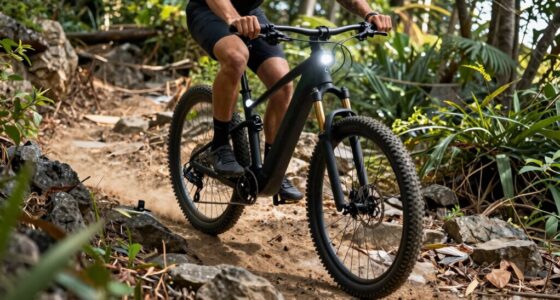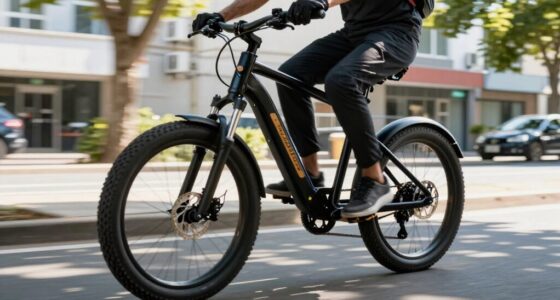

Regenerative braking on e-bikes helps you recover energy lost during slowing down or stopping. When you brake, the system switches your motor into a generator, converting kinetic energy into electrical power that recharges the battery. This process extends your riding range and makes your ride more efficient by turning braking into an energy-saving activity. To find out how this technology improves your e-bike experience and works seamlessly, keep exploring the details ahead.

Get sports gear delivered free — and shop member deals
- Fast, free delivery on millions of items
- Access to Prime Big Deal Days deals on October 6–7
- Prime Video, Amazon Music and more included
Key Takeaways
- Converts kinetic energy into electrical energy during braking to recharge the battery.
- Uses specialized dual-function motors to switch seamlessly between driving and generating modes.
- Enhances riding range by recapturing energy that would otherwise be lost as heat.
- Managed by control systems that optimize energy recovery based on speed and terrain.
- Improves overall efficiency and sustainability of e-bikes by making braking an energy-generating activity.

Have you ever wondered how e-bikes can recharge their batteries while you’re riding? It’s a clever combination of technology and design that makes this possible. At the heart of it is regenerative braking, a feature that captures energy normally lost during braking and converts it back into usable power for your battery. When you brake or slow down, your e-bike’s motor switches roles from propelling you forward to acting as a generator. This process substantially improves battery efficiency because it extends your riding range without needing external charging. Instead of wasting kinetic energy as heat through traditional braking, the system recovers it and feeds it into the battery pack, helping you go further on a single charge.
Regenerative braking converts kinetic energy into power, extending your e-bike’s range and making rides more efficient.
The effectiveness of regenerative braking heavily depends on the motor design. E-bike motors are typically designed with dual functionality in mind—serving as both a drive motor and a generator during braking. This requires specialized motor components that can handle the reverse flow of electrical current without overheating or losing efficiency. Brushless DC motors are common because they’re lightweight, efficient, and capable of rapid changes in direction of current flow, making them ideal for regenerative braking. Their design allows for quick transition between driving and generating modes, ensuring a smooth experience for the rider. The motor’s control system manages this switch seamlessly, activating regenerative braking whenever you slow down, which maximizes energy recovery without compromising riding comfort.
Additionally, the motor design influences how effectively your e-bike can recover energy during various riding conditions. For instance, bikes with more advanced motor controllers can optimize regenerative braking at different speeds and terrains, adjusting the amount of energy recaptured based on the situation. This intelligent management makes sure you don’t lose too much momentum when braking but still gain as much energy as possible back into the battery. As a rider, you benefit from this smart integration because it means less frequent charging and longer rides, especially on hilly routes or during city commutes with frequent stops.
In essence, the combination of efficient motor design and smart control systems makes regenerative braking a valuable feature. It turns the act of braking into an energy-generating opportunity rather than a simple waste of kinetic energy. By improving battery efficiency and extending your ride, regenerative braking helps you get more out of every trip. So next time you coast to a stop, remember that your e-bike is working behind the scenes, silently recharging itself and making your journey a little greener and a lot more efficient.
e-bike regenerative braking system
As an affiliate, we earn on qualifying purchases.
As an affiliate, we earn on qualifying purchases.
Frequently Asked Questions
Does Regenerative Braking Work at Low Speeds?
Yes, regenerative braking works at low speeds, though its efficiency decreases. When you brake at low speeds, you might notice less energy recovery, but braking performance remains reliable. This system is designed to optimize energy capture during deceleration, even when you’re riding slowly. Keep in mind that at very low speeds, regenerative braking may feel less strong, but it still contributes to overall efficiency and helps extend your e-bike’s range.
How Does Weather Affect Regenerative Braking Efficiency?
They say “a change in the weather” can change everything, and regenerative braking efficiency is no exception. Weather impact, like rain or snow, reduces efficiency variation because wet or icy conditions decrease brake grip, limiting energy recovery. Cold temperatures can also slow battery response, further lowering efficiency. So, when weather turns bad, you might notice less regenerative braking, making it less effective in conserving energy during your ride.
Can Regenerative Braking Extend Battery Life Long-Term?
Yes, regenerative braking can extend your e-bike’s battery life long-term. By capturing energy during braking, you promote battery preservation and maximize energy recovery, reducing the need for frequent recharges. This process helps you get more distance per charge and keeps your battery healthier over time. Just remember, the effectiveness depends on riding habits, terrain, and braking frequency, but overall, it’s a smart way to boost your e-bike’s longevity.
Is Regenerative Braking Suitable for All E-Bike Models?
Think of regenerative braking like a universal adapter—some e-bike models embrace it, while others don’t. Not all e-bikes are compatible due to battery design and system integration. You’ll want to check your bike’s battery compatibility before considering it. Additionally, the cost implications can be significant; some models require costly upgrades. So, it’s not suitable for all e-bike models without careful evaluation and potential investment.
What Maintenance Is Required for Regenerative Braking Systems?
You should regularly check your regenerative braking system by performing battery calibration and system diagnostics. Keep an eye on how the system responds during braking; if you notice reduced energy recovery or unusual noises, it’s time for maintenance. Clean the brake components and ensure connections are tight. Periodic calibration guarantees accurate energy recapture, while diagnostics help detect any underlying issues, keeping your e-bike running smoothly and efficiently.
Conclusion
You might think regenerative braking won’t make much difference, but it actually extends your e-bike’s range and saves energy. Imagine cruising through your favorite route, knowing you’re recovering power with every stop and start. This technology isn’t just a fancy feature; it’s a practical way to ride smarter and farther without extra effort. So, next time you hit the brakes, remember—you’re not just stopping, you’re also boosting your ride’s efficiency.
NFL season / tailgating Picks
team gear
As an affiliate, we earn on qualifying purchases.