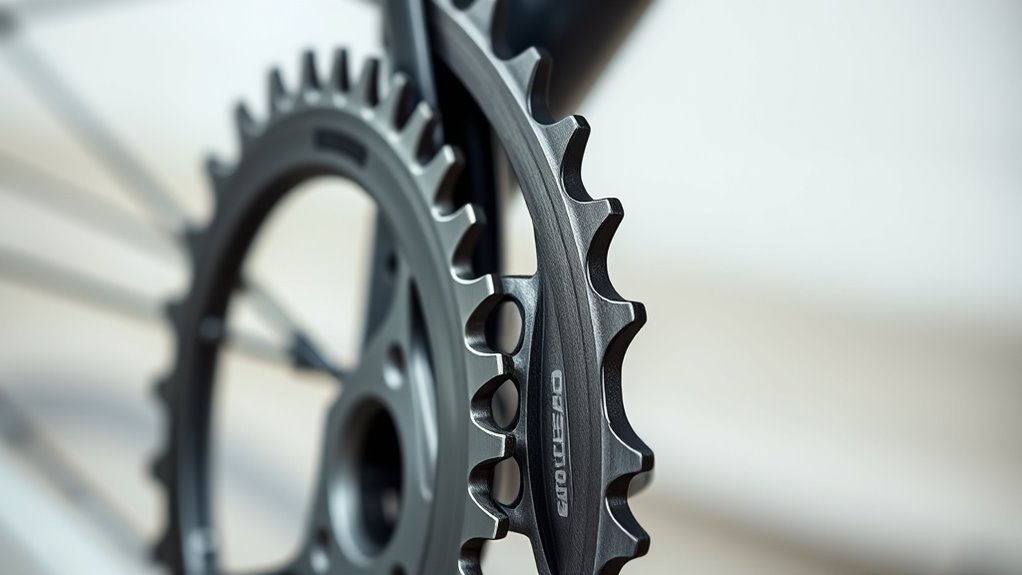

Oval chainrings aim to improve your power transfer by optimizing pedal force during specific strokes, especially during climbs and sprints. They can reduce dead spots, making pedaling smoother and more efficient, which many riders find beneficial for long rides and high effort. Round chainrings, on the other hand, offer predictable performance and consistent gear ratios. To discover how each might suit your riding style and goals, there’s more to explore below.
Key Takeaways
- Studies indicate oval chainrings can improve power output during high-intensity efforts like sprints and climbs.
- Research shows oval designs reduce pedal “dead spots,” leading to smoother pedal strokes and potentially less fatigue.
- Comparative tests reveal minimal aerodynamic differences between oval and round chainrings at typical cycling speeds.
- User reports and trials suggest oval chainrings enhance efficiency but require adaptation; preferences vary by rider.
- Scientific evidence remains mixed, with some studies supporting performance benefits and others noting negligible differences.
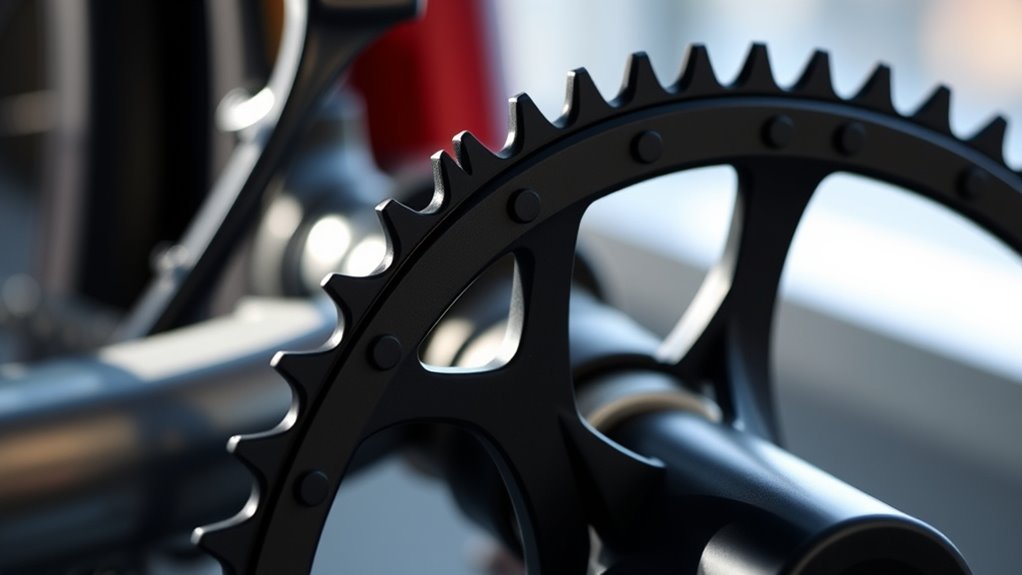
Choosing between oval and round chainrings can substantially impact your cycling performance. When deciding, you need to weigh how each shape influences gear efficiency and aerodynamics. Oval chainrings are designed with an elliptical shape, which aims to optimize power transfer during specific pedal strokes. As you pedal, the oval shape allows you to generate more force at the most advantageous points, such as when your pedal is at the top or bottom of the stroke. This can lead to a smoother power delivery and reduce muscle fatigue, especially during long rides or intense efforts. In contrast, round chainrings provide consistent gear ratios throughout the pedal cycle, which some riders find more predictable and easier to manage.
Oval chainrings enhance power transfer and reduce fatigue during intense cycling efforts.
From an efficiency standpoint, oval chainrings can help you make better use of your energy. Because of their shape, they reduce the dead spots in your pedal stroke—those moments when you’re pushing less effectively. This can translate into improved gear efficiency, meaning you use less energy to maintain the same speed. If you’re climbing hills or sprinting, this efficiency boost can make a noticeable difference, helping you conserve energy over the course of your ride. However, some riders find the shift from round to oval chainrings takes time to adapt to, as the pedal feel changes slightly. The key is that oval chainrings are often marketed as tools to enhance gear efficiency, especially under high load conditions, where their elliptical shape can facilitate better power transfer.
Aerodynamics also play a role in your choice. While oval chainrings are not primarily designed for aerodynamic gains, their shape can influence airflow around the crankset and chainring area. Some cyclists believe that the reduced frontal area or altered airflow patterns can marginally improve aerodynamics, especially at higher speeds. Round chainrings, on the other hand, tend to be more aerodynamically neutral, offering less resistance in terms of airflow. If you’re racing or riding at a speed where aerodynamics are critical, you might lean toward round chainrings for their simplicity and established aerodynamic profile. However, the actual impact of chainring shape on aerodynamics is often minimal compared to other factors like frame design, helmet, and riding position.
Additionally, the choice of chainring shape can influence gear shifting and compatibility with other components, which is important for maintaining a smooth riding experience. In the end, your choice boils down to how you prioritize gear efficiency and aerodynamics. Oval chainrings could give you an edge in maintaining a smooth, efficient pedal stroke, especially during intense efforts, while round chainrings offer predictable, consistent performance with a potentially slight aerodynamic advantage. Test both if you can, and see which shape aligns best with your riding style and goals.
Frequently Asked Questions
Do Oval Chainrings Improve Climbing Performance?
Yes, oval chainrings can improve your climbing performance by offering better power transfer during the pedal stroke. They may also provide slight aerodynamics benefits, especially at higher speeds, but these are generally minimal. However, consider the cost implications, as oval chainrings tend to be more expensive than round ones. If you’re serious about climbing and willing to invest, they could give you a noticeable edge, but for casual riding, round chainrings suffice.
Are Oval Chainrings More Durable Than Round Ones?
You might wonder if oval chainrings are more durable than round ones. In reality, durability depends largely on the chainring material and manufacturing processes. High-quality aluminum or carbon fiber oval chainrings, made with advanced techniques, can match or surpass the lifespan of round ones. However, cheaper materials or poor manufacturing can lead to quicker wear. So, choose based on quality and material rather than shape alone.
How Do Oval Chainrings Affect Pedal Stroke Smoothness?
Oval chainrings can improve pedal smoothness by reducing dead spots during your pedal stroke. This design allows for better biomechanical efficiency, making your pedaling feel more natural and consistent. You’ll notice smoother power transfer, especially during high-cadence riding or climbing. However, individual preferences vary, so it’s worth trying them out to see how they enhance your pedal stroke and overall cycling experience.
Can Oval Chainrings Fit on All Cranksets?
Oval chainrings may not fit all cranksets due to compatibility issues. You need to take into account crankset variations and whether your bike’s bottom bracket and bolt pattern support oval designs. Some manufacturers produce specific adapters or dedicated oval chainrings, but in many cases, you’ll need to check with your crankset’s specifications. Always verify compatibility before purchasing to guarantee a proper fit and ideal performance.
Do Professional Cyclists Prefer Oval or Round Chainrings?
Professional cyclists tend to prefer round chainrings due to their aesthetics preference and proven reliability. While some athletes experiment with oval chainrings for potential performance gains, round ones are more common because they typically have lower manufacturing costs and offer consistent gear engagement. Ultimately, personal comfort and team preferences influence their choice, but round chainrings remain the standard at the elite level, balancing function and cost-effectiveness.
Conclusion
Ultimately, choosing between oval and round chainrings depends on your riding style. Studies show that riders can see up to a 5% efficiency increase with oval chainrings during climbs, making them a compelling option. If you’re looking to optimize power transfer and reduce fatigue, trying out oval designs might give you that edge. So, whether you stick with round or switch to oval, understanding their impact can help you ride smarter and further.