
Platform and hanging hitch racks each have unique benefits. Platform racks offer stability, extra support, and easier loading, making them great for heavier or multiple bikes. Hanging racks are lighter, more compact, and simpler to transport, ideal for lighter bikes or limited storage. However, they might not secure bikes as firmly. Understanding these differences helps you pick the right rack for your needs—keep exploring to learn more about their key features and considerations.
Key Takeaways
- Platform racks support bikes at both wheels, offering greater stability and security during transit compared to hanging racks.
- Hanging racks use frame hooks to suspend bikes, making them lighter and more portable but potentially less stable.
- Platform racks are easier to load and unload, especially for heavier or larger bikes, due to their flat, wheel-supported design.
- Hanging racks often provide quicker installation and are more space-efficient for storage and transport.
- The best choice depends on priorities: platform racks excel in security and stability, while hanging racks favor convenience and portability.
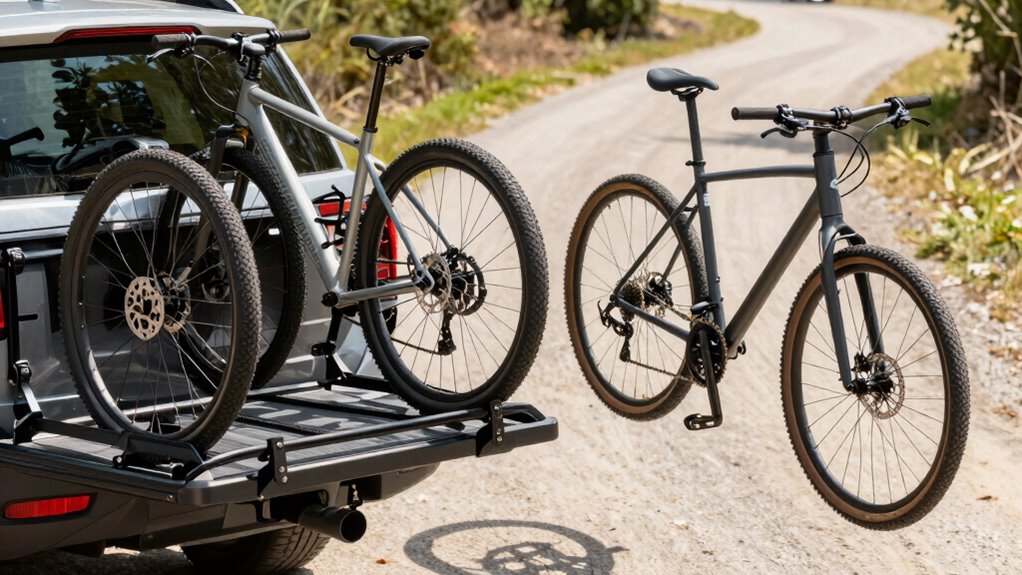
When it comes to transporting bicycles or cargo, choosing the right hitch rack style can make all the difference. Your decision impacts not only how easy it is to load and unload but also how secure your bikes will be during transit. Two popular options are platform racks and hanging racks, each with distinct features that suit different needs. Understanding these differences helps you pick the best fit for your vehicle and riding style.
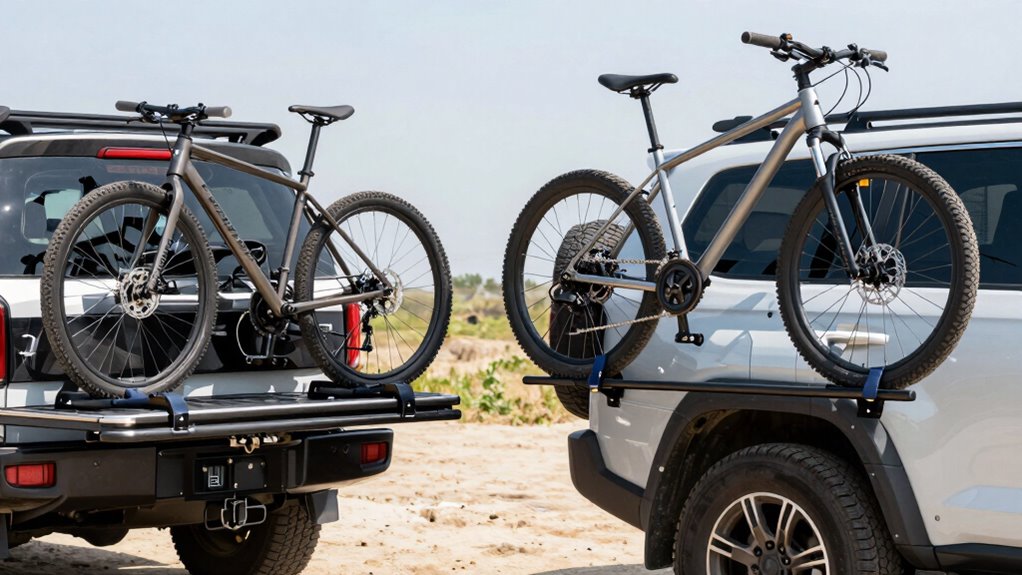
Platform racks are known for their stability and ease of use. They typically feature a flat, wheel-supported platform where you place your bike and secure it with straps or locks. Because your bike sits flat and is supported at both wheels, it tends to stay steadier on bumpy roads. Plus, they’re generally easier to load and unload, especially for heavier or larger bikes, since you don’t need to lift the bike high or maneuver it awkwardly. When it comes to bike security, platform racks provide a snug fit; your bike is held firmly at multiple points, reducing movement that could cause damage or accidental release during transit. Installation is straightforward, as most platform racks attach directly to your hitch receiver with minimal fuss, often with adjustable arms to accommodate different bike sizes and frame styles. This ease of rack installation means you spend less time setting up and more time hitting the road.
On the other hand, hanging racks suspend bikes by their frames using arms with hooks or cradles. They’re usually lighter and more compact, making them a popular choice for those needing a portable or budget-friendly option. While hanging racks can sometimes be quicker to load, especially for multiple bikes, they might sacrifice some bike security, particularly on rough roads or if the bikes aren’t properly secured. The frame hooks need to be carefully adjusted to prevent bike sway, which can cause scratches or loosened straps. Rack installation for hanging racks also tends to be simple, but you have to pay close attention to how tightly you secure the bikes. If not installed correctly or if the rack isn’t stable enough, bikes can shift, jeopardizing both the bike’s safety and your other cargo. Additionally, the bike frame stability of hanging racks may be compromised on uneven terrains, requiring extra caution during transit.
In essence, your choice between a platform and hanging rack hinges on your priorities: whether you value maximum bike security and simplicity in rack installation or prefer a lightweight, space-saving option. Each style has its pros and cons, but understanding these differences helps you make an informed decision that keeps your bikes safe and your travels hassle-free.
Frequently Asked Questions
Can Hitch Racks Be Used for Electric Bikes?
Yes, you can use hitch racks for electric bikes, but you need to verify electric bike compatibility first. Many racks support e-bikes, but some may require hitch rack upgrades for better stability and weight capacity. Look for racks designed to handle heavier loads and wider tires typical of electric bikes. Always confirm the rack’s specifications to guarantee safe transport, and consider upgrades if needed to accommodate your e-bike securely.
What Is the Weight Limit for Different Hitch Rack Styles?
Imagine your bike hanging securely, weight limits matter. For platform racks, expect a higher limit, often up to 150 pounds, offering added bike security and rack durability. Hanging racks usually support around 35-50 pounds per bike, so you need to be cautious. Knowing these limits helps prevent damage and guarantees your bike stays safe during every ride. Don’t overlook weight restrictions—they’re key to peace of mind on every trip.
Are Platform Racks Compatible With Different Vehicle Types?
Yes, platform racks are generally compatible with different vehicle types because they offer versatile vehicle compatibility and straightforward rack installation. You should check your vehicle’s hitch receiver size and weight capacity to guarantee proper fit and safety. Many platform racks are designed to fit multiple vehicle styles, including SUVs, sedans, and trucks, making them an adaptable choice. Always verify compatibility before installation to avoid issues.
How Do I Prevent Bike Theft From a Hitch Rack?
To prevent bike theft from your hitch rack, prioritize protection with proactive security tips. Use sturdy locks, secure the frame, and lock the bike to the rack tightly. Consider adding cable locks or locking skewers for extra security. Park in populated, well-lit areas, and never leave your bike unattended for long. These theft prevention tactics help keep your bike safe, ensuring peace of mind wherever you ride.
What Maintenance Is Required for Hitch Racks?
To maintain your hitch rack, regularly check bike rack security by tightening bolts and straps to prevent loosening. Clean the rack with mild soap and water to protect hitch rack durability, especially after exposure to dirt or road salt. Lubricate moving parts periodically to ensure smooth operation. Inspect for rust or corrosion and address it promptly. Proper maintenance keeps your rack secure and extends its lifespan, giving you peace of mind during every ride.
Conclusion
Now that you’ve navigated the nuances of platform and hanging hitch racks, you’re ready to make a smart, swift choice. Consider your cargo, convenience, and comfort to find the perfect fit. With the right rack in place, bike hauling becomes hassle-free and enjoyable. Remember, whether you prefer the sturdy support of a platform or the simplicity of a hanging style, your decision delivers dedicated durability and dependable transport—driving you confidently down your cycling journey.