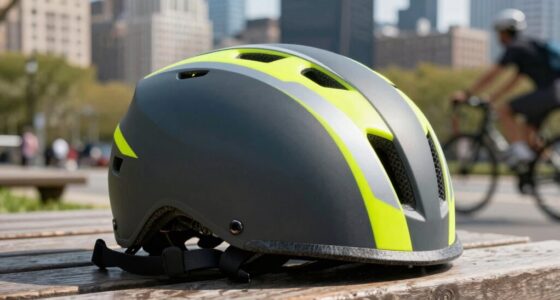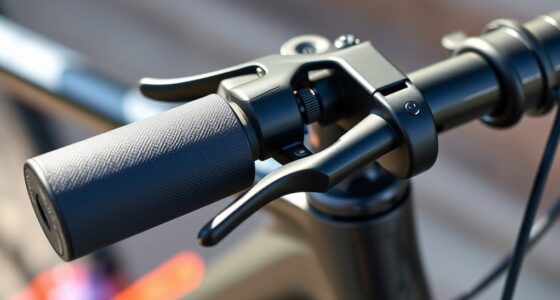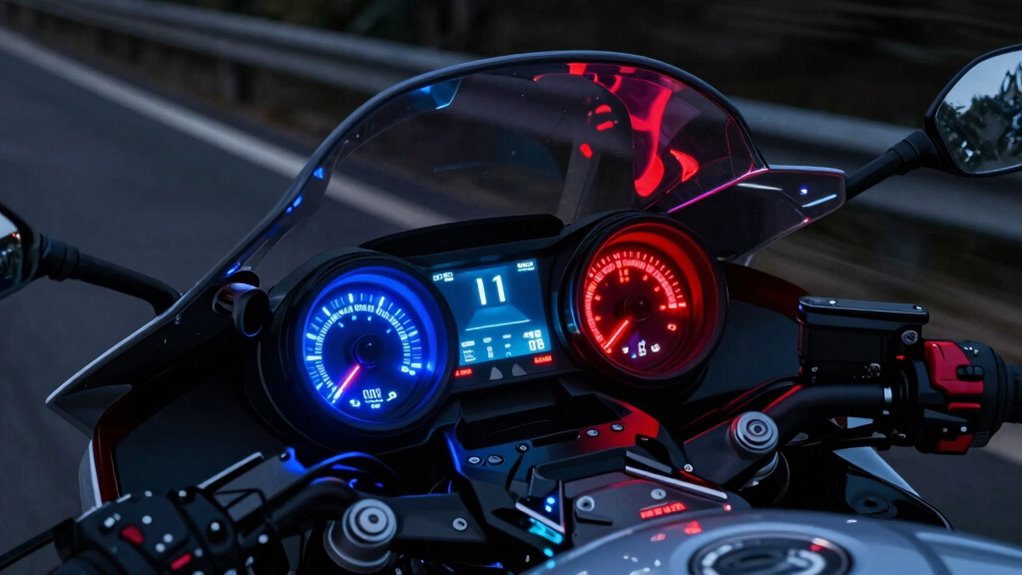

Smart lighting modes automatically adjust brightness, patterns, and intensity based on your surroundings, making you more visible and safer on the road. They use sensors to detect ambient light, motion, and nearby vehicles, helping lights brighten in dark areas and dim in well-lit spaces. You can also activate turn signals and hazard lights easily. These features work seamlessly with other safety systems, providing a more connected riding experience. Keep going to discover how these innovations can transform your ride.

Get sports gear delivered free — and shop member deals
- Fast, free delivery on millions of items
- Access to Prime Big Deal Days deals on October 6–7
- Prime Video, Amazon Music and more included
Key Takeaways
- Smart lighting automatically adjusts brightness and patterns based on ambient light and motion for optimal visibility.
- It integrates with bike systems like brakes and turn signals for clear communication and enhanced safety.
- Advanced technology ensures reliable, responsive performance across various riding conditions.
- Riders can customize settings via smartphone apps to suit their preferences and riding environments.
- Smart lights help conserve battery life while increasing rider visibility and signaling clarity.

Smart lighting modes are transforming how riders stay visible and safe on the road. With advancements in lighting technology, your bike can now adapt to changing conditions, improving your bike safety during every ride. These innovative lighting systems automatically adjust brightness, pattern, and intensity based on your speed, surrounding environment, and even the time of day. This means you don’t have to manually switch lights or worry about whether your visibility is *ideal*; instead, the smart system handles it for you, increasing your safety without added effort.
Understanding how these lighting modes work is *essential* for making the most of your bike safety features. Most smart lighting systems use sensors to detect ambient light levels, motion, and even nearby vehicles. When you ride into a darker area, like a tunnel or shaded street, the lights automatically brighten to *guarantee* you’re seen clearly by others. Conversely, when you’re in well-lit zones, the lights may dim to conserve battery life and prevent blinding other road users. Some systems even have blinking or strobe modes activated during high-traffic scenarios or when braking, making your intentions clearer to drivers and pedestrians. Smart lighting systems are also increasingly integrating with other bike safety features, creating a more comprehensive approach to rider visibility. These interconnected systems enhance your overall safety by providing seamless communication between different components. Additionally, advancements in lighting technology have made these systems more reliable and responsive, ensuring consistent performance across various conditions. Moreover, newer designs often incorporate wireless connectivity, allowing for easier control and updates via smartphone apps.
Smart lights automatically adjust brightness and modes for safety and efficiency based on environment and rider actions.
Lighting technology has evolved from simple front and rear lights to complex, interconnected systems that improve your overall safety. For example, many smart lights now sync with your bike’s braking system, flashing brighter or faster when you slow down or stop, signaling your intentions to vehicles behind you. Others incorporate turn signals or hazard lights, which can be activated with a simple handlebar press, increasing your visibility during turns or emergencies. These features not only enhance bike safety but also make your ride more intuitive and responsive to real-time conditions. As technology advances, these systems are becoming more accessible and easier to customize, allowing riders to tailor their safety features to their specific needs. This ongoing innovation ensures that riders can enjoy a safer and more connected riding experience.
smart bicycle front and rear lights
As an affiliate, we earn on qualifying purchases.
As an affiliate, we earn on qualifying purchases.
Frequently Asked Questions
How Do Smart Lighting Modes Impact Battery Life?
Smart lighting modes can impact your battery life by increasing or reducing power consumption based on settings and usage. When you enable features like automatic or adaptive modes, they help with battery optimization by adjusting brightness and color based on your environment. However, if you use high-intensity or constant lighting, it can drain your battery faster. Balancing smart lighting features with your riding needs helps manage power consumption effectively.
Are Smart Lighting Modes Compatible With All Bike Models?
While not all bike frames are ready to embrace smart lighting modes, many modern models are designed with compatibility in mind. You’ll find that bikes with adjustable lighting colors often support these features, enhancing visibility and style. Before upgrading, check your bike’s specifications or consult the manufacturer to confirm your bike frame can harmonize with smart lighting modes, making your rides safer and more personalized.
Can Riders Manually Override Smart Lighting Settings?
Yes, you can manually override smart lighting settings. Most systems offer manual control options, allowing you to customize your lighting based on your preferences or riding conditions. This feature gives you the flexibility to turn lights on or off, adjust brightness, or switch modes, ensuring you stay safe and visible. User customization makes it easier to adapt your bike’s lighting to any situation, enhancing your overall riding experience.
How Do Weather Conditions Affect Smart Lighting Performance?
Imagine riding through a storm, and smart lighting reacts like a trusty steed. Weather conditions impact smart lighting performance because weather resilience varies; heavy rain or fog can reduce light visibility, making it harder for the system to adapt. To stay safe, make certain your lights are weatherproof and understand their limitations during extreme conditions. Proper maintenance keeps your smart lighting reliable, providing clear visibility regardless of the weather.
What Safety Features Are Integrated With Smart Lighting Modes?
Smart lighting modes include safety features like adaptive brightness and motion sensors. Adaptive brightness adjusts the light intensity based on ambient conditions, ensuring clear visibility without glare. Motion sensors detect movement, automatically turning lights on or off to prevent accidents and enhance security. These features work together to create a safer riding environment, especially in low-light or unpredictable conditions, helping you stay alert and protected on the road.
Conclusion
As you navigate the road with smart lighting modes, think of these features as your trusty lighthouse guiding you safely through the night. They illuminate your path, adapt to your surroundings, and keep you visible to others. Embrace these technological beacons, and you’ll ride with confidence, knowing your bike’s lighting is working tirelessly to shine a light on your journey. With smart lighting, you’re not just riding—you’re steering through a brighter, safer world.
NFL season / tailgating Picks
team gear
As an affiliate, we earn on qualifying purchases.