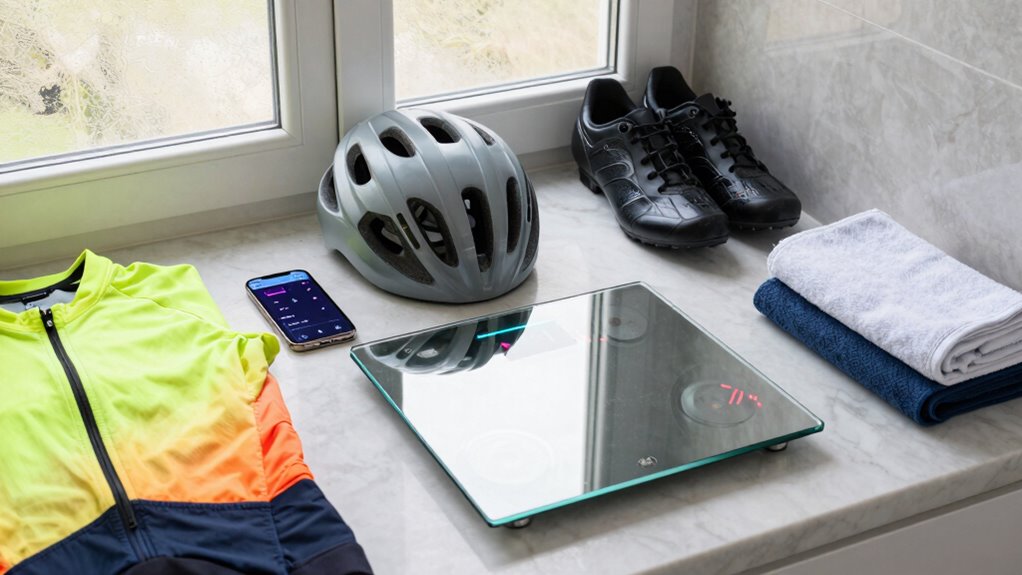

Smart scales and sleep trackers attract data-driven cyclists because they give you precise insights into your body’s response to training and recovery. These tools measure not just weight but muscle, fat, hydration, and sleep quality, helping you make smarter decisions about nutrition and rest. They allow you to track progress objectively and adjust routines for better performance. Keep exploring to discover how integrating these devices can elevate your training and results even further.
Listen free for 30 days with Audible
Thousands of audiobooks and originals — cancel anytime.
As an affiliate, we earn on qualifying purchases.
Key Takeaways
- Provide real-time, detailed body composition data to optimize training, nutrition, and recovery strategies for better cycling performance.
- Track sleep quality and patterns to enhance recovery, focus, and energy levels during rides.
- Deliver clear, actionable insights that enable proactive adjustments to training loads and dietary plans.
- Help prevent overtraining and under-fueling by monitoring hydration, muscle mass, and fatigue indicators.
- Support a data-driven approach, bridging effort and results for more effective and sustainable cycling progress.
For cyclists aiming to optimize their performance, understanding how their body responds to training and recovery is essential. That’s where smart scales and sleep trackers become invaluable tools. These devices deliver real-time data that help you make informed decisions about your training, nutrition, and rest routines. As a data-driven cyclist, you recognize that success hinges on precise insights, and these gadgets provide the detailed feedback needed to refine your approach.
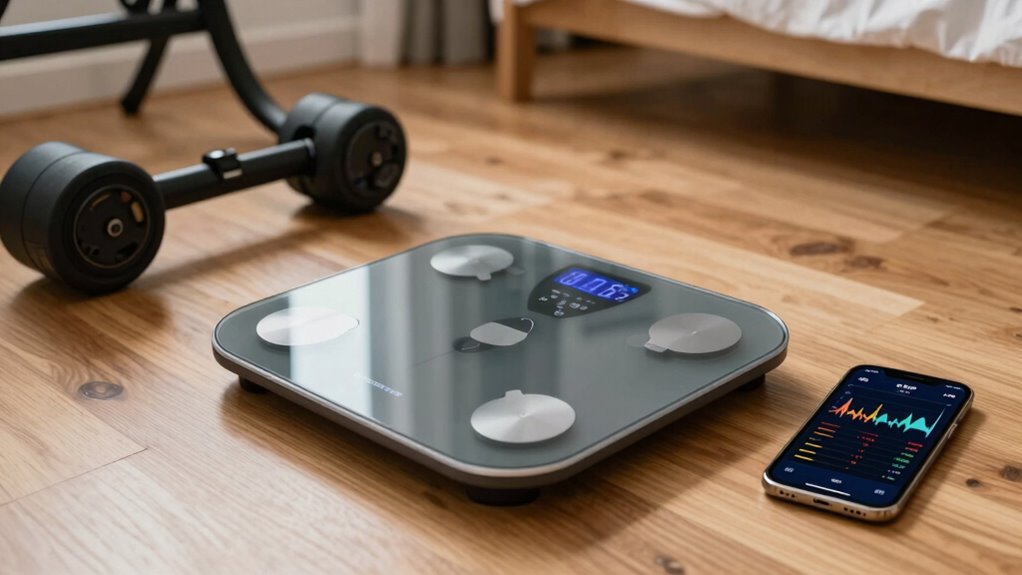
Smart scales do more than just measure your weight. They analyze body composition, including muscle mass, body fat percentage, and hydration levels. This information gives you nutrition insights that are crucial for tailoring your diet to support your training goals. If you notice fluctuations in hydration or muscle mass, you can adjust your intake of fluids, electrolytes, or carbs accordingly. This continuous feedback loop helps you avoid overtraining or under-fueling, ensuring your body stays in peak condition. By integrating these insights into your routine, you can optimize your performance with targeted nutritional strategies that align with your training plan.
Smart scales provide vital insights into body composition to help cyclists tailor their nutrition and optimize performance.
Sleep trackers complement this process by providing detailed data on your sleep quality and patterns. As a cyclist, you know that restorative sleep is fundamental to recovery and overall performance. Sleep trackers monitor not just duration but also sleep stages, interruptions, and overall restfulness. With this information, you can identify habits or stressors that disrupt your sleep and make adjustments to improve it. Better sleep means faster recovery, more consistent energy levels, and enhanced focus during rides. You’ll start to see how proper rest, combined with good nutrition, forms the foundation of effective training optimization.
What makes these devices particularly appealing is their ability to deliver actionable insights without requiring complex analysis on your part. They sync with apps that interpret the data, giving you clear, understandable feedback. This empowers you to tweak your training loads, recovery periods, and nutrition plans proactively. Instead of relying solely on subjective feelings or guesswork, you gain objective data that helps you stay on track and avoid plateaus or setbacks.
Ultimately, smart scales and sleep trackers aren’t just gadgets—they’re strategic tools for serious cyclists. They bridge the gap between effort and results by providing the precise information needed to enhance every aspect of your training. Using accurate body composition measurements from these devices, you can develop a more comprehensive understanding of your physical state. This understanding is supported by the fact that biodiversity and conservation efforts highlight the importance of precise data for sustainable practices. Incorporating indigenous knowledge and traditional skills can further enhance your approach by emphasizing holistic and sustainable methods of health and performance. With consistent use, you develop a deeper understanding of how your body responds, enabling you to fine-tune your routines for maximum performance. For you, this means not just riding harder, but smarter, with a clear, data-driven approach to reaching your cycling goals.
smart body composition scale for athletes
As an affiliate, we earn on qualifying purchases.
As an affiliate, we earn on qualifying purchases.
Frequently Asked Questions
How Accurate Are Smart Scales Compared to Traditional Weigh-Ins?
Smart scales are generally quite accurate, but their calibration accuracy can vary between models. You might notice discrepancies due to user variability, like hydration levels or time of day, which affect readings. While they provide useful trends over time, they may not match the precision of traditional weigh-ins for critical measurements. Use smart scales as a helpful tool, but consider occasional manual weigh-ins for the most reliable data.
Can Sleep Trackers Improve Cycling Performance Directly?
Yes, sleep trackers can improve your cycling performance by enhancing sleep quality and aiding recovery optimization. When you monitor your sleep patterns, you identify disruptions or insufficient rest, allowing you to adjust your habits. Better sleep leads to faster recovery, increased energy, and improved focus during rides. Over time, these improvements translate into enhanced endurance, strength, and overall cycling performance, making sleep tracking a valuable tool for serious cyclists.
Are There Any Health Risks With Continuous Data Tracking?
You might worry about health risks with continuous data tracking, but the risks are generally low if you use reputable devices. However, privacy concerns can arise if your data isn’t securely stored or shared without your consent. While tracking can offer valuable insights, it’s crucial to stay informed and cautious about how your data is used, ensuring it doesn’t compromise your privacy or lead to unintended health anxieties.
How Do Data Privacy Concerns Affect Tracker Usage?
Data security and privacy policies profoundly influence your tracker usage. You might hesitate if you’re concerned about how your personal data is stored or shared. Always review the company’s privacy policies to understand what they collect and how they protect your information. Opting for devices with strong security measures reassures you that your data remains private. Staying informed helps you enjoy the benefits of tracking without compromising your privacy.
What Is the Cost-Benefit Ratio of Investing in These Devices?
Investing in smart scales and sleep trackers offers a good balance of cost effectiveness and value analysis. You get personalized insights that can improve your cycling performance and overall health. While upfront costs might seem high, the long-term benefits—like optimized recovery and better training—outweigh the expense. Overall, these devices provide a worthwhile return on investment, especially if you’re committed to data-driven improvement and healthy habits.
Conclusion
By embracing smart scales and sleep trackers, you’re not just riding your bike—you’re transforming into a superhuman powered by data. Imagine waking up each morning feeling like a champion, every pedal stroke fueled by precision insights that propel you faster and stronger than ever. These tools turn your routine into a high-tech adventure, making you unstoppable on the road. So gear up, analyze, and conquer—because with data, the finish line’s just the beginning of your greatness.
Fall Picks
fall essentials
As an affiliate, we earn on qualifying purchases.