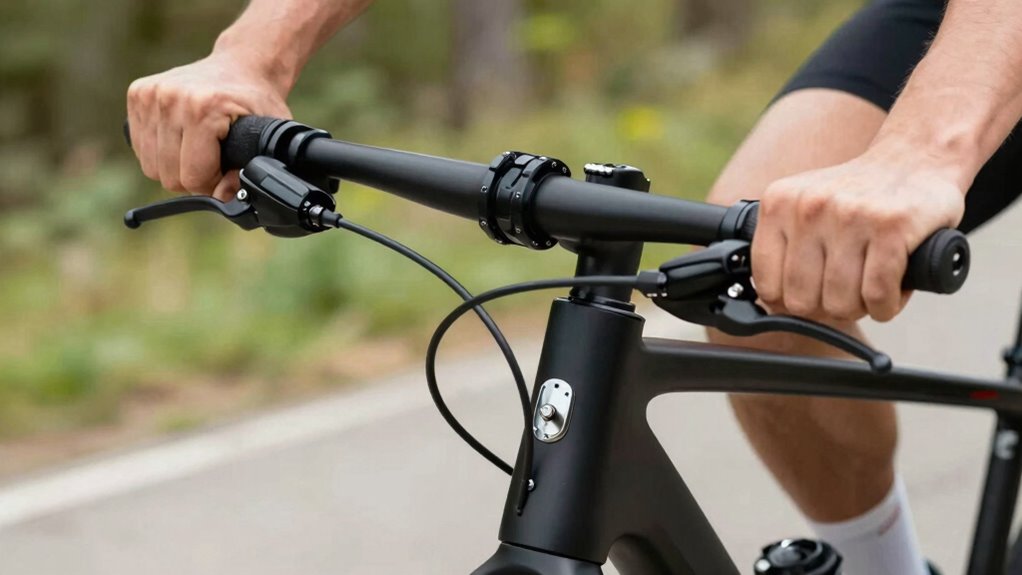
With a torque sensor, you’ll experience a more natural, effort-responsive ride because the motor adjusts based on how hard you pedal. This creates a smoother, intuitive feel, especially on varied terrain. In contrast, a cadence sensor offers simpler assistance controlled by your pedaling speed, resulting in a more mechanical feel. If you want to understand how these differences influence your riding experience and what suits your style, keep exploring further details.
Key Takeaways
- Torque sensors detect pedaling force for natural, effort-responsive assistance, while cadence sensors activate based on pedaling speed regardless of effort.
- Torque sensors provide more precise, effort-based support, resulting in a more realistic riding experience compared to cadence sensors’ mechanical feel.
- Torque sensors often improve battery efficiency and ride distance but require more maintenance and calibration.
- Cadence sensors are simpler, lower-maintenance, and suitable for riders who prefer basic, less nuanced assistance.
- The choice influences the e-bike’s feel, with torque sensors offering a more intuitive, effort-driven experience versus the more mechanical cadence sensor response.
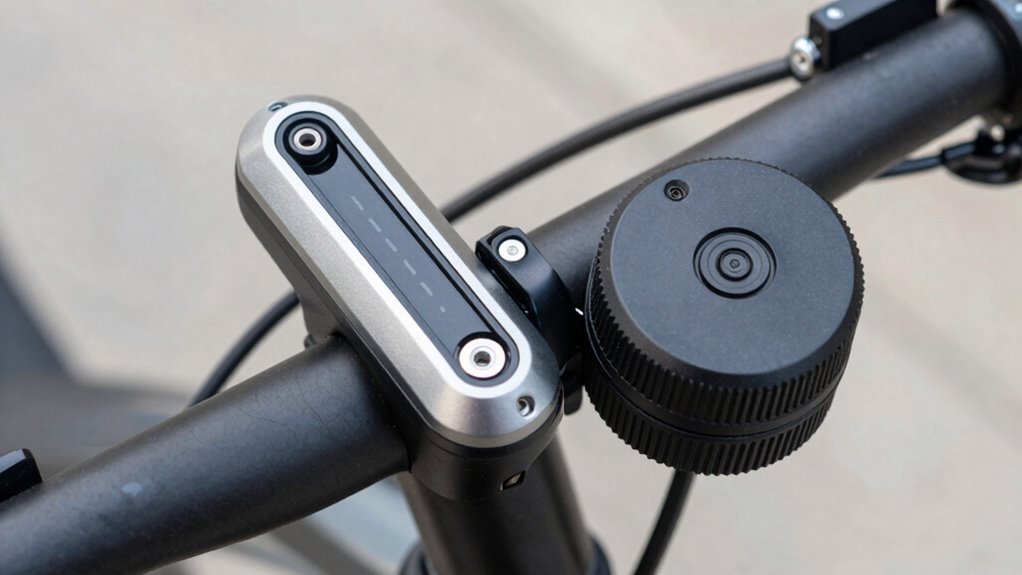
When choosing between a torque sensor and a cadence sensor for your bike, understanding how each one works can help you optimize your riding experience. Torque sensors measure how hard you’re pedaling by detecting the force you exert on the crank. This data allows the motor to provide assistance proportionally, creating a natural and intuitive cycling feel. Because they respond directly to your effort, torque sensors tend to use power more efficiently, often resulting in better battery efficiency. This means your e-bike can go longer on a single charge since the motor only kicks in when needed, avoiding unnecessary power use. However, these sensors are typically more complex and can require more maintenance, especially if dirt, moisture, or grime build up on their sensitive components. They may need occasional calibration or cleaning to keep them functioning smoothly. Additionally, the integration of sensors with high-quality home cinema projectors can enhance the user experience by providing real-time feedback and precise control.
Torque sensors provide natural, effort-based assistance, enhancing efficiency but requiring more maintenance.
On the other hand, cadence sensors work by detecting whether you’re pedaling and at what rate, regardless of how hard you’re pushing. They usually rely on simple magnets and sensors mounted near the crank or wheel, making them less complex than torque sensors. Because of their straightforward design, cadence sensors generally consume less power, which can also enhance battery efficiency to some extent. They tend to be more durable and require less maintenance—simply ensuring the magnets stay aligned and the sensor remains clean is usually enough. That said, cadence sensors don’t provide the nuanced assistance that torque sensors deliver. They often lead to a more mechanical or less natural riding experience, especially during variable terrain or quick changes in effort.
In terms of maintenance, torque sensors might demand more attention, especially if you ride in muddy or wet conditions. Their internal components can be sensitive to dirt and moisture, so regular checks and occasional servicing might be necessary to keep your system running smoothly. Conversely, cadence sensors are simpler, with fewer parts prone to failure, making them easier and cheaper to maintain over time.
Ultimately, your choice depends on your riding style and preferences. If you want a more natural, effort-responsive ride and don’t mind the extra maintenance, a torque sensor could be the better fit. If you prefer a simpler setup with lower maintenance needs and don’t mind a less nuanced assistance system, a cadence sensor might suit you better. Both sensors influence how your e-bike feels and operates, but understanding their differences in battery efficiency and maintenance helps you choose the right system for your riding needs.
Frequently Asked Questions
Can Both Sensors Be Used Together on the Same E-Bike?
Yes, you can use both sensors together on the same e-bike, but sensor compatibility varies by model. Installing both might pose challenges, as it requires careful wiring and calibration to avoid interference. You’ll need to verify your e-bike’s system supports dual sensors and follow proper installation steps. Keep in mind, combining sensors can enhance performance, but it’s essential to address potential installation challenges for smooth operation.
How Do Sensor Types Affect Battery Life?
Sensor types critically shape your e-bike’s battery balance. Torque sensors, demanding more power for precise pedal input, can drain your battery faster, reducing overall efficiency. Cadence sensors, simpler and less power-hungry, extend battery life through sensor compatibility with minimal energy use. As you pedal, this balance between power consumption and sensor sophistication impacts how long your ride lasts, making mindful sensor choices essential for maximizing battery endurance and e-bike enjoyment.
Are Torque Sensors More Expensive Than Cadence Sensors?
Yes, torque sensors are generally more expensive than cadence sensors due to their advanced sensor calibration and installation requirements. You’ll find torque sensors involve more complex components, leading to higher costs, but they offer a more natural riding feel. Cadence sensors are simpler, easier to install, and less costly. If you want precise control and a smoother experience, expect to invest more upfront for a torque sensor.
Do Sensor Types Influence Maintenance Requirements?
Sensor types do influence maintenance requirements. Torque sensors generally need more frequent calibration because they are sensitive to sensor durability issues, especially if exposed to harsh conditions. Cadence sensors are more durable and require less calibration, making maintenance simpler. You should regularly check sensor calibration and keep sensors clean to guarantee peak performance. Proper maintenance extends sensor life and keeps your e-bike running smoothly, regardless of the sensor type.
Which Sensor Type Provides a More Natural Riding Experience?
You’ll find that a torque sensor offers a more natural riding experience because of its high sensor accuracy, which adjusts power smoothly based on your effort. Studies show torque sensors provide about 30% better riding comfort compared to cadence sensors. With this, you’ll enjoy seamless assistance that mimics real pedaling, making your ride feel more intuitive and comfortable, especially on varied terrain.
Conclusion
Now that you know the differences between torque and cadence sensors, you can decide which feels better for your riding style. Will you prefer the intuitive, natural assistance of a torque sensor, or the straightforward response of a cadence sensor? Ultimately, it’s about what makes your ride more comfortable and enjoyable. So, why not try both and see which sensor type truly enhances your e-bike experience? After all, your perfect ride is just a sensor choice away.