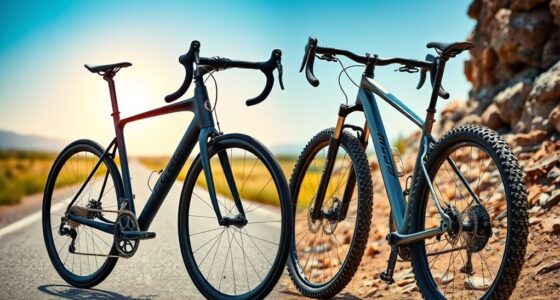
UDH (Universal Derailleur Hanger) and hangerless derailleur concepts are innovations aimed at simplifying bike maintenance and boosting durability. UDH standardizes hanger placement for better compatibility across frames, while hangerless designs eliminate traditional parts, relying on advanced materials and precise manufacturing for direct attachment. This approach enhances bike performance, reduces parts and repair costs, and creates sleeker aesthetics. Continuing here will reveal how these concepts are transforming modern cycling technology and what to expect in future drivetrain systems.
Key Takeaways
- UDH (Universal Derailleur Hanger) standardizes derailleur attachment for compatibility across frames.
- Hangerless derailleur designs eliminate the traditional hanger, directly mounting to the frame for streamlined performance.
- Hangerless systems require high-precision manufacturing to ensure proper alignment and shifting.
- Advanced materials like composites and specialized alloys improve durability and reduce weight in hangerless setups.
- The shift towards UDH and hangerless concepts aims to simplify maintenance, enhance reliability, and optimize bike performance.
The industry is shifting towards more streamlined and durable bicycle drivetrain designs, and the UDH (Universal Derailleur Hanger) along with hangerless derailleur concepts are at the forefront of this evolution. As a rider or manufacturer, you’ll appreciate how these innovations aim to simplify maintenance, improve compatibility, and enhance overall bike performance. Central to this shift is materials innovation, which plays a vital role in overcoming manufacturing challenges and creating components that withstand the rigors of riding while remaining lightweight and reliable.
Materials innovation involves exploring new alloys, composites, and manufacturing techniques to produce stronger yet lighter parts. Traditional derailleur hangers are often made from steel or aluminum, which, although durable, can be prone to bending or breaking under impact. Newer materials, like carbon composites or advanced aluminum alloys with improved fatigue resistance, allow manufacturers to craft hangers that are both resilient and lightweight. These innovations help reduce the risk of damage during crashes and make replacements easier and more affordable. However, integrating these advanced materials into production isn’t straightforward. Manufacturing challenges arise because materials like composites require specialized equipment and processes, often increasing costs and complicating mass production.
New alloys and composites make derailleur hangers stronger, lighter, and more resistant—yet pose manufacturing challenges.
The shift to hangerless derailleur designs further amplifies these manufacturing challenges. Instead of relying on a separate hanger, the derailleur attaches directly to the frame, demanding precise manufacturing tolerances to ensure proper alignment and shifting performance. Achieving this precision means investing in advanced manufacturing techniques such as CNC machining, laser cutting, or additive manufacturing. These methods enable the production of highly accurate frame mounts, but they also introduce complexity and cost. Additionally, the durability of hangerless systems depends heavily on the quality of the frame material and construction, which must withstand the forces exerted during riding without deforming or failing. Incorporating materials innovation is essential for overcoming these hurdles and ensuring the longevity and performance of hangerless systems.
Despite these challenges, the benefits of materials innovation and hangerless designs are compelling. They promise a more integrated, streamlined aesthetic, reduced parts count, and improved durability. As you ride or build bikes, you’ll notice how these advancements lead to more consistent shifting, easier maintenance, and fewer parts to replace after impacts. For manufacturers, embracing new materials and refining manufacturing processes are essential steps to bring these innovative concepts into widespread use. While they require significant investment and technological development, the payoff is a more reliable, efficient, and simplified drivetrain system that meets the demands of modern cycling enthusiasts.
Frequently Asked Questions
How Does UDH Compare to Traditional Derailleur Standards?
You’ll find that UDH offers better frame compatibility and easier derailleur alignment compared to traditional standards. It standardizes hanger placement, ensuring your derailleur lines up perfectly regardless of the bike frame. This reduces setup time, minimizes misalignment issues, and makes swapping derailleurs straightforward. Unlike traditional standards, UDH creates a more consistent platform, so you can expect smoother shifting and fewer adjustments, making your riding experience more reliable and hassle-free.
Are Hangerless Derailleurs Compatible With All Bike Frames?
Hangerless derailleurs aren’t compatible with all bike frames because of frame compatibility issues. You might face installation challenges if your bike isn’t designed for a hangerless system, as it often requires specific mounting points or frame modifications. Before choosing one, check your frame’s specifications to guarantee it supports hangerless derailleurs. Otherwise, you could encounter difficulty installing or achieving proper shifting performance.
What Maintenance Is Required for Hangerless Derailleur Systems?
You need to perform regular lubrication routines on your hangerless derailleur to keep it operating smoothly. Check for compatibility adjustments, as these systems may require fine-tuning to match your bike’s frame and gear setup. Keep the derailleur clean and free of dirt, and periodically inspect for wear or damage. Proper maintenance ensures peak shifting performance and prolongs the lifespan of your hangerless derailleur system.
Can Hangerless Derailleurs Be Upgraded or Replaced Easily?
Hangerless derailleurs can be upgraded or replaced, but it depends on your frame compatibility. Many hangerless systems are designed for specific standards, making upgrades more complex than traditional setups. You’ll need to confirm that your frame supports the new derailleur’s mounting style and cable routing. If compatible, replacing or upgrading is straightforward. Otherwise, you might face additional modifications or consider a different derailleur system to match your bike.
How Do Hangerless Systems Impact Bike Weight and Aerodynamics?
Hangerless systems improve your bike’s aerodynamics efficiency by reducing drag from traditional hanger mounts, making your ride sleeker. They also tend to lower overall weight since fewer components are needed for frame compatibility. You’ll find that upgrading or replacing these systems is easier because they’re designed for seamless integration, which means less fuss and more streamlined performance during your rides. Overall, hangerless setups enhance both speed and efficiency.
Conclusion
Embracing UDH and hangerless derailleur concepts could revolutionize your riding experience, making it smoother and more reliable than you ever imagined. With these innovations, you get the ultimate blend of durability and simplicity — almost like wielding a magic wand over your bike. Don’t settle for outdated designs; these game-changing ideas are here to elevate your ride to legendary status. Get ready to conquer trails and roads with a gear setup that’s truly out of this world.