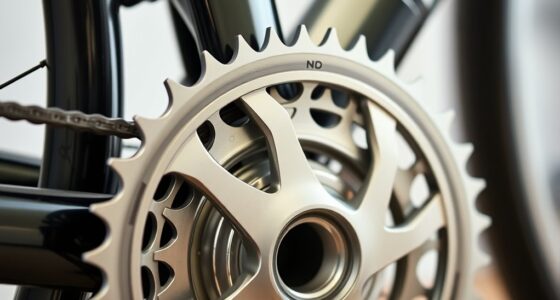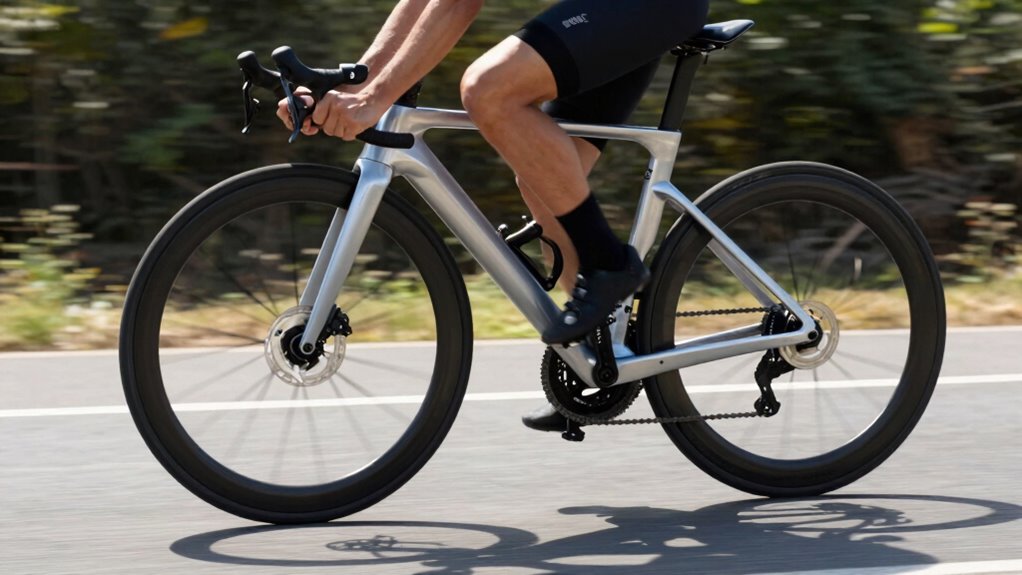

To feel stable at speed, you need a bike that combines proper geometry, frame stiffness, and balanced weight distribution. Adjust tire pressure for better grip, and make sure your suspension is set up to absorb shocks smoothly. Your riding posture also matters—lean forward with bent elbows to lower your center of gravity. When all these elements work together, your bike becomes more predictable and confident, helping you stay in control during fast, technical sections. Keep exploring to discover more tips.

Get sports gear delivered free with Prime
- Fast, free delivery on millions of items
- Prime Video, Amazon Music and more included
- Member-only deals all year
Key Takeaways
- A well-designed frame with appropriate geometry lowers the center of gravity and enhances stability.
- Proper weight distribution between rider and bike prevents wobble during fast riding.
- Correct tire pressure and wider tires improve grip and shock absorption for better control.
- Suspension setup and tuning absorb shocks, maintaining smoothness and stability on uneven terrain.
- Aerodynamic features reduce wind resistance, helping maintain speed and balance.
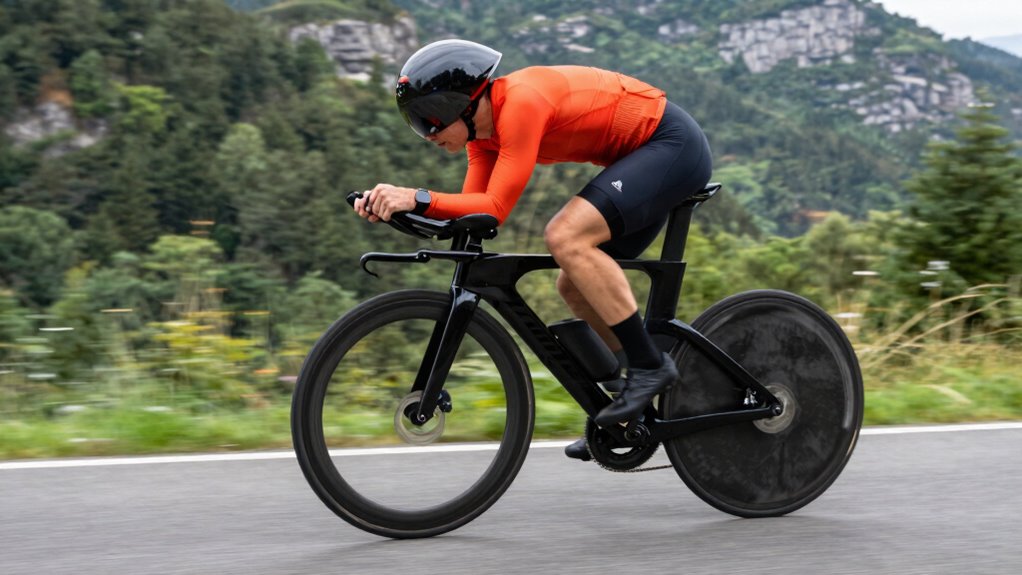
When you’re riding at high speeds, feeling stable on your bike isn’t just about the rider’s skill—it’s largely influenced by the bike’s design and setup. If you’re on a mountain bike, especially when tackling rough terrain or descents, stability becomes even more crucial. Your bike’s geometry, weight distribution, and tires all play a role in how confidently you can ride fast. A well-balanced mountain bike with a low center of gravity helps keep you planted on the trail, reducing wobble and improving control. Additionally, the bike’s frame stiffness and suspension setup can absorb shocks effectively, which is essential when maintaining stability at speed.
A bike’s geometry, weight distribution, and low center of gravity boost stability and control at high speeds.
Wind resistance is another key factor that impacts your stability. As you pick up speed, air pushes against you and your bike, making it harder to stay balanced. A bike with aerodynamic considerations, such as a streamlined frame shape and narrower handlebars, reduces wind resistance and helps you cut through the air more smoothly. When wind resistance is minimized, your effort goes into maintaining speed and stability, rather than fighting against the elements. This becomes especially important on open trails or mountain descents where gusts of wind can suddenly destabilize you if your bike isn’t designed to mitigate aerodynamic drag. Improving bike aerodynamics can significantly enhance your high-speed stability and efficiency.
Tire choice and pressure are also critical. Wider tires with a lower pressure provide better grip and shock absorption, which enhances stability on uneven terrain. On the other hand, higher pressure reduces rolling resistance but may make the ride harsher and less stable over rocky or roots-covered trails. Finding the right balance depends on the terrain and your riding style, but keeping your tires properly inflated ensures optimal contact with the ground, giving you more confidence at speed.
Furthermore, understanding the importance of frame geometry can significantly influence how stable your bike feels at high speeds, particularly in technical sections. Your riding posture plays a role too. Leaning slightly forward with elbows bent helps lower your center of gravity and distribute your weight more evenly over the bike. This position helps you respond quickly to sudden changes and stay balanced, especially when riding fast downhill or through technical sections. The combination of a well-designed mountain bike, proper tire setup, aerodynamic considerations, and your riding posture all come together to create a more stable ride. When these elements work in harmony, you’ll notice how much easier it is to feel confident and in control, even at higher speeds.
As an affiliate, we earn on qualifying purchases.
Frequently Asked Questions
How Does Rider Weight Influence Bike Stability at High Speeds?
Your rider weight considerably influences bike stability at high speeds, as a heavier rider adds more downward force, helping maintain traction and balance. Your riding posture also matters; a low, centered stance reduces wind resistance and keeps the bike steady. By staying relaxed and balanced, you enable the bike to respond smoothly. Combining your rider weight with a proper riding posture enhances stability, making high-speed rides safer and more controlled.
What Role Do Tires Play in Maintaining Speed Stability?
You might notice that your bike feels smoother at high speeds when your tires are just right. Tire tread and pressure play key roles—slicker tires with minimal tread reduce rolling resistance, while proper tire pressure guarantees better contact and stability. When you keep your tires well-maintained, the bike responds more predictably, making those fast rides feel safer and more controlled, almost as if the bike is an extension of your own confidence.
Can Bike Frame Geometry Affect Stability During Fast Rides?
Yes, your bike frame geometry crucially affects stability during fast rides. A geometry with a longer wheelbase and a lower center of gravity enhances suspension performance, providing better shock absorption and control. Frame stiffness also plays an essential role; a stiffer frame reduces flex, ensuring precise handling and stability at high speeds. Together, these factors help you stay balanced, confident, and safe during quick, aggressive rides.
How Does Wind Impact Bike Stability at High Velocities?
Did you know that at 30 mph, wind resistance can double your effort? Wind impacts your bike’s stability by creating unpredictable forces that push and pull, especially from crosswinds. Aerodynamic efficiency becomes essential—you want a streamlined position to cut through air. Strong headwinds slow you down and can wobble your bike, while tailwinds boost stability. Staying low and aligned helps counteract these effects, keeping your ride smoother and safer at high speeds.
What Maintenance Tips Help Ensure Stability at Speed?
To keep your bike stable at speed, regularly check your bike alignment to guarantee wheels and frame are properly aligned, reducing wobble. Additionally, fine-tune your suspension to match your riding conditions; proper suspension tuning absorbs shocks and maintains control, especially on rough terrains. Keep your tires properly inflated for maximum grip and stability. Routine maintenance like tightening bolts and checking brakes also contributes to a smoother, more stable ride at high speeds.
Conclusion
When you understand the key factors that contribute to bike stability—like frame geometry, tire grip, and rider posture—you’re steering your confidence straight into the wind. Think of your bike as a steady ship cutting through choppy seas; with the right setup, it feels like you’re gliding on glass—smooth, controlled, and fearless. Embrace these elements, and every ride will feel like a dance across the open road, your spirit soaring with the wind.
Halloween Picks
halloween
As an affiliate, we earn on qualifying purchases.