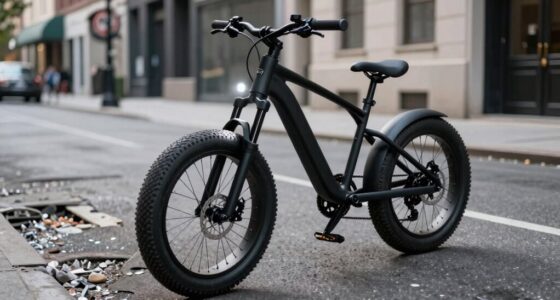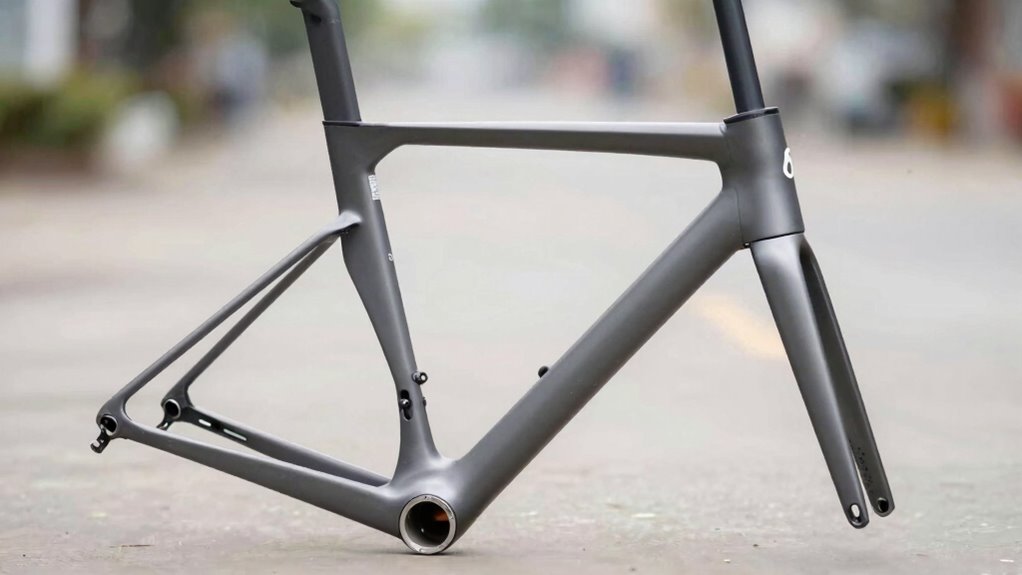
You’ll notice some frames feel faster even when they weigh the same because of their design and geometry. A frame with aerodynamic shape and geometry allows you to adopt a more aggressive, streamlined posture, reducing wind resistance and increasing speed. Stiffer, well-constructed frames also respond better to your effort, making you feel quicker. Plus, better handling and responsiveness boost your confidence, which can make the bike seem faster overall. Keep exploring—there’s more to discover about what influences your speed.

Get sports gear delivered free with Prime
- Fast, free delivery on millions of items
- Prime Video, Amazon Music and more included
- Member-only deals all year
Key Takeaways
- Frame geometry influences rider positioning, enabling a more aerodynamic stance that reduces drag and increases perceived speed.
- Structural design and tube angles enhance frame stiffness, improving responsiveness and control at high speeds.
- Well-designed frames optimize power transfer, making pedaling feel more efficient and faster during acceleration.
- Increased handling and stability from frame design boosts rider confidence, contributing to a perception of greater speed.
- Aerodynamic frame shapes direct airflow better, decreasing wind resistance regardless of weight differences.
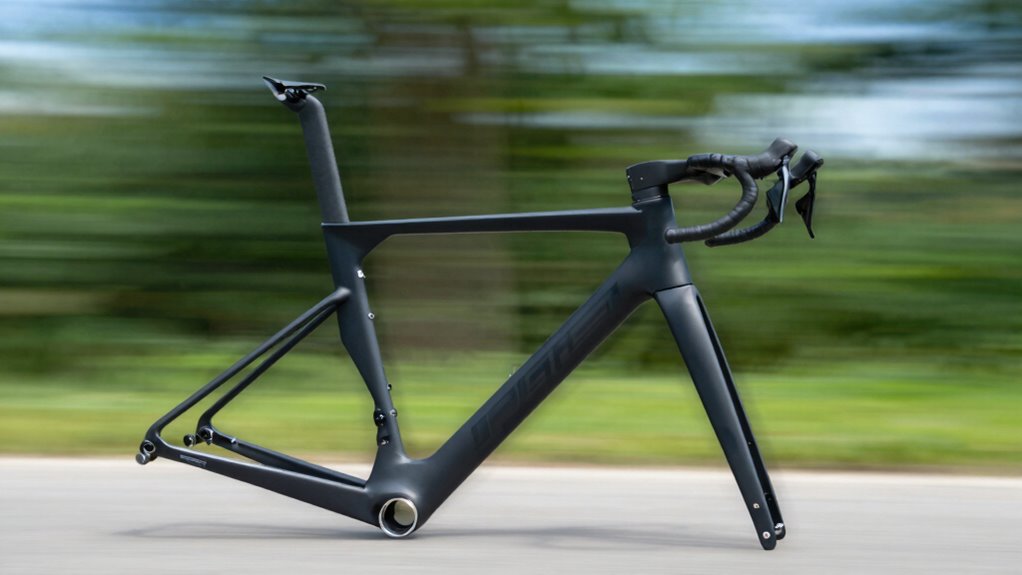
When you’re tucked in closer to the handlebars, you cut through the air more efficiently, reducing wind resistance. Even a slight difference in how your body is positioned can significantly impact your speed and feel on the bike. Bicycle aerodynamics also play a role, as the design of the frame can influence airflow around the bike and rider, further affecting speed. Your rider position is closely tied to frame geometry. If the frame allows you to lean forward comfortably, you naturally adopt a more aerodynamic stance. This means your torso is lower, and your body presents a smaller profile to the wind. Conversely, a more relaxed or upright position, often found on bikes with different geometries, might feel comfortable but can increase drag. This added wind resistance makes the bike seem slower, even at the same weight. So, it’s not just about the frame’s weight but how well it enables you to optimize your body positioning for speed.
Another aspect to consider is how the geometry affects power transfer. Frames with geometry that encourage a more aggressive stance often translate your pedaling effort more directly into forward motion. When your hips are positioned correctly and your saddle-to-handlebar distance is optimized, you generate more efficient power and feel more responsive. This responsiveness can make a bike seem faster because your input feels more immediate, and you can maintain higher speeds with less effort. Additionally, frame stiffness plays a crucial role in ensuring that energy isn’t lost during pedaling, contributing to a more efficient ride.
The overall stiffness of the frame, influenced by its shape and tube angles, also matters. A frame with well-designed geometry can feel more rigid and responsive, giving you better control and confidence at higher speeds. When you’re confident in your bike’s handling, you naturally push harder and feel more in control, which adds to that perception of speed.
As an affiliate, we earn on qualifying purchases.
Frequently Asked Questions
How Does Frame Geometry Affect Perceived Speed?
Frame geometry influences perceived speed by affecting aerodynamics and your center of gravity. An aerodynamic design reduces wind resistance, making you feel faster even at the same weight. A lower center of gravity improves stability and handling, which can boost your confidence and perceived speed on the bike. Sharp angles and sleek lines also contribute to a more aggressive look, tricking your mind into feeling faster, regardless of actual weight.
Can Tire Pressure Influence Frame Feel?
Yes, tire pressure can influence how your frame feels, especially through tire grip and road texture. Lower pressure increases grip and absorbs vibrations, making the ride feel softer and more responsive, while higher pressure reduces rolling resistance and enhances speed. Depending on the road texture, adjusting tire pressure helps optimize your frame feel, giving you better control and a faster, smoother experience on different surfaces.
Does Rider Position Impact the Sensation of Speed?
Think of yourself as a arrow soaring through the air—your position shapes your speed perception. When you adopt an aerodynamic positioning, you cut through the wind like a hot knife through butter. This stance reduces drag, making you feel faster even if the frame’s weight stays the same. Visual cues, like a stretched-out silhouette, reinforce this sensation, boosting your confidence and encouraging you to push harder.
How Do Different Materials Alter Frame Responsiveness?
Different materials considerably affect frame responsiveness through their durability and weight properties. Carbon fiber offers a stiff, responsive feel due to its lightweight and high durability, enhancing power transfer and agility. Aluminum frames are durable but less responsive, providing a comfortable ride. Advanced aerodynamic design combined with high-quality materials can make a bike feel faster by reducing drag and improving overall responsiveness, giving you a snappy, energetic ride.
Does Frame Stiffness Contribute to Perceived Acceleration?
Yes, frame stiffness contributes to perceived acceleration. When your bike’s frame is stiffer, it minimizes frame flex, making power transfer more direct and efficient. An aerodynamic design also plays a role by reducing drag, which boosts your speed perception. Together, a stiff frame and aerodynamic shape make you feel faster even at the same weight, as less energy is lost to flex and air resistance.
Conclusion
So, next time you feel like your bike’s just cruising at the same weight but somehow feels quicker, remember it’s not just about the grams. It’s about the dance between frame design, material magic, and your own rhythm. Think of your bike as a sleek arrow soaring through the wind—sometimes, it’s all about how that arrow is crafted, not just how heavy it is. Ride smart, and let your frame’s personality lead the way.
Halloween Picks
halloween
As an affiliate, we earn on qualifying purchases.