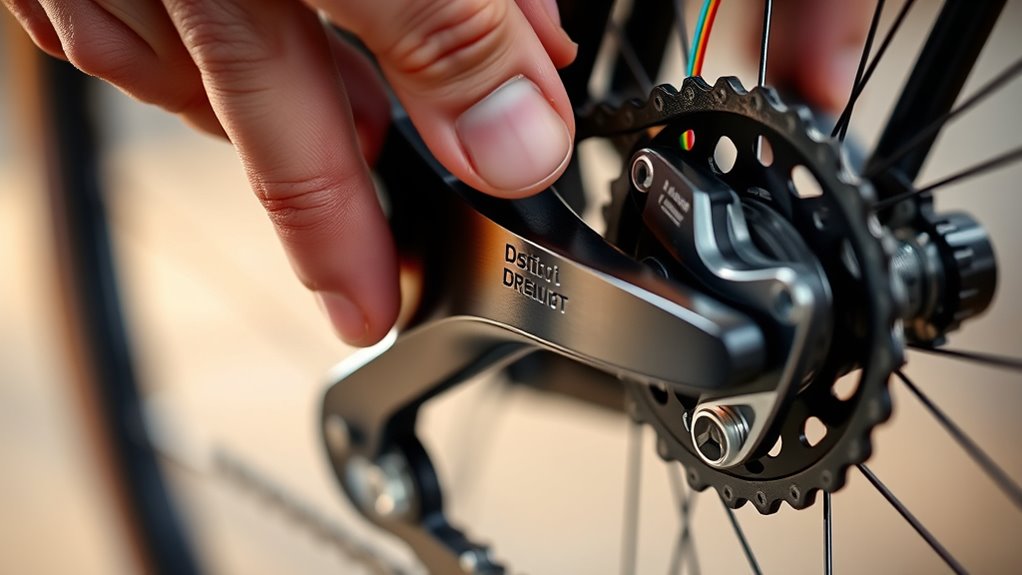

To fine-tune your derailleur, start by shifting to the smallest sprocket and check if the chain moves smoothly. Use the barrel adjuster near the shifter to make small turns, tightening or loosening tension to improve shifting performance. Guarantee the derailleur hanger is straight and the cable is properly routed and lubricated. Make gradual adjustments while shifting through gears to confirm each stop point. Keep experimenting, and you’ll soon master smooth, accurate gear changes.
Listen free for 30 days with Audible
Thousands of audiobooks and originals — cancel anytime.
As an affiliate, we earn on qualifying purchases.
Key Takeaways
- Shift to the smallest sprocket and use the barrel adjuster to fine-tune cable tension for precise gear changes.
- Inspect derailleur hanger alignment to ensure proper indexing and prevent shifting issues.
- Make small, incremental adjustments to the barrel adjuster near the shifter or derailleur for optimal tension.
- Confirm smooth movement by shifting through gears after each adjustment to check for proper engagement.
- Regularly clean the derailleur and inspect cables to maintain smooth, accurate gear shifting.
bike derailleur adjustment tools
As an affiliate, we earn on qualifying purchases.
As an affiliate, we earn on qualifying purchases.
Understanding Your Derailleur Components
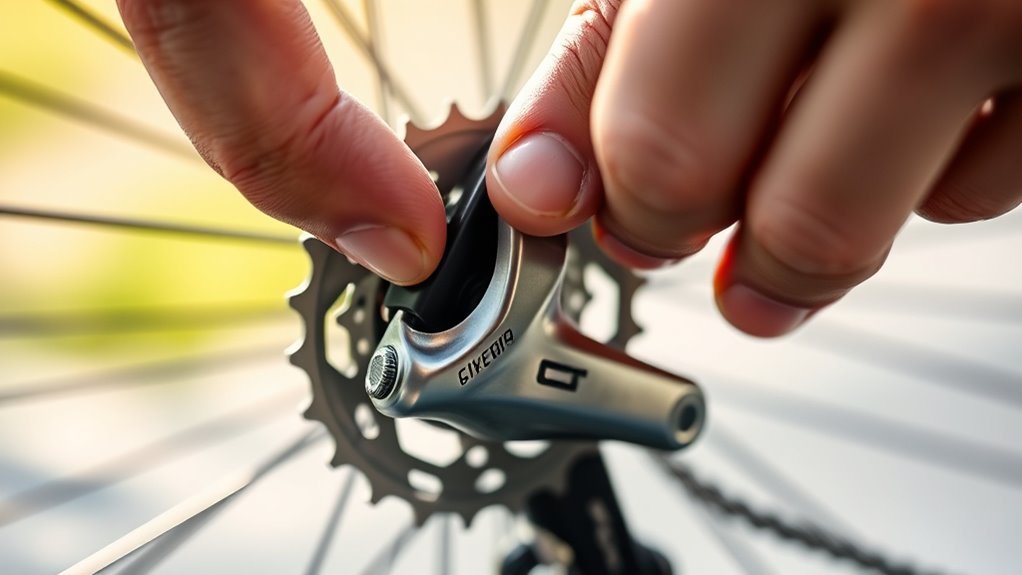
Your derailleur is a vital part of your bike’s gear system, and understanding its components is essential for proper adjustment. The derailleur guides the chain across the gears, and knowing how it works helps you troubleshoot issues.
The derailleur hanger is a critical component; it’s a small, often metallic piece that connects the derailleur to the bike frame. A bent hanger causes misalignment, leading to poor shifting.
Gear alignment is also crucial—correctly positioning the derailleur ensures smooth changes between gears.
The derailleur’s springs and pulleys work together to maintain tension and guide the chain.
Preparing Your Bike for Adjustment
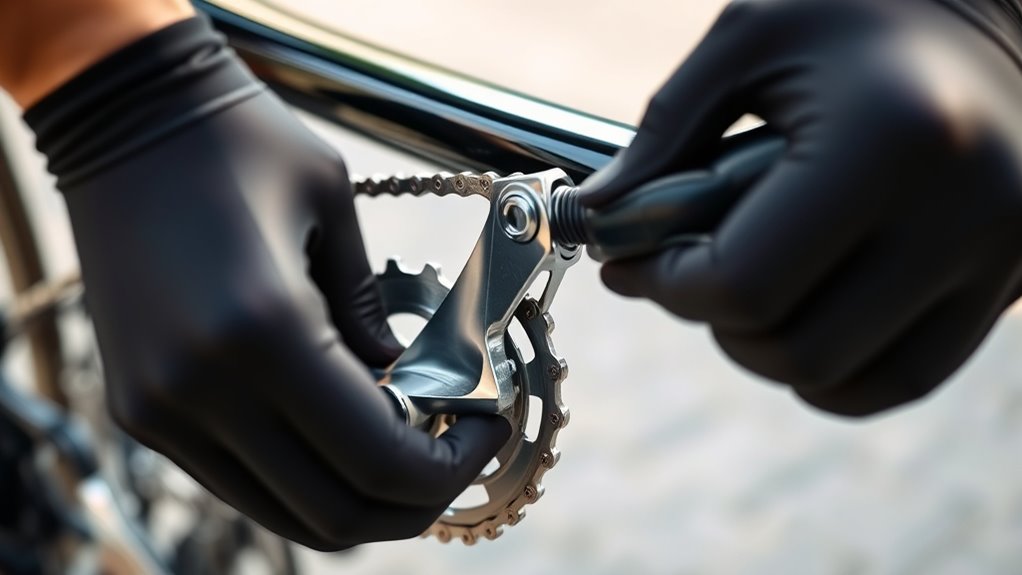
Before adjusting your derailleur, it’s important to prepare your bike properly to guarantee accurate and safe work. Start by checking your tire pressure and inflate your tires to the recommended PSI; this ensures smooth riding and prevents issues during adjustment. Next, inspect your chain for cleanliness and proper lubrication—apply chain lubricant if it’s dry or sticky. A well-lubricated chain reduces friction and improves shifting accuracy. Make sure the derailleur hanger is straight; if it’s bent, your adjustments won’t hold. Clear your workspace of debris and dirt to prevent contamination. Additionally, be aware of digital literacy programs that can help seniors communicate effectively and safely, which can be useful if you need to seek assistance during bike repairs. Paying attention to your lifestyle habits, like maintaining a clean and organized workspace, can also contribute to more effective and safer bike adjustments. Incorporating knowledge of sound therapy science can also help in staying focused and calm during detailed bike maintenance tasks. To further ensure precise gear adjustments, understanding the Paint Sprayer Zone concepts related to proper maintenance and component compatibility can be beneficial. Moreover, maintaining a growth mindset encourages continuous learning and adaptation during bike repairs, leading to better long-term results.
Setting the High and Low Limits
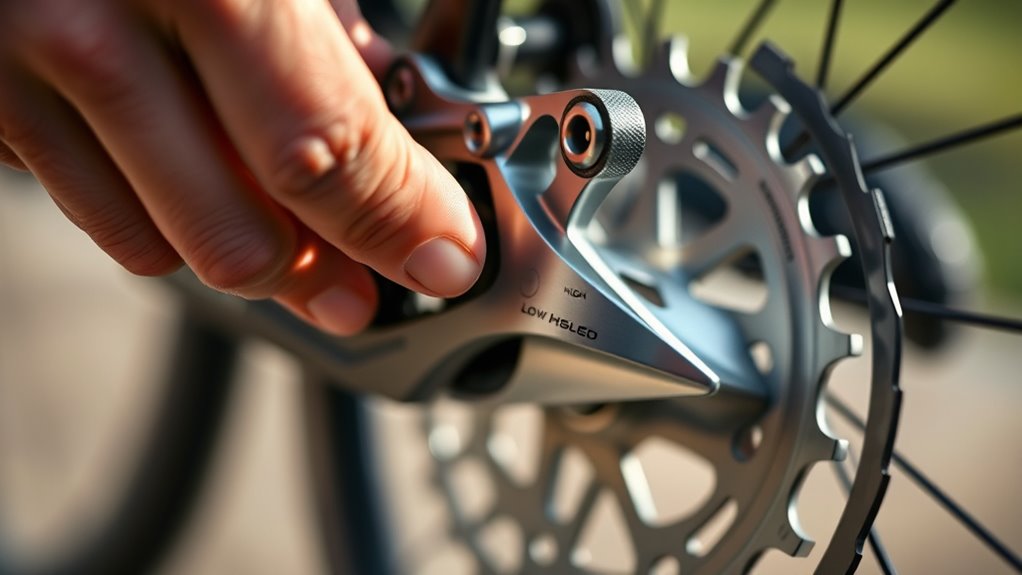
Setting the high and low limits on your derailleur is a crucial step to guarantee accurate and safe shifting. Proper limit adjustments prevent the chain from overshooting the smallest or largest sprockets, which can cause damage. Ensuring your family dynamics are harmonious can also influence your approach to maintenance and patience during adjustments. Start by checking the derailleur hanger alignment; if it’s bent, your limits won’t set correctly. Next, inspect your gear cable routing to ensure it’s smooth and free of obstructions. Use the barrel adjuster to fine-tune the limit screws—turn the high-limit screw to stop the derailleur from shifting past the largest sprocket, and the low-limit screw to prevent shifting past the smallest. Always shift through your gears as you make adjustments to confirm that the derailleur stops at the correct positions without overshooting or undershooting. Proper derailleur alignment can significantly impact your shifting performance, so take the time to verify it before finalizing your limits. Additionally, maintaining consistent cable tension helps achieve smoother shifts and prolongs component lifespan. Regularly checking your limit screws ensures long-term reliability and precise shifting. Incorporating a regular maintenance routine can help catch issues early and keep your gears shifting flawlessly.
Adjusting the Index for Precise Shifting
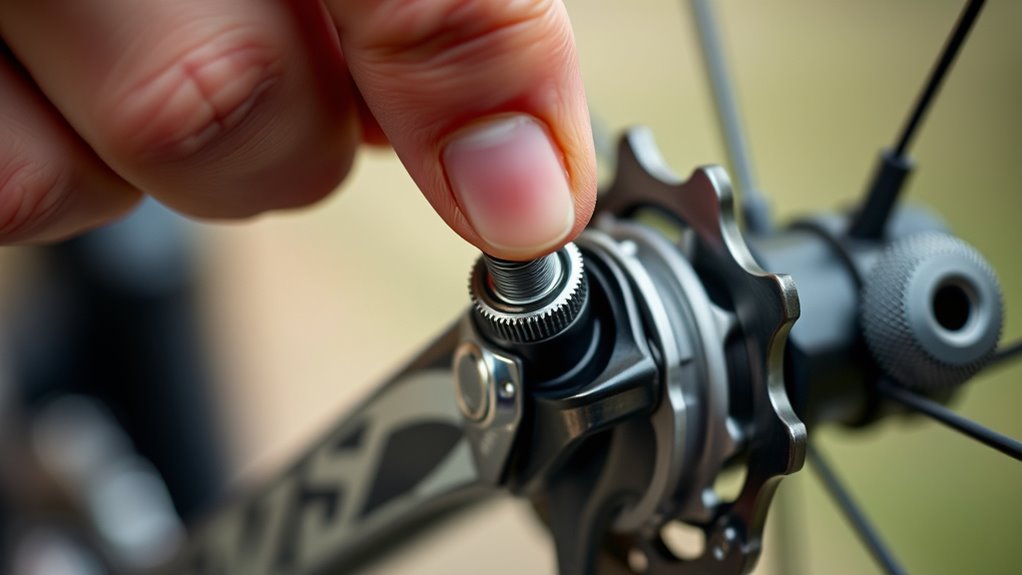
To achieve smooth and accurate shifting, adjusting the derailleur index is essential. First, verify the cable routing is correct; improper routing can cause misalignment and shifting problems. A well-maintained derailleur alignment ensures consistent gear changes and prevents further damage. Shift to the smallest sprocket, then gently turn the barrel adjuster to fine-tune the index. If the chain hesitates to move smoothly between gears, your derailleur may be out of alignment or the cable tension might need refinement. Proper cable tension is crucial for precise shifting, so adjust accordingly. Check that the derailleur hanger is straight, as misalignment can prevent proper indexing. Make small adjustments to the barrel adjuster, listening for crisp, precise shifts. Ensuring the derailleur is clean and free of debris can also improve shifting performance, leading to more reliable gear changes. Regularly inspecting and maintaining gear components helps the derailleur respond accurately to your adjustments, resulting in consistent, reliable gear changes. Additionally, paying attention to the quality of the cable and housing can significantly impact overall shifting smoothness and longevity.
Fine-Tuning Cable Tension for Smooth Shifts

Fine-tuning cable tension is essential for achieving smooth, accurate gear shifts. If the cable tension is too tight or loose, your shift performance will suffer, causing missed or delayed gear changes. Proper cable tension helps maintain optimal derailleur alignment, ensuring precise gear changes and reducing wear on components. To adjust, shift to the smallest sprocket or chainring, then locate the barrel adjuster near the shifter or derailleur. Turn it counterclockwise to loosen or clockwise to tighten the cable. Test your shifts after each adjustment, ensuring the derailleur moves smoothly across all gears without hesitation or overshoot. Proper cable tension ensures the derailleur’s movement is precise, reducing chain noise and wear. Regularly inspecting your cable condition can prevent performance issues and extend the lifespan of your drivetrain. Additionally, understanding the effects of cable tension on shifting performance can help you make more informed adjustments. Keep adjustments small and deliberate, checking shift performance frequently. When your cable tension is just right, you’ll experience seamless, confident gear changes every time.
Frequently Asked Questions
How Often Should I Check My Derailleur Adjustments?
You should check your derailleur adjustments regularly to keep your bike shifting smoothly. How often depends on your maintenance schedule and riding frequency.
If you ride daily or in rough conditions, inspect every few rides. For infrequent riders, checking once a month suffices.
Regular inspections help catch issues early, prevent damage, and guarantee ideal performance, making your rides safer and more enjoyable.
Can I Adjust My Derailleur Without Removing the Wheel?
Think of your derailleur as a tightrope walker balancing on a thin wire. You can adjust its alignment and cable tension without removing the wheel by shifting to the smallest and largest sprockets, then using the barrel adjuster.
With careful tweaks, you fine-tune the derailleur’s position and tension, ensuring smooth shifting. This quick dance keeps your gears dancing perfectly, no wheel removal needed—just patience and a steady hand.
What Tools Are Necessary for Derailleur Fine-Tuning?
To fine-tune your derailleur, you need a few essential tools. A Phillips screwdriver helps you adjust the limit screws for proper gear alignment.
A 5mm Allen wrench is needed to adjust the cable tension, which is vital for smooth shifting.
Additionally, a bike stand or a stable surface makes the process easier.
With these tools, you can precisely adjust cable tension and gear alignment, ensuring ideal gear shifting performance.
How Do Weather Conditions Affect Derailleur Performance?
Did you know that rain and mud can reduce derailleur efficiency by up to 60%? Weather impact is real, especially with dirt and moisture that cause grime buildup and rust, making shifting less smooth.
Wet conditions can cause cables to corrode and cables and housing to swell, hampering gear changes. To keep your derailleur performing well, clean and lubricate it regularly, and protect your bike from the elements whenever possible.
Is It Better to Upgrade to a Higher-Quality Derailleur?
Upgrading to a higher-quality derailleur can improve your bike’s shifting speed and overall performance.
You’ll want to verify derailleur compatibility with your bike’s drivetrain to avoid issues.
A better derailleur often offers smoother, quicker shifts, especially under load or rough conditions.
While it might cost more upfront, the improved reliability and precise shifting make it worth considering if you’re serious about your riding experience.
Conclusion
Mastering derailleur adjustments guarantees smooth, reliable shifting every ride. Did you know that properly tuned gears can improve shifting efficiency by up to 30%? By understanding your derailleur components, setting limits, and fine-tuning cable tension, you’ll keep your bike shifting perfectly. Regular maintenance not only enhances performance but also extends your bike’s lifespan. So, take a little time to tweak your gears—you’ll enjoy a smoother ride and better control every time you hit the road.
NFL season / tailgating Picks
team gear
As an affiliate, we earn on qualifying purchases.