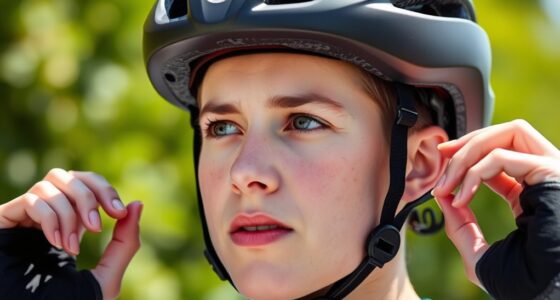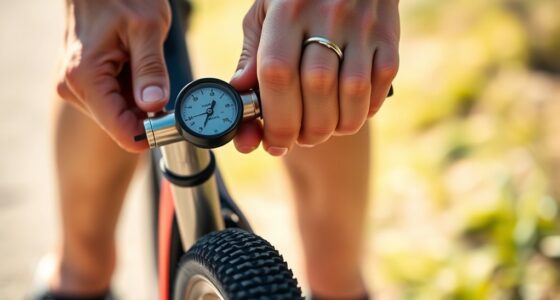

To avoid getting dropped on group climbs, focus on smart gear selection and maintaining a steady cadence of 80-100 RPM. Listen to your body signals, shift to lower gears when needed, and avoid unnecessary surges that cause fatigue. Fuel properly before and during the ride, stay well-hydrated, and keep effort consistent. Developing mindful riding habits and understanding your limits will help you stay with the group longer. Keep going, and you’ll discover more ways to boost your climbing endurance.

Get sports gear delivered free with Prime
- Fast, free delivery on millions of items
- Prime Video, Amazon Music and more included
- Member-only deals all year
Key Takeaways
- Maintain a steady, moderate effort and avoid unnecessary surges to conserve energy and prevent fatigue.
- Use appropriate gears to keep cadence around 80-100 RPM and reduce muscle strain.
- Listen to your body signals and shift to lower gears when feeling fatigued to sustain effort.
- Fuel and hydrate adequately before and during climbs to maintain energy levels and focus.
- Ride mindfully, avoiding impulsive accelerations, and stay within your personal limits to stay with the group.
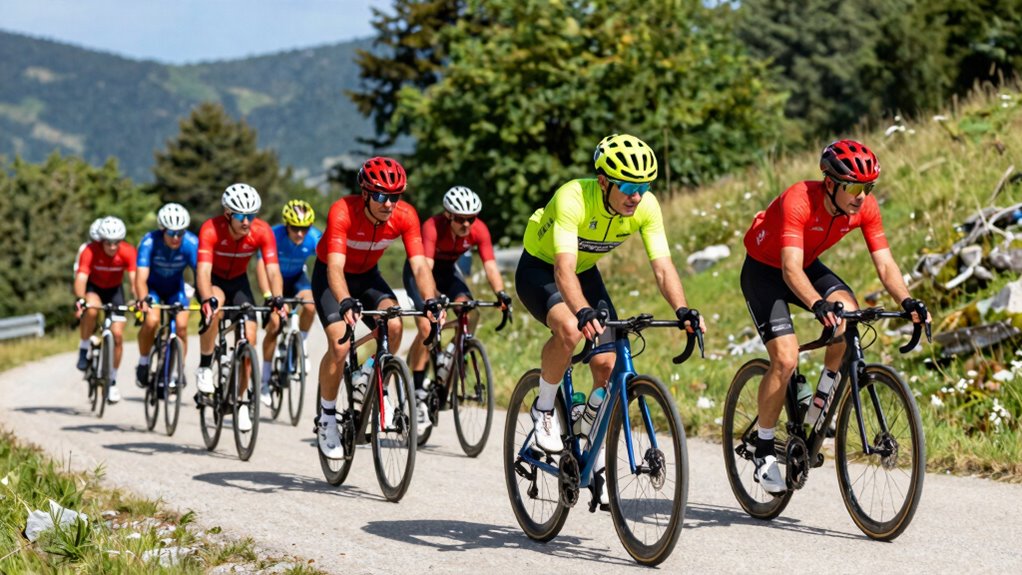
Ever wondered how some cyclists manage to stay with the group on demanding climbs while others fall behind? It often comes down to a mix of smart gear selection and effective nutrition strategies. When you’re tackling a tough ascent, your gear choices can make a significant difference. Shifting into the right gear at the right moment keeps your cadence steady, preventing unnecessary fatigue. If you’re in too high a gear, you’ll burn out quickly; too low, and you’ll spin your legs uselessly. Practice smooth, precise shifting before races or group rides so you can adapt quickly during climbs. A good rule of thumb is to stay in a gear that allows you to maintain a comfortable cadence—around 80 to 100 RPM—without exerting excessive force. This conserves your energy and keeps your legs fresh for the entire climb.
Choose gears that keep your cadence steady and prevent fatigue on tough climbs.
Nutrition strategies play just as vital a role. Proper fueling before and during the ride helps you sustain your effort and avoid hitting a wall mid-climb. Before you start, eat a carbohydrate-rich meal to top off your glycogen stores. During the ride, consume small amounts of easily digestible carbs—like energy gels, bars, or drinks—every 15 to 20 minutes. Staying hydrated is equally important. Dehydration can sap your strength and impair your decision-making, making it harder to choose the right gear or pace yourself. Carry enough water or electrolyte drinks to match the duration and intensity of your climb. Maintaining proper hydration is essential for optimal performance and endurance. Additionally, understanding your body’s signals can help you make better adjustments during the climb. Recognizing signs of fatigue early allows you to modulate your effort and avoid overexertion.
As you ascend, listen to your body. If you notice your breathing becoming labored or your legs feeling sluggish, it’s time to adjust. Drop into a lower gear to keep your cadence steady and prevent muscle fatigue from building up too quickly. Maintaining a consistent effort is key; don’t chase every burst of speed from others in the group. Instead, focus on your pacing, fueling, and gear choices. Over time, you’ll develop a better sense of your limits and how to push them without overdoing it.
Ultimately, staying with the group on climbs is about smart preparation and mindful riding. By selecting the right gear to match your effort and sticking to a solid nutrition plan, you’ll keep your energy levels high and your legs fresh. This approach enables you to hold your position on those tough ascents, enjoy the ride, and avoid getting dropped. Fostering a mindful riding approach not only improves your climbing but also enhances your overall cycling endurance and enjoyment.
As an affiliate, we earn on qualifying purchases.
Frequently Asked Questions
What Gear Should I Carry for Group Climbs?
For group climbs, carry a lightweight, multi-speed gear setup to handle varying terrain. Bring quick-access cycling nutrition like gels or bars to maintain energy, and guarantee your bike maintenance is up-to-date, with properly functioning brakes and gears. This way, you stay efficient and confident, avoiding dropped struggles. Carry a spare tube and pump, so you’re prepared for flats, keeping your focus on the climb instead of gear mishaps.
How Do I Communicate Effectively With the Group?
Like a knight with a quill, you should clearly signal your intentions to the group. Use cycling etiquette by calling out hazards, pace changes, and upcoming turns, and maintain steady eye contact if possible. Respect group dynamics by being assertive yet polite, and listen actively when others speak. Keep communication consistent, concise, and positive, so everyone stays in sync, and the ride remains smooth and enjoyable for all.
What’s the Best Way to Recover if I Get Dropped?
If you get dropped, focus on your pacing strategies to gradually catch up without burning out. Maintain steady, controlled efforts and avoid rushing, which can deplete your energy. Use mental resilience to stay positive and motivated; remind yourself that recovery is part of the process. Keep a steady rhythm, stay hydrated, and conserve energy for the final push. With patience and focus, you’ll rejoin the group stronger and more prepared.
How Can I Predict the Group’s Pace Beforehand?
You can predict the group’s pace by observing group dynamics during warm-up rides or previous climbs. For example, if you notice riders taking long breaks or easing up on steep sections, expect a slower pace. Climbing strategies like pacing yourself based on their rhythm help you stay in sync. Pay attention to rider signals and terrain cues, adjusting your effort early to avoid getting dropped and to keep everyone moving smoothly.
What Should I Do if I Feel Overwhelmed?
If you feel overwhelmed, focus on your mental resilience by staying calm and positive. Use breathing techniques like deep, steady inhales and exhales to manage fatigue and maintain control. Break the climb into smaller sections, and remind yourself of your training. Push through setbacks with confidence, knowing you can handle the effort. Remember, staying composed and using proper breathing keeps your mind strong and your body moving forward.
Conclusion
Remember, staying with the group isn’t about being a hero or a speed demon—it’s about strategy and pacing. Keep an eye on your effort, communicate clearly, and don’t be afraid to tuck in behind faster riders. Think of it like a well-coordinated circus act—everyone has a role, and together, you can all cross the finish line smoothly. So, pedal smart, stay steady, and you’ll avoid getting dropped, even if you feel like you’re trying to out-sprint the Flash himself.
Halloween Picks
halloween
As an affiliate, we earn on qualifying purchases.