

To keep your bike frame scratch-free, start by inspecting its vulnerability and selecting durable protective films or wraps that match your style. Apply clear coats or nail polish to small chips for extra protection, and use protective tape or stickers in high-friction areas. Regular cleaning and maintenance help prevent damage, while proper touch-up techniques address minor scratches quickly. With these steps, you can maintain your bike’s appearance—discover more tips to safeguard your frame effectively.
Key Takeaways
- Clean the frame thoroughly with mild soap and water before applying any protective film or coating.
- Use UV-resistant clear films or coatings to prevent scratches and damage from sunlight.
- Apply protective tape or film carefully, smoothing out air bubbles for a seamless, scratch-resistant surface.
- Regularly inspect and clean the frame to identify and address scratches or chips early.
- Reapply or touch up protective coatings or films as needed to maintain a scratch-free finish over time.
Assessing Your Frame’s Vulnerability
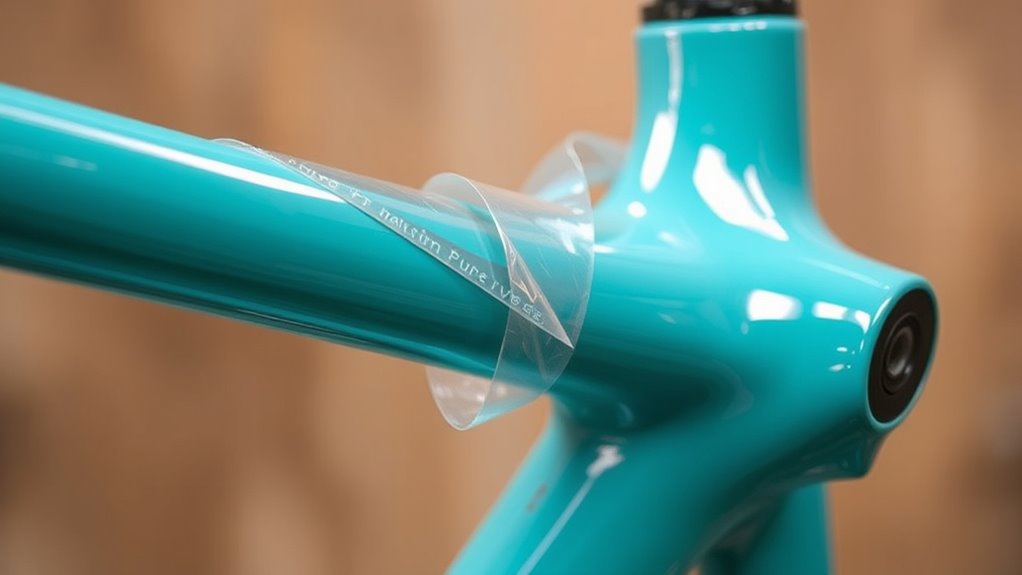
Before you start protecting your bike, it is vital to evaluate how vulnerable your frame is. The frame material plays a significant role in determining its susceptibility to damage. Aluminum, carbon fiber, steel, and titanium each have different levels of durability and resistance to scratches and impacts. You should inspect your bike for existing weak spots, chips, or cracks that could compromise structural integrity. Pay attention to areas prone to friction or contact, like the chainstay or fork. Understanding your frame’s strengths and vulnerabilities helps you prioritize protection where it’s needed most. Additionally, considering the frame’s durability that suit your style can help personalize your bike accessories and protective gear. Conducting a comprehensive security assessment can further ensure that your frame is well protected against unexpected damage. Recognizing the impact resistance of your frame material can guide you in selecting appropriate protective accessories. Moreover, knowing the sound therapy science behind vibration absorption can inform choices that reduce vibrations and prolong your frame’s life. By analyzing these factors, you guarantee your efforts are effective, preventing unnecessary damage and extending your bike’s lifespan. Proper evaluation is the first step toward ideal frame protection.
Choosing the Right Protective Film or Wrap
Selecting the appropriate protective film or wrap is essential to effectively safeguard your bike’s frame. First, consider your frame color to choose a film that either matches or complements it for a seamless look. There are different protective film types, such as clear, matte, or gloss finishes, each offering unique benefits. Clear films are discreet and preserve your bike’s original appearance, while matte options reduce glare and hide scratches better. If you want a subtle look, transparent protective films work well, but if you prefer a specific aesthetic, choose a wrap that enhances your style. Make sure the film is durable and UV-resistant to withstand weather and sun exposure. Picking the right type ensures your frame stays protected without sacrificing your bike’s visual appeal. Additionally, understanding aura colors and their messages can inspire confidence in your choices, symbolizing positive transformations and protection for your ride. When selecting a film, consider its tuning compatibility to ensure it can withstand any modifications or adjustments you plan in the future. It’s also wise to select a film with second trimester overview properties that match your climate and riding habits for optimal longevity. Proper research on installation techniques can further ensure a flawless application and lasting protection.
Applying Clear Coat for Extra Durability
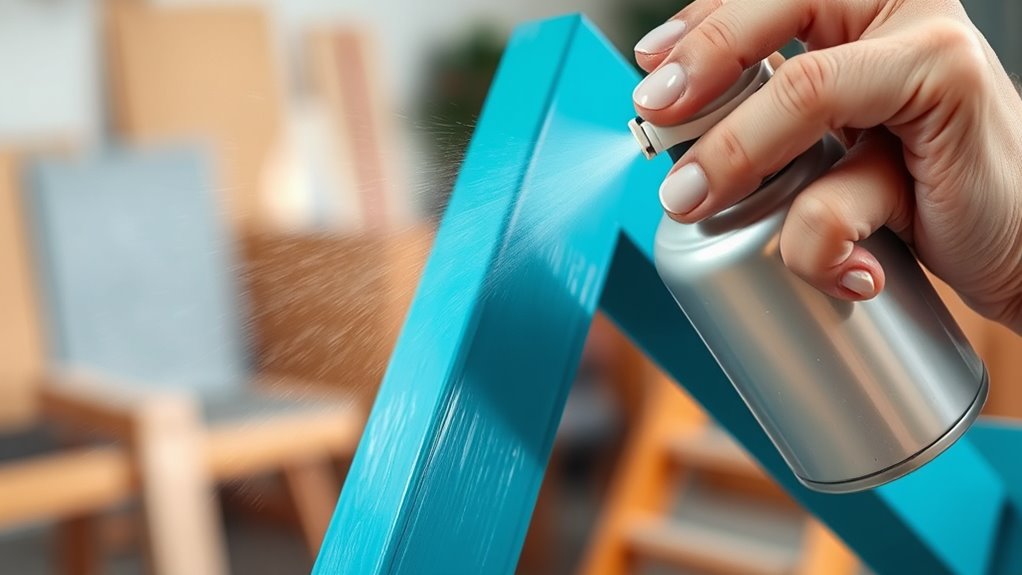
Choosing the right clear coat is essential to guarantee your frame stays protected and looks great. You need to take into account factors like gloss level and drying time to match your needs. Proper application techniques will help you achieve a smooth, durable finish that lasts. Additionally, selecting a fire-resistant finish can enhance safety in environments where heat exposure is a concern. Considering Maximize Space and Organization options can also influence the type of protective coating best suited for your vehicle’s specific modifications. Incorporating AI-driven safety measures can further ensure the durability and safety of your protective coating in various conditions. As automation and data privacy considerations evolve, integrating these advancements can help monitor and maintain the integrity of your protective layers effectively.
Choosing the Right Clear Coat
Applying the right clear coat is essential to guarantee your frame protection lasts through everyday wear and tear. To do this, you need to take into account your frame material and paint types. Different frame materials, like metal, carbon fiber, or plastic, react differently to various clear coats. For example, metal frames often require a clear coat that offers corrosion resistance, while plastic frames might need a flexible, UV-resistant finish. Additionally, your paint type—whether it’s glossy, matte, or satin—will influence the clear coat choice to make sure a smooth, even look. Selecting a compatible clear coat prevents issues like peeling or discoloration. Take time to match the clear coat to your frame’s specific needs, making sure a durable, scratch-free finish that lasts. Also, understanding the differences between paint finishes can help you choose the most appropriate clear coat for your project. When choosing a clear coat, consider application techniques to ensure an even and professional finish. For optimal results, it’s helpful to familiarize yourself with protective styling methods to further safeguard your frame from damage. Moreover, selecting a clear coat with air filtration technology can improve the application process by reducing airborne particles and achieving a cleaner finish. Incorporating dynamic communication exercises for couples can also help in maintaining open dialogue if you encounter challenges during your DIY project.
Proper Application Techniques
Once you’ve picked the right clear coat for your frame, how you apply it can make all the difference in achieving lasting protection. Start by confirming your frame material is clean and free of dust or grease. When applying, use smooth, even strokes to prevent drips or uneven coverage. For different paint types, adjust your technique: water-based paints often require thinner coats, while oil-based paints may need longer drying times between layers. Always follow the manufacturer’s instructions regarding drying times and reapplication. Maintain a consistent distance from the surface to avoid thick spots. Applying the clear coat in a dust-free environment and in good lighting helps achieve a smooth, professional finish. Proper technique ensures maximum durability and keeps your frame looking scratch-free longer. Additionally, practicing proper application techniques can help you achieve a more uniform and professional result. Being mindful of environmental conditions like humidity can also influence the application process and final outcome. Moreover, understanding the importance of sustainable application practices can contribute to better environmental impact and longer-lasting results.
Using Clear Nail Polish for Small Chips
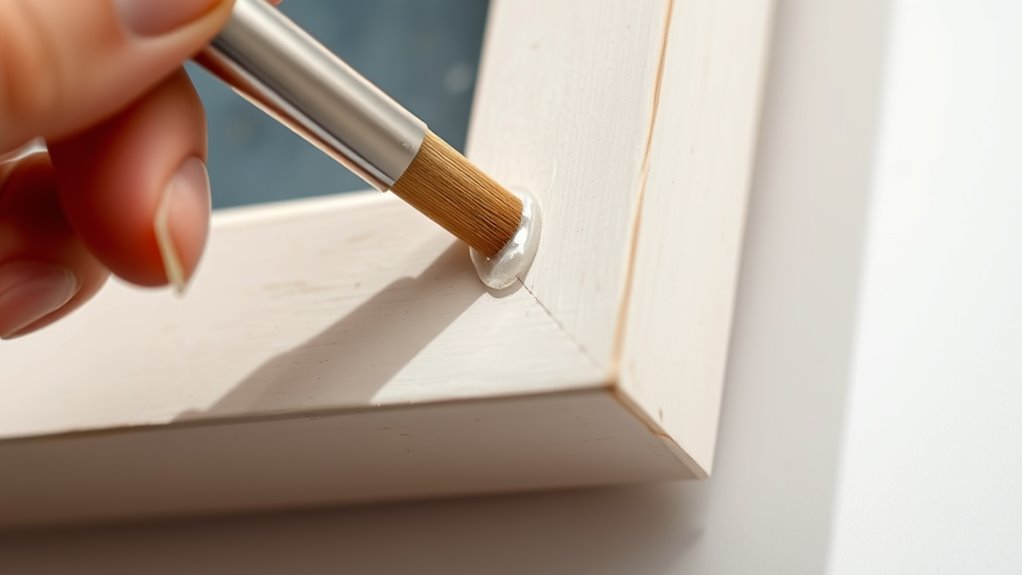
When you notice a small chip on your frame, quick action can prevent it from worsening. Clear nail polish is a simple solution, especially for minor damage. First, clean the area gently to remove dirt or grease, ensuring the polish adheres properly. Apply a thin layer of clear nail polish directly onto the chip using the brush from the bottle. This helps seal the exposed area and prevents the chip from spreading. Keep in mind that the effectiveness of this fix depends on your frame material; it works best on painted or coated surfaces. While it doesn’t restore the original finish, it minimizes the chip’s aesthetic impact and keeps your frame looking neat. Reapply as needed, and avoid exposing the area to harsh elements for lasting protection.
Installing Protective Tape or Stickers
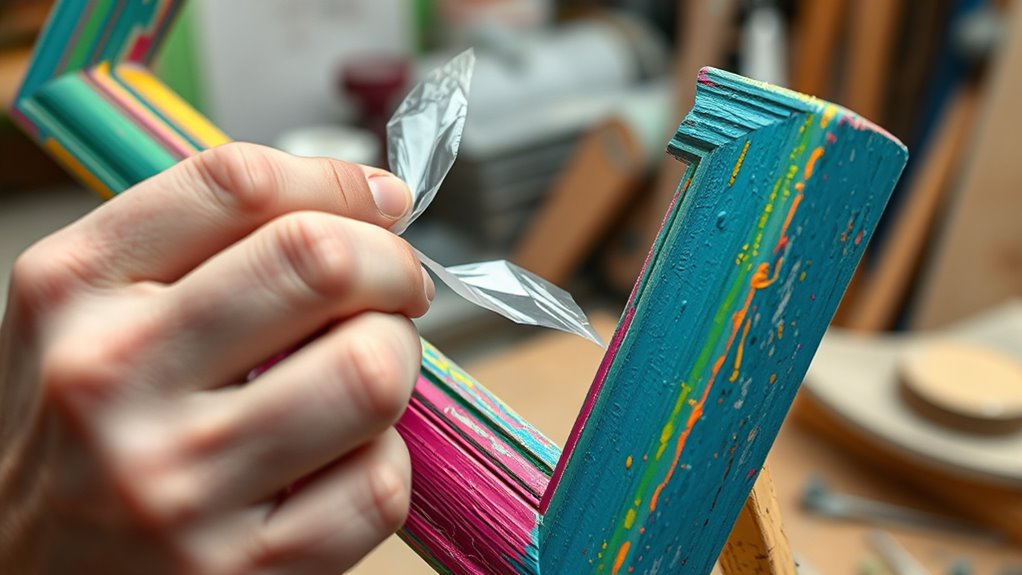
Choosing the right tape is vital to guarantee your frame stays protected without damaging the finish. Make certain the tape is designed for your bike’s material and conditions. When applying, press firmly and smooth out bubbles to get a seamless, long-lasting barrier.
Choosing the Right Tape
Selecting the right tape is essential for guaranteeing your frame stays protected without causing damage or look bad. You need to contemplate your paint color and frame material to choose the best option. For painted frames, use painter’s tape or painter’s masking tape, which won’t peel paint or leave residue. If your frame has a delicate or matte finish, opt for low-tack or painter’s tape designed for sensitive surfaces. For metal, plastic, or wood frames, a standard painter’s tape usually works well, but check the product specifications. Clear or frosted tape can blend seamlessly with most designs, keeping the focus on your artwork. Always match the tape’s adhesion strength to your frame’s material to avoid peeling or residue. Proper selection ensures protection without compromising your frame’s appearance.
Proper Application Technique
To guarantee your protective tape adheres smoothly and stays intact, carefully clean and dry the frame surface before application. Different frame materials, such as metal, plastic, or wood, may require specific cleaning methods to ensure maximum adhesion. For painted surfaces, consider the type of paint—glossy or matte—as some tapes may lift or damage certain finishes. Use a gentle cleaner suited for the material, avoiding harsh chemicals that might degrade paint or cause smudges. When applying, peel back a small portion of the tape and align it carefully, smoothing it out gradually with a squeegee or your finger to prevent bubbles or wrinkles. Proper technique ensures the tape stays secure, protecting your frame from scratches while maintaining a professional, clean look.
Regular Maintenance and Cleaning Tips
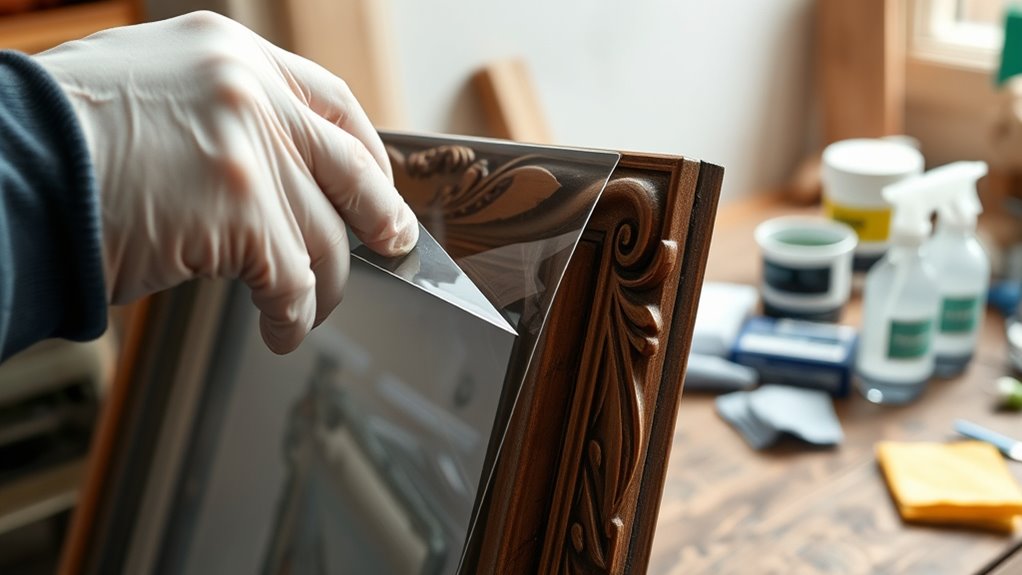
Regular maintenance and cleaning are essential for keeping your frame protected and looking its best. The type of frame material determines how you should clean it; for example, wood may require gentle dusting, while metal or composite frames can handle more thorough cleaning. Environmental factors, like exposure to sunlight, moisture, and dirt, can accelerate wear and cause scratches if not managed properly. Regularly inspect your frame for dust, dirt, or signs of damage, and clean it using a soft cloth with mild soap and water. Avoid abrasive cleaners that could scratch the surface. Protect your frame from harsh elements by installing covers or keeping it indoors when possible. Consistent care prevents buildup, preserves appearance, and ensures your frame stays scratch-free longer.
DIY Touch-Up Techniques for Scratches
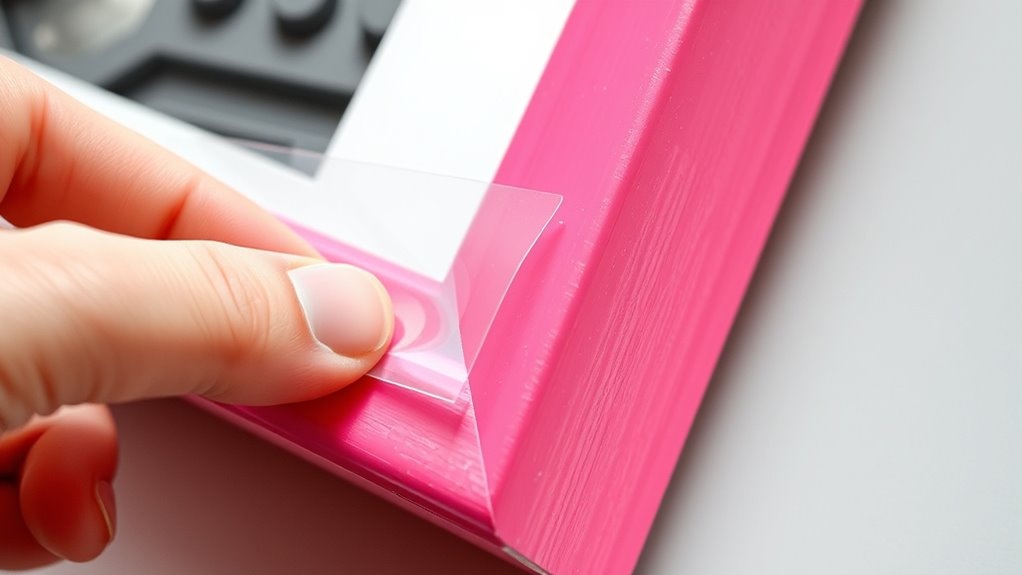
When scratches appear on your frame, quick and effective touch-up techniques can restore its appearance without the need for professional help. First, identify your frame material to choose the right paint and guarantee compatibility. Then, clean the scratched area thoroughly to remove dirt and grease. Next, follow these steps:
- Select a paint that matches your frame’s color and finish, verifying paint compatibility.
- Use a fine brush or toothpick to carefully apply the touch-up paint to the scratch, avoiding over-application.
- Allow the paint to dry completely before gently sanding with a fine grit if needed for a smooth finish.
These simple steps can help you conceal scratches effectively, keeping your frame looking fresh and protected.
Preventive Measures for Daily Riding or Use
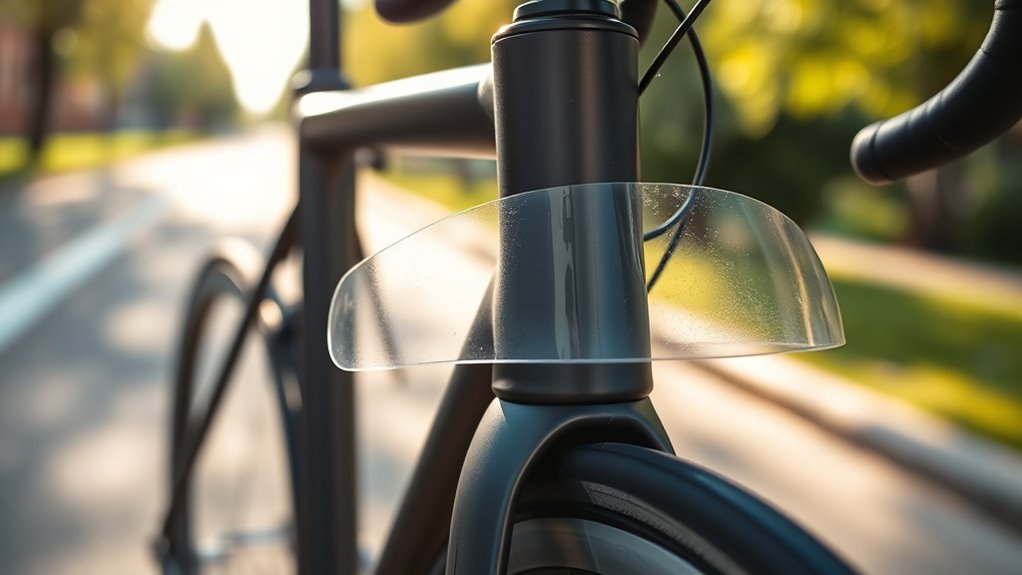
Since daily riding exposes your frame to constant wear and environmental factors, implementing preventive measures is essential to protect its surface. Knowing your frame material helps you choose the right protective options; for example, carbon frames may require specific clear coatings, while aluminum benefits from durable protective film. Regularly cleaning and inspecting your bike keeps dirt and debris from causing scratches, preserving both function and aesthetic enhancement. Applying protective tape or clear film in high-impact areas creates a barrier against scratches and chips. Using mudguards and frame guards also helps minimize damage from mud and stones. These measures not only extend your bike’s lifespan but also maintain its appearance, ensuring your frame remains scratch-free and visually appealing during daily use.
Frequently Asked Questions
Can Protective Films Be Removed Without Damaging the Paint?
You can remove protective films without damaging the paint if you do it carefully. To avoid adhesive residue, peel the film slowly at a sharp, low angle. Keep in mind that film durability varies, so some films may be easier to remove than others. If you notice any sticky residue, use a gentle solvent like isopropyl alcohol. Patience and proper techniques guarantee your paint stays scratch-free and looks great.
What Are the Best Storage Conditions to Prevent Frame Scratches?
Imagine your frame nestled in a cozy, protected haven. To prevent scratches, keep your frame material in a stable storage environment—avoid humid, dusty, or extreme temperature areas. Store it upright or flat with soft padding, like a gentle cloud cradling it. This careful approach shields your artwork from accidental bumps or abrasions, ensuring it remains pristine and vibrant, just like a treasured masterpiece resting safely in its perfect sanctuary.
How Often Should Protective Coatings Be Reapplied?
You should reapply protective coatings based on their application frequency and coating durability. Typically, check every year or so, especially if you notice signs of wear or scratches. High-quality coatings last longer, but environmental factors like sunlight and moisture can reduce their lifespan. Regular inspections help you determine when to recoat, ensuring your frame stays scratch-free and well-protected. Proper maintenance keeps your paint looking fresh and damage-free for years.
Are There Eco-Friendly Options for Frame Protection?
Think of your bike’s frame as a garden needing gentle care. You can choose eco-friendly options like biodegradable coatings or plant-based protectants, which act like nurturing soil, safeguarding your paint without harm to nature. These alternatives provide effective protection while being kind to the environment. By opting for biodegradable and plant-based coatings, you guarantee your ride stays pristine, and Mother Earth stays healthy.
Will Protective Films Affect the Frame’S Appearance or Resale Value?
Protective films may slightly affect your frame’s aesthetic impact, giving it a subtle sheen or texture change. However, if you choose clear, high-quality films, the impact is minimal. When considering resale, these films can actually preserve your frame’s condition, potentially boosting its resale value. Just verify you remove or replace the film if it becomes damaged or faded, so your frame remains attractive and maintains its appeal for future buyers.
Conclusion
Now, with your frame protected and your skills sharpened, you can ride confidently, knowing scratches won’t steal your pride. While prevention keeps your paint pristine, occasional touch-ups restore it, blending repair with resilience. Embrace these DIY techniques—because a well-maintained frame isn’t just protected from damage, it’s a monument to your care. Ultimately, safeguarding your bike balances between vigilance and touch-up, ensuring every ride remains smooth and your frame stays beautiful, scratch-free, and ready for the road ahead.