To ride more comfortably on long descents, guarantee your bike fits well, with saddle height and handlebar position optimized for comfort and control. Keep your body relaxed, with elbows slightly bent and weight evenly distributed, and lean forward from your hips. Maintain a steady, alert mindset, anticipating terrain changes and adjusting your body position accordingly. Prioritize proper nutrition and hydration to stay energized. Keep exploring these tips to discover even more ways to improve your descent experience.

Get sports gear delivered free with Prime
- Fast, free delivery on millions of items
- Prime Video, Amazon Music and more included
- Member-only deals all year
Key Takeaways
- Ensure your bike is properly fitted, with saddle height and handlebar position optimized for comfort and control.
- Maintain a relaxed, slightly forward body position with elbows bent to absorb shocks and reduce fatigue.
- Keep hydration and energy levels steady by eating and drinking regularly during the descent.
- Anticipate terrain changes and adjust your body position accordingly to stay balanced and confident.
- Stay alert and mindful of obstacles, maintaining a steady posture to enhance control and reduce strain.
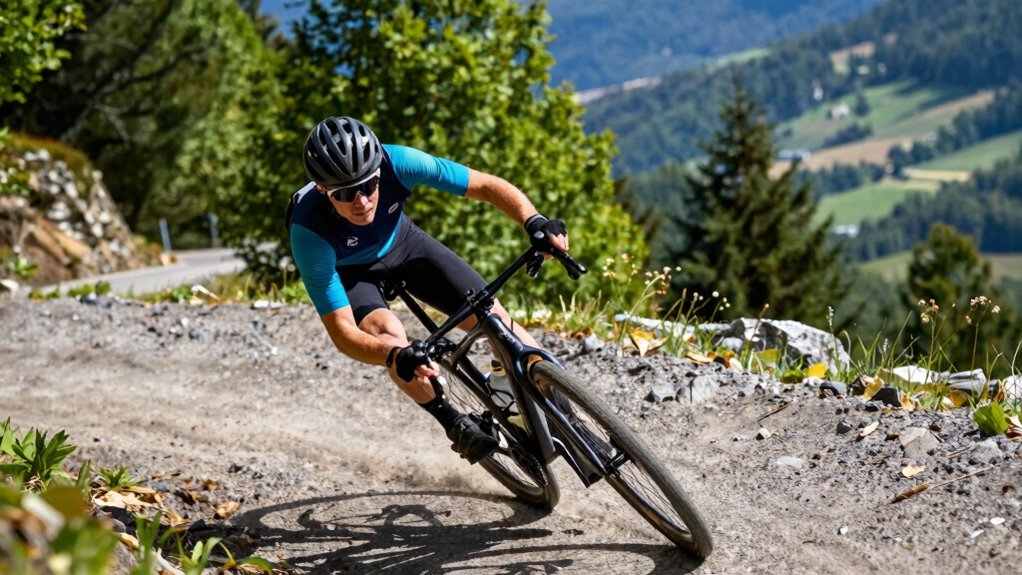
Long descents can be exhilarating, but they also pose challenges for maintaining comfort and control. When you’re flying downhill, your body endures rapid shifts in position and increased impact forces, which can lead to fatigue and discomfort if you’re not prepared. To keep yourself steady and comfortable, focusing on bike ergonomics is essential. Proper bike setup ensures your riding position minimizes strain on your hands, back, and neck. Adjust your saddle height so that your leg has a slight bend at the bottom of the pedal stroke, and make sure your handlebars are positioned to keep your wrists straight and shoulders relaxed. A well-fitted bike reduces unnecessary movement, helping you stay in control and reducing fatigue over long descents. Additionally, paying attention to your bike ergonomics can help prevent injuries and improve your overall riding experience. Being aware of your body position and making small adjustments can significantly enhance comfort and control during challenging descents.
Proper bike fit and ergonomic setup enhance comfort and control during long downhill descents.
Alongside ergonomic adjustments, paying attention to your nutrition strategies can make a significant difference. As you ride downhill, your body still burns calories and loses fluids, so maintaining proper fueling is key to staying comfortable. Before your descent, ensure you’ve eaten a balanced meal rich in carbohydrates, which provide quick energy. During the ride, keep a steady intake of snacks like energy gels, bars, or bananas to prevent energy dips that can cause fatigue and reduce your control. Hydration is equally critical; sip water regularly to replace fluids lost through sweat. Dehydration can lead to cramps, dizziness, and decreased focus, all of which compromise your ability to handle long descents smoothly.
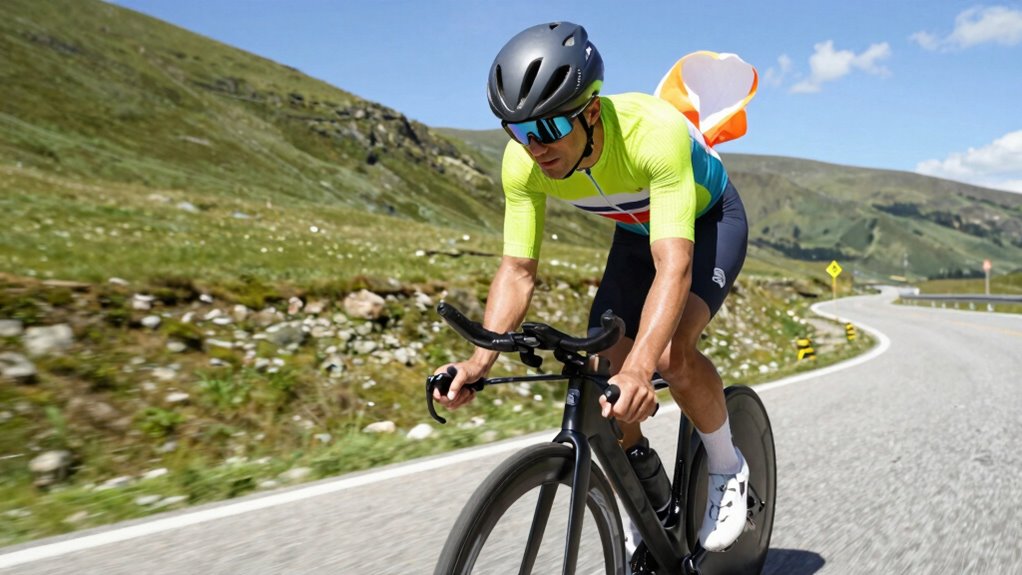
Your body position also plays a role in comfort and control. Keep your elbows slightly bent and relaxed, allowing your arms to act as shock absorbers. Lean forward slightly from the hips, distributing your weight evenly between your hands and saddle. This position not only improves aerodynamics but also reduces strain on your upper body, letting you respond more effectively to terrain changes. As you descend, avoid gripping the handlebars too tightly; a relaxed grip prevents fatigue and gives you better feedback from the road.
Finally, practice mindfulness and anticipate the descent. Stay alert to upcoming turns, rough patches, or loose gravel, which require precise control. Combining good bike ergonomics with solid nutrition strategies ensures you’re physically prepared, while your relaxed riding posture and awareness keep you comfortable and confident at high speeds. With these habits, long descents become not just thrilling but also manageable, allowing you to enjoy the ride without unnecessary discomfort or fatigue.
As an affiliate, we earn on qualifying purchases.
Frequently Asked Questions
What Gear Should I Use for Steep Descents?
For steep descents, you should shift into a lower gear to maintain control and reduce strain on your bike maintenance. Keep your hands on the brake levers, and use your riding technique to stay balanced and centered. Avoid over-shifting or riding in too high a gear, which can cause fatigue or loss of control. Proper gear choice and smooth shifting help you descend safely and comfortably, especially on challenging slopes.
How Can I Prevent Brake Fatigue on Long Descents?
To prevent brake fatigue on long descents, you should apply controlled, intermittent braking instead of constant pressure, allowing your brakes to cool and avoid overheating. Regular bike maintenance guarantees your brake components work efficiently. Stay hydrated by maintaining proper hydration strategies; dehydration can lead to fatigue and reduced focus, increasing your risk. Remember to check your brake pads and fluid levels before long rides, and take periodic breaks to cool down your brakes.
What’s the Optimal Body Position for Control and Comfort?
To maintain control and comfort on long descents, focus on posture adjustments and hand positioning. Keep your body centered over the bike, slightly flexing your elbows and knees for shock absorption. Place your hands on the drops or hoods, depending on the terrain, to enhance stability and braking control. Avoid leaning too far back or forward, and stay relaxed to reduce fatigue and maintain better balance throughout the descent.
How Do I Handle Unexpected Obstacles During a Descent?
When unexpected obstacles appear during a descent, stay calm and maintain terrain awareness. Quickly scan ahead to identify the obstacle and assess its size and position. Use controlled, smooth movements to navigate obstacle navigation, avoiding sudden braking or steering. Shift your weight slightly back for stability, and gently steer around the obstacle if possible. Staying alert and responsive guarantees you handle surprises safely, keeping your descent smooth and enjoyable.
What Should I Do if I Feel Overwhelmed or Anxious?
When you feel overwhelmed or anxious, take a deep breath, grounding yourself with mental strategies like positive self-talk or visualization. Focus on your breathing techniques—slow, steady inhales and exhales—to calm your nerves. Remember, riding is as much mental as physical. By staying present and controlling your breath, you’ll regain confidence, turning that mountain of anxiety into a manageable hill, making your descent smoother and more enjoyable.
Conclusion
As you glide down the mountain, feel the cool breeze against your face and the steady rhythm of your breathing. Trust your brakes, stay loose, and embrace the thrill of the descent. With each smooth turn and controlled speed, you’ll find a dance with gravity that makes the journey not just about reaching the bottom, but savoring every exhilarating moment. Ride confidently, and let the mountain’s beauty inspire a ride as comfortable as it is unforgettable.
NFL season / tailgating Picks
team gear
As an affiliate, we earn on qualifying purchases.