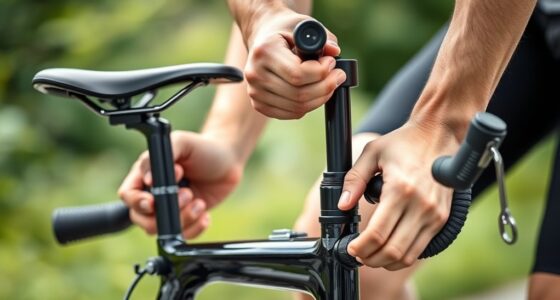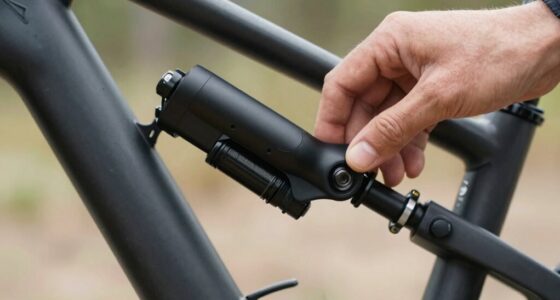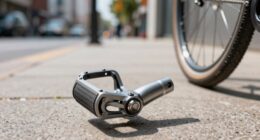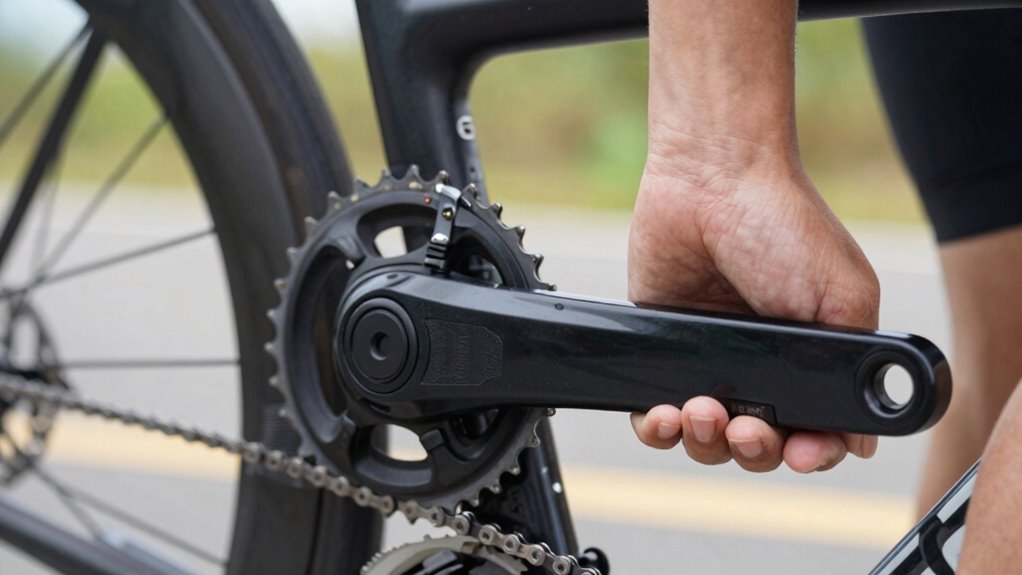

To choose a better power meter, consider your riding style and training goals. If you’re casual, a replaceable coin cell or hub-based meter may suit you, while competitive riders might prefer pedal or crank-based options for higher accuracy. Think about compatibility with your bike and devices, and how easy it is to install and maintain. Budget also plays a role—more advanced models cost more but offer better reliability. Keep these factors in mind, and you’ll find a device that fits your needs perfectly.
Key Takeaways
- Match the power meter type (pedal, crank, hub) to your riding style for optimal convenience and accuracy.
- Consider battery life and ease of maintenance based on your training frequency and ride duration.
- Ensure compatibility with your bike, cycling computer, and training platforms for seamless data integration.
- Prioritize accuracy and reliability to get consistent metrics essential for training and performance tracking.
- Balance features and budget to select a power meter that meets your riding needs without overspending.

Selecting the right power meter can markedly improve your cycling performance by providing accurate, real-time data on your power output. But choosing the best one for your riding style involves more than just looking at numbers. You need to consider how well it fits your bike, your riding habits, and how it integrates with your existing gear. One of the primary concerns is battery life. Power meters with longer-lasting batteries reduce the hassle of frequent recharges or replacements, especially if you ride daily or do long-distance events. Some models offer rechargeable batteries, which can be more cost-effective and environmentally friendly over time, while others use replaceable coin cells that last for months. Knowing how often you’ll need to swap or recharge batteries helps you avoid interruptions during crucial training sessions or races.
Choosing a power meter with long battery life ensures reliable data during training and races.
Compatibility issues are another critical factor. Not all power meters work seamlessly with every bike or head unit. For example, if you ride a specific brand of bike or use particular cycling computers, you’ll want to verify whether the power meter is compatible. Some models connect via ANT+ or Bluetooth, and you’ll need to ensure your devices support these protocols. Incompatibility can lead to unreliable data, disconnections, or the need for additional adapters, which complicate setup and use. Before making a purchase, check the manufacturer’s compatibility list and confirm that the power meter will integrate smoothly with your existing cycling computer, smartphone app, or training platform. Additionally, understanding the accuracy and data reliability of different models can help ensure you get consistent, trustworthy metrics to inform your training decisions. It’s also helpful to consider the ease of installation and maintenance, especially if you prefer a setup that requires minimal technical skills. Moreover, considering the sensor technology used by the power meter can influence how well it performs under various riding conditions and temperatures. Being aware of the manufacturer’s reputation for quality and customer support can also save you time and frustration should issues arise.
Furthermore, evaluating the calibration process of a power meter can impact how often you need to perform adjustments to maintain precision. Beyond battery life and compatibility, think about the type of power meter that suits your riding style. Pedal-based meters are great if you want easy installation and removal, plus the ability to switch between bikes effortlessly. Crank arm or spindle-mounted meters tend to be more accurate and durable, ideal for serious training or racing. Hub-based meters are less intrusive but often come at a higher price and may require more maintenance. Your riding style—whether you’re a casual rider, a serious competitor, or a dedicated trainer—dictates which setup offers the best balance of convenience and precision.
Lastly, consider the accuracy and data reliability of the power meter. Some models provide more consistent readings across different conditions and riding styles. If you’re focusing on detailed training metrics, investing in a high-quality device can make a significant difference. Remember, the best power meter isn’t just the one with the most features but the one that aligns with your riding needs, setup preferences, and budget. Taking the time to evaluate battery life, compatibility issues, and overall fit will ensure you select a device that enhances your performance without added frustration.
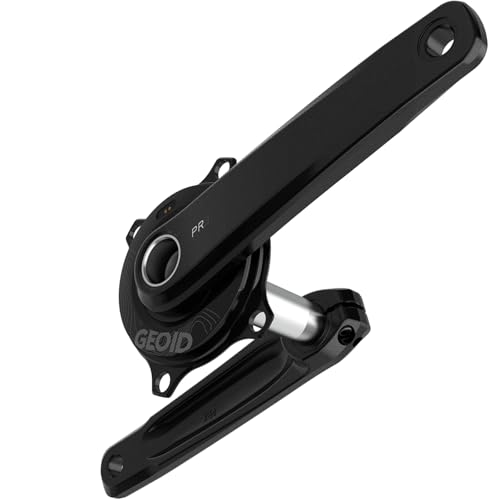
GEOID PM500 Bike Power Meter Crankset, ±1.5% Accuracy, Lightweight 680g, 300h Long Battery Life, 110BCD, Bluetooth & ANT+, IPX7 Waterproof Cycling Power Meter for Road Bikes – 165mm
- Power Accuracy: ±1.5% reliable data accuracy
- Lightweight Material: 680g aluminum crankset
- Long Battery Life: 300 hours per charge
As an affiliate, we earn on qualifying purchases.
As an affiliate, we earn on qualifying purchases.
Frequently Asked Questions
Can I Upgrade My Power Meter Later if Needed?
Yes, you can upgrade your power meter later if needed. When doing so, consider factors like battery life and data connectivity to guarantee compatibility with your existing setup. Upgrading allows you to access newer features or more accurate data, enhancing your riding experience. Just check if the new power meter integrates seamlessly with your bike’s electronics and apps, making the shift smooth and effective.
How Does Power Accuracy Vary Between Models?
Imagine your power data as a steady heartbeat—accuracy varies between models due to calibration consistency and data transmission quality. Some meters stay true over time, providing reliable readings, while others might drift with vibrations or temperature changes. Always check reviews on calibration stability and how smoothly data transmits to your device. This guarantees your training insights are precise, helping you hit your goals with confidence.
Are There Compatibility Issues With Certain Bike Types?
Yes, some power meters have compatibility issues with certain bike types. You need to check bike compatibility, especially frame and crank types, to guarantee proper sensor integration. For example, some crank-based meters don’t work well with square-taper bottom brackets, while hub-based models might not fit certain wheel sizes. Always verify compatibility details before purchasing, so your sensor integration is seamless and accurate across your bike.
How Does Price Correlate With Features and Reliability?
You might think higher price guarantees better features and reliability, but that’s not always true. Price comparison shows some budget-friendly power meters offer solid accuracy and durability, while expensive models sometimes include extra features with marginal benefits. Often, you’ll face feature trade-offs; more advanced options may sacrifice simplicity or reliability. So, focus on your specific needs and budget rather than assuming cost equals quality, ensuring you pick the best meter for your riding style.
Is a Power Meter Necessary for Casual Riding?
For casual riding, a power meter isn’t really a power necessity. If you’re riding for fun and fitness without focusing on detailed metrics, you can enjoy your rides without one. However, if you’re interested in tracking your performance and improving gradually, investing in a power meter can add value. Ultimately, it depends on your riding goals—if casual riding is your focus, it’s not essential.
Conclusion
Remember, a power meter is only as good as how well it suits your riding style. Take the time to assess your needs, compare features, and trust your instincts. Don’t just chase the latest tech—choose what genuinely helps you improve. As the saying goes, “The right tool is worth a thousand words.” With the right power meter in hand, you’ll ride smarter, push harder, and reach your goals faster.