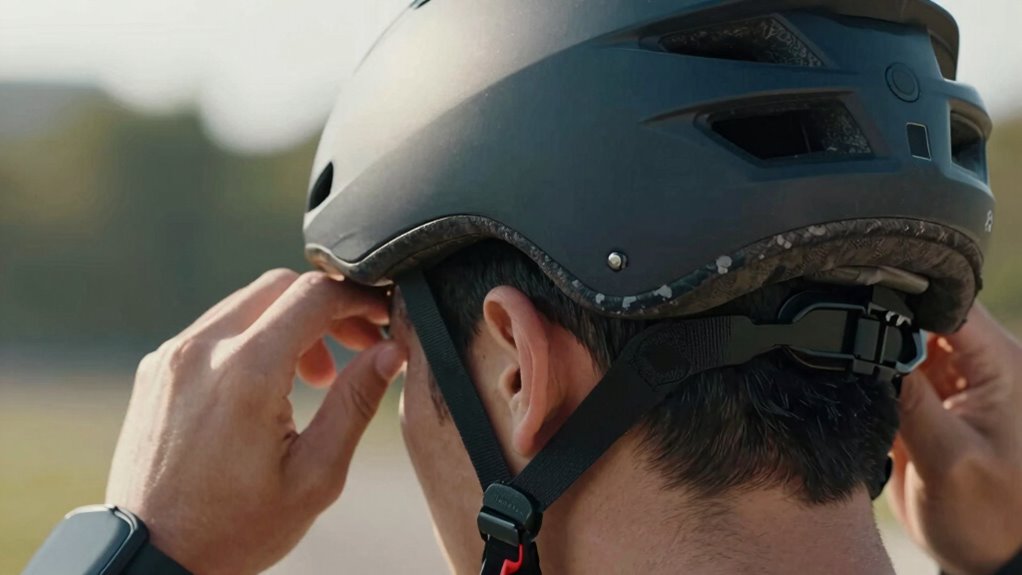

To configure your helmet for safety and comfort, start by measuring your head with a soft tape just above your eyebrows and ears, then choose a size that fits snugly without being tight. Position the helmet level on your head, covering your forehead, and adjust straps so they form a ‘V’ under your ears. Use any dial-fit systems or padding to fine-tune the fit, ensuring it stays secure without causing discomfort. Going over these steps carefully helps keep your helmet safe and super comfortable—keep exploring to learn more.
Prime for Young Adults — start your free trial
Fast free delivery, streaming and member deals for eligible 18–24 year olds.
As an affiliate, we earn on qualifying purchases.
Key Takeaways
- Measure head circumference accurately above eyebrows and ears to select the correct helmet size for optimal fit.
- Position the helmet level on the head, covering the forehead, and ensure it sits snugly without causing discomfort.
- Adjust straps to form a secure ‘V’ shape under ears and tighten the dial-fit system for stability during movement.
- Add or remove padding inserts to eliminate gaps and enhance comfort without compromising safety.
- Regularly check and readjust the helmet fit over time to maintain safety and comfort during different activities.
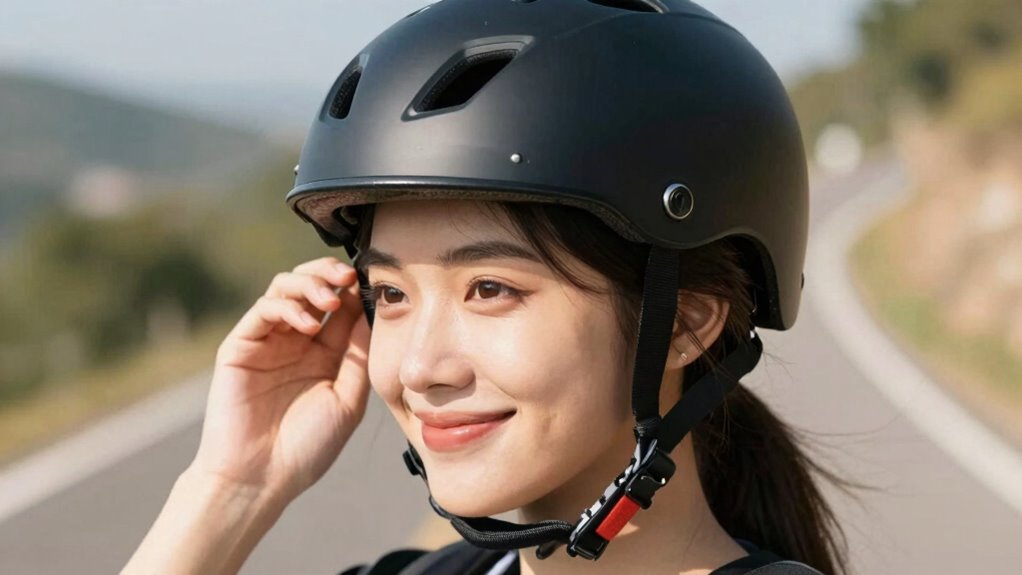
Getting your helmet to fit properly is essential for both comfort and safety. When your helmet fits well, it provides maximum protection in case of a fall or collision, ensuring that your head is shielded effectively. Proper fit is a key part of helmet safety, so taking the time to adjust your helmet correctly is worth it. There are many helmet styles available, each designed for different activities like biking, skateboarding, or motorcycling. Choosing the right style is important, but equally important is ensuring that whichever helmet you select fits securely and comfortably on your head.
A proper helmet fit ensures safety and comfort across all activities.
Start by measuring your head accurately. Use a soft tape measure and wrap it around the widest part of your head, usually just above your eyebrows and ears. This measurement will guide you in choosing a helmet size that’s close to your head’s dimensions. Most helmets come in standard sizes like small, medium, or large, but sizes can vary between brands. Once you have your measurement, pick a helmet style that suits your activity and fits within those size ranges. Remember, a helmet that’s too tight can cause discomfort and headaches, while one that’s too loose won’t provide proper protection.
When you try on a helmet, ensure it sits level on your head, covering your forehead without tilting back or forward. The helmet should fit snugly without feeling constrictive. You should feel firm contact around your entire head, but not so tight that it leaves marks or causes pain. Many helmets feature adjustable straps and a dial-fit system at the back. Use these tools to fine-tune the fit. Adjust the straps so they form a ‘V’ shape under your ears when buckled, and tighten or loosen the dial to achieve a secure but comfortable fit. If your helmet has padding inserts, add or remove them to improve the fit and prevent any gaps. Proper fit is essential for both protection and comfort, as it ensures the helmet stays in place during movement.
Check the helmet’s stability by gently shaking your head from side to side and up and down. It shouldn’t shift excessively. If it does, re-adjust the straps or the fit system. Remember that helmet safety depends on a proper fit, but comfort is equally important. A well-fitted helmet that causes discomfort might tempt you to remove it prematurely, which defeats its purpose. Keep in mind that helmet styles vary not just in appearance but also in fit characteristics. Some helmets, like skate or BMX helmets, tend to fit more snugly, while motorcycle helmets often have more padding and adjustable features.
adjustable bicycle helmet with dial fit
As an affiliate, we earn on qualifying purchases.
As an affiliate, we earn on qualifying purchases.
Frequently Asked Questions
How Often Should I Replace My Helmet for Safety?
You should replace your helmet every 5 to 10 years, depending on helmet maintenance and safety regulations. Even if it looks fine, materials can degrade over time, reducing protection. After a significant impact or crash, replace it immediately, as internal damage may be hidden. Regularly check for cracks, dents, or worn straps to guarantee safety. Staying current with safety regulations helps you know when it’s time to upgrade your helmet for maximum protection.
Can Helmet Padding Be Adjusted for Better Comfort?
Yes, you can adjust helmet padding for better comfort. Most helmets offer fit customization through removable or adjustable padding, allowing you to customize the fit to your head shape. Carefully add or remove padding layers to achieve a snug but comfortable feel, ensuring the helmet stays secure without causing pressure points. Always check that the padding doesn’t compromise safety, and test the fit after adjustments before riding.
What Are Signs My Helmet No Longer Fits Properly?
If your helmet no longer fits properly, don’t ignore the signs. You might notice discomfort, a loose chinstrap, or it shifts easily during activity. If it feels too heavy or presses too tight, it’s time to reevaluate. Remember, a helmet that doesn’t fit well is like a square peg in a round hole—it won’t keep you safe. Confirm the chinstrap is snug but comfortable and that the weight feels balanced.
Do Different Helmet Brands Have Different Sizing Standards?
Different helmet brands do have different sizing standards, so it’s important to verify each brand’s sizing chart before purchasing. You’ll find variations in helmet sizing, which can affect comfort and safety. When comparing brands, don’t assume your usual size fits all. Try on helmets or measure your head accurately, then compare your measurements to each brand’s sizing guide for the best fit. This ensures your helmet is both safe and comfortable.
How Do Temperature Changes Affect Helmet Fit?
Temperature changes can affect your helmet fit because the helmet material may expand or contract slightly with heat or cold. When it’s hot, your helmet might feel looser due to expansion, especially around areas with less internal ventilation. Conversely, cold temperatures can make the helmet feel tighter. To maintain a safe and comfortable fit, make certain your helmet’s internal ventilation system is effective and consider trying it on in different temperatures.
Conclusion
Remember, a well-fitted helmet isn’t just about comfort; it’s your silent guardian on every ride. When you take the time to adjust it properly, you’re gently ensuring your safety without saying a word. Trust that a little effort now keeps the unexpected at bay, allowing you to enjoy your journey fully. Sometimes, the smallest adjustments carry the greatest peace of mind—so wear your helmet with care, and let confidence be your quiet companion.
NFL season / tailgating Picks
team gear
As an affiliate, we earn on qualifying purchases.