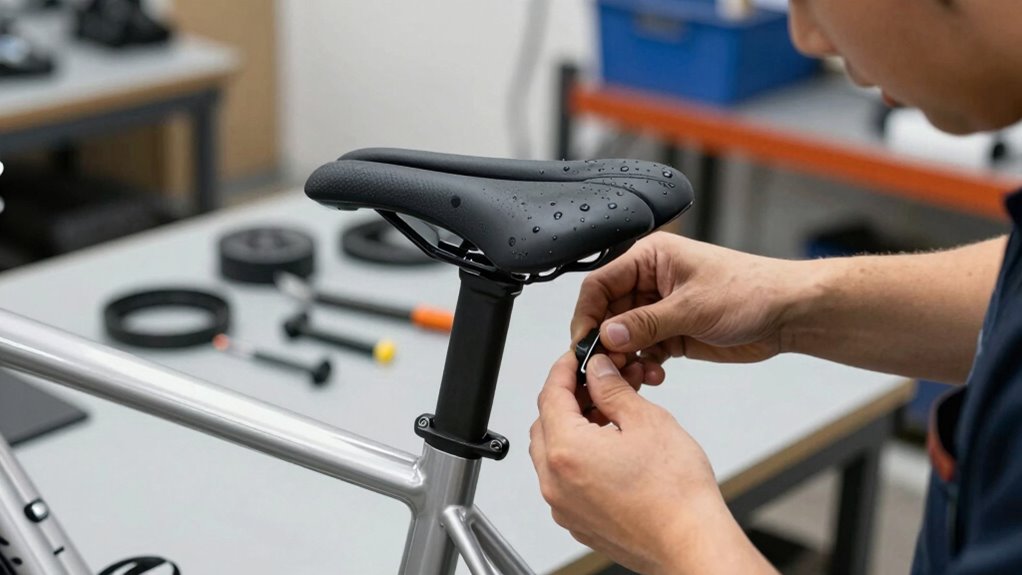

To install a new saddle and fix its tilt, first loosen the saddle clamp and position the saddle securely on the rails. Tighten the clamp enough to hold it firmly without damaging the rails. Adjust the saddle height, fore-aft, and tilt—preferably level or slightly nose-down—by small increments. Tighten all bolts securely once you find the most comfortable position. If you keep exploring, you’ll discover how to fine-tune for perfect comfort and support.
Open a free Amazon Business account
Business pricing, bulk buying and tax-exempt orders.
As an affiliate, we earn on qualifying purchases.
Key Takeaways
- Attach the saddle securely to the seat post, tightening the clamp enough to prevent movement without damaging the rails.
- Position the saddle at the desired height and fore-aft alignment before adjusting its tilt.
- Tilt the saddle slightly downward or keep it level, testing comfort over short rides to find the optimal angle.
- Make small, incremental tilt adjustments, then test each position to identify the most comfortable and supportive angle.
- Once satisfied, tighten all bolts securely and regularly check the saddle’s stability during rides.
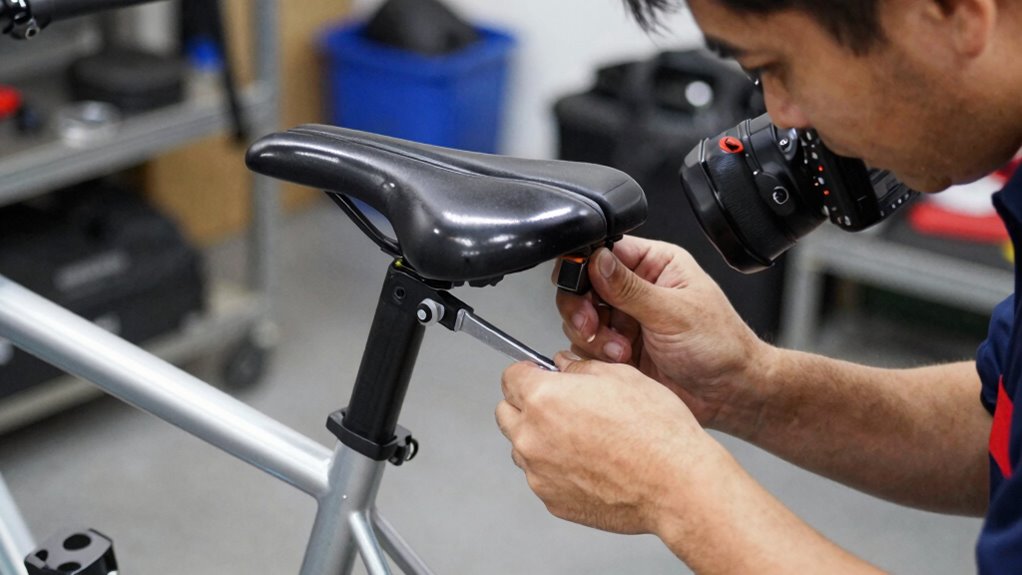
Installing a saddle properly and fixing its tilt are vital steps to guarantee a comfortable and efficient ride. When you choose a new saddle, you want to prioritize saddle comfort because it directly impacts how long and how well you can ride without discomfort. A well-fitted saddle can prevent chafing, numbness, and soreness, making your cycling experience more enjoyable. The key to achieving this starts with proper bike fitting. If your bike isn’t correctly fitted to your body, even the best saddle won’t provide the comfort and support you need. Take the time to adjust the saddle height, tilt, and fore-aft position to match your riding style and body dimensions. This ensures that your hips, knees, and back are in proper alignment, reducing strain and maximizing efficiency.
When installing the saddle, begin by ensuring it’s securely attached to the seat post. Tighten the clamp enough to prevent any movement during riding but avoid overtightening, which can damage the rails or distort the saddle shape. Once mounted, it’s time to focus on the tilt. The saddle should typically be level or slightly nose-down, but this depends on your personal comfort. If you notice numbness or pressure on sensitive areas, you might need to make small adjustments. A slight tilt downward can alleviate pressure, but too much downward tilt can cause you to slide forward, reducing saddle comfort and control. Conversely, tilting the saddle upward may lead to discomfort in your lower back or hamstrings. Additionally, understanding the role of saddle geometry can help you select a saddle that matches your riding needs and anatomy. Adjustments should be made incrementally, testing each position on a short ride. Pay attention to how your body feels—any pinching, numbness, or pain indicates you need to tweak the saddle angle. Remember, bike fitting plays an important role here: if your saddle tilt isn’t aligned properly with your riding posture, you won’t achieve ideal saddle comfort. For some riders, a slight tilt adjustment makes a significant difference, so don’t hesitate to experiment within small ranges. Once you’ve found a position that feels natural and comfortable, tighten all bolts securely to maintain this setting.
As an affiliate, we earn on qualifying purchases.
Frequently Asked Questions
How Often Should I Replace My Bike Saddle?
You should replace your bike saddle when it shows significant wear or discomfort, usually every 1 to 3 years, depending on saddle material and frequency of riding. If the saddle becomes cracked or causes pain, it’s time for a new one. Also, check your saddle height regularly; an improper fit can cause discomfort or injury. Upgrading guarantees better comfort and performance, especially if your current saddle no longer supports your riding style.
Can Saddle Tilt Affect Riding Comfort Significantly?
A slight saddle tilt can greatly impact your riding comfort. For example, if your saddle tilts forward, it may cause you to shift your pelvis, leading to discomfort and poor riding posture correction. Conversely, a level or slightly tilted saddle promotes better weight distribution, reducing fatigue. The saddle tilt impact is significant, so adjusting it properly ensures you stay comfortable and maintain ideal riding posture during longer rides.
What Tools Are Needed for Saddle Installation?
To install a new saddle, you’ll need basic tools like an Allen wrench or hex key, and possibly a screwdriver. Make sure to check your saddle’s materials and verify seat post compatibility to avoid issues. You might also need a torque wrench to tighten bolts properly. These tools help secure your saddle firmly, providing comfort and safety during rides while preventing tilt problems.
Is It Necessary to Lubricate Saddle Rails Before Installation?
A little prep can go a long way, so yes, lubricating saddle rails helps guarantee smooth installation. Depending on your saddle materials, a light application of grease or carbon paste prevents sticking and facilitates saddle height adjustment. This simple step reduces friction, making it easier to fine-tune your saddle position and tilt, ultimately providing a more comfortable and efficient ride. Just don’t overdo it—less is often more.
How Can I Tell if My Saddle Is Properly Aligned?
You can tell if your saddle is properly aligned by checking if your saddle height feels comfortable and if you’re experiencing saddle pain. When aligned correctly, your hips stay level, and pedaling feels smooth. Adjust the saddle tilt so it’s level or slightly nose-down, depending on comfort. Also, make certain your saddle is centered over the seat post. Proper alignment reduces saddle pain and improves your riding efficiency.
Conclusion
Now that you’ve installed your new saddle and corrected the tilt, you’re ready to ride with confidence. Think of your bike as a finely tuned instrument—every part in harmony makes for a smoother journey. Just like a well-placed saddle, a little attention and adjustment can make all the difference. Keep checking your saddle’s position regularly, and enjoy riding comfortably, like gliding effortlessly on a calm, open road. Happy cycling!
Fall Picks
fall essentials
As an affiliate, we earn on qualifying purchases.