To pack for an overnight bikepacking trip, choose lightweight, versatile gear like moisture-wicking clothing, a compact tent or bivvy, and high-energy snacks. Map out your route to identify water sources and hazards, and organize your gear in waterproof bags, with essentials easily accessible. Prioritize safety, stability, and comfort while keeping weight minimal. For detailed tips on planning and packing efficiently, keep exploring to make certain you’re fully prepared for your adventure.
Key Takeaways
- Select lightweight, multi-purpose gear including a compact tent, sleeping bag, and sleeping pad to save space and weight.
- Organize gear using waterproof bags, placing essentials like snacks, water, and navigation tools in quick-access compartments.
- Pack moisture-wicking clothing, waterproof jacket, and extra gloves or socks for versatile weather protection.
- Carry navigation devices, backup maps, and illumination tools to ensure safe orientation and visibility.
- Include high-energy snacks, sufficient water, a basic first aid kit, and bike repair tools for emergencies.
Planning an overnight bikepacking trip can be both exciting and challenging, but with the right packing strategy, you’ll be prepared for a smooth adventure. The key lies in choosing the right bikepacking gear and effective route planning. Before you start packing, it’s essential to determine your route because this influences what gear you’ll need and how much space you have. Map out your trail, check for water sources, campsites, and potential hazards. Knowing your route helps you decide what essentials are a must and what can be left behind, guaranteeing you’re not overloading your bike while still being prepared.
Proper route planning ensures you pack only essentials and avoid overloading on your bikepacking trip.
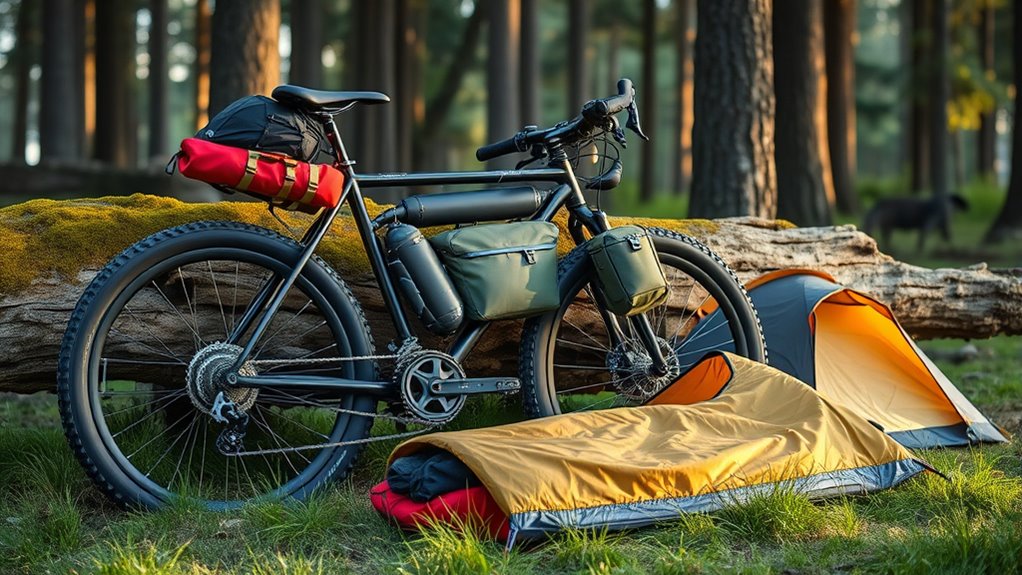
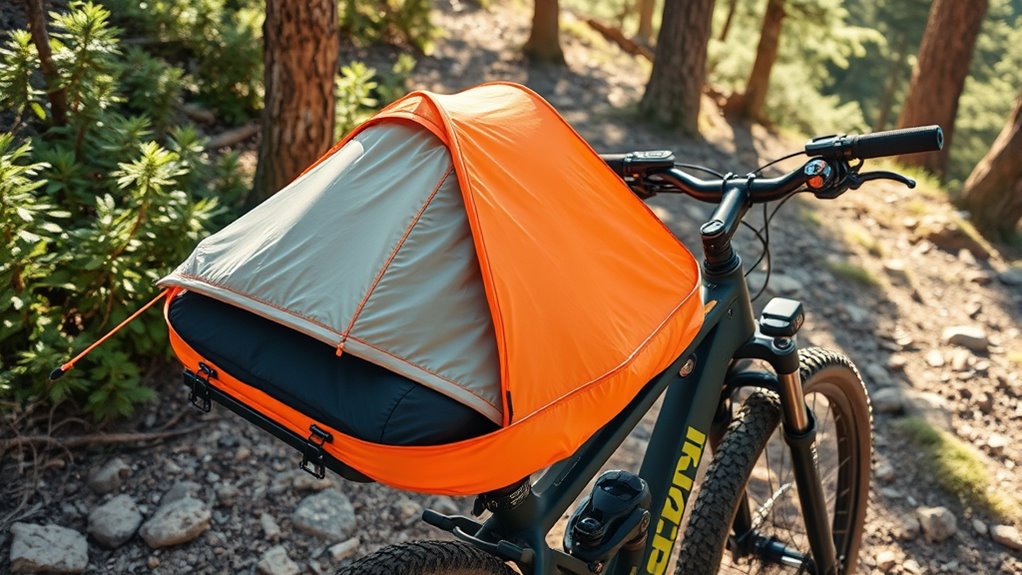
When it comes to bikepacking gear, focus on lightweight, multi-purpose items. Your bike itself should be equipped with reliable racks or bags designed specifically for bikepacking. These gear systems distribute weight evenly and keep your load balanced. Pack a lightweight tent or bivvy if camping overnight, along with a sleeping bag suitable for the expected temperatures. Don’t forget a sleeping pad for comfort and insulation. Clothing should be versatile: moisture-wicking layers, a waterproof jacket, and extra gloves or socks if the weather might turn cold. Remember, every ounce counts, so prioritize quality and compactness over bulk.
Navigation tools are essential—bring a GPS device or smartphone with offline maps, plus a backup compass and paper map. This assures you won’t get lost, especially in remote areas. Illumination is another must-have; pack a headlamp or bike lights with extra batteries. For food and hydration, carry high-energy snacks, a water filter or purification tablets, and enough water bottles or a hydration bladder to sustain you during your ride. Planning for emergencies is crucial; include a basic first aid kit, a multi-tool, and a small repair kit for your bike. Spare tubes, a pump, and tire levers will save you if you get a flat. Additionally, considering the importance of proper lighting setup can significantly improve your safety and visibility on the trail.
Packing efficiently requires careful organization. Use waterproof bags or dry sacks to keep your gear dry and accessible. Pack heavier items low and toward the center of your bike to maintain stability. Consider what you’ll need quick access to—such as snacks, water, or a rain jacket—and place those items in easily reachable spots. Remember, less is more, so only bring what’s necessary to prevent unnecessary fatigue or imbalance during your ride. With the right gear and route planning, you’ll be well-equipped to face whatever the trail throws your way, making your overnight bikepacking trip enjoyable and stress-free.
Frequently Asked Questions
What’s the Best Way to Prevent Saddle Sores on a Bikepack Trip?
To prevent saddle sores on your bikepack trip, focus on saddle hygiene by cleaning it regularly and keeping the area dry. Use chafing remedies like anti-chafe creams or powders to reduce friction. Make certain your saddle fits properly and wear padded shorts for added comfort. Taking these steps helps minimize chafing and saddle sores, keeping you comfortable and ready to enjoy your ride without discomfort or irritation.
How Do I Choose the Right Bike for Overnight Bikepacking?
You should pick a bike with a sturdy, versatile frame that fits your riding style, ensuring comfort over longer distances. Look for a bike with gear compatibility to handle your gear efficiently, avoiding unnecessary stress. Opt for a lightweight yet durable frame, so you’re not weighed down, and check that it accommodates racks and bags. This choice will keep your adventure smooth, just like a well-matched partner on your journey.
What Are Essential Safety Tips for Solo Bikepacking Overnight?
When solo bikepacking overnight, prioritize your safety by carrying essential safety gear like a helmet, lights, and a first aid kit. Always inform someone about your route and expected return time, and keep emergency contacts handy. Stay aware of your surroundings, avoid risky areas, and trust your instincts. Regularly check your gear and bike to make sure everything’s functional. These steps help keep you safe and prepared for unexpected situations.
How Can I Optimize My Packing to Reduce Weight?
Cutting weight is key, so pack smart with lightweight gear and focus on compact packing. Prioritize multi-purpose items, like a jacket that doubles as a pillow, and choose gear that’s small yet durable. Eliminate unnecessary extras and keep essentials streamlined. By doing this, you’ll carry less, move faster, and enjoy the trip more. Remember, less is more—your ride will be smoother and more enjoyable with minimal baggage.
What Should I Do if I Encounter Bad Weather Unexpectedly?
If you face unexpected bad weather, you should quickly put on your rain gear to stay dry and comfortable. Keep your emergency shelter accessible in case conditions worsen or you need to take shelter. Use your waterproof jacket, pants, and cover for your gear, and find a safe spot if necessary. Staying prepared and adaptable helps you manage surprises and continue your trip safely.
Conclusion
Now that you’ve packed like a pro, you’re all set for your overnight adventure. Remember, simplicity is key—think of it as channeling a pioneer crossing uncharted lands with just what you need. With your gear ready, you’re basically the Indiana Jones of bikepacking, ready to conquer the unknown. So, hit the trail confident, and enjoy the journey—after all, every great explorer started with a well-packed bag and a spirit of adventure.