To plan a route with a cycling GPS, start by inputting your desired parameters like distance, elevation, or scenery preferences. Use the device’s mapping tools to generate tailored routes and set turn-by-turn navigation for guidance. Take advantage of safety features like traffic alerts and hazard notifications, and explore community-shared routes for new adventures. If you’re interested in optimizing your ride and staying safe, there’s more to explore to make your cycling experience even better.
Key Takeaways
- Input your preferred distance, elevation, or scenery to generate a customized cycling route.
- Use turn-by-turn navigation for active guidance throughout your ride.
- Access and share routes within the cycling community to discover new paths.
- Incorporate safety features like hazard alerts and visibility options during planning.
- Analyze past ride data to refine future routes based on performance and preferences.

Ever wondered how to make your cycling routes more efficient and enjoyable? Using a cycling GPS can transform your rides, helping you navigate safely while maximizing your time on the bike. One of the key benefits of a GPS device is its ability to enhance bike safety. Modern GPS units come equipped with features like real-time traffic updates, route alerts, and emergency assistance options, giving you peace of mind as you ride. With these tools at your fingertips, you can avoid hazardous areas, stay aware of upcoming intersections, and quickly find the safest routes through busy streets or unfamiliar neighborhoods.
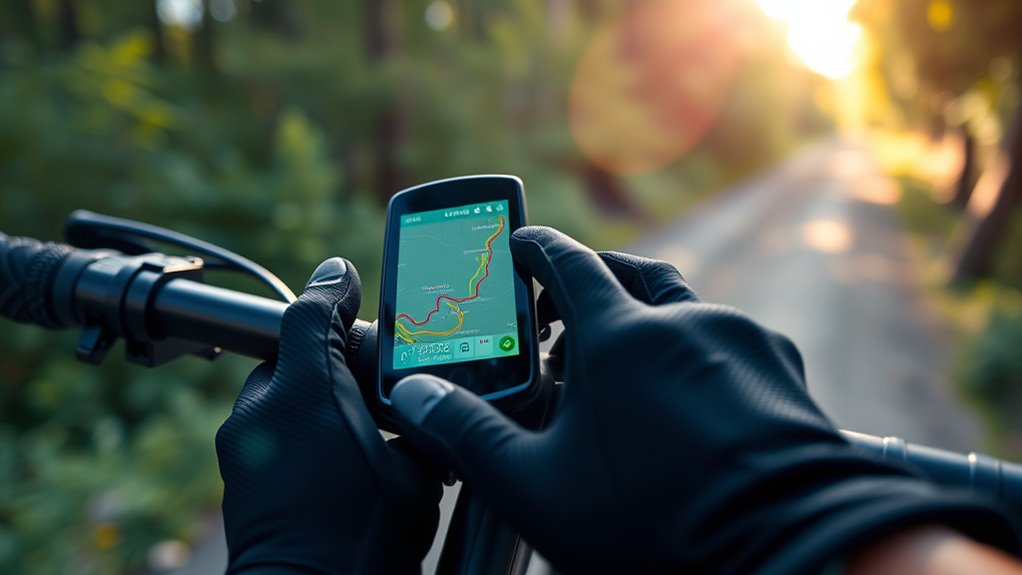
When planning your route with a cycling GPS, you’ll want to explore its various features. Many devices allow you to input your preferred distance, elevation, or scenery preferences, then generate routes tailored to those parameters. This customization guarantees your ride aligns with your fitness level and interests, whether you’re seeking a leisurely cruise or a challenging climb. Additionally, GPS device features such as turn-by-turn navigation keep you on track, reducing the stress of constantly checking maps or risking wrong turns. This active guidance helps you focus on enjoying the ride instead of worrying about navigation.
Another valuable feature is route sharing. With just a few taps, you can send your planned route to a friend or access routes shared by other cyclists. This community aspect can introduce you to new paths and routes you might not discover on your own, broadening your cycling horizons. Plus, many GPS devices track your ride data, including speed, distance, and time, allowing you to analyze your performance and set new goals. These insights can motivate you and help you improve your cycling skills over time.
Furthermore, a GPS device with robust bike safety features often includes built-in lights or visibility alerts, which can be critical during early morning or late evening rides. Some devices even integrate with smartphone apps to provide live location sharing, so friends or family can monitor your progress and ensure you’re safe. This connectivity adds another layer of security, especially when exploring remote or unfamiliar areas.
Ultimately, planning your route with a cycling GPS isn’t just about navigation; it’s about creating a safer, smarter, and more enjoyable cycling experience. By leveraging its features—such as bike safety tools, customizable routes, and performance tracking—you can ride with confidence and discover new paths with ease. Whether you’re commuting, training, or exploring for fun, a well-chosen GPS device helps you make every ride more efficient and enjoyable.
Frequently Asked Questions
Can I Plan Routes Offline With a Cycling GPS?
Yes, you can plan routes offline with a cycling GPS. You just need to guarantee it has offline map storage, so you can access maps without internet. You can customize your routes directly on the device, adjusting paths and waypoints as needed. This way, you’re not dependent on connectivity, and you can confidently navigate even in remote areas by pre-planning your route and storing it offline.
How Do I Update Maps on My Cycling GPS Device?
Ever wondered how to keep your cycling GPS maps current? To update maps, connect your device to Wi-Fi or a computer, then visit the manufacturer’s website or app for the latest map updates. Make sure your GPS is compatible with these updates. Download and install the updates, and your device will automatically incorporate the new maps. This guarantees your routes are accurate and always up-to-date for your rides.
What Features Should I Look for in a Cycling GPS?
When choosing a cycling GPS, look for long cycling battery life to guarantee your device lasts through extended rides. A touchscreen interface makes navigation easier and more intuitive, especially when you’re on the move. Additionally, consider features like detailed mapping, route planning, and real-time tracking to enhance your experience. These features help you stay connected, safe, and confident on your cycling adventures.
Is It Possible to Share Routes Between Devices?
Did you know over 75% of cyclists share routes regularly? Yes, route sharing between devices is feasible, making your rides more social and efficient. Most modern cycling GPS units support device compatibility, allowing you to transfer and share routes seamlessly via Bluetooth, Wi-Fi, or dedicated apps. Check your device’s features to make certain it supports route sharing, so you can easily plan, share, and explore new paths with fellow riders.
How Accurate Are Cycling GPS Devices in Remote Areas?
Cycling GPS devices are quite reliable in remote areas, but their accuracy depends on GPS signal reliability and map accuracy. You might experience some signal loss or slight inaccuracies in very remote regions, especially if there’s dense foliage or rugged terrain. To improve your experience, verify your device’s maps are up-to-date and consider using devices with multi-constellation support, which enhances signal strength and accuracy in challenging environments.
Conclusion
By mastering cycling GPS route planning, you can confidently navigate new terrains and optimize your rides. For instance, imagine mapping a scenic route through winding mountain trails, avoiding busy roads and steep climbs. Using your GPS, you guarantee a smooth, enjoyable ride while discovering hidden gems. With practice, you’ll turn complex terrains into manageable adventures, making every ride safer and more exciting. So, start exploring your options and let your GPS guide you to unforgettable cycling experiences.