
To brake without skidding during an emergency, apply firm yet steady pressure to the brake pedal—avoid pumping it. Keep your steering calm and controlled, resisting sudden movements that could cause loss of traction. Adjust your speed and braking force based on road conditions, especially on wet or slippery surfaces. Remember, understanding how surface types affect your braking performance helps you stay safer; if you continue, you’ll learn more about mastering emergency stops effectively.
Key Takeaways
- Apply firm, steady pressure on the brake pedal to activate ABS and prevent wheel lock-up.
- Avoid pumping the brakes; keep consistent pressure for optimal ABS operation.
- Maintain firm steering control, making gentle adjustments to avoid skidding.
- Reduce speed gradually before emergency braking on slippery or uneven surfaces.
- Increase following distance and adapt braking techniques based on road surface conditions.
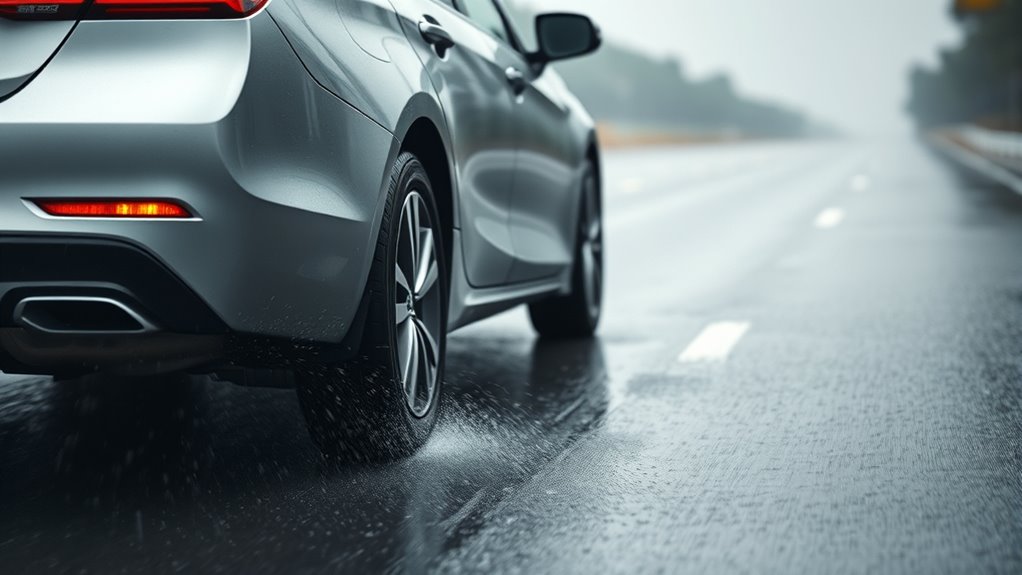
When you need to brake suddenly to avoid a hazard, skidding can compromise your control and increase the risk of an accident. That’s where ABS functionality becomes a vital safety feature. ABS, or Anti-lock Braking System, prevents your wheels from locking up during hard braking, allowing you to maintain steering control even when you’re applying maximum force to the brake pedal. This system detects when a wheel is about to lock and modulates brake pressure accordingly, giving you the ability to steer around obstacles instead of being forced into a straight-line stop. Without ABS, your wheels can lock up easily on slippery or uneven surfaces, causing you to skid and lose directional control, which considerably raises the chance of a crash.
ABS prevents wheel lock-up during hard braking, helping you steer around hazards and avoid skidding.
The effectiveness of ABS depends heavily on road surface effects. Different surfaces react differently under braking pressure. For example, on dry asphalt, ABS works efficiently because the friction between the tires and the road provides enough grip for the system to modulate brake pressure effectively. You’ll notice shorter stopping distances and better stability. Conversely, on wet, icy, or loose gravel surfaces, the benefits of ABS can be less pronounced. Water, ice, and loose gravel reduce traction, making it harder for the system to prevent wheel lock-up. In such conditions, ABS still helps by reducing the likelihood of skidding, but you need to recognize that braking distances may be longer, and steering response can be compromised if the surface is extremely slick.
To maximize the benefits of ABS and avoid skidding, you should apply firm, steady pressure to the brake pedal during emergency stops. Avoid pumping the brakes, as this can defeat the purpose of ABS. Instead, let the system do its job by maintaining consistent pressure. Keep your steering inputs smooth and controlled so you can maneuver around hazards while braking. Remember that the road surface effects play a vital role in how well your braking system performs, so adjust your expectations and driving behavior accordingly. On rough or slippery surfaces, slow down when possible and increase your following distance, giving yourself more time to react and brake safely. Additionally, understanding the limitations of ABS can help you make more informed decisions in challenging conditions.
In the end, understanding how ABS functions and how different road surfaces affect braking performance empowers you to respond more effectively in emergencies. It’s not just about having advanced technology; it’s about knowing how to use it properly to maintain control and avoid skidding when seconds count. By staying alert to surface conditions and practicing proper braking techniques, you can reduce your risk of accidents and keep yourself safer on the road.
Anti-lock Braking System (ABS) for cars
As an affiliate, we earn on qualifying purchases.
As an affiliate, we earn on qualifying purchases.
Frequently Asked Questions
What Types of Vehicles Are Best Suited for Emergency Braking Techniques?
You’ll find that vehicles with good vehicle stability and advanced brake force distribution systems are best suited for emergency braking techniques. Cars equipped with anti-lock braking systems (ABS) prevent skidding by adjusting brake pressure automatically, maintaining control. These features help you apply maximum brake force safely, even on slippery surfaces. Vehicles designed with stability control and balanced brake force distribution give you better control, reducing the risk of skidding during emergency stops.
How Does Road Surface Affect the Ability to Brake Without Skidding?
Road surface greatly affects your ability to brake without skidding because of road friction and pavement texture. On high-friction surfaces like rough asphalt, you can brake more effectively without skidding. Conversely, smooth or wet pavement reduces friction, making skidding more likely. To maintain control, adjust your braking force based on the pavement texture and conditions. Always be cautious on slippery or uneven surfaces to prevent loss of traction.
Can Anti-Lock Braking Systems (ABS) Prevent Skidding During Emergency Stops?
Yes, ABS effectiveness helps prevent skidding during emergency stops. When you press the brake firmly, ABS automatically modulates brake pressure, preventing wheel lockup. This allows you to maintain steering control and stop safely. By reducing the chances of skids, ABS enhances overall safety, especially on slippery or uneven surfaces. So, during urgent braking, trust your ABS system to optimize skid prevention and help you stop more effectively.
What Common Mistakes Lead to Skidding During Emergency Braking?
You might find yourself overestimating your stopping power, leading to overconfidence pitfalls. When you push too hard on the brakes, you risk misjudging stopping distances, especially on slick surfaces or uneven roads. This misjudgment can cause your wheels to lock up and skid. To avoid this, stay calm, apply steady pressure, and use smooth, controlled braking techniques, especially in emergency situations. Remember, patience keeps you safer on the road.
Are There Specific Training Programs to Improve Emergency Braking Skills?
Yes, there are specific training programs designed to improve your emergency braking skills. These programs focus on enhancing driver awareness and teach you how to brake effectively without skidding. They often include practical exercises, vehicle control techniques, and tips on maintaining proper vehicle maintenance, like tire health, to guarantee peak braking performance. Participating in such training helps you react quickly and confidently in emergencies, reducing the risk of accidents.
Conclusion
Just like a skilled sailor adjusts their sails to navigate stormy seas, you can master emergency braking without skidding. Stay calm, apply firm, steady pressure, and trust your vehicle’s safety features. Remember, knowing how to brake properly keeps you in control, much like a captain steering through turbulent waters. By practicing these techniques, you’ll be prepared for any sudden stop, ensuring your safety and that of everyone around you. Stay alert, stay safe—your journey depends on it.