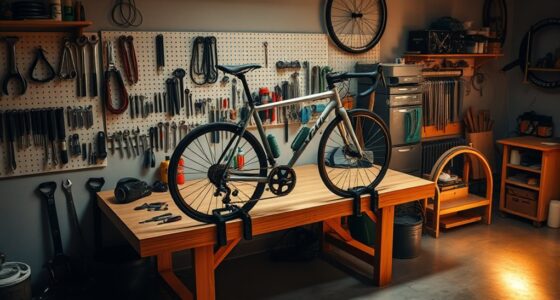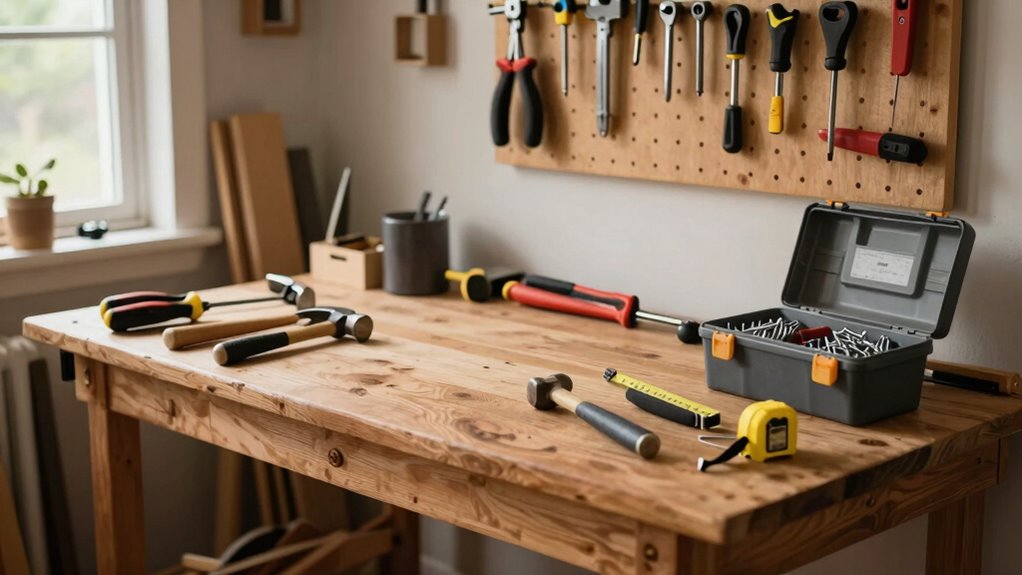

When setting up your new home workshop, start by prioritizing safety and organized storage. Clear, well-lit spaces and properly secured tools reduce accidents and boost efficiency. Designate specific spots for each item, using labels and wall-mounted storage to keep clutter in check. Installing safety gear and proper ventilation is also key. Focusing on these essentials first creates a safe, functional workspace that encourages productivity, and you’ll find more tips to perfect your setup as you go along.

Get sports gear delivered free — and shop member deals
- Fast, free delivery on millions of items
- Access to Prime Big Deal Days deals on October 6–7
- Prime Video, Amazon Music and more included
Key Takeaways
- Establish a clean, organized layout to ensure safety and efficiency from the start.
- Prioritize safety measures, including proper lighting, ventilation, and safety gear storage.
- Create designated storage spaces for tools and materials to reduce clutter and hazards.
- Plan for electrical safety with adequate outlets, surge protectors, and cord management.
- Incorporate ergonomic arrangements to promote comfort and minimize fatigue during work.

Setting up a new home workshop can feel overwhelming, but knowing where to start makes the process much smoother. The first thing you should focus on is establishing a solid foundation for storage organization and implementing safety measures. These elements are vital because they set the tone for a functional, safe workspace that encourages productivity and minimizes risks. The first thing you should focus on is establishing a solid foundation for storage organization and implementing safety measures. These elements are vital because they set the tone for a functional, safe workspace that encourages productivity and minimizes risks. Without proper storage, tools and materials can quickly become cluttered and difficult to find, wasting your time and increasing the danger of accidents. Meanwhile, neglecting safety measures can lead to injuries or damage, hindering your progress and creating an unsafe environment.
Start by planning your storage solutions. Think about what tools, hardware, and materials you’ll need most often, and design a system that keeps these accessible but neatly stored. Wall-mounted pegboards are excellent for hanging frequently used hand tools, while shelving units can hold larger items or supplies you don’t need daily. Clear plastic bins or labeled containers help you quickly identify and retrieve small parts, screws, or nails. Prioritize an organized layout so you don’t waste time searching for essential tools or stumble over clutter. Good storage organization boosts efficiency, saves space, and creates a more inviting workspace. Additionally, storage organization plays a crucial role in maintaining a safe environment by preventing accidents caused by clutter or misplaced tools. Implementing proper storage solutions ensures that everything has a designated place, reducing the risk of mishaps. Incorporating ergonomic layout principles can also improve comfort and reduce fatigue during long work sessions. It’s also beneficial to consider safety regulations to ensure your workshop adheres to local standards and best practices. Moreover, adhering to biodiversity principles in workspace design can promote a healthier environment by reducing waste and encouraging eco-friendly practices.
Next, turn your attention to safety measures. First, confirm your workshop has proper lighting. Bright, even illumination reduces eye strain and prevents accidents. Install outlets with surge protectors and keep electrical cords tidy to avoid tripping hazards. Equip yourself with safety gear, such as goggles, ear protection, and dust masks, and make sure they’re easily accessible. Proper ventilation is also vital, especially when working with paints, solvents, or power tools that generate dust and fumes. Installing a dust collection system or using portable vacuums will help keep the air clean and your workspace safe. Additionally, secure heavy or dangerous equipment to prevent tipping or accidental activation. Remember, safety isn’t just about reacting to hazards but proactively designing your workshop to minimize risks from the start. Regularly inspecting your safety equipment and ensuring it’s in good condition is equally important for ongoing safety.
garage workshop wall-mounted pegboard
As an affiliate, we earn on qualifying purchases.
As an affiliate, we earn on qualifying purchases.
Frequently Asked Questions
How Do I Determine the Best Layout for My Workshop?
To determine the best layout for your workshop, start by evaluating your needs and workflow. Consider storage solutions that keep tools organized and accessible. Think about lighting options to ensure proper visibility in all work areas. Arrange your workbenches and storage to minimize movement and maximize efficiency. Experiment with different configurations on paper or in a small scale before committing to a layout, ensuring your space is functional and comfortable.
What Safety Features Should I Install Initially?
When setting up your workshop, prioritize installing essential safety features like fire prevention systems and safety gear storage. For example, a hobbyist once overlooked smoke detectors, risking fire hazards. Installing smoke alarms, fire extinguishers, and ensuring easy access to safety gear like goggles and gloves can prevent accidents. These initial steps create a safer environment, allowing you to focus on your projects without unnecessary risks.
How Much Budget Should I Allocate First?
Start by allocating about 30-40% of your total budget to essentials like storage solutions and lighting options. These are crucial for organizing your workspace and ensuring good visibility. Prioritize quality over quantity to create a functional environment. Once those are in place, you can gradually invest in tools and equipment. This approach helps you build a safe, efficient workshop without overspending early on.
Which Tools Are Essential for Starting Out?
Start with essential power tools like a drill, circular saw, and jigsaw, as they handle most projects. Invest in quality storage solutions to keep your workspace organized and safe. These tools form the foundation for building and woodworking, so prioritize their purchase to guarantee efficiency and safety. As your skills grow, you can add more specialized tools, but these basics will set you up for success right from the start.
How Do I Plan for Future Workshop Expansions?
Did you know that most workshops expand within two years? To plan for future growth, you should prioritize versatile storage solutions that adapt to your evolving projects. Consider adding adjustable shelving and modular units now. Also, select flexible lighting options, like track lighting or portable lamps, that can be expanded or repositioned as your workspace grows. This proactive planning helps you stay organized and guarantees your workshop remains efficient and adaptable over time.
Conclusion
As you settle into your new workshop, picture it coming alive—tools hanging neatly, a workbench ready for your next project, the scent of fresh wood filling the air. Prioritize what sparks your passion first, and let your space grow with your ideas. With each step, your workshop becomes a haven, a place where creativity flows freely and every project tells a story. Soon, it’ll be your favorite corner of the world, full of purpose and promise.
Fall Picks
fall essentials
As an affiliate, we earn on qualifying purchases.