To ride more efficiently in a headwind, tuck your elbows in and lower your torso to streamline your body, reducing drag. Maintain a steady cadence between 80-100 RPM and use smooth, circular pedal strokes to conserve energy. Make small adjustments to your position based on wind shifts, tighten your core, and stay relaxed. Focus on controlled breathing and mental resilience to stay calm. Keep exploring these strategies to boost your performance even further.

Get sports gear delivered free with Prime
- Fast, free delivery on millions of items
- Prime Video, Amazon Music and more included
- Member-only deals all year
Key Takeaways
- Adopt an aerodynamic posture by tucking elbows, lowering the torso, and keeping your head low to reduce wind resistance.
- Maintain a steady cadence of 80-100 RPM with smooth pedal strokes to conserve energy against headwinds.
- Make small body adjustments, like dropping shoulders and tightening core, to stay as streamlined as possible.
- Focus on controlled breathing and mental resilience to sustain effort and stay calm during challenging headwinds.
- Choose appropriate gears to maintain consistent effort without overexertion, adjusting body position as wind conditions change.
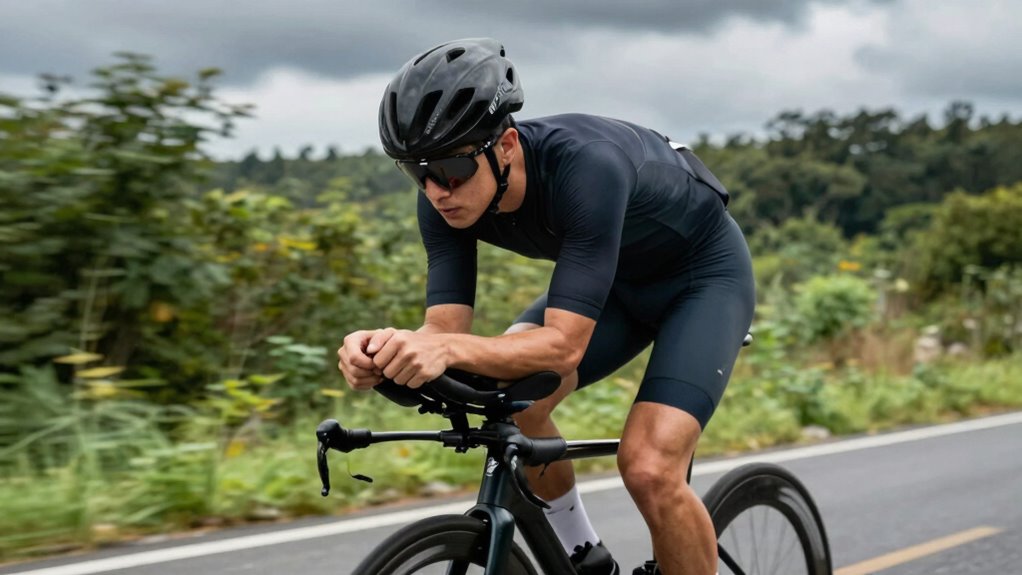
Riding into a headwind can be frustrating, but with the right techniques, you can ride more efficiently and conserve energy. One of the most important aspects is adopting an aerodynamic posture. When facing a headwind, you want to minimize your frontal profile, so tuck your elbows in and lower your torso slightly. This reduces air resistance and makes it easier to cut through the wind. Keep your head low, looking slightly ahead rather than directly into the wind, to further streamline your body. Maintaining this aerodynamic posture not only decreases drag but also helps you stay comfortable over longer stretches. Remember, a more aerodynamic position might feel less relaxed initially, but it pays off in energy savings. Additionally, paying attention to your cycling aerodynamics can help you identify subtle ways to improve your efficiency further.
Adopt an aerodynamic posture by tucking elbows, lowering your torso, and keeping your head low to reduce wind resistance.
Another key factor is your pedal cadence. When riding into a headwind, it’s tempting to slow down or push harder on the pedals, but a steady, higher cadence is more efficient. Aim for around 80 to 100 revolutions per minute, depending on your fitness level. A consistent cadence helps maintain momentum, preventing you from wasting energy in bursts of power or slowing down excessively. It also reduces muscle fatigue since you’re relying more on your aerobic system rather than brute strength. To achieve this, focus on smooth, circular pedal strokes, engaging both the push and pull phases. This technique increases efficiency, especially when battling against the wind, and helps you sustain your effort longer without feeling drained.
It’s also helpful to anticipate changes in wind direction and adjust your riding position accordingly. If the wind shifts or becomes stronger, consider slightly shifting your body to stay as streamlined as possible. Small adjustments, like dropping your shoulders or tightening your core, can make a significant difference. Keep your upper body relaxed; tension only increases fatigue and makes it harder to maintain an aerodynamic posture. Also, try to stay in a consistent gear that allows you to maintain your ideal pedal cadence without bouncing or straining. Overexerting yourself by shifting into too high a gear can cause unnecessary fatigue, especially in headwinds, so find a balance that maintains your rhythm.
Finally, focus on your breathing and mental resilience. Keeping a steady, controlled breathing pattern helps you sustain a higher cadence without feeling overwhelmed. Remain calm and patient—riding into a headwind is tough, but with the right posture, cadence, and mindset, you can ride more efficiently and conserve energy for the remainder of your ride.
road cycling aerodynamic jersey men's
As an affiliate, we earn on qualifying purchases.
As an affiliate, we earn on qualifying purchases.
Frequently Asked Questions
How Does Headwind Affect My Bike’s Aerodynamics?
Headwinds increase your bike’s aerodynamic drag, making it harder to ride. Wind resistance pushes against you, forcing you to exert more effort. As you ride into the wind, your bike faces more air resistance, which slows you down and demands greater energy. To counter this, you can adopt an aerodynamic position, reduce your frontal area, and stay relaxed to minimize wind resistance and improve efficiency against headwinds.
Can I Improve Efficiency by Changing My Riding Position?
Imagine slicing through the wind like a jet, your riding posture streamlined and low. You can boost efficiency by adjusting your aero position—tucking your elbows in, lowering your torso, and shifting your weight forward. These aero adjustments reduce drag, helping you cut through the headwind more smoothly. By adopting a more aerodynamic riding posture, you minimize resistance and conserve energy, making your ride feel easier even against tough gusts.
What Gear Should I Use to Combat Headwinds?
To combat headwinds, you should shift to a lower gear to maintain a steady cadence and avoid fatigue. Along with gear changes, consider your clothing choices—opt lightweight, aerodynamic clothing to reduce drag. Route planning also helps; choose routes that minimize exposure to strong headwinds or take advantage of sheltered areas. Combining these strategies guarantees you ride more efficiently and conserve energy despite challenging wind conditions.
How Does Wind Direction Impact Overall Cycling Strategy?
You might think wind direction doesn’t matter much, but it profoundly impacts your cycling strategy. A headwind demands lower gears and a steady pace, conserving energy, while a tailwind boosts your speed with less effort. Crosswinds can be tricky, so plan your route accordingly, avoiding exposed areas. Considering wind speed helps you adjust your approach, ensuring you stay efficient and safe, regardless of which way the wind blows.
Are There Specific Training Techniques for Windy Conditions?
You can improve your windy condition riding by practicing wind tunnel testing, which helps identify your most aerodynamic position. Incorporate aerodynamic clothing to reduce drag during training sessions, mimicking race conditions. Focus on steady, controlled efforts against headwinds, and simulate windy scenarios in your workouts. These techniques build your awareness of airflow and improve your efficiency, making you more comfortable and faster when riding in challenging headwind conditions.
Conclusion
Riding into a headwind is like dancing against a relentless tide—you can’t stop it, but you can learn to move with grace. Keep your cadence steady, stay low, and focus on your breathing to slice through the gusts. Remember, every pedal stroke is a brushstroke on the canvas of your ride’s masterpiece. With patience and finesse, you’ll glide through the wind’s resistance, turning a challenging headwind into a fleeting shadow on your path.
Halloween Picks
halloween
As an affiliate, we earn on qualifying purchases.