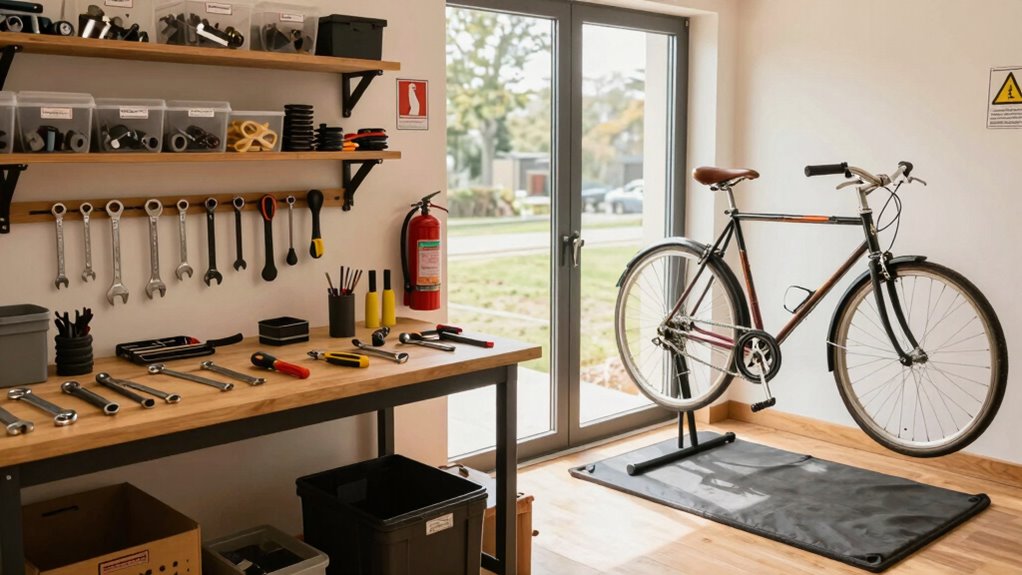
To set up a safer home bike workshop, organize tools with labeled drawers and secure heavy or sharp items to prevent injuries. Install good lighting, like overhead LEDs and adjustable task lamps, to eliminate shadows and improve visibility. Guarantee proper ventilation and keep fire extinguishers and first aid kits nearby. Keep the workspace clean, use anti-slip mats, and regularly inspect your tools for damage. Want more tips to make your workshop safer and more efficient?
Key Takeaways
- Organize tools and bike parts on labeled shelves and pegboards for quick access and to prevent accidents.
- Install proper lighting, including task lamps, to ensure clear visibility for detailed bike repairs.
- Secure heavy tools and sharp components in designated, stable storage to avoid injuries.
- Keep a fire extinguisher and first aid kit nearby, and maintain good ventilation to handle fumes and dust safely.
- Regularly inspect and maintain tools and workspace setup to ensure ongoing safety and efficiency.
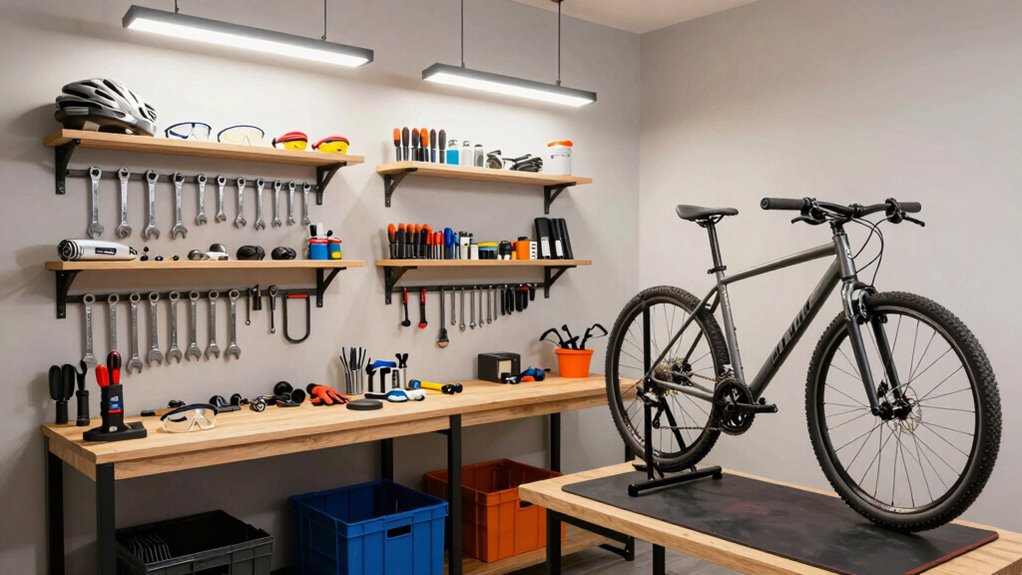
Creating a safe and efficient home bike workshop starts with careful planning and organization. You want your workspace to be functional, clutter-free, and safe, so start by mapping out a layout that maximizes space and accessibility. One of the first steps is to focus on tool organization. When your tools are well-arranged, you reduce the risk of accidents and make your work more efficient. Invest in pegboards, shelves, or tool chests to keep everything visible and within reach. Labeling drawers and containers can help you quickly find what you need, preventing you from rummaging through clutter or accidentally grabbing the wrong tool. Keep sharp and heavy tools stored securely to avoid injuries, and regularly declutter your workspace to maintain order. Incorporating biodiversity-friendly materials and practices in your workspace, such as using non-toxic lubricants or eco-friendly cleaning supplies, can contribute to sustainable living. Using eco-friendly cleaning supplies also supports environmental sustainability, making your workspace more eco-conscious. Additionally, considering ergonomic arrangements for your workbenches and seating can help reduce fatigue and prevent musculoskeletal issues during prolonged projects. Ensuring proper air quality and ventilation can prevent the buildup of fumes and improve overall safety in your workspace. Lighting improvements are another critical aspect of setting up a safer workshop. Poor lighting can cause eye strain and increase the risk of mishandling tools or making mistakes during repairs. To enhance safety and efficiency, add a combination of ambient, task, and accent lighting. Overhead LED lights provide bright, even illumination that covers the entire workspace. Supplement this with adjustable task lamps over your workbenches to focus light precisely where you’re working. Make sure the lighting is positioned to eliminate shadows and glare, especially around detailed work areas. Good lighting not only helps you see what you’re doing but also reduces fatigue, keeping you alert and alertness high during long sessions. Additionally, properly positioning lighting fixtures can prevent accidental contact with hot or moving parts, further enhancing safety. Beyond organization and lighting, consider safety features like a fire extinguisher nearby, a first aid kit, and proper ventilation, especially if you’re working with paints or lubricants. Keep your workspace clean, wiping up spills immediately and disposing of waste properly. A cluttered or poorly lit workshop can lead to accidents, so take time to regularly review and improve your setup. Investing in sturdy workbenches, anti-slip mats, and secure storage for chemicals and flammable materials adds layers of safety, giving you peace of mind while you work. Regularly inspecting your tools and equipment for damage or wear is another key safety measure, preventing potential hazards. In the end, setting up a safer home bike workshop requires continuous attention. As your projects evolve, revisit your organization system and lighting setup to identify improvements. With careful planning, tool organization, and lighting improvements, you create a workspace that’s not only safer but also more enjoyable and productive for every repair or maintenance task.
As an affiliate, we earn on qualifying purchases.
Frequently Asked Questions
What Safety Gear Should I Always Wear in My Bike Workshop?
You should always wear protective gloves and safety glasses in your bike workshop. Gloves protect your hands from cuts, scrapes, and chemicals, while safety glasses shield your eyes from flying debris, grease splatters, or sparks. These essential safety gears minimize injury risk during maintenance or repair tasks. Always make certain your gloves fit well and your glasses provide clear vision, keeping you safe while working efficiently on your bike projects.
How Can I Prevent My Tools From Causing Injuries?
To prevent injuries, prioritize proper tool organization and clear safety signage. Keep tools neatly stored in labeled drawers or racks, so you avoid accidental cuts or pokes. Use safety signs to remind yourself of hazards and safe practices. Regularly inspect tools for damage, and always handle them with care. When tools are organized and marked, your workspace becomes safer, reducing risks of slips, trips, and accidental injuries.
Are There Specific Lighting Recommendations for Bike Workshops?
You should use LED lighting in your bike workshop for bright, energy-efficient illumination. Incorporate task-specific lighting over workbenches and bike repair stations to reduce shadows and improve visibility. Adjustable lights help focus on detailed tasks, minimizing eye strain and potential accidents. Make certain overall ambient lighting is sufficient to illuminate the entire space, creating a safe environment where you can work confidently without risking injury or missing essential details.
How Do I Properly Dispose of Bike Parts and Chemicals?
To properly dispose of bike parts and chemicals, you should prioritize bike part recycling through local recycling centers or donation programs. For chemicals like lubricants or cleaners, follow specific chemical disposal methods recommended by your local waste management authorities. Never pour chemicals down the drain or onto the ground. Instead, take them to authorized disposal facilities to guarantee safe and environmentally friendly disposal, reducing potential hazards and pollution.
What Are Common Electrical Safety Tips for Workshops?
Think of your workshop’s electrical system as a safety net; grounding and circuit protection keep you secure. Always guarantee your tools are properly grounded to prevent shocks. Use circuit breakers or fuses for overload protection, and avoid overloading outlets. Keep cords tidy, inspect wiring regularly, and unplug tools when not in use. These simple steps help you ride safely through your bike repairs without sparks flying.
Conclusion
By following these simple tips, you transform your home bike workshop into a fortress of safety, where accidents are as rare as a unicorn sighting. Keep your space organized, wear proper gear, and guarantee good lighting—your bike repairs will become smoother than a well-lubricated chain. Remember, a safe workshop isn’t just about avoiding mishaps; it’s about creating a haven where you can tinker away happily, knowing you’re protected from even the wildest of mishaps.