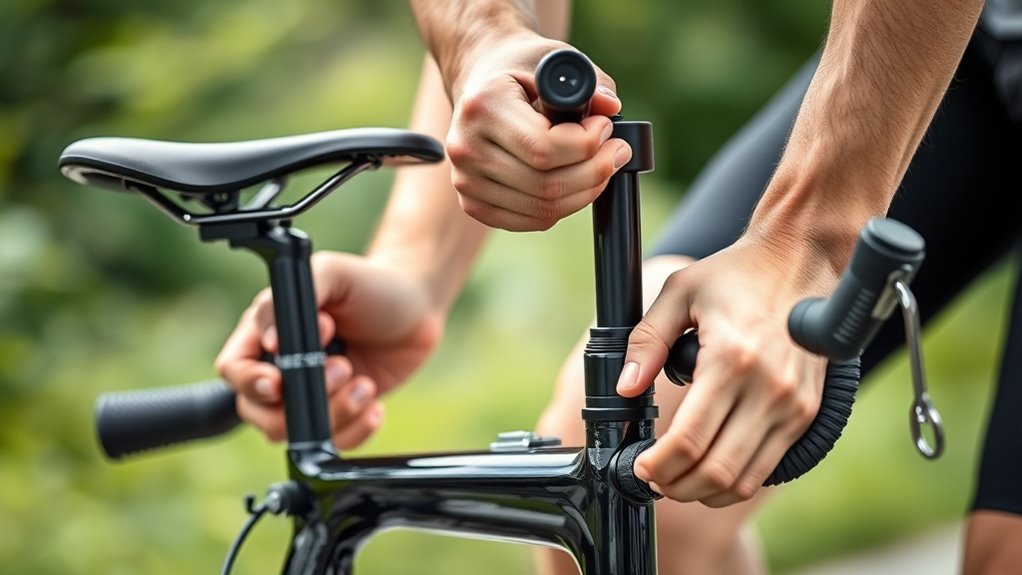

To eliminate saddle soreness, start by adjusting your saddle height so it allows a slight knee bend at the bottom of your pedal stroke. Fine-tune the fore-aft position to distribute pressure evenly and keep your saddle level or slightly nose-down. Choose a saddle with the right padding and width for your body. Improving your cycling technique and taking regular breaks can also prevent discomfort. Keep exploring these tips to discover more ways to ride pain-free.
Key Takeaways
- Ensure saddle height allows a slight knee bend at the pedal’s bottom for proper support.
- Adjust saddle fore-aft position to balance pressure on sit bones and knees.
- Level or slightly nose-down tilt helps distribute pressure evenly and reduces soreness.
- Choose a saddle with appropriate width and padding based on sit bone measurement and comfort needs.
- Develop habits like frequent position shifts and regular breaks to improve circulation and prevent discomfort.
Assessing and Adjusting Saddle Height for Comfort

To guarantee a comfortable ride, it’s essential to assess and adjust your saddle height regularly. The right saddle height depends on your body, riding style, and saddle materials, which influence comfort and support. When selecting a saddle, consider reputable saddle branding known for durability and ergonomic design. An improperly adjusted saddle can cause pressure points and soreness, so ensure your saddle is at the correct height—your leg should have a slight bend at the knee when the pedal is at the lowest point. Check your saddle height periodically, especially after bike adjustments or if you experience discomfort. Proper saddle height helps distribute your weight evenly, reducing strain and soreness. Additionally, maintaining proper saddle positioning can further improve comfort and efficiency during your ride. Keep in mind that comfort and performance depend on fine-tuning this setup for your individual needs. Adjustments to bike geometry can also influence overall comfort and should be considered for an optimal riding experience. Regularly reviewing your bike fit can help prevent discomfort and enhance your riding performance, especially when incorporating performance tuning techniques to optimize your setup.
Fine-Tuning Saddle Fore-Aft Position to Reduce Pressure
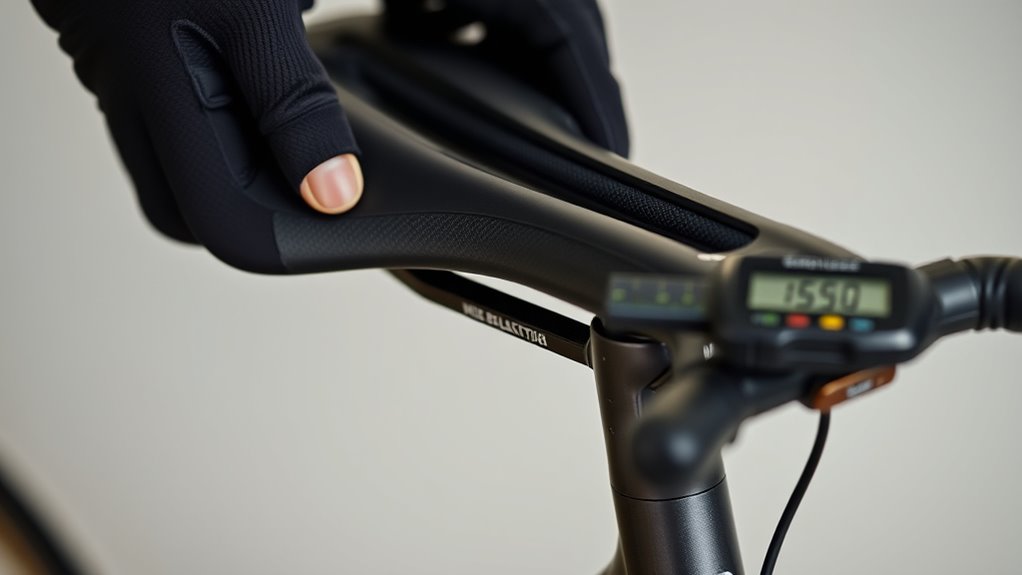
Adjusting your saddle’s fore-aft position can considerably impact comfort and pressure distribution during your ride. Moving the saddle forward shifts pressure toward your hands and knees, while sliding it back increases pressure on your sit bones. Ensure your saddle tilt is level or slightly nose-down to prevent discomfort, and consider seat material—more cushioned options can help reduce soreness. Use the following table to fine-tune your setup:
| Adjustment Point | Effect |
|---|---|
| Forward saddle position | More pressure on hands & knees |
| Backward saddle position | Greater pressure on sit bones |
| Saddle tilt (nose down/up) | Affects pressure distribution |
| Seat material choice | Influences comfort & pressure points |
| Check alignment regularly | Maintains optimal pressure balance |
Regularly calibrating your setup can help maintain optimal pressure distribution and prevent discomfort over time. Additionally, proper saddle adjustment aligns with the artistic influence of ergonomic design, which emphasizes both function and comfort. Incorporating adjustment techniques into your routine can further optimize your riding experience and reduce soreness.
Choosing the Right Saddle and Padding for Your Body
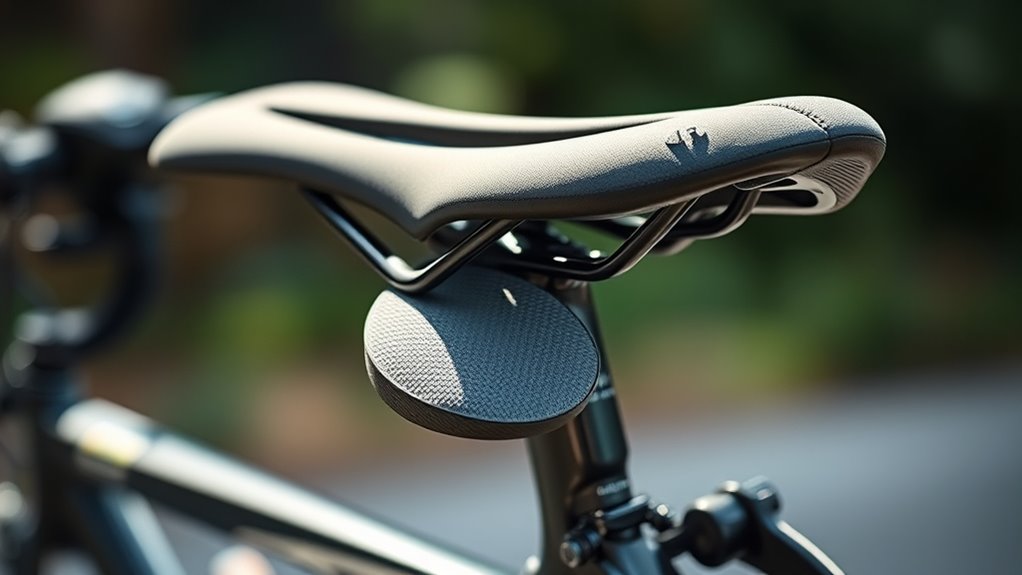
Since choosing a saddle and padding that fit your body is essential for comfort, it’s necessary to take into account your anatomy and riding style. Look for saddle materials that offer a good balance of durability and cushioning, such as leather or synthetic options suited to your preferences. Padding thickness plays a key role; thicker padding can reduce pressure points, especially if you experience saddle soreness, but too much may compromise stability. Conversely, thinner padding provides a more direct connection to the saddle, which some riders prefer for better control. Measure your sit bones to find a saddle width that supports your anatomy. Additionally, understanding material options can help you select the most suitable saddle for your needs. Selecting a saddle with high-quality resilient materials can enhance durability and comfort during long rides. Incorporating ergonomic design principles can further optimize comfort and reduce soreness, especially on extended rides. Paying attention to saddle fit and adjusting it properly is crucial for preventing soreness and ensuring a comfortable riding experience. Ultimately, selecting the right combination of saddle materials and padding thickness helps prevent soreness and keeps your rides comfortable.
Correcting Cycling Technique to Minimize Friction and Chafing

Improper cycling technique can markedly increase friction and chafing, leading to saddle soreness and skin irritation. To reduce this, focus on your pedal stroke—aim for smooth, even movements that avoid excessive side-to-side motion, which can cause unnecessary rubbing. Maintain a consistent cadence to prevent sudden shifts that increase skin friction. Additionally, your hand positioning influences your overall posture and comfort; keep your hands relaxed and properly placed on the handlebars to promote better weight distribution and reduce pressure on sensitive areas. Avoid gripping too tightly, which can cause tension and uneven movement. By refining your pedal stroke and hand positioning, you can minimize skin irritation and saddle soreness, making your rides more comfortable and enjoyable. Regularly checking your cycling setup can also help ensure proper alignment and reduce discomfort during longer rides, especially when considering ergonomic adjustments for better support. Being aware of your support hours at local cycling shops or fitness centers can also provide access to professional fittings and advice to optimize your riding comfort. Proper bike fit is essential for preventing saddle soreness and enhancing overall riding efficiency. Ensuring your saddle height is correctly adjusted can further decrease friction and improve comfort on each ride.
Implementing Proper Riding Habits and Breaks to Prevent Soreness

To prevent saddle soreness, it’s essential to develop good riding habits and take regular breaks during your ride. Focus on proper seat ergonomics to ensure your saddle supports your anatomy correctly, reducing pressure points. Maintain a riding posture that keeps your back straight and shoulders relaxed, which helps distribute your weight evenly. Shift your position slightly every 15-20 minutes to avoid prolonged pressure on the same spots. Incorporate short breaks to get off the saddle and stretch, promoting circulation and easing muscle tension. Staying mindful of your seat ergonomics and riding posture not only minimizes soreness but also enhances comfort and endurance. Consistent habits like these make your ride more enjoyable and help prevent saddle discomfort from developing.
Frequently Asked Questions
How Often Should I Reevaluate My Saddle Adjustments?
You should reevaluate your saddle adjustments regularly, especially during bike maintenance routines or after long rides. Typically, check your saddle every few rides or at least once a month. Keep an eye on saddle materials—if you notice wear or discomfort, tweak the height, tilt, or position. Frequent adjustments guarantee comfort and prevent saddle soreness, helping you ride smoothly and avoid unnecessary discomfort during your cycling adventures.
Can Specific Saddle Shapes Prevent Soreness More Effectively?
Yes, choosing the right saddle shape and design can help prevent soreness more effectively. A saddle with a shape that matches your anatomy provides better support and reduces pressure points. Look for a saddle design that offers proper padding and accommodates your riding position. By selecting a saddle that fits well, you’ll experience less discomfort and enjoy longer, more comfortable rides. Remember, the right saddle shape makes a significant difference.
Are There Recommended Stretches to Alleviate Saddle-Related Discomfort?
To alleviate saddle-related discomfort, try stretches that improve your cycling posture and hip flexibility, such as gentle hamstring and hip flexor stretches. These help reduce pressure on your saddle area. Also, make certain your saddle padding is appropriate, as it plays an essential role in comfort. Maintaining good posture during rides and incorporating these stretches can notably ease soreness and improve your overall cycling experience.
What Signs Indicate I Need a New Saddle Altogether?
Think of your saddle as the throne of your ride—if it’s causing persistent discomfort, it might be time for a change. Signs you need a new saddle include ongoing pain, numbness, or chafing despite adjustments. Check your bike fit and consider saddle materials that match your riding style. If discomfort persists after tweaks, investing in a better saddle guarantees a smoother, more enjoyable journey.
How Does Clothing Choice Impact Saddle Soreness?
Your clothing choice greatly impacts saddle soreness. Wearing cycling shorts with padded liners provides extra cushioning, reducing pressure and friction on your sit bones. Opt for moisture-wicking fabrics to keep you dry and prevent chafing. Avoid cotton, which retains sweat and can cause irritation. Properly fitted apparel ensures minimal movement and chafing, helping you stay comfortable longer. By choosing the right clothing, you can markedly decrease saddle soreness and enjoy smoother rides.
Conclusion
By making these simple adjustments, you can say goodbye to saddle soreness and enjoy your rides more. Think of your saddle like a trusted partner—when properly tuned, it supports you effortlessly. So, don’t let discomfort steal your joy; instead, take control and fine-tune your setup. Remember, a comfortable ride isn’t just a goal—it’s a journey you deserve. Embrace these tips, and let your cycling experience shine brighter than ever.