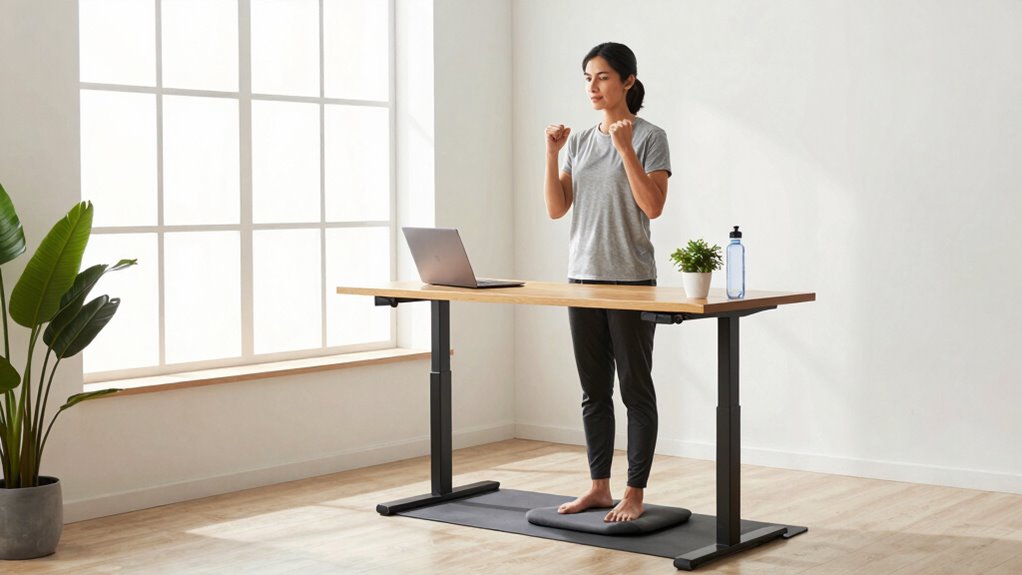

To use a standing desk safely during recovery, keep your monitor at eye level and position your keyboard and mouse to maintain elbows close to your sides at roughly 90°. Use ergonomic accessories like wrist rests and supportive mats, and take regular breaks to stretch, walk, and shift positions. Listen to your body signals for discomfort and adjust your setup as needed throughout the day. Staying mindful of posture helps prevent strain, and more tips await you as you explore further.
Listen free for 30 days with Audible
Thousands of audiobooks and originals — cancel anytime.
As an affiliate, we earn on qualifying purchases.
Key Takeaways
- Gradually increase standing time to allow your body to adapt without strain.
- Keep your monitor at eye level to prevent neck and eye discomfort.
- Use ergonomic accessories like supportive mats and wrist rests for proper alignment.
- Take regular breaks to sit, stretch, and move to prevent stiffness and promote circulation.
- Listen to your body signals and adjust your workspace setup as needed for comfort.
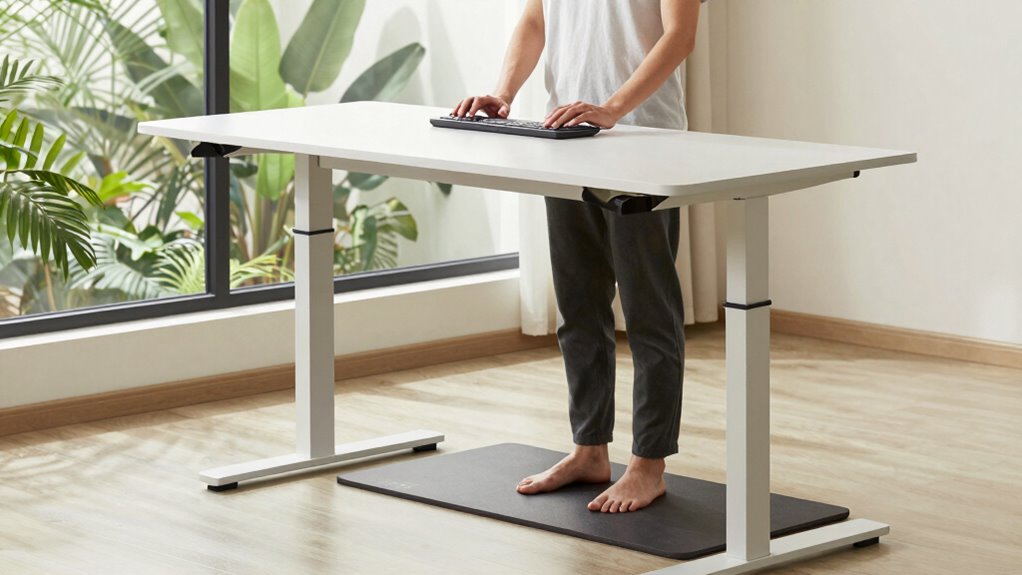
Using a standing desk can boost your productivity and improve your posture, but if you’re recovering from an injury or illness, it’s essential to use it wisely. You want to avoid aggravating your condition while still gaining the benefits of standing. Start by making thoughtful posture adjustments to ensure your body stays supported and comfortable. Keep your monitor at eye level so you don’t strain your neck, and position your keyboard and mouse so your elbows stay close to your sides, forming roughly a 90-degree angle. These posture adjustments help prevent unnecessary stress on your joints and muscles, which is critical during recovery. Incorporating ergonomic accessories can make a significant difference. Use a supportive anti-fatigue mat to reduce pressure on your feet and legs, especially if you plan to stand for extended periods. An adjustable standing desk allows you to switch between sitting and standing, giving your body the variety it needs to avoid fatigue and stiffness. Additionally, consider using wrist rests or ergonomic keyboard trays to keep your wrists in a neutral position, preventing discomfort or strain. These accessories help you maintain proper alignment, reducing the risk of developing new aches while healing existing injuries. Paying attention to biodiversity in your environment can also create a more calming and healthful workspace. Listening to your body is key. If you feel pain, dizziness, or discomfort, don’t push through it. Take short breaks regularly—stand, stretch, and walk around for a few minutes every half hour. This not only prevents stiffness but also encourages better circulation, which is essential during recovery. Incorporating ergonomic principles can further optimize your setup for comfort and safety. Adjust the height of your desk or accessories as needed, because what works in the morning might not be comfortable after a few hours. Being aware of and adapting to your body’s signals will help you find the right balance, especially in ergonomic setups that support your recovery process. Being mindful of posture and body mechanics can also contribute to a safer, more effective workspace during recovery.
ergonomic anti-fatigue standing desk mat
As an affiliate, we earn on qualifying purchases.
As an affiliate, we earn on qualifying purchases.
Frequently Asked Questions
Can Standing Desks Help Reduce Back Pain Long-Term?
Standing desks can help reduce back pain long-term if you focus on proper posture correction. Using ergonomic accessories like adjustable monitor stands and cushioned mats encourages better alignment and comfort. You should switch between sitting and standing, maintain a neutral spine, and avoid slouching. By doing so, you reduce strain on your back muscles, promote healthier posture, and support your recovery process effectively.
What Are the Best Anti-Fatigue Mats for Standing Desks?
Think of anti-fatigue mats as the unsung heroes of your standing desk setup. The best mats feature ergonomic footwear compatibility and anti-slip surfaces, ensuring stability and comfort as you work. Look for mats with cushioned support, durable materials, and textured surfaces to prevent slipping. These qualities help reduce foot fatigue and maintain your balance, turning long hours at your standing desk into a comfortable, pain-free experience.
How Often Should I Switch Between Sitting and Standing?
You should switch between sitting and standing every 30 to 60 minutes to prevent strain. During these posture adjustments, pay attention to your desk height so your monitor remains at eye level, and your elbows stay at a 90-degree angle. This helps you maintain good ergonomics and reduces muscle fatigue. Regularly changing positions guarantees better recovery and comfort, keeping your body aligned and preventing discomfort over long work periods.
Are There Specific Exercises to Do While Using a Standing Desk?
Yes, there are specific exercises you can do at your standing desk. Incorporate ergonomic accessories like anti-fatigue mats and footrests to promote better posture correction. Simple movements like calf raises, heel-to-toe walks, and shoulder rolls help reduce stiffness and improve circulation. These exercises, combined with proper ergonomic setup, support your recovery and make standing work more comfortable, minimizing strain and enhancing overall posture.
What Signs Indicate I Should Stop Standing and Sit Down?
You should stop standing and sit down if you notice signs like persistent back, neck, or leg pain, or if your posture feels strained despite adjustments. Pay attention to how your body reacts—if you experience numbness or dizziness, it’s time to sit. Make posture adjustments regularly, wear supportive footwear, and listen to your body’s signals to prevent discomfort and guarantee safe use of your standing desk.
Conclusion
Using a standing desk wisely can boost your productivity without hindering recovery. Remember, research shows that standing for just 15 minutes every hour can reduce back pain and improve circulation. By adjusting your desk height properly and taking regular breaks, you protect your health and support your recovery journey. So, stay mindful, listen to your body, and enjoy the benefits of standing without risking setbacks. Your body will thank you for it!
Fall Picks
fall essentials
As an affiliate, we earn on qualifying purchases.