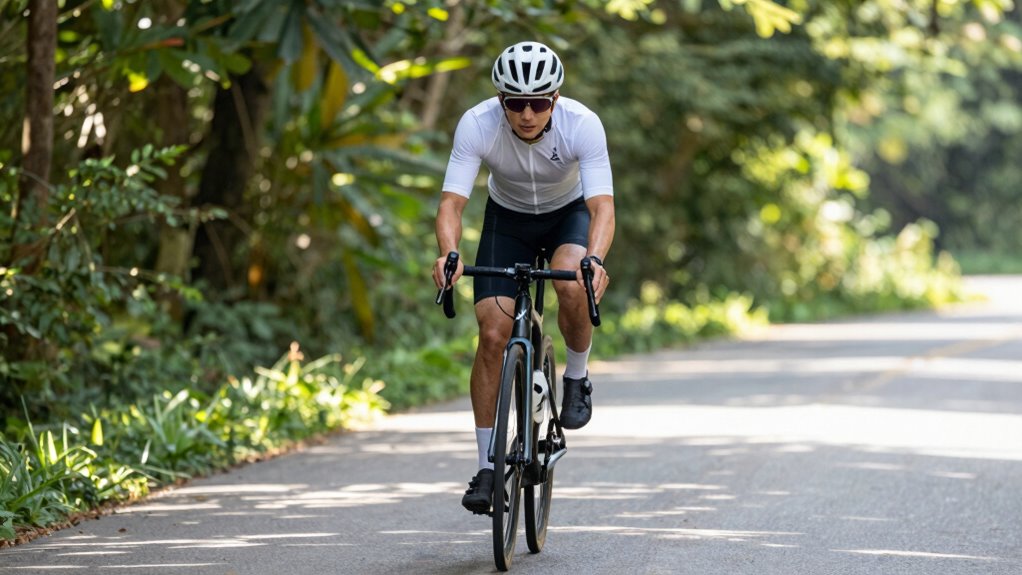
To improve your balance and stability for better bike control, focus on maintaining a proper posture by keeping your back straight, shoulders relaxed, and elbows slightly bent. Practice engaging your core muscles and staying aware of your body to enhance control and stability. Use steady pedaling and avoid abrupt movements, while practicing drills like single-leg pedaling. Consistent effort and small adjustments will boost your confidence on the bike—continue exploring tips that can help you ride more smoothly and confidently.

Get sports gear delivered free with Prime
- Fast, free delivery on millions of items
- Prime Video, Amazon Music and more included
- Member-only deals all year
Key Takeaways
- Maintain proper cycling posture with a straight back, relaxed shoulders, and even weight distribution.
- Focus on body awareness and center of gravity to enhance control and stability.
- Practice slow, controlled pedaling and single-leg drills to improve balance and coordination.
- Engage core muscles continuously to support stability during rides.
- Use small posture adjustments and focus on smooth, fluid pedal strokes for better control.

Having good balance and stability is vital for maintaining control and riding confidently. When you’re on your bike, your cycling posture plays a critical role in how well you can stay balanced. Keep your back straight, shoulders relaxed, and elbows slightly bent. Avoid leaning too far forward or backward, as this can throw off your center of gravity and make balancing more difficult. A proper cycling posture helps distribute your weight evenly across the bike, giving you better control over your movements. It also reduces fatigue, so you can ride longer without losing stability.
Good balance and proper posture are essential for confident, stable cycling and reduced fatigue.
Your pedal technique also considerably impacts your balance. Focus on pedaling smoothly and consistently, which helps maintain momentum and keeps you stable. Push down on the pedals with a gentle, even force, avoiding sudden jerks or uneven pressure. Keep your feet centered on the pedals, making sure your arches remain relaxed. This guarantees your feet stay securely in place and prevents wobbling that can throw you off balance. As you become more confident, try to develop a fluid pedal stroke that feels natural, allowing your bike to glide smoothly without abrupt shifts. Developing body awareness can further enhance your control and stability during rides.
To improve your cycling posture, practice standing over your bike with a comfortable stance, making small adjustments until you find a position that feels balanced. When riding, keep your core engaged—this enhances your overall stability and helps you react quickly to changes in terrain or direction. Keeping your eyes focused ahead, rather than on the ground, also helps you anticipate obstacles and maintain better control. Additionally, practicing ergonomic posture can significantly enhance your comfort and stability during rides. Understanding the importance of center of gravity can help you make more precise adjustments to your riding position, improving your overall balance. Incorporating body alignment awareness into your routine can further optimize your riding form and stability. Regularly practicing these techniques can lead to a more intuitive sense of balance and control on your bike.
Refining your pedal technique involves paying close attention to your pedaling rhythm. Practice maintaining a steady cadence, which helps keep your bike balanced and reduces unnecessary wobbling. If you notice your bike swaying, slow down and focus on even, controlled pedal strokes. Incorporate drills like single-leg pedaling to strengthen muscles and improve your pedal control, leading to more stability. Remember, consistent practice is key—small adjustments over time will make a big difference in how secure you feel on your bike.
bike balance and stability trainer
As an affiliate, we earn on qualifying purchases.
As an affiliate, we earn on qualifying purchases.
Frequently Asked Questions
How Often Should I Practice Balance Exercises?
You should practice balance exercises, like balance drills and core strengthening, at least 3 to 4 times a week. Regular practice helps improve your stability and bike control. Focus on challenging yourself gradually by increasing the difficulty of balance drills. Consistency is key, so make these exercises a routine part of your fitness schedule. Over time, you’ll notice better balance, making your rides safer and more enjoyable.
Can Specific Bike Types Improve Stability More Than Others?
Imagine you’re steering a tightrope, and certain bikes are like the poles that help you stay steady. Some bike types, like mountain bikes with wider tires and specific geometry, can improve stability thanks to better tire traction and balanced design. These features allow you to handle rough terrains confidently, making control easier. So, choosing a bike with appropriate geometry and tire traction can greatly enhance your stability and riding confidence.
What Are Common Mistakes That Affect Bike Control?
You often make mistakes that affect bike control, like neglecting equipment maintenance or poor rider posture. Skipping regular checks can lead to issues with brakes, tires, or gears, making riding unstable. Additionally, poor posture—like leaning too far forward or slouching—throws off your balance. Focus on maintaining your bike properly and keeping a good riding posture; these habits considerably improve your control and stability on the bike.
How Does Weather Impact Bike Stability?
Weather factors can turn your ride into a dance on a slippery stage. Rain, snow, or fog affect grip conditions, making your tires less reliable and your control shaky. Wind can push you off course, while wet roads increase the risk of sliding. To stay stable, adjust your speed, brake gently, and be extra cautious in adverse conditions. Think of weather as an unpredictable partner, always demanding your full attention.
Are There Safety Tips for Practicing Balance Skills?
Yes, there are safety tips for practicing balance skills. Always wear helmet safety gear to protect your head in case of falls. Use protective gear like knee and elbow pads to prevent injuries. Start on flat, smooth surfaces to build confidence, and practice slowly, focusing on steady movements. Keep your eyes forward and stay relaxed. These tips help you improve balance safely while reducing the risk of injury.
Conclusion
Just like a tightrope walker masters each step, you can refine your balance and stability to conquer every ride. Think of the great explorers who relied on their steadiness to navigate uncharted territories—your bike is your new frontier. By practicing these tips, you’ll gain smoother, more confident control, turning every journey into a victory. Remember, with steady feet and focused mind, you’re the hero of your own adventure—ready to embrace the open road ahead.
Fall Picks
fall essentials
As an affiliate, we earn on qualifying purchases.