To build leg strength off the bike, focus on resistance exercises like squats, lunges, and step-ups that target your quads, hamstrings, glutes, and calves. Incorporate high-rep sets and plyometric moves to boost endurance and explosive power. Consistently challenge your muscles while allowing time for recovery, and combine strength work with aerobic activities like hill walking. Don’t forget proper nutrition, hydration, and stretching to support recovery — continue exploring to discover more effective strategies.

Get sports gear delivered free — and shop member deals
- Fast, free delivery on millions of items
- Access to Prime Big Deal Days deals on October 6–7
- Prime Video, Amazon Music and more included
Key Takeaways
- Incorporate targeted resistance exercises like squats, lunges, and leg presses to strengthen key leg muscles.
- Use high-repetition and plyometric exercises to build muscular endurance and explosive power.
- Gradually increase resistance and challenge muscles while allowing adequate recovery time.
- Combine strength training with aerobic activities such as hill walking or stair climbing for overall fitness.
- Prioritize proper nutrition, hydration, stretching, and foam rolling to support muscle recovery and prevent injuries.
Building leg strength off the bike is vital for improving your cycling performance and preventing injuries. When you focus on developing muscle endurance and incorporating resistance training, you create a solid foundation that supports your riding. Muscle endurance allows your legs to sustain effort over long distances, while resistance training boosts your overall strength, making pedaling feel easier and more efficient. By strengthening your muscles off the bike, you can tackle climbs with greater power, accelerate faster, and recover more quickly after intense efforts.
Building leg strength off the bike enhances performance, prevents injuries, and boosts endurance for better cycling.
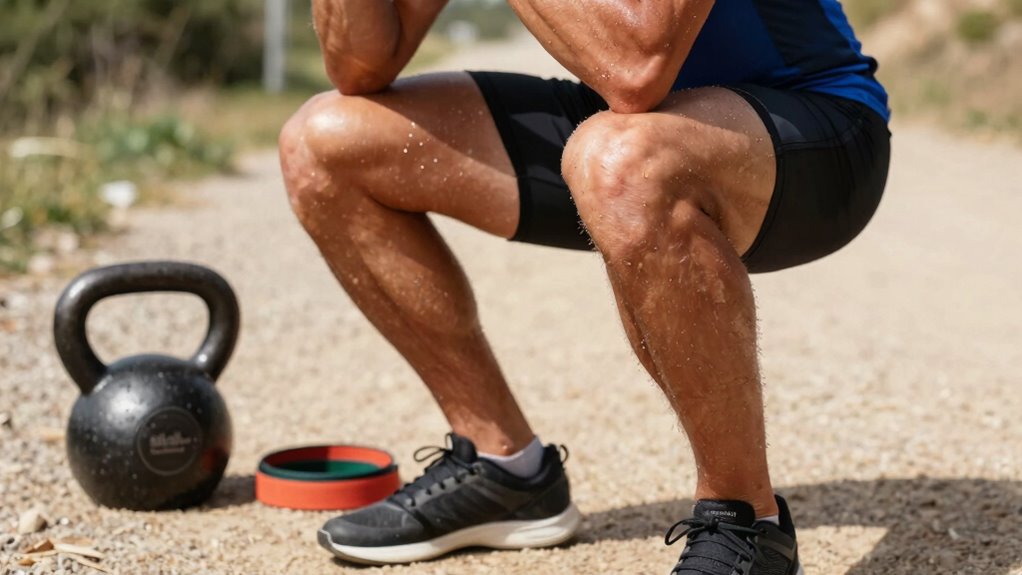
To achieve this, you should prioritize resistance training exercises that target your major leg muscles—quadriceps, hamstrings, glutes, and calves. Squats and lunges are some of the most effective moves because they mimic the pedaling motion and enhance overall strength. When performing squats, focus on controlled movement and gradually increase weight to challenge your muscles. Lunges help improve balance and unilateral strength, which is imperative for correcting imbalances that can lead to injury. Incorporate both in your routine 2-3 times a week, making sure you allow enough recovery time between sessions.
In addition to traditional resistance exercises, include movements that build muscle endurance. High-repetition sets with moderate weights can help your muscles work longer without fatigue, translating into better sustained performance on long rides. For example, doing sets of 15-20 repetitions for leg presses or step-ups can simulate the endurance needed during extended cycling sessions. You might also include plyometric exercises like box jumps or jump squats to develop explosive power, which is particularly useful for sprinting or quick accelerations. Incorporating muscular endurance exercises can help your muscles sustain effort over extended periods, which is essential for long-distance cycling. Additionally, muscle recovery techniques such as stretching and foam rolling are important to prevent stiffness and aid in muscle repair. Proper nutrition and hydration strategies can further optimize your recovery process, ensuring your muscles are ready for your next ride.
Consistency is key when building leg strength off the bike. You need to challenge your muscles regularly but also give them time to recover and adapt. Combining resistance training with aerobic exercises, such as hill walking or stair climbing, can further enhance your muscular endurance. Paying attention to proper form will prevent injuries and maximize gains. Gradually increase resistance or repetitions as your strength improves, avoiding the temptation to push too hard too quickly. Staying mindful of training progression ensures continuous improvement without overexertion.
Incorporating these resistance training routines into your overall fitness plan will complement your cycling efforts. As your leg muscles become stronger and more enduring, you’ll notice improved power, efficiency, and resilience on the bike. This balanced approach ensures you’re not only riding smarter but also reducing the risk of overuse injuries. Remember, building leg strength off the bike isn’t just about lifting heavy weights—it’s about creating muscular endurance that lasts throughout your rides. Engaging in core strengthening exercises can also support your leg muscles and improve overall stability during cycling.
adjustable dumbbell set for leg exercises
As an affiliate, we earn on qualifying purchases.
As an affiliate, we earn on qualifying purchases.
Frequently Asked Questions
What Are the Best Leg Exercises for Cycling Endurance?
To boost your cycling endurance, focus on leg exercises that target cycling muscles like squats, lunges, and step-ups. These move improve power endurance by strengthening key muscles, helping you ride longer and more efficiently. Incorporate resistance training with weights or bodyweight, and do plyometrics to build explosive strength. Consistently challenging your legs off the bike enhances overall cycling performance, making your rides smoother and less tiring.
How Often Should I Train Leg Strength off the Bike?
You should train leg strength off the bike 2 to 3 times a week, allowing ample recovery. Incorporate cross training benefits like strength training and flexibility exercises to boost endurance. Focus on balanced nutrition strategies, including protein intake for muscle repair and carbs for energy. This routine helps prevent overtraining, improves muscle balance, and enhances cycling performance, ensuring you’re strong and resilient on the bike.
Can You Build Leg Strength Without Weights?
Yes, you can build leg strength without weights. Think of your muscles as a garden; bodyweight workouts and plyometric exercises like jump squats or lunges act as nourishing sunlight and water. These workouts challenge your muscles, making them stronger over time. Even without weights, consistent effort with bodyweight exercises can boost your leg power, much like watering a garden helps it flourish.
How Long Does It Take to See Results?
You’ll start noticing improvements in your leg strength within 3 to 4 weeks if you train consistently, focusing on increasing cycling speed and challenging your muscles. Keep in mind, proper muscle recovery is essential; it helps prevent injury and boosts progress. As you continue, your cycling speed will improve, and you’ll feel stronger during rides. Stay patient and dedicated, and your results will become more evident over time.
Are There Specific Stretches to Prevent Injuries?
Yes, incorporating flexibility routines like hamstring, quad, and calf stretches can help prevent injuries. You should stretch after each workout to improve muscle elasticity and joint mobility. Focus on dynamic stretches before riding to warm up and static stretches afterward to cool down. Consistently practicing injury prevention stretches keeps your muscles flexible, reduces strain, and decreases the risk of strains or tears, ensuring safer, more effective leg training off the bike.
Conclusion
Now that you know the key exercises to boost your leg strength off the bike, imagine what you could achieve with consistent effort. Will you push through the doubts and release your true potential? The secret lies in your commitment—every squat, every step, bringing you closer. The next move is yours. Are you ready to see how far your legs can take you when strength and determination collide? The journey to greatness starts now.
NFL season / tailgating Picks
team gear
As an affiliate, we earn on qualifying purchases.