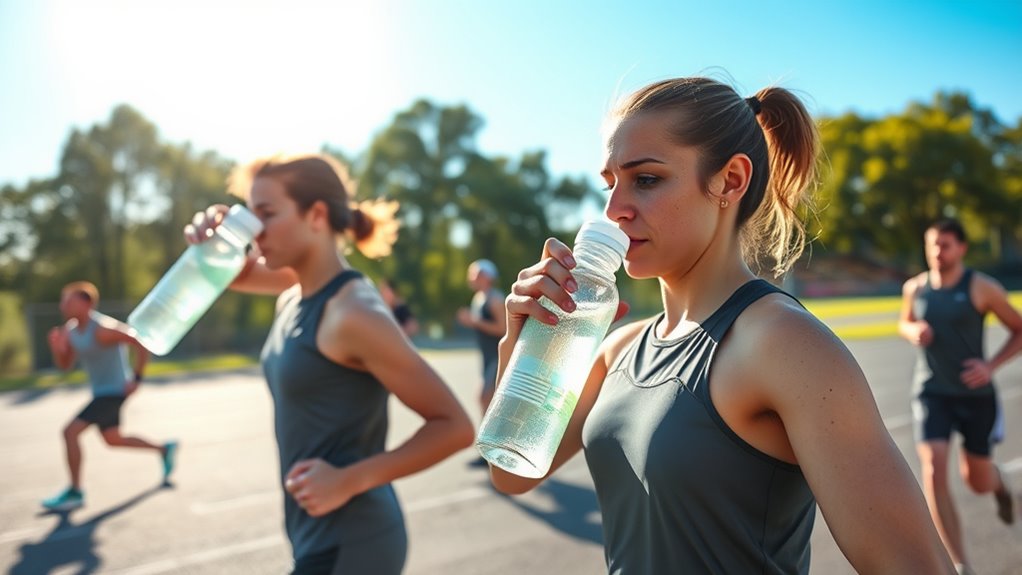

To improve heat tolerance, follow a structured heat acclimation protocol by gradually exposing yourself to high temperatures over 1-2 weeks. Combine this with proper hydration strategies tailored to your sweat rate, and monitor your body’s responses to adjust fluid and electrolyte intake. Focus on consistent heat exposure and listen to your body signals like thirst and fatigue. Keep going, and you’ll discover how to optimize your adaptation and stay safe in hot environments.
Key Takeaways
- Gradually increase heat exposure duration and intensity over 1-2 weeks to promote physiological adaptation.
- Incorporate regular hydration, tailoring fluid intake based on individual sweat rate analysis.
- Monitor body responses such as core temperature, heart rate, and thirst to adjust protocols accordingly.
- Balance heat exposure with adequate rest and recovery to prevent heat stress and support adaptation.
- Use electrolyte-rich beverages during and after heat sessions to replenish lost salts and enhance acclimation.

Heat acclimation protocols are vital for preparing your body to handle high temperatures more effectively. When you’re exposed gradually to heat, your body adapts by improving sweat responses, cardiovascular efficiency, and overall thermal regulation. To maximize these benefits, focusing on hydration strategies is fundamental. Proper hydration helps maintain blood volume, supports sweating mechanisms, and prevents dehydration, which can impair performance and increase heat-related illness risk. Develop a hydration plan that includes drinking fluids before, during, and after heat exposure. Water is basic, but for longer or more intense sessions, electrolyte-rich drinks help replenish lost minerals like sodium and potassium, maintaining ideal fluid balance.
Proper hydration is essential for effective heat acclimation and performance.
A key component of effective heat acclimation is sweat rate analysis. Understanding how much you sweat during exercise in the heat allows you to tailor your hydration strategies precisely. To perform sweat rate analysis, weigh yourself before and after a workout, accounting for any fluids consumed during exercise. The difference in weight, adjusted for fluid intake, indicates your sweat loss. Knowing your sweat rate helps you determine how much fluid you need to replace during and after training sessions, reducing the risk of dehydration. It also highlights whether you need to adjust your hydration plan or modify training intensity to avoid overexertion.
Incorporating sweat rate analysis into your routine enables you to fine-tune your hydration strategies. For instance, if you find you sweat heavily, you’ll want to increase your fluid intake and focus on electrolyte recovery. Conversely, if your sweat rate is lower, you might not need as much electrolyte supplementation but still require consistent hydration to support heat adaptation. Monitoring your sweat response over time will also reveal how your body adapts, typically showing decreased sweat rate and improved efficiency as you become more heat acclimated. Additionally, understanding your individual hydration needs can enhance your safety during heat exposure by preventing both dehydration and hyponatremia.
Alongside hydration, gradually increasing your exposure to heat in controlled settings will enhance your body’s ability to adapt, but never neglect the importance of hydration strategies. Consistent intake aligned with your sweat rate analysis ensures you’re replacing what you lose without overhydrating, which can lead to hyponatremia. As you progress through your heat acclimation protocol, stay attentive to your body’s signals—thirst, fatigue, or dizziness—and adjust your hydration accordingly. Combining these strategies will help you build resilience to heat, improve performance, and reduce the risk of heat-related illnesses, ultimately helping you train smarter and safer in hot environments.
Frequently Asked Questions
How Long Does It Take to Fully Acclimate to Heat?
You typically need about 1 to 2 weeks to fully adapt to heat, depending on your fitness level and exposure. During this acclimation timeline, your body improves heat tolerance, sweat efficiency, and cardiovascular response. Consistent daily exposure to heat, around 1-2 hours, accelerates heat adaptation. Remember, listen to your body and avoid overexposure to prevent heat-related illnesses while building your heat tolerance gradually.
Can Heat Acclimation Improve Athletic Performance?
Sure, because who wouldn’t want to turn into a human furnace, right? Heat acclimation actually boosts your thermoregulation enhancement and improves your sweat response, leading to better athletic performance. By training your body to handle heat more efficiently, you stay cooler longer, delay fatigue, and perform at your peak. So, yes, sweating in the sun could make you a faster, more resilient athlete—if you’re into that sort of thing.
Are There Risks Associated With Heat Acclimation Training?
Yes, there are risks with heat acclimation training, such as heat exhaustion and electrolyte imbalance. You might become dehydrated or overheat if you push too hard or don’t stay properly hydrated. To reduce these risks, listen to your body, take breaks, and replenish lost electrolytes. Always monitor your symptoms closely, especially during intense heat exposure, and consult a healthcare professional if you experience dizziness, nausea, or muscle cramps.
How Does Hydration Affect Heat Acclimation?
Hydration plays a vital role in heat acclimation by maintaining your hydration balance and preventing heat-related illnesses. When you stay well-hydrated, your body can better regulate temperature and sweat efficiently. Electrolyte replacement is also essential because it helps replenish salts lost through sweating, reducing cramps and fatigue. Proper hydration supports your body’s adaptation process, making heat acclimation safer and more effective, so drink fluids regularly and include electrolytes as needed.
Can Heat Acclimation Benefit Elderly or Vulnerable Populations?
You might be surprised to learn that heat acclimation can markedly boost elderly resilience, helping them better tolerate hot conditions. For vulnerable populations, such protocols can improve safety by reducing risks of heat-related illnesses. Regular exposure to controlled heat increases the body’s ability to manage temperature, making seniors more resilient and protecting their health during heatwaves. Prioritizing heat acclimation supports vulnerable safety and promotes overall well-being.
Conclusion
By following these heat acclimation protocols, you’ll transform your body into an unstoppable furnace, ready to conquer the hottest challenges. Consistency and patience are your secret weapons—don’t expect overnight miracles, but trust that your resilience will skyrocket. With dedication, you’ll become almost superhuman in the heat, outlasting everyone else. So gear up, stay committed, and watch yourself thrive in the blazing sun like never before. Your ultimate heat mastery awaits—are you ready to ignite your potential?