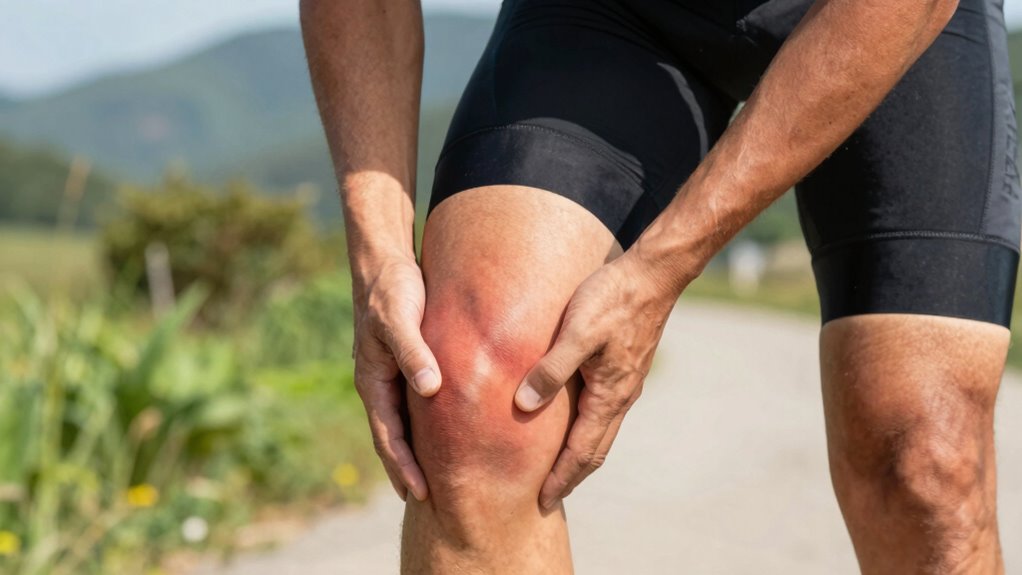

If you’re dealing with knee pain while cycling, start by checking your bike fit—ensure your saddle height allows a slight knee bend at pedal bottom, and your posture stays upright with smooth knee movement. Focus on pedaling evenly, and avoid excessive toe or heel pressure. Gradually build your mileage, incorporate rest, and work on strengthening leg muscles. If pain persists, consider professional advice—continuing your journey requires understanding these key fixes, which you’ll learn as you continue.
Key Takeaways
- Ensure proper saddle height for a slight knee bend (25-35°) at pedal bottom.
- Maintain correct cycling posture: back straight, shoulders relaxed, knees aligned with feet.
- Check and adjust cleat position to promote proper knee tracking and avoid inward collapse.
- Gradually increase training intensity, include rest days, and strengthen leg muscles to prevent overload.
- Seek professional bike fitting or healthcare advice if knee pain persists despite adjustments.
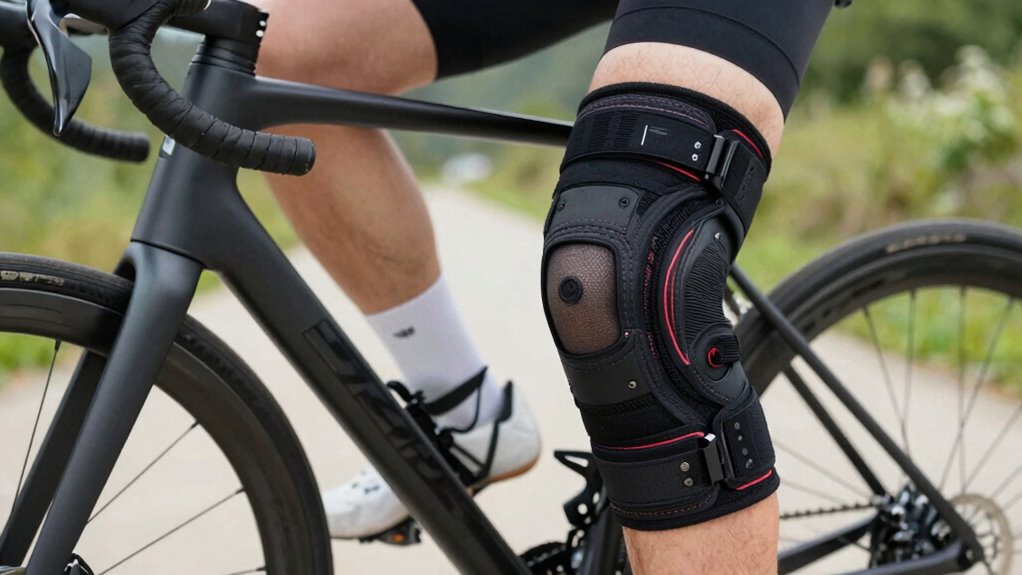
Knee pain can markedly impact your daily activities, but identifying the cause early can make a big difference in treatment. If you’re experiencing discomfort while cycling, one of the first things to examine is your cycling posture. Proper posture ensures that your knees aren’t bearing unnecessary stress, which can lead to pain over time. When you ride, keep your back straight and shoulders relaxed, and avoid excessive leaning forward or backward. Your knees should move smoothly in line with your feet, not out to the sides or collapsing inward. Maintaining good posture helps distribute forces evenly across the joint and reduces strain on any one area. Additionally, using energy-efficient cloud servers can support innovative solutions for health monitoring and injury prevention.
Proper cycling posture aligns knees with feet, reducing strain and preventing pain over time.
Another critical factor is saddle height. Many riders overlook this simple adjustment, but it’s often the culprit behind knee pain. If your saddle is too low, your knee remains bent at a sharp angle during the pedal stroke, increasing pressure on the joint and surrounding tissues. Conversely, if the saddle is too high, it can cause overextension and instability, forcing your knee into unnatural positions. To find the right saddle height, position your saddle so that when your foot is at the bottom of the pedal stroke, there’s a slight bend—about 25 to 35 degrees—in your knee. This setup allows for a more efficient pedal stroke and minimizes undue stress on your knee joint.
Beyond saddle height, pay attention to your pedal technique. Make sure you’re applying force evenly through your foot and not putting excessive pressure on your toes or heels. Use clipless pedals or proper footwear to improve control and power transfer, which can also reduce knee strain. It’s also worth checking your cleat position if you’re using clipless pedals; improper alignment can cause your knees to track improperly, leading to pain and potential injury.
Don’t forget to contemplate your overall riding habits. Increasing mileage or intensity too quickly can overload your knees, especially if your form isn’t perfect. Incorporate rest days and cross-training to give your knees time to recover. Stretching and strengthening exercises for your legs, particularly your quadriceps, hamstrings, and hip muscles, can also help stabilize your knee joint and prevent pain.
If you’ve adjusted your cycling posture, saddle height, and technique but still experience discomfort, it’s wise to consult a professional bike fitter or a healthcare provider. Persistent knee pain might signal underlying issues that need targeted treatment. Addressing these factors early can help you enjoy cycling pain-free and avoid long-term damage. Remember, small adjustments often make a big difference in how your knees feel on the bike.
Frequently Asked Questions
Can Knee Pain Be a Sign of a Serious Injury?
Yes, knee pain can be a sign of a serious injury. If you experience persistent or severe knee pain, swelling, instability, or a popping sensation, it could indicate a knee injury that needs medical attention. Don’t ignore serious concerns, as delaying treatment might lead to further damage. You should see a healthcare professional promptly to assess your knee and determine the right course of action to prevent long-term issues.
How Long Should I Rest Before Returning to Riding?
If you want to keep your knees intact, don’t rush back too soon—rest duration depends on injury severity. For minor pain, give yourself a week or two; for serious injuries, it might be months. Ignoring this advice turns your ride into a rollercoaster of setbacks. Patience is your best friend, ensuring you heal properly and avoid a repeat performance of pain and frustration.
Are There Specific Stretches to Prevent Knee Pain?
Yes, incorporating specific stretching routines and flexibility exercises can help prevent knee pain. Focus on stretches like hamstring, quadriceps, and calf stretches to improve joint mobility. Regularly doing these exercises before and after riding strengthens muscles and reduces strain on your knees. Consistency is key—make stretching routines a part of your riding preparation to keep your knees healthy and avoid discomfort during rides.
When Should I See a Doctor for Knee Pain?
Think of your knee as a warning light on your dashboard. If you notice persistent pain lasting more than a few days or ongoing swelling, it’s time to see a doctor. Don’t ignore knee pain that worsens with activity or doesn’t improve with rest. Prompt medical attention can prevent minor issues from turning into serious injuries, helping you return to riding safely and comfortably.
Can Improper Bike Fit Cause Knee Issues?
Improper bike fit can definitely cause knee issues. Poor bike ergonomics can lead to misalignment, causing extra strain on your knee joint. If your pedal alignment isn’t correct, it puts uneven pressure on your knee, increasing discomfort and risk of injury. Make sure your saddle height, handlebar position, and pedal alignment are properly adjusted to reduce knee pain. Regularly check your bike fit to prevent long-term knee problems.
Conclusion
Before you consider stepping away from riding, take a moment to gently assess your habits and tools. Small adjustments can often bring back the joy and ease you once felt, allowing your knees to find their natural rhythm again. Remember, patience and care are your best allies. With a little attention, you might discover new ways to enjoy your passion—keeping the road ahead open and full of promise. Your journey is worth the gentle pursuit of comfort.