
To find your sweet spot, focus on balancing your cadence and power based on your terrain and effort. Aim for a moderate to high cadence (around 80-100 RPM) while applying steady, manageable force to conserve energy and stay comfortable. Don’t just push harder or spin faster—adjust both to suit climbs, sprints, and flats. Perfecting this balance helps you ride more efficiently and with less fatigue, and if you continue, you’ll discover how to fine-tune your rhythm even more.
Key Takeaways
- Aim for a cadence around 80-100 RPM during climbs to conserve energy and maintain steady breathing.
- Increase power output by pushing harder at a moderate cadence for effective sprints.
- Adjust cadence and force based on terrain: higher cadence for steep climbs, more force for shorter efforts.
- Find your personal “sweet spot” by experimenting to balance optimal cadence with sufficient power.
- Combining moderate cadence with targeted power boosts enhances overall efficiency and performance.

When optimizing your cycling performance, understanding the differences between cadence and power is vital. These two elements work together to influence how efficiently you climb hills, accelerate during sprints, and sustain your overall ride. Cadence refers to the number of pedal revolutions per minute, while power measures the actual force you generate to turn the pedals. Knowing how to balance these two can dramatically improve your climbing efficiency and refine your sprint strategies.
If your goal is to climb hills more smoothly, focusing on climbing efficiency is key. Maintaining an ideal cadence allows you to conserve energy and reduce fatigue on long ascents. Pedaling too slowly can strain your muscles, leading to quicker exhaustion, whereas spinning too fast might waste energy and compromise your control. The appropriate cadence varies among riders, but generally, a moderate to high cadence—around 80 to 100 RPM—helps keep your muscles fresh and your breathing steady. When you find this sweet spot, you’ll notice that climbing feels less strenuous, and you can sustain higher intensities for longer periods.
Sprint strategies, on the other hand, rely more heavily on generating maximum power in short bursts. During sprints, your focus should shift toward increasing power output rather than just spinning quickly. While a high cadence might seem beneficial, it’s often more effective to lower your cadence slightly and push harder with each pedal stroke to produce greater force. This allows you to maximize your power output without sacrificing control or risking injury. Properly blending cadence and power during sprints helps you accelerate faster and maintain higher speeds for vital moments in races or group rides.
Balancing cadence and power also affects your ability to recover and prepare for subsequent efforts. For instance, during a hilly course, you might need to adjust your cadence depending on the gradient. Climbing steep sections may tempt you to grind at a lower cadence with more force, but conserving energy through a higher cadence can be more effective in the long run. Conversely, when sprinting or tackling short, sharp climbs, dialing in your power output at a manageable cadence ensures you don’t burn out prematurely. Recognizing how these elements interact allows you to adapt your riding style to different terrains and race situations.
Additionally, understanding your personal data—your ideal cadence for climbing efficiency and your power thresholds for sprinting—empowers you to make smarter, more strategic decisions on the bike. By fine-tuning these variables, you’ll ride more efficiently, conserve energy, and perform at your best across all types of terrain and race scenarios. Recognizing the importance of biomechanical efficiency can further enhance your training and riding outcomes.
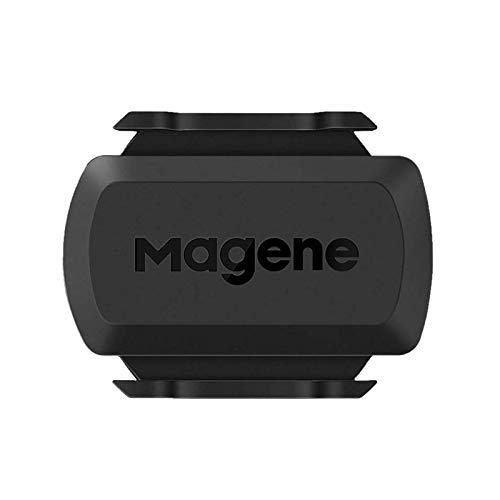
Magene Outdoor/Indoor Speed/Cadence Sensor for Cycling, Wireless Bluetooth/Ant+ Bike Computer RPM Sensor for Road Bike or Spinning Bike and Trainers Compatible with Onelap, Wahoo Fitness, Zwift
- Battery Installation: Remove insulation before use
- Mode Selection: One mode per sensor
- Device Compatibility: Connects to multiple devices via ANT+
As an affiliate, we earn on qualifying purchases.
As an affiliate, we earn on qualifying purchases.
Frequently Asked Questions
How Do I Determine My Personal Optimal Cadence and Power Levels?
To find your ideal cadence and power levels, focus on consistent training and use accurate equipment. Track your performance over several sessions, noting where you feel strongest and most efficient. Avoid sudden changes and stick to similar conditions to get reliable data. By maintaining training consistency and ensuring your devices are calibrated correctly, you’ll identify the sweet spot that maximizes your cycling performance.
Can Cadence and Power Be Effectively Trained Simultaneously?
Yes, you can train cadence and power simultaneously. Think of it like learning to ride a bike; with consistent training, you develop balance in both. Focus on training consistency and incorporate proper nutritional strategies to support your efforts. Over time, your body adapts, improving both metrics together. Just stay patient, listen to your body, and keep challenging yourself gradually for balanced progress.
How Do External Factors Influence My Cadence and Power?
External conditions like wind, terrain, and temperature can impact your cadence and power, making it harder to maintain consistency. Equipment calibration also plays a vital role; if your bike or trainer isn’t properly calibrated, your data won’t be accurate, leading to misguided adjustments. To optimize your performance, account for these external factors, regularly calibrate your equipment, and adapt your effort based on changing conditions.
What Equipment Is Best for Monitoring Cadence and Power?
You’ll want bike sensors that offer precise data accuracy to track your cadence and power effectively. Popular options include power meters like crank-based or pedal-based sensors, paired with reliable cadence sensors. These devices sync seamlessly with your bike computer or smartwatch, providing real-time insights. Coincidentally, upgrading your equipment guarantees you get consistent, accurate readings, helping you optimize your ride and reach your fitness goals faster.
How Often Should I Reassess My Cadence and Power Targets?
You should reassess your cadence and power targets every 4 to 6 weeks, especially as your training consistency improves or you notice changes in performance. Regularly adjusting these targets helps you stay on track and avoid plateaus. Incorporate recovery strategies like rest days and proper nutrition to support progress. Listen to your body, and if you feel persistent fatigue or setbacks, consider reevaluating your goals sooner.
Conclusion
Remember, finding your cadence and power is like tuning a fine instrument—you become in harmony with your body’s rhythm. When you strike that perfect balance, you release your true potential, much like a maestro commanding the orchestra. Trust the process, listen to your body’s signals, and stay committed. Your sweet spot isn’t just a number; it’s your personal symphony waiting to be conducted. Keep pushing, and let your performance soar.