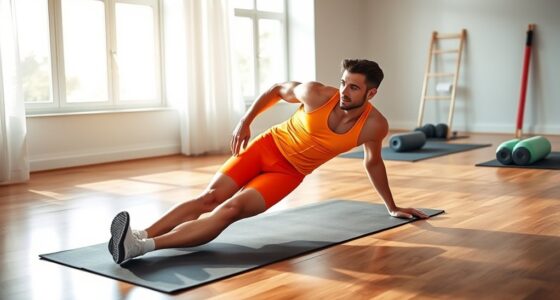

Improving mobility in your hips and ankles is key to preventing injuries and moving efficiently. Focus on dynamic stretches like leg swings, hip circles, and ankle mobility drills to loosen tight muscles and strengthen stabilizers. Consistent practice with balance exercises and stretching gradually increases flexibility and stability. When you prioritize these movements regularly, you’ll notice better movement, less strain, and more resilience in your daily and athletic activities. Keep going to learn more on maintaining ideal hip and ankle health.
Key Takeaways
- Regular stretching and mobility drills like leg swings and hip circles enhance hip flexibility and range of motion.
- Balance exercises such as single-leg stands and wobble board activities strengthen ankle stability and resilience.
- Incorporating deep lunges and pigeon pose helps release tension and improve hip joint mobility.
- Strengthening exercises like calf raises and resistance band work support ankle stability and prevent stiffness.
- Consistent, gradual practice of mobility routines promotes long-term movement efficiency and injury prevention.
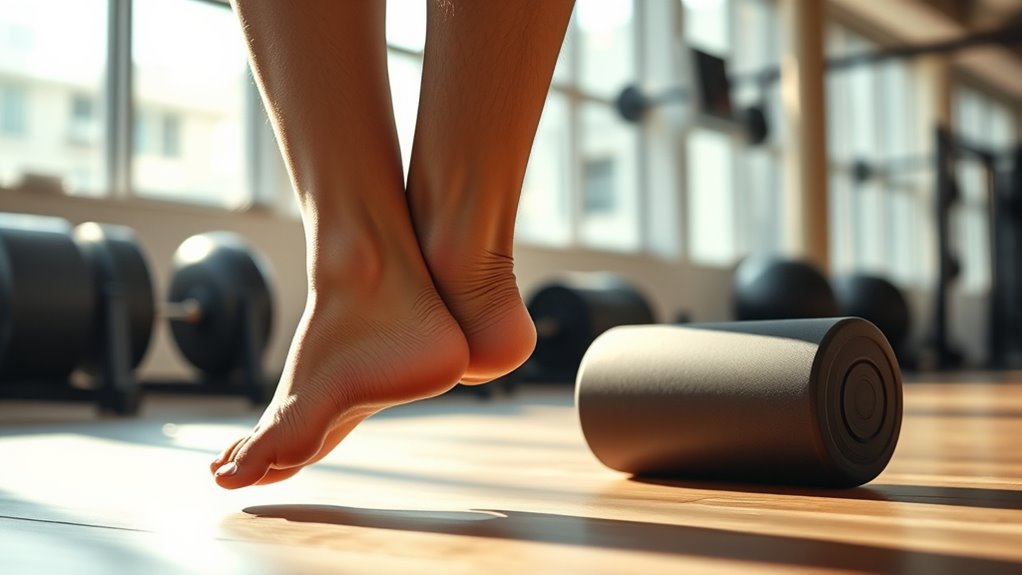
Having good mobility in your hips and ankles is essential for overall movement and injury prevention. When your hips are flexible and your ankles are stable, you can move more efficiently, reduce strain on other joints, and lower your risk of injuries during daily activities or exercise. Improving hip flexibility allows your hips to move through their full range of motion, which is crucial for activities like squatting, running, or even bending down. Without adequate hip mobility, you might compensate with your lower back or knees, increasing the chance of pain or injury over time. Likewise, ankle stability plays a vital role in maintaining proper alignment and balance, especially when walking, jumping, or changing directions quickly. When your ankles are weak or stiff, your body struggles to absorb shock and distribute forces evenly, leading to potential sprains, strains, or chronic issues.
Good mobility in hips and ankles prevents injuries and enhances movement efficiency.
To enhance your hip flexibility, focus on dynamic stretches and mobility drills that target the hip joint. Exercises like leg swings, hip circles, and deep lunges can help loosen tight muscles and improve range of motion. Incorporating hip-opening stretches such as pigeon pose or butterfly stretches also helps release tension in the hip muscles, making movement smoother and more natural. Consistency is key—regularly dedicating time to these exercises will gradually increase your flexibility and overall mobility. Remember, pushing too hard too quickly can cause setbacks, so progress at a steady, controlled pace.
For ankle stability, strengthening exercises are just as important as stretching. Balance drills, such as standing on one leg or using a wobble board, challenge your ankle muscles and enhance their ability to stabilize. Calf raises and resistance band exercises targeting the ankle tendons and muscles can also improve strength and resilience. Along with strengthening, ankle mobility drills like ankle circles or dorsiflexion stretches help maintain full motion and prevent stiffness. Wearing supportive footwear and paying attention to proper biomechanics during movement can also protect your ankles from unnecessary stress.
Ultimately, maintaining or improving mobility for your hips and ankles requires a balanced approach that includes both stretching and strengthening. When you prioritize these areas, you’ll notice better movement quality, increased endurance, and a lower chance of injury. Your body will thank you for the effort, as improved hip flexibility and ankle stability translate into more effortless, pain-free movement in everyday life and athletic pursuits alike. Taking small, consistent steps to care for your hips and ankles ensures that your mobility remains functional and resilient for years to come.
Frequently Asked Questions
How Often Should I Perform Hip and Ankle Mobility Exercises?
You should perform hip and ankle mobility exercises about 3 to 5 times a week, depending on your goals. Incorporate variety by including different exercise variations to target all angles and muscles. Consistency is key, so stick to this frequency to improve flexibility and prevent injuries. Always listen to your body, and if you feel soreness, give yourself a day or two to recover before resuming exercises.
Can Limited Mobility in Hips and Ankles Affect Other Joints?
Think of your joints as the foundation of a house. When your hips and ankles have limited mobility, it’s like a shaky foundation causing joint stiffness and muscle imbalances. This uneven support can lead to stress on other joints, like knees and lower back, making them more prone to injury. So, yes, limited mobility in hips and ankles can definitely affect the health and function of other joints.
Are There Specific Stretches for Sports-Related Mobility Improvements?
Yes, you can improve your sports-related mobility through dynamic stretches and sport-specific drills. Incorporate dynamic stretches like leg swings and walking lunges before your workout to warm up your hips and ankles. Follow up with sport-specific drills that mimic your activity, such as lateral shuffles or agility ladders, to enhance joint flexibility and range of motion. Consistently practicing these techniques helps prevent injuries and boosts overall performance.
What Are Signs of Overtraining in Mobility Routines?
A stitch in time saves nine, and recognizing overtraining signs keeps you safe. If you notice persistent muscle fatigue or joint stiffness, it’s a red flag. You might also feel decreased performance, nagging pain, or trouble recovering. These signs indicate you’re pushing too hard and need rest. Listen to your body—rest and recovery are just as essential as the exercises themselves to prevent injury and promote long-term mobility gains.
Do Age or Gender Influence Mobility Improvement Strategies?
Age considerations and gender differences do influence your mobility improvement strategies. As you age, you might need to focus on gentler stretches and longer warm-ups to prevent injury. Gender differences can affect flexibility and strength, so tailoring your routines to your body’s needs is essential. You should listen to your body, adapt exercises accordingly, and consider consulting professionals for personalized guidance, ensuring safe and effective progress regardless of age or gender.
Conclusion
Now that you’ve revealed the secrets to hip and ankle mobility, imagine what’s possible when you push even further. Are you ready to challenge your limits and open new levels of movement? The next step could change everything—if you dare to explore. Keep moving, stay curious, and don’t stop now. Your body’s potential is waiting just beyond the comfort zone. So, will you take the leap and discover what lies ahead?