For ideal cycling performance, prioritize scientifically supported supplements like carbohydrates and electrolytes to stay hydrated and energy-optimized during rides. Creatine boosts power and speeds recovery, while beta-alanine helps you sustain high-intensity efforts longer. Nitrate supplements improve blood flow and endurance, and protein with BCAAs accelerate muscle repair post-ride. Understanding these strategies can give you a real edge—check out how each one fits into your routine for better results.

Get sports gear delivered free — and shop member deals
- Fast, free delivery on millions of items
- Access to Prime Big Deal Days deals on October 6–7
- Prime Video, Amazon Music and more included
Key Takeaways
- Creatine enhances muscle power, recovery, and mental focus, supporting overall cycling performance and strength gains.
- Beta-Alanine improves muscular endurance by buffering acid buildup, delaying fatigue during high-intensity efforts.
- Nitrate supplements increase nitric oxide, boosting blood flow, oxygen efficiency, and stamina during rides.
- Carbohydrates and electrolytes are essential for hydration, energy maintenance, and preventing cramps during endurance cycling.
- Protein and BCAAs aid muscle repair and reduce soreness, optimizing recovery post-ride.
As an affiliate, we earn on qualifying purchases.
The Role of Carbohydrates and Electrolytes in Endurance

Have you ever wondered how your body keeps going during long rides? It all comes down to effective hydration strategies and carbohydrate timing. When you hydrate properly, you replace lost electrolytes and maintain fluid balance, preventing cramping and fatigue. Consuming carbohydrates at regular intervals ensures your muscles get a steady energy supply, delaying exhaustion. Timing matters—eating carbs before, during, and after rides helps sustain performance and aid recovery. Electrolytes like sodium and potassium are key to keeping your nerves and muscles functioning smoothly. Without proper support, your endurance drops and you risk hitting “the wall.” So, plan your intake carefully: sip fluids with electrolytes and eat carbs consistently to maximize energy and stamina during those long rides. Incorporating nutrient-rich ingredients from juice cleansing can also support your overall recovery and hydration needs, especially when combined with mindfulness techniques to enhance your focus and mental resilience during challenging rides. Additionally, understanding individual physiological differences can help tailor hydration and nutrition strategies for optimal performance. Proper supplementation with electrolyte solutions can further enhance your endurance and reduce the risk of dehydration.
Creatine and Its Impact on Power and Recovery

Creatine is a popular supplement among cyclists aiming to boost power and accelerate recovery. It enhances muscle hypertrophy by increasing phosphocreatine stores, which helps regenerate ATP during high-intensity efforts. This results in improved sprinting ability and explosive power on the bike. Additionally, creatine supports faster recovery after intense rides, reducing muscle soreness and fatigue. Beyond physical benefits, creatine has been shown to enhance mental focus, helping you stay sharp during long or demanding rides. By improving both muscular performance and cognitive function, creatine can be a valuable tool for cyclists looking to push harder and recover quicker. Incorporating creatine into your routine may lead to gains in strength and overall cycling performance, especially during high-intensity training blocks. For optimal results, understanding the best supplements for cyclists can help tailor your nutrition plan effectively. Moreover, research indicates that creatine may also support brain health by improving neurochemical function, which can be beneficial during prolonged endurance efforts.
The Benefits of Beta-Alanine for Muscular Endurance
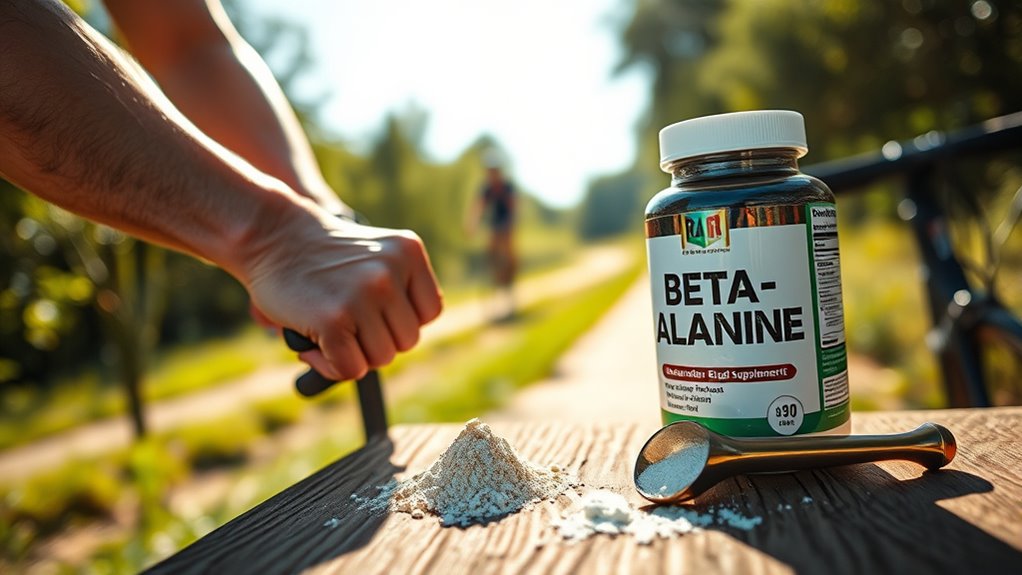
Beta-alanine is a powerful supplement that can substantially enhance your muscular endurance during intense cycling sessions. It works by increasing muscle buffering capacity, helping your muscles maintain ideal pH levels during high-intensity efforts. This pH regulation reduces fatigue caused by acid buildup, allowing you to sustain effort longer. When you supplement with beta-alanine, your muscles can better handle the metabolic stress of continuous pedaling.
- Improves your ability to push through fatigue
- Delays the onset of muscle exhaustion
- Supports sustained high-intensity efforts
- Works synergistically with other endurance strategies
Nitrate Supplements and Their Effect on Cycling Performance

Did you know that nitrate supplements can considerably boost your cycling performance? These supplements increase nitric oxide production, which improves blood flow, muscle efficiency, and oxygen use during efforts. To maximize benefits, you need to contemplate supplement timing—taking nitrates about 2-3 hours before riding is ideal. Consistent intake can lead to sustained nitric oxide levels, enhancing endurance and power output. Here’s a quick overview:
| Effect | How it helps |
|---|---|
| Improved blood flow | Delivers oxygen and nutrients efficiently |
| Increased stamina | Reduces fatigue during long rides |
| Enhanced efficiency | Uses energy more effectively |
The Evidence Behind Protein and BCAAs for Recovery
While the role of protein and BCAAs in recovery is widely discussed, scientific evidence shows they can effectively support your cycling performance. They aid muscle repair by providing essential amino acids that promote faster recovery after your rides. BCAAs, in particular, are quickly absorbed, helping to reduce muscle soreness and prevent fatigue. However, whole protein sources generally offer better amino acid absorption and overall benefits.
Here’s what you should know:
- Adequate protein intake enhances muscle repair after intense cycling sessions
- BCAAs can help decrease muscle soreness and support quick recovery
- Consuming protein within 30-60 minutes post-ride optimizes amino acid absorption
- Whole protein sources are more effective than BCAAs alone for sustained muscle repair
Frequently Asked Questions
Are There Any Risks Associated With High-Dose Supplement Use for Cyclists?
You should know that taking high doses of supplements can pose risks like dosage toxicity, which may harm your liver or kidneys. Additionally, supplements can interact with each other or medications, leading to side effects or reduced effectiveness. It’s important to follow recommended dosages and consult a healthcare professional before increasing intake. Staying informed helps you prevent dangerous supplement interactions and ensures safe, effective support for your cycling performance.
How Do Individual Genetics Influence Supplement Effectiveness in Cycling?
They say “know thyself,” and in cycling, your genetics hold the key. Genetic testing reveals how your body responds to supplements, guiding personalized nutrition plans. You might find that certain compounds boost your performance, while others don’t. By understanding your unique genetic makeup, you optimize supplement effectiveness, avoid waste, and reduce risks. Embracing this tailored approach helps you ride smarter, faster, and safer—because one size never fits all in cycling.
Can Supplements Replace Proper Training and Nutrition Strategies?
Supplements can’t replace proper training and nutrition strategies, like meal timing and hydration. You need to focus on these fundamentals first, ensuring your body gets the right nutrients and fluids at the right times. Supplements can support your efforts, but they shouldn’t be the main approach. Prioritize consistent training, balanced meals, and hydration strategies to optimize your cycling performance and long-term health.
What Are the Potential Side Effects of Long-Term Supplement Consumption?
Imagine your body as a finely tuned race bike, and long-term supplement dependency as adding sticky tape to every part—sure, it might seem helpful, but it risks long-term health issues. Prolonged use can lead to nutrient imbalances, liver damage, or kidney problems. You might think you’re fueling your ride, but over time, you could be undermining your health, making it harder to perform without those supplements in the future.
Are Natural or Plant-Based Supplements as Effective as Synthetic Ones?
You might wonder if natural or plant-based supplements are as effective as synthetic ones. Generally, plant extracts and herbal remedies can be just as potent, offering unique compounds that support your health and performance. However, their effectiveness varies depending on quality and dosage. Always choose reputable sources, and remember that natural doesn’t always mean stronger—scientific research backs many plant-based options, but individual responses differ.
Conclusion
So, after all this science-backed talk, it’s clear you don’t need a secret supplement to crush your rides—just good old effort and those trusty carbs. But hey, if you’re looking for that extra edge, maybe toss in a bit of creatine or nitrate—because who doesn’t want to look like they’ve got a secret weapon? Just remember, the real magic happens when you pedal hard, not just what’s in your bottle.
NFL season / tailgating Picks
team gear
As an affiliate, we earn on qualifying purchases.