
To get the benefits of strength training as a cyclist, aim for 2-3 focused sessions weekly. Target key areas like your core, glutes, and hips with exercises such as planks, bird dogs, squats, and lunges. Keep workouts short and intense, emphasizing quality over quantity. This minimal dose boosts stability, reduces injury risk, and improves performance. Stick with it consistently, and you’ll see how even a small effort makes a big difference. If you continue exploring, you’ll learn how to optimize your routine further.
Key Takeaways
- 2-3 focused sessions per week effectively build core stability and prevent injuries for cyclists.
- Prioritize compound movements like planks, squats, and lunges for maximum muscle engagement.
- Short, intense workouts (20-30 minutes) deliver optimal strength gains efficiently.
- Consistency in training yields better long-term injury prevention and performance improvements.
- Incorporate targeted exercises for glutes and hip stabilizers to enhance power and pelvic stability.
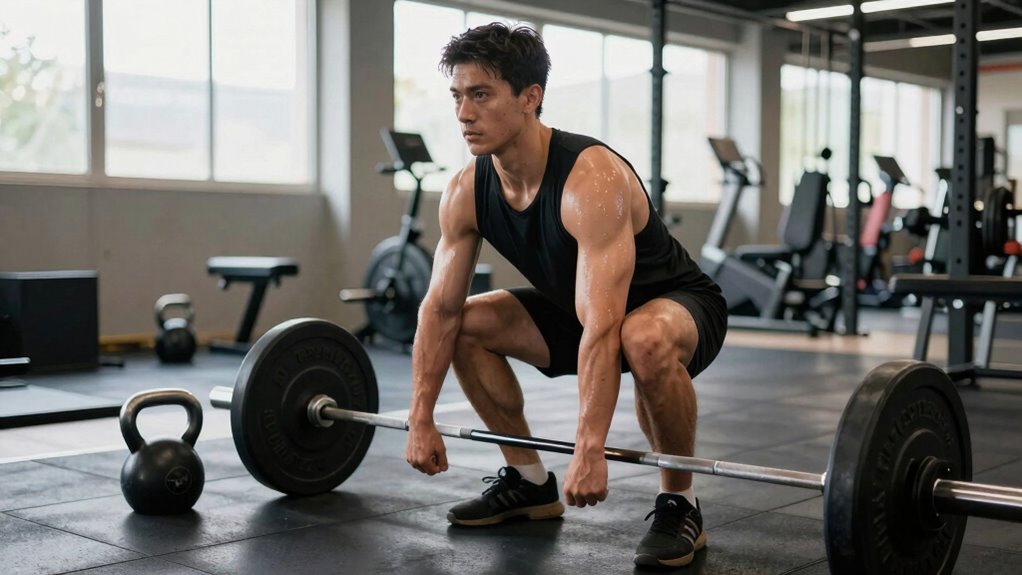
Strength training is vital for cyclists looking to boost performance, prevent injuries, and build overall strength. One of the most effective ways to achieve these goals is by focusing on core stability. Your core acts as the foundation for every pedal stroke, helping you transfer power efficiently from your upper body to your legs. When your core is weak or unstable, other muscles compensate, which can lead to overuse injuries or strain. By regularly engaging in core stability exercises, you create a solid support system that enhances your posture on the bike, improves balance, and reduces the risk of back pain or shoulder strain. Incorporating exercises like planks, side planks, and bird dogs into your routine helps develop this vital stability. You’ll notice that with a stronger core, your riding becomes more controlled, and fatigue sets in later during long rides.
Injury prevention is another critical aspect of strength training for cyclists. Repetitive pedaling motions and prolonged rides put stress on your knees, hips, and lower back, increasing the likelihood of overuse injuries. Targeted strength exercises can reinforce these vulnerable areas, making them more resilient. For instance, strengthening your glutes and hip stabilizers through squats, lunges, and hip bridges not only improves power but also stabilizes your pelvis, helping prevent common issues like iliotibial band syndrome or knee pain. Building balanced strength around your joints minimizes compensatory movement patterns that often lead to injuries. Moreover, incorporating resistance training helps correct muscular imbalances, which are frequent in cyclists due to the repetitive nature of pedaling. When your muscles are balanced and well-conditioned, you’re less likely to experience strains or tears.
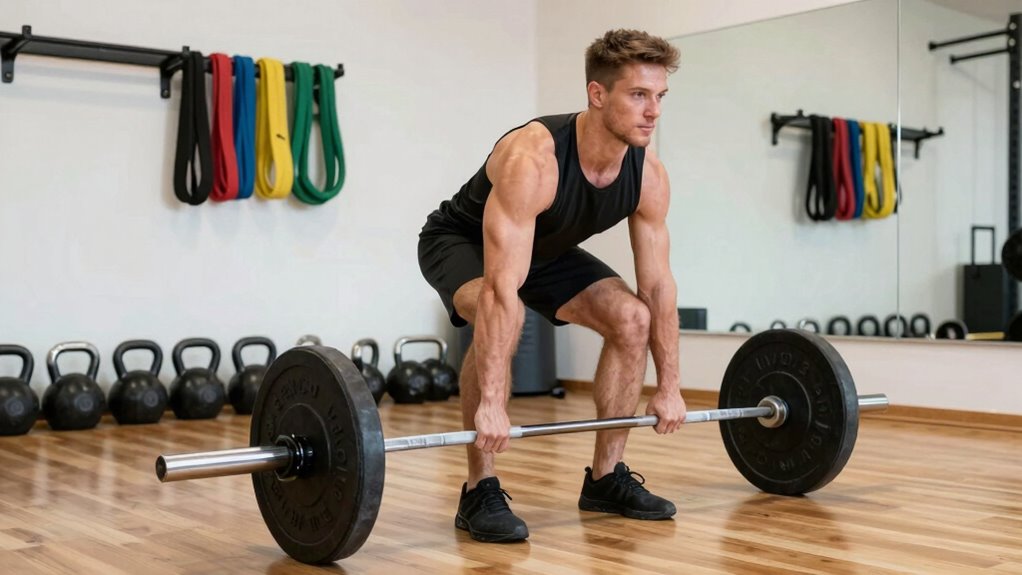
You don’t need to spend hours in the gym to reap the benefits of strength training. A minimal effective dose involves just two to three sessions per week, focusing on compound movements that target multiple muscle groups simultaneously. This approach maximizes your efficiency, ensuring you develop core stability and strengthen key areas without overtraining. Keep your workouts brief but intense, emphasizing quality over quantity. Remember, consistency is key—making strength training a regular part of your routine ensures long-term improvements in strength, injury resilience, and overall cycling performance. By dedicating a small amount of time each week to these targeted exercises, you’ll notice significant gains in stability and injury prevention, helping you ride stronger, longer, and safer.
Frequently Asked Questions
How Often Should Cyclists Incorporate Strength Training Weekly?
You should incorporate strength training into your weekly routine about two to three times a week. This helps improve cycling nutrition by boosting your power and endurance. Make certain your bike fitting is optimized to prevent injuries and maximize gains. Consistent strength workouts alongside proper cycling nutrition will enhance your performance and reduce fatigue, making your rides more efficient and enjoyable. Stick to this schedule for steady progress without overtraining.
What Are the Best Strength Exercises for Cycling Performance?
You should focus on core stability exercises like planks and bridges to enhance balance and power on the bike. Incorporate plyometric drills such as box jumps and jump squats to boost explosive strength and pedal efficiency. These exercises improve muscle responsiveness and endurance, directly translating to better cycling performance. Consistently including core stability work and plyometrics in your routine helps you ride faster, longer, and more efficiently.
Is Strength Training Suitable for All Cycling Disciplines?
Yes, strength training suits all cycling disciplines. It improves your cycling biomechanics, boosting power and efficiency whether you’re racing, mountain biking, or commuting. You should tailor your training periodization to match your discipline’s demands, gradually increasing intensity and volume to avoid overtraining. Consistent strength work enhances endurance and reduces injury risk, making it a valuable addition to any cyclist’s routine regardless of your specific cycling discipline.
How Can Beginners Start Strength Training Safely?
You can start strength training safely by focusing on proper form and gradually increasing resistance to promote muscle hypertrophy without overloading your muscles. Begin with bodyweight exercises or light weights, and don’t rush progress. Always include warm-up and cool-down routines to prevent injury. Consistent, moderate effort helps build strength, which boosts injury prevention and cycling performance, ensuring you stay safe while gaining the benefits of strength training.
Does Strength Training Improve Cycling Endurance?
Yes, strength training can boost your cycling endurance by enhancing muscle hypertrophy and anaerobic capacity. You might worry about losing your endurance, but focusing on specific strength routines actually improves your stamina. When you build muscle strength, your body becomes more efficient at sustained efforts, allowing you to ride longer without fatigue. Incorporating targeted strength workouts helps you perform better on tough climbs and long rides, making your cycling more powerful and resilient.
Conclusion
So, if you want to conquer mountains and crush your cycling goals, don’t overlook strength training. Even just a few carefully chosen sessions can release superhuman stamina and power—it’s like turning your legs into pistons of pure energy. Stick to the minimum effective dose, stay consistent, and watch your performance skyrocket beyond what you ever thought possible. Remember, with the right strength routine, you’re not just riding—you’re flying on two wheels!