
To improve your cycling strength, focus on underrated core moves like plank with shoulder taps and dynamic balance exercises. These moves target stabilizing muscles, enhance coordination, and boost overall stability on uneven terrain. Flexibility routines for hips, hamstrings, and lower back also support core engagement and pedaling efficiency. Incorporating these often-overlooked exercises can markedly boost your performance and reduce injury risks. Keep exploring to discover even more essential moves to elevate your ride.

Get sports gear delivered free with Prime
- Fast, free delivery on millions of items
- Prime Video, Amazon Music and more included
- Member-only deals all year
Key Takeaways
- Plank with shoulder taps enhances oblique and shoulder stability, improving balance and coordination on the bike.
- Single-leg balance exercises with torso twists mimic on-road instability, strengthening core responsiveness.
- Dynamic stability drills, like standing on one leg with reach movements, boost proprioception and quick muscle reactions.
- Incorporating lower back twists and hip flexor stretches maintains flexibility, supporting efficient core engagement.
- Simple, effective exercises like bird dogs improve core stability and prevent injury during intense cycling efforts.
A strong core is essential for cyclists because it improves stability, power, and endurance on the bike. While many riders focus on leg strength and cardio, neglecting your core can limit your performance and increase the risk of injury. The most underrated core moves often involve simple, effective exercises that target deep stabilizing muscles. Incorporating balance exercises into your routine enhances your body’s ability to stay steady during rides, especially on uneven terrain or during quick turns. These exercises challenge your proprioception and help you develop better motor control, enabling you to react swiftly and maintain proper posture despite fatigue or external disturbances.
Flexibility drills are equally crucial but often overlooked. Tight hips, hamstrings, or lower back muscles can restrict movement and cause discomfort, ultimately affecting your cycling efficiency. Regular flexibility drills help release tension, improve your range of motion, and promote smoother pedal strokes. When combined with targeted core exercises, they create a well-rounded approach that boosts your overall cycling performance. Additionally, focusing on proper core activation techniques during these exercises can enhance muscle engagement and stability.
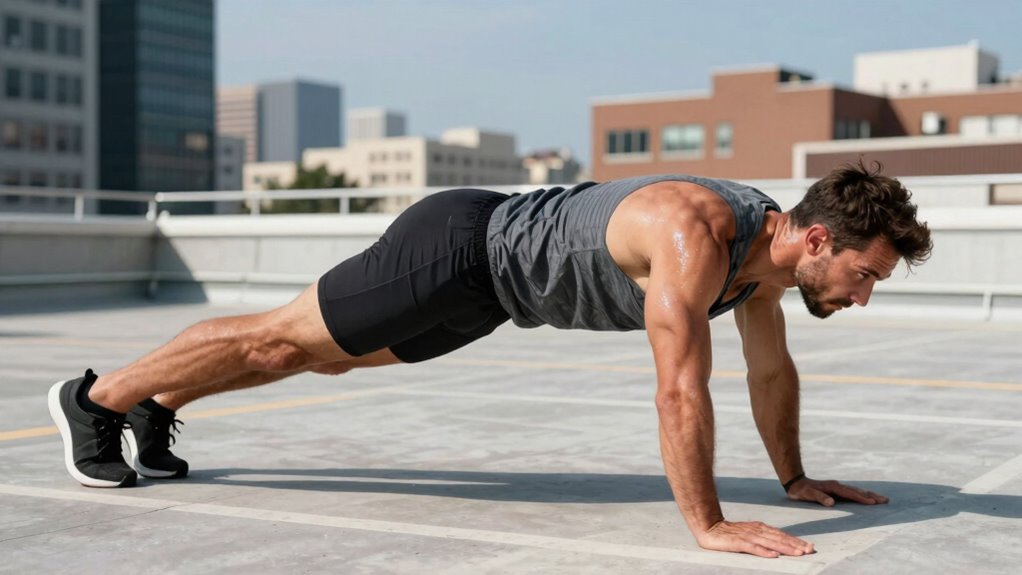
One underrated move is the plank with shoulder taps. It’s a simple variation of the classic plank but adds a dynamic element that engages your obliques and shoulder stabilizers. As you hold a plank position, lift one hand and tap your opposite shoulder, then alternate sides. This move not only strengthens your core but also enhances your balance and coordination—key qualities for maintaining control on the saddle. To make it even more effective, focus on keeping your hips as still as possible and engaging your core throughout. Incorporating core activation techniques can help you maximize muscle engagement during these exercises.
Another often-neglected move involves dynamic balance exercises, like standing on one leg while performing small torso twists or reaching for objects. These exercises mimic the instability you encounter during rides and train your muscles to respond quickly. Incorporate these into your warm-up or cool-down routines to build resilience and improve overall core stability. Developing proprioception through such exercises can significantly impact your riding confidence and safety.
Flexibility drills such as hip flexor stretches, hamstring extensions, and lower back twists help keep your muscles pliable and prevent tightness that could impair your core engagement. Regularly dedicating time to these stretches can make a noticeable difference in how efficiently you pedal and how long you can sustain a comfortable riding position. Moreover, maintaining good flexibility can prevent injuries that might otherwise hinder your training progress. Including flexibility routines in your training is a simple yet effective way to support your core strength and overall mobility.
core exercise equipment for cyclists
As an affiliate, we earn on qualifying purchases.
As an affiliate, we earn on qualifying purchases.
Frequently Asked Questions
How Often Should Cyclists Perform Core Exercises Weekly?
You should perform core exercises two to three times a week to boost core stability and core flexibility. Consistency helps you develop a stronger, more balanced core, which improves cycling performance and reduces injury risk. Incorporate a variety of moves targeting different core muscles, and guarantee you give your muscles time to recover. Regular practice will enhance your overall stability on the bike and make your rides more efficient and comfortable.
Are Core Moves Suitable for Beginner Cyclists?
Yes, core moves are suitable for beginner cyclists. They help build core stability, which is essential for maintaining proper posture and balance on the bike. Incorporating simple exercises like planks or bird dogs can improve your strength gradually. Strengthening your core also aids in injury prevention, making your rides safer and more efficient. Start slow, focus on proper form, and gradually increase intensity as your core gets stronger.
Can Core Exercises Improve Cycling Endurance?
Did you know that improved core stability can boost cycling efficiency by up to 20%? Yes, core exercises enhance muscle activation, leading to better endurance on long rides. When your core is strong, it stabilizes your pelvis and spine, reducing fatigue and conserving energy. So, incorporating core exercises into your training can considerably improve your cycling endurance, making it easier to ride longer distances with less effort.
What Equipment Is Needed for Core Training?
You don’t need much equipment for core training—just your body weight often suffices. To enhance core stability and add variety, consider using versatile gear like stability balls, resistance bands, or a medicine ball. These tools help target different muscle groups, making your workouts more effective. Remember, the key is consistency, so choose equipment that’s easy to use and fits your space and schedule.
How Long Before Noticeable Core Strength Improvements Occur?
You’ll notice core strength improvements in about 4 to 6 weeks if you train consistently. Research shows that improved core stability can reduce injury risk by up to 40%, making your rides safer. Regularly engaging in targeted core exercises enhances your balance and posture, directly benefiting your cycling performance. Keep at it, and you’ll see stronger abs, better injury prevention, and more efficient pedaling in just a few weeks.
Conclusion
Focusing on these underrated core moves can seriously boost your cycling performance and prevent injuries. Incorporate them into your routine regularly, and you’ll notice improved stability and power on every ride. Did you know that strong core muscles can improve your riding efficiency by up to 20%? Keep working on these moves consistently, and you’ll ride faster, stronger, and with less fatigue. Your cycling game is about to reach new heights—so get started today!
Halloween Picks
halloween
As an affiliate, we earn on qualifying purchases.