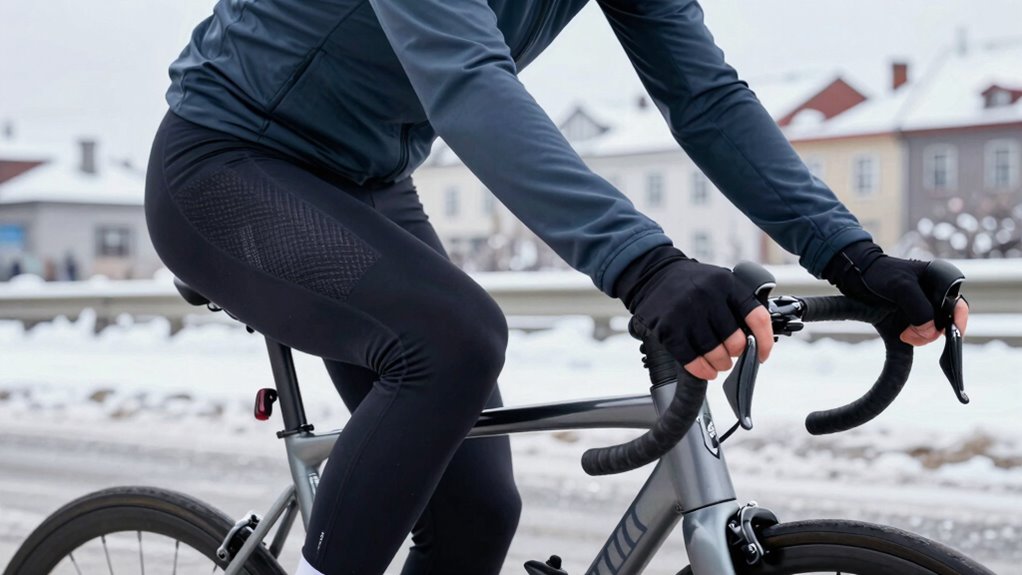

To stay warm on cold rides, use a layering system starting with a close-fitting moisture-wicking base layer made of merino wool or synthetic fibers to keep sweat away. Add an insulating layer like fleece or wool for warmth and a windproof, waterproof outer shell to block wind and rain. Proper layering traps heat, manages moisture, and adapts to changing conditions. Keep your legs cozy and dry—continue to explore how each layer works for ideal comfort.
Key Takeaways
- Use moisture-wicking base layers like merino wool or synthetic fabrics to keep sweat away from skin.
- Add insulating layers such as fleece or wool for warmth without bulk, adjustable based on conditions.
- Apply a windproof and waterproof outer shell to protect against wind, rain, and snow while allowing moisture escape.
- Layer appropriately to trap heat, manage moisture, and adapt to changing weather for optimal comfort.
- Proper layering maintains core warmth and dry legs, ensuring comfort and performance during cold rides.
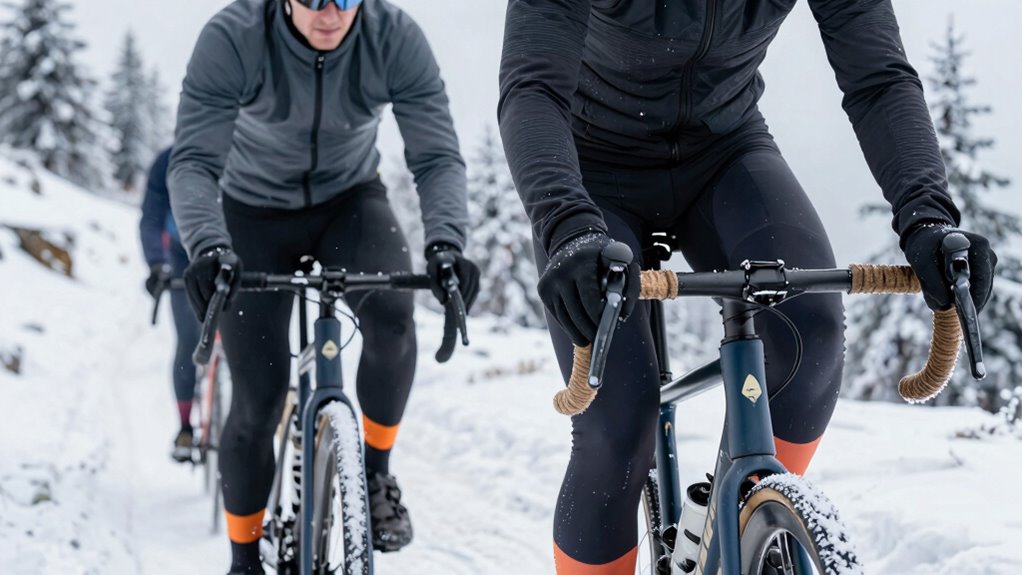
When riding in cold weather, staying warm and comfortable requires more than just a thick jacket. It’s about understanding how to layer effectively to keep your body temperature steady and your ride enjoyable. The key is selecting clothing that offers excellent thermal insulation while also managing moisture. Proper layering traps heat close to your skin, creating a barrier against the cold, but it’s equally important to prevent sweat from chilling you once you start sweating. That’s where moisture management comes into play.
Start with a moisture-wicking base layer. This layer should fit snugly against your skin and pull sweat away from your body. Materials like merino wool or synthetic fibers excel here because they dry quickly and prevent moisture buildup, which can lead to chills. Avoid cotton, as it absorbs moisture and stays wet longer, increasing your risk of getting cold. Your goal with this layer is to keep your skin dry and comfortable, creating a solid foundation for the rest of your layers.
Start with a snug, moisture-wicking base layer to keep your skin dry and comfortable.
Over the base, add an insulating layer designed for thermal insulation. Fleece or wool are excellent options because they trap heat effectively without adding bulk. This middle layer acts as your primary defense against the cold, providing warmth while still allowing for some breathability. It’s essential to choose a layer that can be adjusted or removed as needed — for instance, if you start to sweat more than expected or if the temperature rises slightly. When selecting this layer, think about how well it insulates and how easily it can be layered or shed during your ride. Incorporating modern textile technologies can also enhance insulation and moisture management in your layers.
Finally, top it all with a windproof and waterproof outer shell. This layer protects you from the elements — wind, rain, or snow — which can quickly sap your body heat and make you miserable. Look for a shell that’s breathable but sturdy enough to block wind and moisture. This keeps the heat in and prevents external moisture from penetrating and dampening your layers underneath. When you’re riding, your outer shell should be easy to adjust or remove if you generate enough heat or if the weather shifts.
Combining these layers thoughtfully ensures you stay warm, dry, and comfortable during your cold rides. By focusing on thermal insulation, you keep your core heat locked in, and with proper moisture management, you prevent sweat from turning into a cold, uncomfortable problem. The right layering system makes all the difference, allowing you to enjoy your ride regardless of the weather.
Frequently Asked Questions
How Do I Choose the Right Base Layer for Cold Rides?
To choose the right base layer for cold rides, focus on thermal regulation and moisture management. Look for materials like merino wool or synthetic fabrics that keep you warm while wicking sweat away from your skin. Avoid cotton, which traps moisture and chills you. Opt for a snug fit to maximize insulation and moisture control, ensuring you stay dry and warm throughout your ride.
What Materials Are Best for Insulation Layers?
They say, “You are only as warm as your layers,” and that’s true for insulation layers. For the best thermal fabrics, opt for materials like merino wool, fleece, or synthetic insulation, which trap heat effectively. These insulation materials are lightweight, moisture-wicking, and provide excellent warmth. Choose fabrics that suit your ride’s intensity and conditions, ensuring you stay warm without overheating.
How Often Should I Adjust My Layers During a Ride?
You should modify your layers as needed by monitoring your temperature regularly during the ride. If you start feeling too warm, remove a layer; if you’re getting cold, add one. Pay attention to signals from your body and weather changes, making layer adjustments promptly. Staying proactive with temperature monitoring ensures you stay comfortable and safe, preventing overheating or chilliness throughout your ride.
Can Layering Help Prevent Frostbite on Cold Rides?
Yes, layering helps prevent frostbite on cold rides by maintaining thermal regulation and managing moisture wicking. When you layer properly, your outer shell blocks wind and retains heat, while moisture-wicking layers keep sweat away from your skin, reducing the risk of frostbite. You should adjust your layers as needed, adding or removing them to stay warm and dry. Proper layering guarantees consistent warmth and moisture control throughout your ride.
What Are the Signs of Overheating While Layered?
You’ll know you’re overheating when you start sweating excessively, feel clammy, and notice moisture wicking clothing becomes damp. Sweat management is key, so if your layers trap heat and moisture, you’ll feel uncomfortable, sluggish, or dizzy. Keep an eye on physical cues like increased heart rate or flushed skin. Adjust your layers accordingly to maintain comfort, ensuring moisture wicking keeps sweat away from your skin and prevents overheating.
Conclusion
Think of your layering system as a trusty shield that guards you against the chill, much like a knight’s armor protecting them in battle. Each layer is a crucial part, working together to keep you warm and comfortable on cold rides. When you choose the right pieces, you’re forging a strong, flexible armor that adapts to every gust and gust, allowing you to conquer the cold with confidence. Ride on, knowing you’re well-armored against winter’s bite.