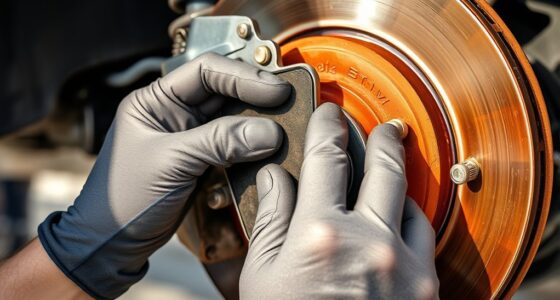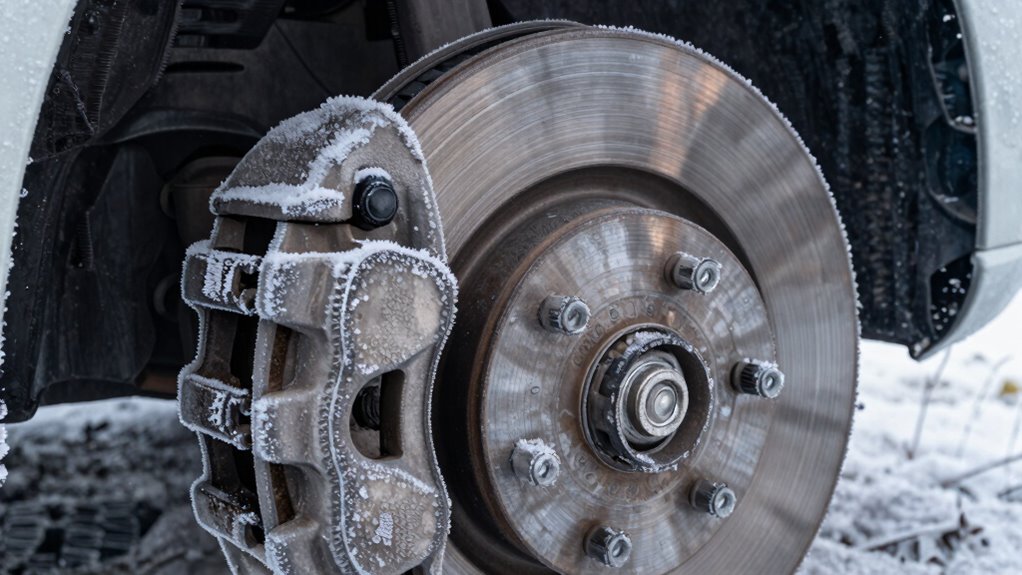

In cold weather, your brakes feel different because the brake fluid thickens, making it harder for it to flow smoothly through brake lines, which can cause a spongy or delayed response. Low temperatures can also reduce tire traction, increasing stopping distances. You might notice needing more pressure on the pedal or longer stops. Paying attention to these changes and understanding how cold affects your vehicle helps keep you safe—keep going to learn what you can do about it.
Key Takeaways
- Cold temperatures cause brake fluid to thicken, reducing its flow and responsiveness.
- Moisture absorption lowers brake fluid’s boiling point, impairing braking performance in winter.
- Thickened brake fluid requires more pedal effort, making brakes feel less firm or spongy.
- Reduced tire traction on icy roads increases stopping distances, affecting brake feel.
- Cold weather can affect brake components, leading to delayed or less responsive braking.
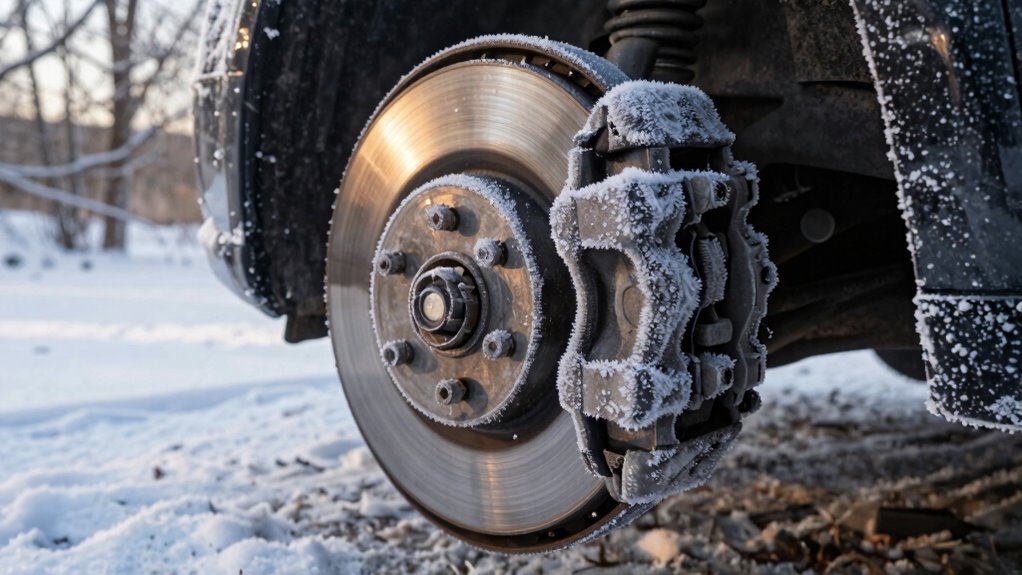
When temperatures drop, your vehicle’s brakes can become less responsive, making it essential to understand how cold weather affects their performance. Cold temperatures influence various brake components, especially brake fluid, which is crucial for smooth braking. As the temperature falls, brake fluid can thicken, reducing its ability to flow freely through brake lines. This thickening means your brakes might feel less responsive or require more pressure to engage fully. You may notice a spongy or delayed brake response, especially if your brake fluid hasn’t been replaced recently or isn’t of the right type for winter conditions. Regularly checking and replacing your brake fluid with a formulation suitable for low temperatures can help maintain proper brake function during the cold months. Additionally, brake fluid is hygroscopic, meaning it absorbs moisture over time, which can further lower its boiling point and impair braking performance in cold weather. Ensuring your brake fluid is free of moisture is especially important in winter to prevent freezing or reduced effectiveness. Proper brake system maintenance can also prevent issues caused by cold weather, keeping your vehicle safe to drive. In colder climates, the quality of brake fluid becomes even more critical, as subpar formulations may not perform well in low temperatures. Another factor that impacts braking performance in cold weather is tire traction. When roads are icy or snow-covered, your tires struggle to grip the road surface. This loss of traction doesn’t just make acceleration difficult; it also affects your ability to stop quickly. You might feel your vehicle skidding or taking longer to come to a complete stop, even with firm pressure on the brake pedal. Good tire traction is essential for safe braking, especially in winter conditions, so ensuring your tires have sufficient tread and are properly inflated is critical. Keep in mind that even with excellent tires, icy patches can be unpredictable, making cautious driving and increased stopping distances necessary. Proper maintenance of your tires, including regular checks for tread depth and pressure, can significantly improve winter driving safety and braking performance. The combination of cold temperatures affecting brake fluid and decreased tire traction means you need to adapt your driving in winter. It’s wise to give yourself extra space between your vehicle and the one ahead, anticipating longer stopping distances. When you press the brake pedal, you might feel it’s less firm or it takes more effort, which is partly due to the thicker brake fluid. To counteract this, some drivers find it helpful to gently pump the brakes to warm the brake lines and fluid, restoring better responsiveness. Also, always check your tire pressure, as cold air can cause tires to deflate slightly, reducing traction further. Additionally, understanding winter driving techniques can help you navigate icy or snowy conditions more safely. Ultimately, understanding how cold weather impacts your brakes involves paying close attention to the condition of your brake fluid and tires. Taking proactive steps, like regular maintenance and cautious driving, helps ensure your brakes perform reliably despite the chilly conditions. Recognizing these changes allows you to respond appropriately, keeping you safe on winter roads.

YOUMAYSTORY Brake Bleed Kit for Shimano Hydraulic Brakes, Brake Fluid Change Hydraulic Kits, Including High Performance Brake Fluid Mineral Oil 120ml
- Compatible with Shimano Hydraulic Brakes: Fits all Shimano hydraulic brake systems
- Complete Brake Bleeding Kit: Includes mineral oil, syringe, funnel, and adapters
- High-Quality Brake Fluid: Stable, low-temperature fluid for reliable performance
As an affiliate, we earn on qualifying purchases.
As an affiliate, we earn on qualifying purchases.
Frequently Asked Questions
Can Cold Weather Cause Brake Fluid to Freeze?
Cold weather can cause brake fluid to thicken, as its viscosity increases, but it typically doesn’t freeze solid because most brake fluids are designed to withstand low temperatures. However, extremely cold conditions can contribute to brake system corrosion over time, affecting performance. You should regularly check your brake fluid and consider using a low-temperature fluid if you live in very cold climates to maintain proper brake function and prevent damage.
Do Brake Pads Perform Worse in Cold Temperatures?
You might notice your brake pads perform worse in cold temperatures, and it’s true. Cold weather can cause brake pad wear to increase slightly, affecting your braking distance. When pads are cold, they may not grip as effectively, leading to longer stopping times. This can make your braking feel less responsive. So, in chilly conditions, always allow extra space and be cautious, knowing your brakes might not work as smoothly.
How Does Snow Affect Brake Responsiveness?
Snow affects your brake responsiveness by creating slippery surfaces, which reduce traction and increase stopping distances. When snow accumulates on the road, your brakes may feel less responsive because of decreased grip, especially on icy patches or ice road conditions. You might need to press harder on the pedal or brake earlier to compensate for the reduced friction, making driving in snowy conditions more challenging and requiring extra caution.
Are Ceramic Brakes Better in Winter?
Ceramic brakes are often better in winter because they resist brake noise and maintain performance longer, with a typical lifespan of around 70,000 miles. Cold weather can cause metallic brakes to squeal or seize, but ceramics handle low temperatures more smoothly. You’ll appreciate their durability and quiet operation, especially as they prevent brake fade in chilly conditions, giving you safer, more reliable stopping power during winter driving.
Should I Change My Brake Fluid for Winter?
Yes, you should consider changing your brake fluid for winter. Brake fluid maintenance is essential because cold temperatures can cause moisture buildup, leading to corrosion and reduced braking performance. Fresh brake fluid improves winter driving safety by ensuring your brakes respond reliably when you need them most. Regularly inspecting and replacing your brake fluid helps prevent potential brake system issues, giving you peace of mind during cold, icy conditions.
Conclusion
So, next time you feel your brakes acting up in the cold, remember it’s just the weather messing with your car’s rhythm. With a little extra attention, you can keep your brakes as reliable as your morning coffee. Don’t let the chill turn your drive into a nightmare — a quick check or warm-up can save you from a brake disaster. Stay vigilant and keep those brakes as steady as your favorite playlist.