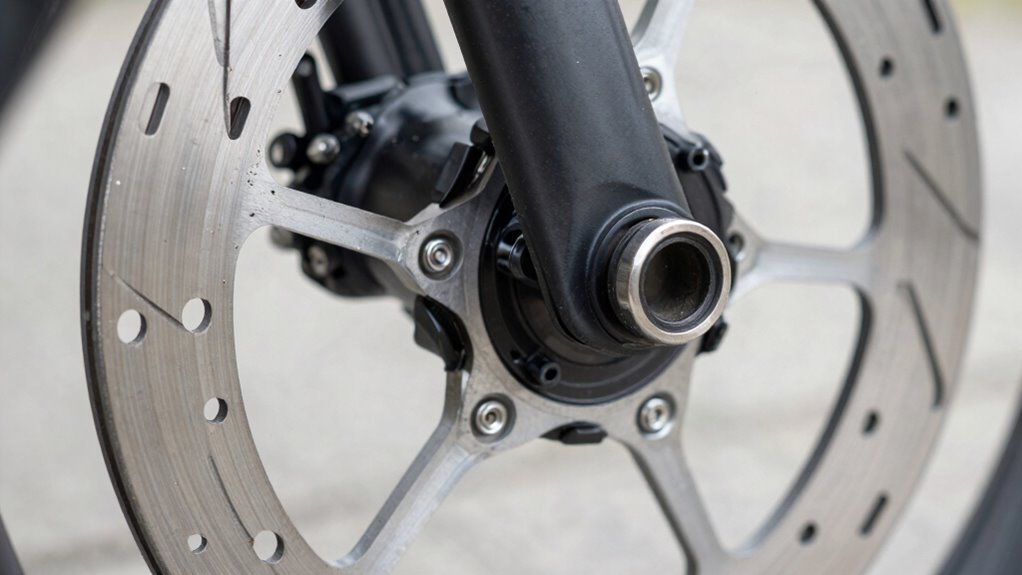

Disc brake rub keeps coming back mainly because of caliper misalignment and warped rotors. Improper installation, uneven pad wear, or rough driving can cause the calipers to sit incorrectly, while excessive heat from heavy braking warps the rotors, leading to persistent noise and vibrations. If these issues aren’t properly addressed, the problem will likely return. Stay tuned to discover how to fix these common causes and keep your brake system smooth and quiet.
Key Takeaways
- Misaligned calipers or improper installation cause recurring brake rub issues.
- Warped rotors from excessive heat lead to uneven contact and persistent noise.
- Normal wear and rough driving can gradually misalign calipers, causing brake rub to reappear.
- Insufficient cooling or heavy braking can warp rotors, making brake rub return even after repairs.
- Ignoring regular maintenance and hardware checks allows minor issues to persist and recur.
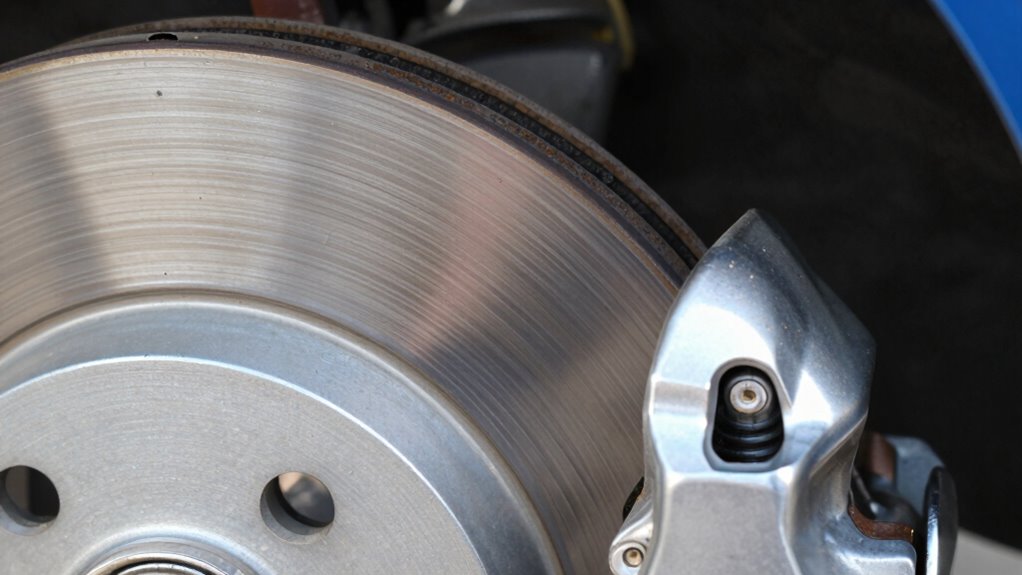
If you notice a squealing or grinding noise when you brake, it could be due to disc brake rub. This issue often feels like the brake pads are dragging against the rotor, and it can be frustrating because it keeps coming back even after you’ve tried fixing it. One common cause is caliper misalignment. When the caliper isn’t properly aligned with the rotor, it can cause uneven contact, leading to persistent rubbing sounds. Over time, this misalignment can occur from normal wear, rough driving, or improper installation. When the caliper isn’t seated correctly, it pushes the brake pads unevenly against the rotor, which not only causes noise but also uneven pad wear and increased brake system stress.
Another factor that frequently leads to disc brake rub is rotor warping. Rotors can warp for several reasons, such as excessive heat buildup during aggressive braking or prolonged heavy braking, especially if the rotors aren’t properly cooled. Warped rotors no longer spin perfectly true, causing the brake pads to constantly make slight contact as the rotor rotates. This uneven contact results in that familiar squeal or grind, and the noise often returns even after you’ve had the rotors resurfaced or replaced. Warped rotors also lead to vibrations when braking, making the driving experience uncomfortable and reducing braking efficiency.
Warped rotors cause uneven contact, squeals, and vibrations during braking.
Addressing disc brake rub isn’t just about quieting the noise; it’s about ensuring your braking system functions safely and efficiently. You should start by inspecting the caliper alignment. If it’s off, you’ll need to realign the caliper, which might involve loosening mounting bolts and adjusting the caliper’s position so it sits evenly over the rotor. Proper caliper alignment ensures the pads make even contact with the rotor surface, reducing the chances of rubbing. If the rotor is warped, you might need to replace or have it resurfaced at a shop that can accurately machine it back into shape. Be cautious about ignoring warped rotors, as they can cause uneven brake pad wear and reduce stopping power.
In many cases, fixing disc brake rub requires a combination of correcting caliper alignment and replacing warped rotors. Regular maintenance, including checking for caliper issues and rotor condition, can prevent the problem from recurring. Additionally, understanding cable and hardware compatibility and quality can help ensure your brake system remains in proper working order, reducing the likelihood of recurring issues. Remember, persistent brake noise isn’t just a nuisance—it’s a sign that something’s not right with your braking system. Addressing these issues promptly will help keep your vehicle safe, quiet, and performing at its best.
Frequently Asked Questions
Can Disc Brake Rub Cause Long-Term Damage?
Yes, disc brake rub can cause long-term damage if ignored. When brake pads wear unevenly or rotor warping occurs, continual rubbing can lead to further rotor damage, increased brake pad wear, and reduced braking efficiency. Over time, this can compromise your braking system’s safety and performance. To prevent long-term issues, address brake rub promptly by inspecting and replacing worn components and realigning the rotor if necessary.
How Often Should I Check My Brake System?
You should check your brake system every 10,000 miles or at least twice a year. Regular brake pad inspection helps catch issues early, preventing problems like disc brake rub. If you notice uneven wear or squeaking, consider rotor resurfacing to guarantee smooth operation. Staying proactive keeps your brakes in top shape, minimizes costly repairs, and keeps you safe on the road. Don’t wait—regular checks are essential for ideal braking performance.
Is Disc Brake Rub Common in All Vehicle Types?
Yes, disc brake rub can happen in all vehicle types. It often occurs when your brake pad isn’t aligned properly with the rotor or if debris gets lodged between them. You might notice resistance or noise while driving. Regularly checking your rotor alignment and ensuring your brake pads are correctly positioned can help prevent this issue from recurring. Keep an eye on your brake system to maintain smooth, quiet stops.
Can Ambient Temperature Affect Brake Rub?
Yes, ambient temperature can affect brake rub. When it’s hot outside, the brake pad and rotor experience thermal expansion, which can cause the components to shift slightly. This expansion might lead to the brake pad pressing more firmly against the rotor, resulting in rubbing. Conversely, cooler temperatures can cause contraction, reducing contact. So, temperature changes directly influence how your brake components fit and function, potentially causing or alleviating brake rub.
What Are the Cost Implications of Fixing Brake Rub?
Fixing brake rub won’t break the bank, but it might make your wallet squeal. You’ll find repair costs vary, with a simple adjustment costing less than replacing warped rotors or pads. A quick cost comparison reveals minor fixes are budget-friendly, while major repairs can hit your pocket hard. So, if you want smooth braking without draining your funds, addressing brake rub early saves money and stress—your wallet will thank you.
Conclusion
If your disc brake rub keeps coming back, don’t throw in the towel just yet. Sometimes, the root cause is lurking beneath the surface, waiting to surprise you. By understanding the real reasons behind the issue—like misalignment, debris, or warped rotors—you can tackle it head-on. Remember, a problem shared is a problem halved. Stay vigilant, keep your tools handy, and you’ll be back on the road with brakes that work like a charm in no time.