
To quickly do a drivetrain deep clean in 20 minutes, start by safely lifting your vehicle if needed. Spray a degreaser generously on all drivetrain parts and let it loosen dirt. Use brushes to scrub away grime on joints, gears, and shafts. Rinse with low-pressure water, avoiding electrical or sealed areas, then dry thoroughly to prevent rust. Finish by applying the correct lubricants to keep everything running smoothly. Keep going to discover more tips for a thorough, efficient clean.
Key Takeaways
- Gather essential tools: degreaser, brushes, rags, gloves, and suitable lubricants before starting.
- Safely lift the vehicle and spray degreaser generously on drivetrain components.
- Scrub thoroughly with brushes, focusing on joints, gears, and shafts to loosen dirt.
- Rinse with low-pressure water, avoiding sealed or electrical parts, then dry completely.
- Apply appropriate lubricants to gears, joints, and transmission parts following manufacturer guidelines.
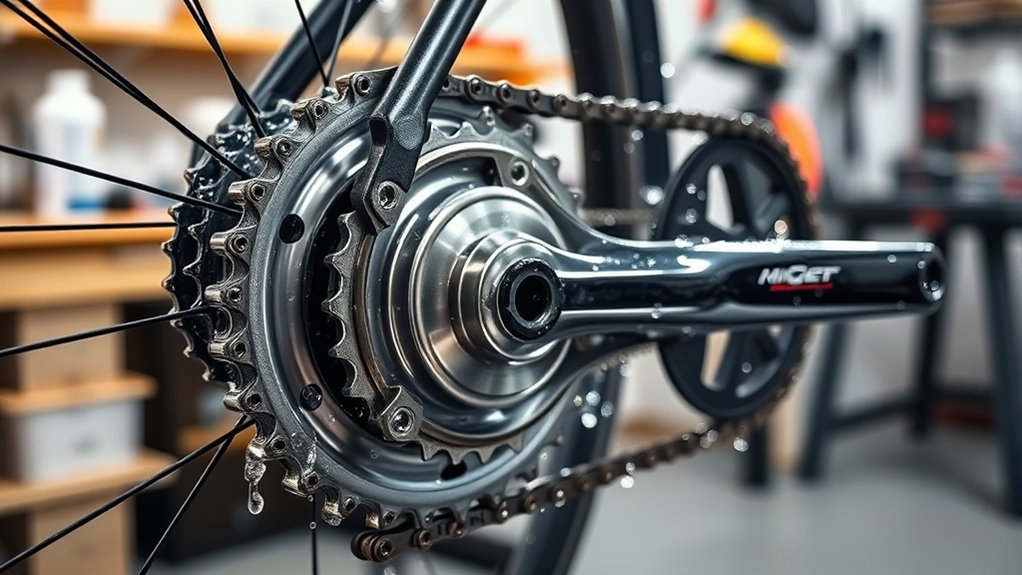
Have you ever wondered how a thorough drivetrain cleaning can boost your vehicle’s performance and longevity? When you dedicate just 20 minutes to deep cleaning your drivetrain, you’re not only removing dirt, grime, and old lubricant but also preventing wear and tear on essential components. This quick yet effective maintenance step helps guarantee your vehicle runs smoothly, responds better, and lasts longer. To get the best results, focusing on lubricant selection is indispensable. Using the right lubricant for your drivetrain components—whether it’s the transmission, differential, or driveshaft—can markedly impact how well your vehicle performs after cleaning. Be sure to choose high-quality lubricants that match your vehicle’s specifications and operating conditions. Proper lubricant selection reduces friction, prevents rust, and minimizes wear, which are all critical during and after a deep clean.
Starting the process, you’ll want to gather a few basic tools and supplies: degreaser, brushes, rags, gloves, and the correct lubricants. Begin by safely lifting your vehicle if needed, and then spray the degreaser generously onto the drivetrain components, focusing on areas with built-up grime. Allow the degreaser to sit for a few minutes to loosen stubborn dirt. Use brushes to scrub away dirt and old grease, paying close attention to joints, gears, and shafts. Once the grime is loosened, rinse it off with low-pressure water, being careful not to force water into sealed components or electrical parts. Dry everything thoroughly to prevent rust. Proper cleaning techniques are essential for achieving optimal results and preventing damage during this process.
Gather tools, spray degreaser, scrub dirt, rinse gently, and dry thoroughly for a clean drivetrain.
At this point, it’s time to apply fresh lubricant. Remember, your lubricant selection plays a pivotal role here. Use a high-quality, appropriate lubricant for each component—gear oil for differentials, grease for joints, and suitable lubricants for transmission parts. Proper lubrication after cleaning minimizes friction and prevents future buildup of dirt and debris. During this process, follow some simple maintenance tips: always check your vehicle’s manual for recommended lubricant types and quantities, and don’t over-lubricate—more isn’t better. Regularly inspect your drivetrain for leaks or signs of wear, and keep the components clean to extend their lifespan.
In just 20 minutes, you can dramatically improve your drivetrain’s health by combining quick cleaning with strategic lubricant application and smart maintenance tips. This simple routine not only enhances your vehicle’s performance but also saves you money and time in the long run. Remember, staying consistent with these quick deep-clean sessions will keep your drivetrain running smoothly, ensuring your vehicle remains reliable mile after mile.
Frequently Asked Questions
Is a Drivetrain Deep Clean Safe for All Vehicle Types?
A drivetrain deep clean is generally safe for most vehicle types, but you should always verify vehicle compatibility first. Different models have varying components, so some may require special cleaning products or techniques. To guarantee cleaning safety, follow the manufacturer’s guidelines and avoid aggressive chemicals that could damage sensitive parts. If unsure, consulting a professional mechanic can help prevent any potential issues and keep your drivetrain in top shape.
How Often Should I Perform a Deep Drivetrain Cleaning?
You should perform a deep drivetrain cleaning every 12,000 to 15,000 miles or once a year, depending on your driving conditions. Incorporate this cleaning into your maintenance schedule to prevent buildup and guarantee peak performance. If you frequently drive in harsh environments like mud or snow, increase the cleaning frequency. Regular maintenance keeps your drivetrain in top shape, extending its lifespan and enhancing vehicle reliability.
Can I Do a Deep Clean Without Professional Tools?
Yes, you can do a deep clean without professional tools by using DIY methods like degreasing with bike-specific cleaner, a soft brush, and rags. Avoid harsh chemicals and power washers, which can damage components. While professional tools can make the job easier and more thorough, proper cleaning supplies and patience allow you to effectively maintain your drivetrain at home, keeping it smooth and efficient without costly equipment.
Does Deep Cleaning Improve Fuel Efficiency?
Yes, deep cleaning your drivetrain improves fuel economy and engine performance. When you remove dirt, grime, and debris, your vehicle runs more smoothly and efficiently. A clean drivetrain reduces strain on engine components, helping your car use fuel more effectively. Regular deep cleaning ensures peak engine operation, saves you money on fuel, and extends your vehicle’s lifespan. So, taking time for a deep clean is a smart move for better overall performance.
Are There Any Risks of Damaging Components During Cleaning?
You can definitely damage components if you’re not careful during cleaning. Use proper techniques to prevent corrosion and protect component longevity. Avoid harsh chemicals and excessive water, which can harm sensitive parts. Follow manufacturer instructions, and consider applying corrosion prevention treatments afterward. Think of it as walking a tightrope—you want to clean thoroughly without risking damage. With caution, you’ll keep your drivetrain in top shape and extend its lifespan.
Conclusion
Now, picture your bike gleaming under the sun, the drivetrain spotless and running smoothly. With just 20 minutes, you’ve turned a dirty, squeaky mess into a sleek, whisper-quiet machine ready to conquer the road. Feel the satisfaction as your hands glide effortlessly over the clean chain and gears, knowing you brought new life to your ride. Keep this routine, and your bike will thank you with every smooth shift and effortless pedal stroke.