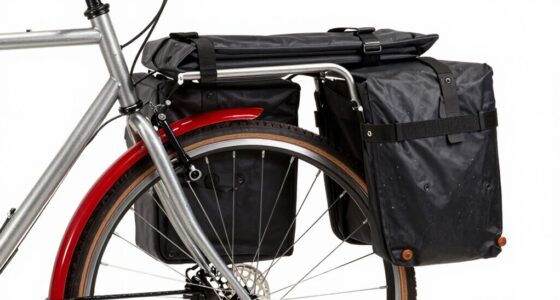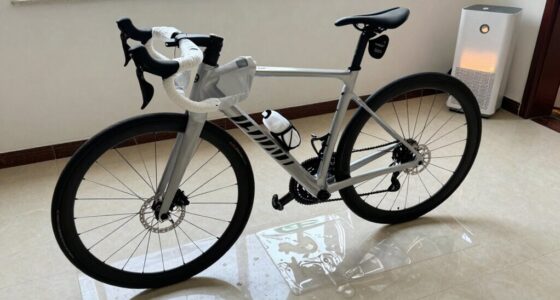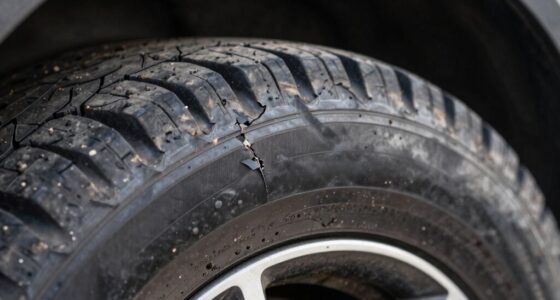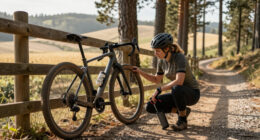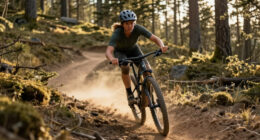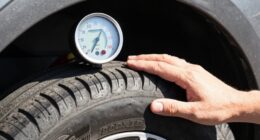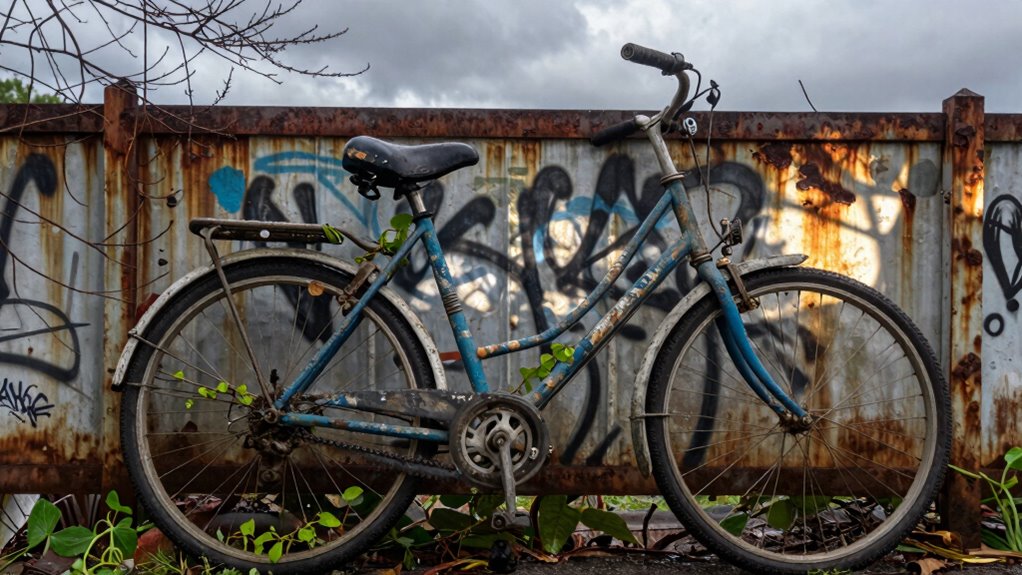
To maintain your outdoor bike, you should use sturdy locks and secure it to a solid object to prevent theft. Regularly wipe it down, focusing on the chain, gears, and brakes, and apply lubricant to keep things running smoothly. Check tire pressure, brake wear, and tighten any loose bolts often. Store the bike in a sheltered spot or cover it to protect it from the elements. Keep attentive to these practices, and you’ll keep your bike in great shape for years to come.

Get sports gear delivered free — and shop member deals
- Fast, free delivery on millions of items
- Access to Prime Big Deal Days deals on October 6–7
- Prime Video, Amazon Music and more included
Key Takeaways
- Regularly clean and dry the bike, especially after wet or muddy rides, to prevent rust and grime buildup.
- Use a weather-resistant cover or store in a sheltered area to protect against rain, sun, and environmental elements.
- Check and maintain tire pressure frequently to avoid flats and ensure riding efficiency.
- Inspect and lubricate the chain, gears, and brakes regularly for smooth operation and longevity.
- Secure the bike with a sturdy lock to a solid object and consider additional security measures against theft.
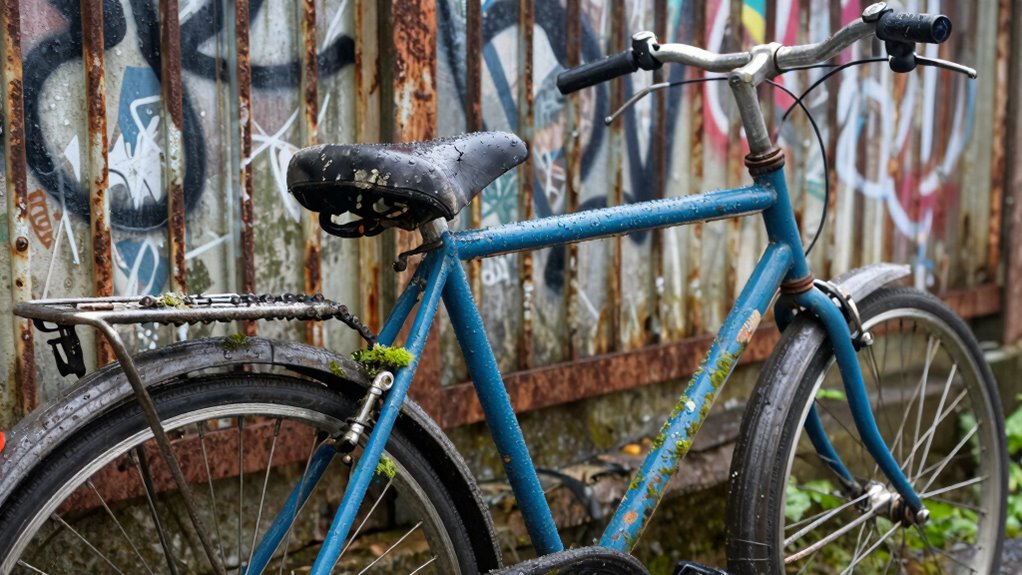
Keeping a bike that lives outside in good condition requires regular maintenance and attention. When your bike spends its days exposed to the elements, it’s essential to protect it from rust, corrosion, and wear. One of the first steps is ensuring your bike lock security is exceptional. A sturdy lock deters theft and keeps your bike safe, even when you’re not around. Opt for a high-quality lock made of hardened steel, and consider using a secondary lock for extra security. When locking your bike, make sure it’s secured to a solid, immovable object, and lock both the frame and wheels whenever possible. This simple habit can prevent theft and give you peace of mind.
Secure your outdoor bike with a sturdy, high-quality lock to prevent theft and keep it safe.
Outdoor riding gear also plays an essential role in maintaining your bike’s longevity. Properly fitted gear, like fenders and mudguards, helps protect your bike from dirt, mud, and water, which can accelerate corrosion. After each ride, especially in wet or muddy conditions, wipe down your bike thoroughly to remove dirt and moisture. Pay particular attention to the chain, gears, and brakes, as grime buildup can impair function and lead to rust. Applying a lubricant to the chain regularly keeps it moving smoothly and prevents rusting. Be sure to choose a lubricant suitable for outdoor riding gear, and wipe off excess to avoid attracting dirt.
In addition to cleaning, inspecting your bike frequently is essential. Check tire pressure often, since outdoor riding can cause tires to lose air more quickly due to temperature changes and rough surfaces. Properly inflated tires improve riding efficiency and prevent flats. Examine the brake pads for wear and replace them if they’re thinning. Regularly inspect the frame for cracks or signs of fatigue, especially if your bike faces rough terrain or harsh weather. Tighten loose bolts and nuts to keep everything secure, which helps avoid mechanical failures mid-ride. Additionally, understanding the importance of biodiversity in outdoor environments encourages responsible riding practices that minimize environmental impact. Incorporating environmentally conscious habits, such as avoiding riding in overly sensitive areas, can help preserve local ecosystems. Being aware of climate conditions can also help you prepare your bike appropriately for different weather scenarios. Regularly checking and maintaining your bike’s components, including tire pressure and brake pads, can prevent issues before they arise.
Finally, store your bike in a sheltered location if possible, such as a covered bike rack or shed. Even if it’s outside, minimizing direct exposure to rain and sunlight can extend its lifespan. Covering your bike with a weather-resistant tarp when not in use offers additional protection. Remember, consistent upkeep isn’t just about maintaining the appearance; it’s about ensuring your bike remains safe, functional, and ready for your next outdoor adventure. Proper bike lock security, diligent cleaning, and smart storage will keep your bike in prime condition, no matter where it lives.
As an affiliate, we earn on qualifying purchases.
Frequently Asked Questions
How Often Should I Replace My Bike’s Tires Outdoors?
You should replace your outdoor bike tires when the tire tread becomes notably worn or if you notice frequent flats. Regularly check the inflation pressure and keep it at the recommended level; under-inflated tires wear faster and are more prone to damage. If the tread is thinning or the tires show cracks or cuts, it’s time for new ones to guarantee safe, smooth rides and prevent flats caused by compromised rubber.
What’s the Best Way to Prevent Rust on Exposed Metal Parts?
Imagine your bike’s metal parts as treasures vulnerable to rust’s relentless grip. To prevent rust and preserve metal, regularly wipe down exposed parts with a protective oil or rust inhibitor. Keep your bike dry and store it in a covered area when possible. Applying a corrosion-resistant spray creates a barrier, shielding metal surfaces from moisture. Consistent maintenance, like cleaning and lubrication, is your armor against rust’s corrosion.
How Can I Protect My Bike From Extreme Weather Conditions?
To protect your bike from extreme weather, make sure it’s securely locked with good bike security measures, preventing theft during storms or high winds. Use weatherproof accessories like a durable cover, fenders, and sealed chains to shield it from rain, snow, and sun damage. Regularly check for rust and corrosion, and store the bike in a sheltered area whenever possible. This keeps your bike in top shape despite harsh conditions.
Is It Safe to Store My Bike in the Rain Regularly?
Storing your bike in the rain regularly is like leaving a sponge outside—eventually, it’ll soak up issues. It’s not entirely safe, as water can cause rust and damage. To protect your bike, use a sturdy bike lock for security and invest in cycling apparel choices like waterproof jackets and covers. Regular maintenance, like drying and lubricating your bike, helps keep it in good shape despite the weather.
How Do I Remove Dirt and Debris From Hard-To-Reach Areas?
To clean hard-to-reach areas, you should focus on cleaning crevices with a soft brush or compressed air to remove dirt and debris. Use a small brush or toothbrush to get into tight spots around gears and brake calipers. Afterward, lubricate chains and moving parts to prevent rust. Regular cleaning of these areas keeps your bike running smoothly and extends its lifespan, especially when exposed to outdoor elements.
Conclusion
Keeping your bike outside is like tending to a garden—you need regular care to keep it thriving. Clean it regularly, protect it from the elements, and check for rust or damage. With consistent attention, your bike will stay as vibrant and resilient as a mountain in full bloom. Think of it as nurturing a loyal friend—your trusty ride will reward you with smooth rides and lasting memories, no matter the weather.
Fall Picks
fall essentials
As an affiliate, we earn on qualifying purchases.