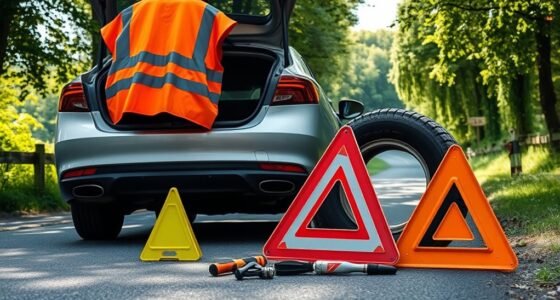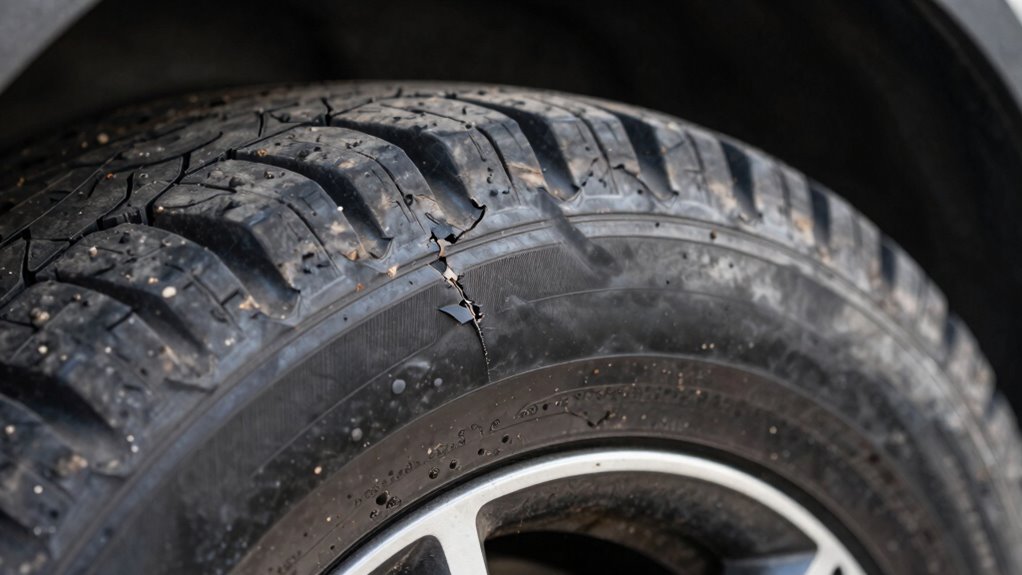

To spot a dangerous tire cut early, closely inspect your tire’s surface for punctures, slices, or irregularities that break its smoothness. Look for shallow grooves or nicks that might seem minor but could worsen over time. Determine if the cut is superficial or deep enough to jeopardize the tire’s strength. Regularly checking your tires helps detect damage before it becomes serious. If you keep exploring, you’ll find out more ways to stay safe on the road.

Get sports gear delivered free — and shop member deals
- Fast, free delivery on millions of items
- Access to Prime Big Deal Days deals on October 6–7
- Prime Video, Amazon Music and more included
Key Takeaways
- Look for deep or long cuts that penetrate the tire’s surface, indicating potential danger.
- Check for irregularities, such as punctures, slices, or shallow grooves that may compromise integrity.
- Regularly inspect tires for any new damage or changes in existing cuts during routine checks.
- Be alert to visible debris or embedded objects that could cause or worsen cuts.
- Assess if the cut appears superficial or deep enough to threaten tire safety and need professional evaluation.

A dangerous tire cut can compromise your safety on the road, so it’s essential to spot it early. Recognizing signs of a dangerous cut can prevent accidents and costly repairs. One of the best ways to do this is by understanding tire repair techniques and what causes these cuts in the first place. Tire repair techniques vary depending on the severity of the damage, but catching a cut early can save you from a blowout or flat. When inspecting your tires, look closely for any punctures, slices, or irregularities that seem out of place. Small cuts may appear as shallow grooves or nicks, but even these can be dangerous if left unaddressed. If you notice a cut, it’s fundamental to determine whether it’s superficial or deep enough to threaten the tire’s integrity. Regular pressure checks are also crucial, as improper maintenance can increase the risk of tire damage. Understanding the causes of tire damage can help you prevent future issues and ensure your tires stay in good condition. Being aware of common road hazards** can help you avoid making cuts or punctures in the first place. Additionally, being proactive about tire inspections can further help you identify potential dangers before they become serious problems. Regularly checking your tires for any signs of damage and understanding how to address them is an essential part of vehicle safety**.
As an affiliate, we earn on qualifying purchases.
Frequently Asked Questions
Can a Small Cut Suddenly Become Dangerous Over Time?
Yes, a small cut can become dangerous over time because tire material may weaken, especially if the cut is in a high-stress area. If you notice a tiny cut, it might seem harmless, but without proper cut healing, it can expand or deepen, risking a blowout. Regularly inspect your tires and address cuts early to prevent safety hazards and guarantee the tire maintains its integrity.
What Tools Are Best for Inspecting Tire Cuts?
You probably find it funny how a simple coin can become your best tire inspection tool. For evaluating cut severity, use a flashlight to illuminate the damage and a magnifying glass to examine the edges closely. A tire tread depth gauge helps measure the depth of the cut, while a tire pressure gauge guarantees air pressure stays ideal. These tools make it easier to spot dangerous cuts early and decide if repairs are needed.
Do Tire Cuts Always Require Professional Assessment?
You should have a professional assess tire cuts, especially if the cut penetrates the tire’s tire material deeply or the cut depth is significant. While minor surface cuts might be safe temporarily, any damage that affects the tire’s integrity needs expert evaluation. A professional checks for hidden issues, ensuring the tire’s safety and preventing blowouts or accidents. Always prioritize safety over risk with tire damage.
How Does Tire Age Affect Cut Danger Levels?
As your tire ages, its material weakens due to aging effects, increasing the danger of cuts. Over time, rubber becomes brittle and less flexible, making even minor cuts more hazardous. You should regularly inspect tires for signs of aging, especially if they have deep cracks or visible deterioration. Remember, aged tires are more vulnerable, and cuts in such tires can quickly escalate into dangerous blowouts, so it’s best to replace them promptly.
Are Certain Tire Brands More Prone to Dangerous Cuts?
Certain tire brands are more prone to dangerous cuts because of their tire material and brand reputation. Some brands use lower-quality materials that aren’t as resistant to cuts and punctures, increasing risk. You should research a brand’s reputation for durability and safety, especially if you often drive on rough roads. Choosing tires from reputable brands with high-quality materials helps reduce the likelihood of dangerous cuts and keeps you safer on the road.
Conclusion
By being vigilant and vigilant, you can spot a sinister split before it surfaces into a serious situation. Regularly check your tires for tears, tears, and tiny tugs that threaten trouble. Trust your touch to detect distress or damage deep in the tread. Don’t delay—diligence today keeps disastrous dilemmas away! Stay sharp, stay safe, and steer clear of surprise blowouts by spotting potential problems early. Your proactive attention protects your trip and keeps you on track.
Fall Picks
fall essentials
As an affiliate, we earn on qualifying purchases.