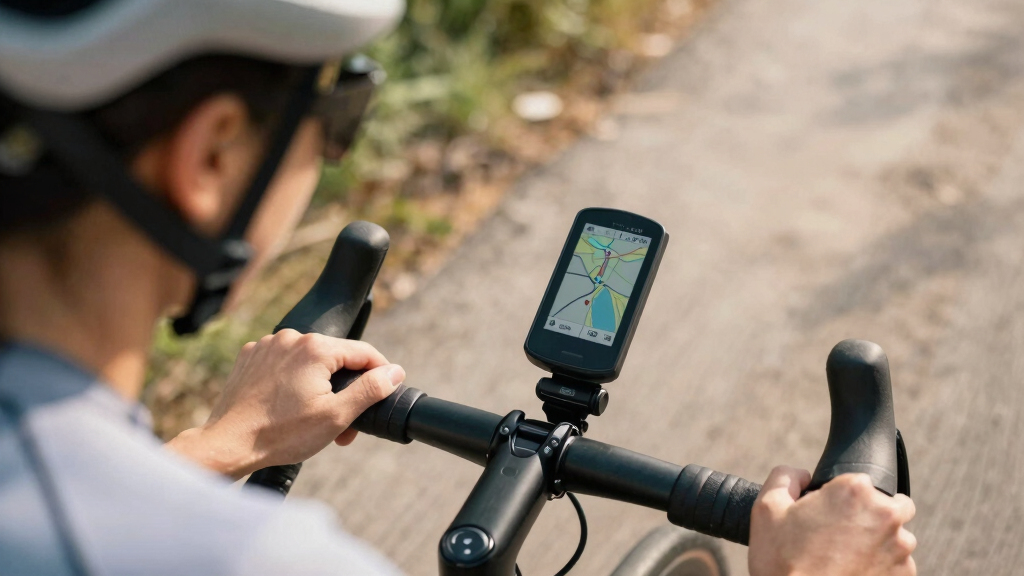

Finding the best GPS bike computer with turn-by-turn maps can significantly enhance your cycling experience, whether you’re exploring new trails or tracking your workouts. The Garmin Edge 540 stands out for its advanced navigation and coaching features, making it ideal for serious riders. The Bryton Rider 650 offers a large color touchscreen and long battery life, perfect for all-day adventures. Meanwhile, the GEOID CC700 Pro balances detailed mapping with WiFi auto-sync, catering to tech-savvy cyclists. Each option comes with tradeoffs like price, complexity, or feature focus. Keep reading for a detailed comparison to help you choose the best GPS bike computer for your needs.
Key Takeaways
- Top picks balance navigation accuracy, display quality, and battery life to match different riding styles.
- Many premium models include advanced features like route rerouting, WiFi sync, and training insights, but at a higher cost.
- Touchscreens simplify interaction but can drain batteries faster and may be less responsive in wet conditions.
- Compatibility with accessories such as bike radar or heart rate monitors varies, influencing overall value.
- Price ranges widely, so consider whether core navigation features or additional training tools are more important for your riding goals.





More Details on Our Top Picks
Bryton Rider 650 2.8 Inch Color LCD Touchscreen GPS Bike/Cycling Computer, Preloaded USA Map, Compatible with Bike Radar, 33hrs Long Battery Life, Navigation with Turn-by Turn Follow Track Waterproof
The Bryton Rider 650 stands out for its vibrant 2.8-inch touchscreen that offers a smartphone-like interface, making navigation intuitive and easy to read during rides. Its impressive 33-hour battery life surpasses many competitors like Garmin Edge 540, which offers around 26 hours, making it ideal for long-distance adventures without frequent recharging. Unlike the Garmin, the Rider 650 provides full-color pre-loaded maps with turn-by-turn guidance, POIs, and street names, ensuring riders are never lost. Safety features like Live Tracking and Rear-View Radar support add extra peace of mind, especially for solo riders exploring new trails. However, the touchscreen, while vivid, can be less responsive in wet or sweaty conditions compared to physical buttons, which are available on some rivals. Its waterproof rating is IPX7, suitable for all weather conditions. The device pairs seamlessly with ANT+ sensors and syncs with popular apps like Strava and Komoot, making data sharing straightforward. The main tradeoff is that its user interface, while simple, may lack some advanced training features found on higher-end models. This pick makes the most sense for riders seeking a reliable, long-lasting, and easy-to-use GPS with comprehensive maps and safety tools for both city and trail riding.
Pros:- Vivid 2.8-inch touchscreen with intuitive UI
- Exceptional 33-hour battery life for extended rides
- Preloaded full-color maps with turn-by-turn navigation
- Safety features like Live Tracking and Rear-View Radar
Cons:- Touchscreen responsiveness can diminish in wet or sweaty conditions
- Limited advanced training analytics compared to premium models
Best for: Long-distance cyclists and adventure riders who prioritize battery life, detailed maps, and safety features.
Not ideal for: Casual riders or those requiring extensive training analytics, who might find it lacking advanced performance metrics.
- Display Size:2.8 Inches
- Battery Life:33 Hours
- Map Type:Preloaded USA Maps
- Waterproof Rating:IPX7
- Connectivity:ANT+, Bluetooth
- User Interface:Color Touchscreen
Bottom line: This device is perfect for serious long-distance and adventure cyclists who need reliability and comprehensive navigation tools.
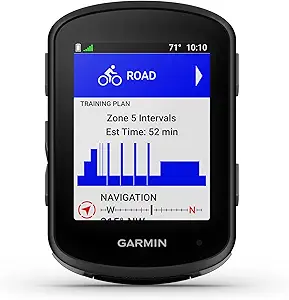
Garmin Edge 540, Compact GPS Cycling Computer with Button Controls, Targeted Adaptive Coaching, Advanced Navigation and More
The Garmin Edge 540 makes a strong case for cyclists focused on training with its targeted adaptive coaching, advanced navigation, and detailed ride metrics. Its 26-hour battery life is solid, though slightly less than Bryton Rider 650, but it compensates with multi-band GNSS technology providing superior accuracy in dense environments. The device features button controls, which some riders prefer over touchscreens, especially in wet conditions, and it offers ride-specific maps with popular roads and trails, plus POIs, aiding both city riders and trail explorers. The Garmin app enhances data management and sharing, making it easy to review performance and progress. Its main tradeoff is the higher price point, which may be less appealing for casual users. The device also provides stamina insights, effort management, and personalized workout prompts, making it ideal for those serious about improving their cycling. However, some may find the interface less intuitive than simpler models like Bryton Rider 650. This is best suited for competitive cyclists or dedicated enthusiasts seeking comprehensive training tools.
Pros:- Button controls for reliable operation in all conditions
- Multi-band GNSS for high-precision positioning
- Targeted adaptive coaching and ride analytics
- Ride-specific maps highlighting popular routes
Cons:- Slightly shorter battery life than some competitors
- Higher cost may deter casual users
Best for: Cyclists aiming to improve performance with detailed analytics, personalized coaching, and advanced navigation.
Not ideal for: Casual riders or weekend cyclists who prioritize simplicity and affordability over in-depth training features.
- Display Size:2.6 Inches
- Battery Life:26 Hours
- Map Types:Ride-specific & POIs
- Waterproof Rating:IPX7
- Connectivity:ANT+, Bluetooth
- Control Method:Physical Buttons
Bottom line: This device is best for performance-focused cyclists who want in-depth analytics, personalized coaching, and reliable navigation in all environments.
The GEOID CC700 Pro offers excellent value with its bright 2.8-inch color touchscreen, integrated navigation, and versatile features. Compared to Garmin Edge 540, it provides nearly similar map capabilities, including offline downloads, re-route planning, and turn prompts, at a significantly lower price. Its 20-hour battery life is decent for most rides, though less than premium options, but it compensates with WiFi auto-sync and message notifications, adding convenience for daily commuting and casual tours. Its waterproof IPX7 rating makes it suitable for all weather conditions. While its rerouting can be slow and sometimes buggy, it generally performs well on familiar routes and supports multiple data points, enhancing ride tracking. The device’s compatibility with ANT+ sensors and seamless app syncing make it a practical choice for everyday cyclists on a budget. Its main tradeoff is that it lacks some of the advanced training analytics present in higher-end models. This pick is ideal for budget-conscious riders who want reliable navigation and smart features without paying for premium analytics.
Pros:- Bright 2.8-inch color touchscreen
- Offline map downloads and re-route planning
- WiFi auto-sync and message notifications
- Waterproof IPX7 rating for all weather riding
Cons:- Relatively slow rerouting and occasional bugs
- Limited advanced training analytics
Best for: Casual riders and commuters seeking a feature-rich, affordable GPS with reliable navigation and safety features.
Not ideal for: Performance cyclists or training-focused riders who need detailed analytics and advanced training tools.
- Display Size:2.8 Inches
- Battery Life:20 Hours
- Map Type:Offline & Re-Route
- Waterproof Rating:IPX7
- Connectivity:ANT+, Bluetooth
- WiFi Sync:Yes
Bottom line: This device offers a compelling balance of features and affordability, perfect for everyday cyclists who want reliable navigation and smart notifications.
iGPSPORT BiNavi Bike Computer, 3.5‘’ Touch Screen Map Navigation Music Control Climb Tips, Wireless GPS Cycling Computer
The iGPSPORT BiNavi excels for riders who want a larger 3.5-inch touchscreen, making it easier to view maps and ride data even in challenging environments. Its support for global offline maps, turn-by-turn navigation, and route re-calculation means adventurers can explore without fear of getting lost, whether on city trails or remote mountain paths. Its off-course warning notifies you if you stray from the route, and the ability to import routes from third-party apps like Strava makes it flexible for varied adventures. The device’s 20-hour battery life is sufficient for long rides, and its IPX7 waterproof rating ensures durability in bad weather. Music control adds convenience, especially on solo rides. However, rerouting can be slow, and some users report lag when loading routes or recalculating paths, which can be frustrating in urgent situations. Its versatility with sensors and compatibility with e-bikes makes it ideal for off-road, mountain biking, and adventure riding. This device is designed for those who prioritize large screens, offline maps, and ruggedness for challenging terrains.
Pros:- Large 3.5-inch capacitive touchscreen
- Global offline maps with turn prompts
- Route re-calculation and off-course warnings
- Supports multiple sensors and e-bike compatibility
Cons:- Slow rerouting and route loading times
- Lag in recalculations can be inconvenient in urgent scenarios
Best for: Trail, mountain, and adventure cyclists seeking a large display, offline maps, and reliable rerouting in remote areas.
Not ideal for: Urban cyclists or those focused on performance analytics, who might find it less feature-rich in training data.
- Display Size:3.5 Inches
- Battery Life:20 Hours
- Map Support:Offline & Route Prompts
- Waterproof Rating:IPX7
- Connectivity:ANT+, Bluetooth
- Music Control:Yes
Bottom line: This GPS is best for off-road, mountain, or adventure riders who need a large, rugged display with offline navigation capabilities.
iGPSPORT BSC300T Wireless Bike Computer GPS, Touchscreen Offline MAP Navigation Off Course Warning Compatible with Insta 360, for Ebike Road Bike MTB
The iGPSPORT BSC300T offers a balanced mix of features suitable for a wide range of riders, including a 2.4-inch touchscreen, offline map support, and off-course warnings. Its support for multiple satellite systems (GPS, Beidou, GLONASS, Galileo, QZSS) ensures fast and accurate positioning in various environments, making it ideal for urban, trail, and mountain biking. Its compatibility with multiple sensors, smart trainers, and even e-bikes enhances its versatility. The device provides over 130 ride data points, including speed, distance, and climb tips, making it a comprehensive tracking tool. While its 20-hour battery life is adequate for most rides, some users find rerouting slow or inconsistent, especially when route modifications occur due to trail closures or detours. Its IPX7 waterproof rating ensures durability under adverse weather conditions. The straightforward interface and extensive sensor support make it suitable for riders who want a reliable, all-around GPS computer capable of integrating with various devices and apps. This model is especially well-suited for multi-sport and multi-device users seeking flexibility.
Pros:- Supports multiple satellite systems for fast positioning
- Offline map support and route re-calculation
- Extensive data points with 130+ ride metrics
- Compatible with a wide range of sensors and devices
Cons:- Route rerouting can be slow and sometimes inconsistent
- Battery life, while decent, may not last through ultra-long rides
Best for: Multi-sport and multi-device riders, including e-bikers and trail cyclists, looking for an adaptable GPS with extensive data support.
Not ideal for: Performance racers or those solely focused on detailed training analytics, as it emphasizes versatility over advanced performance metrics.
- Display Size:2.4 Inches
- Battery Life:20 Hours
- Map Type:Offline & Route Re-Calc
- Waterproof Rating:IPX7
- Satellite Support:GPS, Beidou, GLONASS, Galileo, QZSS
- Connectivity:ANT+, Bluetooth, USB
Bottom line: This GPS offers excellent multi-device support and offline navigation, ideal for riders who want versatility and broad sensor compatibility.
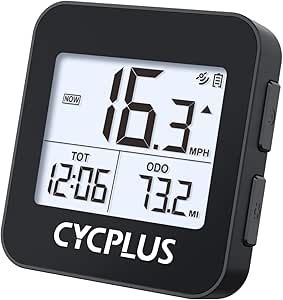
CYCPLUS GPS Bike Computer, Wireless Cycling Computer with Automatic Backlight, Bicycle Speedometer Odometer with Waterproof and Lager Battery, Provide Professional Data Analysis
This model stands out for combining affordability with a comprehensive set of features, including high-accuracy GPS, a large 1200mAh battery lasting over 55 hours, and a clear, glare-free display. Compared with the Garmin Edge Explore 2, it offers a simpler setup with fewer advanced navigation options but excels in battery life and ease of use for casual riders. Its automatic sleep mode conserves power, and waterproof design makes it suitable for all weather. However, its manual setup for units and limited advanced navigation features mean it’s less ideal for serious navigation or training enthusiasts. This pick makes the most sense for riders seeking a reliable, long-lasting GPS without the high price tag or complex features.
Pros:- Long battery life of over 55 hours for extended rides
- Bright, glare-free display visible in sunlight
- Waterproof IPX6 rating for all-weather riding
Cons:- Limited advanced navigation and training features compared to Garmin models
- Manual setup required for unit conversion and time zone adjustments
Best for: Budget-conscious casual cyclists who want basic ride data and reliable performance.
Not ideal for: Advanced riders or those needing detailed route planning and connectivity features.
- Display Size:2 inches
- Battery Average Life:50 hours
- Battery Type:Lithium Polymer
- Connectivity Technology:Wireless
- Mounting Type:Handlebar Mount
- Measurements:2.36″L x 0.98″W x 2.24″H
Bottom line: Ideal for everyday riders needing straightforward, durable GPS data without extra bells and whistles.
iGPSPORT BSC300 GPS Bike Computer, Wireless Offline MAP Navigation Off Course Warning Bluetooth ANT+ Cycling Computer Waterproof
This pick is distinguished by its support for five satellite systems—GPS, Beidou, GLONASS, GALILEO, and QZSS—delivering faster, more precise positioning than many competitors. It supports over 130 ride data metrics, making it suitable for dedicated training and detailed analysis, especially when compared to the simpler CYCPLUS model. Its rugged waterproof design and ANT+/Bluetooth connectivity expand its versatility, connecting easily with sensors like heart rate monitors. The tradeoff is a slightly shorter 20-hour battery life, which may not suffice for ultra-long adventures. This device is best suited for serious cyclists who want a high level of data accuracy and multi-system support for competitive or comprehensive training use.
Pros:- Supports five satellite systems for rapid, accurate positioning
- Over 130 ride data metrics for in-depth analysis
- Waterproof IPX7 rating for all-weather reliability
Cons:- Battery life of only 20 hours may be limiting for multi-day rides
- Complex interface might require a learning curve for new users
Best for: Competitive cyclists or serious training enthusiasts who need highly accurate, multi-satellite navigation and extensive data.
Not ideal for: Casual riders or those prioritizing maximum battery life over precise positioning and detailed data.
- Display Size:2.4 inches
- Battery Average Life:20 hours
- Connectivity Technology:Bluetooth, ANT+
- Waterproof:IPX7
- Supported Satellites:GPS, Beidou, GLONASS, Galileo, QZSS
- Mounting Type:Handlebar mount
Bottom line: Best for cyclists demanding precise navigation and a wealth of riding data for serious training or competition.
GEOID CC600 Color Screen Bike/Cycling Computer Wireless – Route Navigation with Reroute Planing, WiFi & Bluetooth, Fast 5s GPS Positioning, Free Indoor Training
This device is notable for its vibrant 2.4” color touchscreen, offering intuitive navigation with turn-by-turn prompts and reroute planning, surpassing the monochrome displays of simpler models like CYCPLUS. It supports WiFi and Bluetooth for seamless data transfer and firmware updates, and its extensive customization options—including up to 10 data pages—make it ideal for riders who want to tailor their display. It supports indoor training and connects with multiple sensors, making it a great all-in-one solution. The main tradeoff is a slightly shorter 24-hour battery life, which could be limiting on multi-day rides. This pick is perfect for tech-savvy cyclists who want a detailed, customizable experience with advanced navigation features.
Pros:- Bright, high-res color touchscreen for easy control
- Supports route upload, rerouting, and breadcrumb navigation
- WiFi and Bluetooth for rapid data sync
Cons:- Battery life of about 24 hours, less than some competitors
- Higher price point due to advanced features
Best for: Tech-oriented riders seeking detailed route navigation, customization, and indoor training capabilities.
Not ideal for: Casual riders or those prioritizing longest battery life over advanced features.
- Display Size:2.4 inches
- Battery Average Life:24 hours
- Connectivity Technology:WiFi, Bluetooth
- Waterproof:IPX7
- Map Support:Upload and reroute via app
- Supported Protocols:Bluetooth, ANT+
Bottom line: Ideal for cyclists who want a high-tech, customizable navigation and data experience for serious training and exploration.
Garmin Edge® Explore 2, Easy-to-Use GPS Cycling Navigator, eBike Compatibility, Maps and Navigation, with Safety Features
This model excels in providing preloaded maps with highlighted popular roads and trails, making it ideal for riders wanting reliable navigation without fuss. Its 3” high-resolution touchscreen is glove- and rain-friendly, surpassing smaller screens like GEOID CC600. The device offers eBike-specific routing, safety features like incident detection, and smart notifications when paired with a smartphone. While it lacks the extensive customization of the GEOID CC600 or the multi-satellite support of the iGPSPORT, its ease of use and integrated safety features make it ideal for casual to intermediate riders. Battery life of approximately 20 hours may be less suited for ultra-long rides, but the intuitive interface compensates. It’s best for riders who prioritize safety, ease, and reliable navigation over advanced data metrics.
Pros:- Glove- and rain-friendly 3-inch high-res touchscreen
- Preloaded maps with highlighted popular routes
- Includes safety features like incident detection and smart notifications
Cons:- Limited customization compared to premium models
- Battery life around 20 hours, less for multi-day adventures
Best for: Casual and intermediate cyclists seeking simple, reliable navigation with safety features and smart connectivity.
Not ideal for: Advanced training cyclists or those needing highly customizable data pages and multi-satellite positioning.
- Display Size:3 inches
- Battery Average Life:20 hours
- Maps:Preloaded, with routing
- Safety Features:Incident detection, smart notifications
- eBike Compatibility:Yes
- Waterproof:Yes
Bottom line: Best for riders who want straightforward, safe navigation with minimal setup and smart features.
iGPSPORT BSC200S GPS Bike Computer, Wireless Route Navigation 2.4” Screen Bluetooth ANT+ Cycle Computer IPX7 Waterproof
This model stands out for its flexible route creation options, supporting imports from third-party platforms like Strava and Komoot, which makes it a solid choice for cyclists who plan detailed routes. Compared with the Bryton Rider 650, the BSC200S offers more customizable navigation features, including color modules and quick route sending via the app. However, its 2.4” display, while clear and sunlight-readable, isn’t as large as the GEOID CC700 Pro, which can be advantageous for those who prefer bigger screens. The BSC200S also excels in smart notifications, integrating call, SMS, and app alerts, but it’s limited to only 25 hours of battery life, which may fall short on very long rides. Its waterproof rating (IPX7) and connection to iGPSPORT lights add extra safety and convenience. Overall, this pick makes the most sense for riders who want a feature-rich, connected device that handles route customization well, though shorter battery life is a consideration.
Pros:- Supports route import from third-party platforms like Strava and Komoot
- Customizable color module and quick route transfer via app
- Smart notifications including calls and messages
Cons:- Battery life limited to 25 hours, less than some competitors
- Display size and resolution may feel small for users who prefer larger screens
Best for: Cyclists who prioritize versatile route options and smart notifications, especially those who use third-party apps for planning.
Not ideal for: Long-distance riders or ultramarathoners needing extended battery life for multi-day trips.
- Display Size:2.4 inches
- Battery Life:25 hours
- Waterproof Rating:IPX7
- Connectivity:Bluetooth, ANT+
- Navigation Support:Route import from third-party apps, one-touch navigation
- Compatible Lights:iGPSPORT front and radar lights
Bottom line: This device is best suited for cyclists who want flexible navigation and smart features in a compact, waterproof package.
How We Picked
To determine the best GPS bike computers with turn-by-turn maps, I focused on core performance factors such as navigation accuracy, ease of use, display quality, battery life, and build durability. I also evaluated additional features like map updates, route rerouting, connectivity options, and training tools. Devices were ranked by how well they balance these aspects for various cycling needs, from casual riding to advanced training. The selection aims to cover a range of budgets and use cases, highlighting models that offer clear advantages over competitors while acknowledging potential tradeoffs like complexity or price.Factors to Consider When Choosing Best Gps Bike Computers With Turn-by-turn Maps
Choosing the right GPS bike computer involves balancing several key factors. Beyond features, consider how the device fits into your riding style, your budget, and your tech ecosystem. The following sections outline critical considerations to help you make an informed choice and avoid common pitfalls that can lead to dissatisfaction or underperformance.Navigation and Map Features
High-quality turn-by-turn navigation is the core reason for choosing a GPS bike computer, but not all maps are created equal. Look for models offering detailed, regularly updated maps that can reroute on the fly if you stray off course. Some devices include preloaded regional maps, while others support custom map downloads, which can be advantageous for exploring new areas. Beware of models with limited map coverage or slow GPS positioning, as these can frustrate your experience, especially on unfamiliar routes.
Display Quality and Usability
The display determines how easily you can read maps and data while riding. Touchscreens are intuitive but can be less responsive when wet or with gloves, so consider your typical riding conditions. Non-touch button controls tend to be more durable and responsive but may involve more navigation steps. Brightness, contrast, and size influence visibility, especially in bright sunlight or during night rides. Balancing a clear, easy-to-read screen with battery consumption is key to avoiding distractions and ensuring safety.
Battery Life and Durability
Long battery life is critical for extended rides or multi-day trips, with some models lasting over 30 hours. Consider your typical ride duration and whether the device can be easily recharged or swapped. Waterproof and rugged designs are essential if you frequently ride in rain or rough conditions. Cheaper models might sacrifice battery longevity or durability, leading to potential failures mid-ride. Investing in a more robust unit can pay off in reliability and peace of mind.
Connectivity and Compatibility
Many GPS bike computers support ANT+ and Bluetooth, allowing connection to heart rate monitors, power meters, and bike radar. Compatibility ensures you can integrate your existing accessories seamlessly. Some models also support smartphone notifications or WiFi sync, which can be useful for updates and data sharing. Be cautious of devices with limited connectivity options or poor app support, as these can hinder your ability to customize or analyze your rides effectively.
Price and Value
Prices vary significantly, from budget-friendly options to premium models with extensive features. Think about your actual needs—if you primarily ride on familiar routes, a simpler device might suffice. Conversely, if you want in-depth training metrics and advanced navigation, investing in a higher-end model makes sense. Beware of overly cheap units that lack essential features or have poor build quality. Conversely, paying for features you won’t use can lead to unnecessary expenses.
Frequently Asked Questions
Do I need a GPS bike computer with maps if I mostly ride locally?
If your rides are mostly familiar local routes, a GPS bike computer with turn-by-turn maps might be less necessary. Instead, consider a device with basic navigation or even a good smartphone holder with offline maps. However, having a GPS device can still help improve your route tracking, provide ride metrics, and offer peace of mind if you venture into less familiar areas occasionally. Evaluate how often you explore new routes versus sticking to known paths when choosing.
How important is touchscreen vs. button control on a GPS bike computer?
Touchscreens offer intuitive, quick access to maps and data, which can be helpful during rides. However, they tend to consume more battery power and can be less responsive in rain or with gloves. Button controls, while potentially less convenient initially, often provide more reliable operation under tough conditions and extend battery life. Your riding environment and personal preference should guide this choice—consider testing both if possible before buying.
Can I update maps on these GPS devices easily?
Most modern GPS bike computers support map updates via WiFi or USB, but the ease of update varies. Devices with WiFi sync, like the GEOID CC700 Pro, typically make updates straightforward and automatic, reducing hassle. Cheaper or older models may require manual updates through downloadable files, which can be less convenient. Regular map updates enhance navigation accuracy, especially in areas with new roads or trails, so check update procedures before purchasing.
Are premium GPS bike computers worth the extra cost?
Premium models often include features like advanced route planning, multi-satellite support, and extensive training metrics, which can be beneficial for dedicated cyclists. If you ride frequently, participate in training, or explore remote areas, these extras can justify the higher price. Conversely, casual riders or those on a budget may find that mid-range options meet their needs without the added expense. Consider your riding frequency and goals to determine if the investment aligns with your expectations.
How do I ensure my GPS bike computer is compatible with my other cycling accessories?
Compatibility depends on supported connectivity standards like Bluetooth and ANT+. Most devices specify which sensors and accessories they support, so check these details carefully. If you already own heart rate monitors, power meters, or bike radar, verify that the GPS unit can connect to them. Investing in a device with broad compatibility ensures you can expand your setup later without needing to replace your core computer, making it a more flexible choice long-term.
Conclusion
If you’re a serious cyclist seeking comprehensive navigation and training tools, the Garmin Edge 540 offers unmatched performance and feature depth. For casual riders or those on a tighter budget, the iGPSPORT BSC200S provides solid basic mapping without breaking the bank. Beginners who prioritize ease of use should consider models like the Garmin Edge Explore 2, which balances simplicity with reliable navigation. Advanced riders wanting detailed mapping and rerouting might find the GEOID CC700 Pro or COOSPO CS600 worth the investment. Ultimately, your choice depends on how you ride, your experience level, and what features matter most to your cycling adventures.