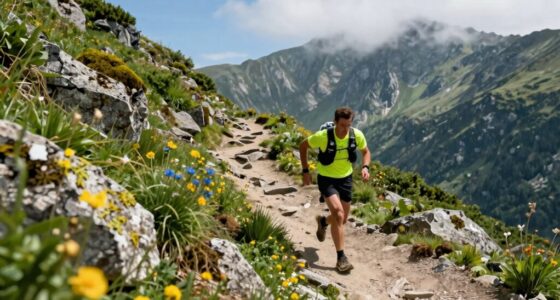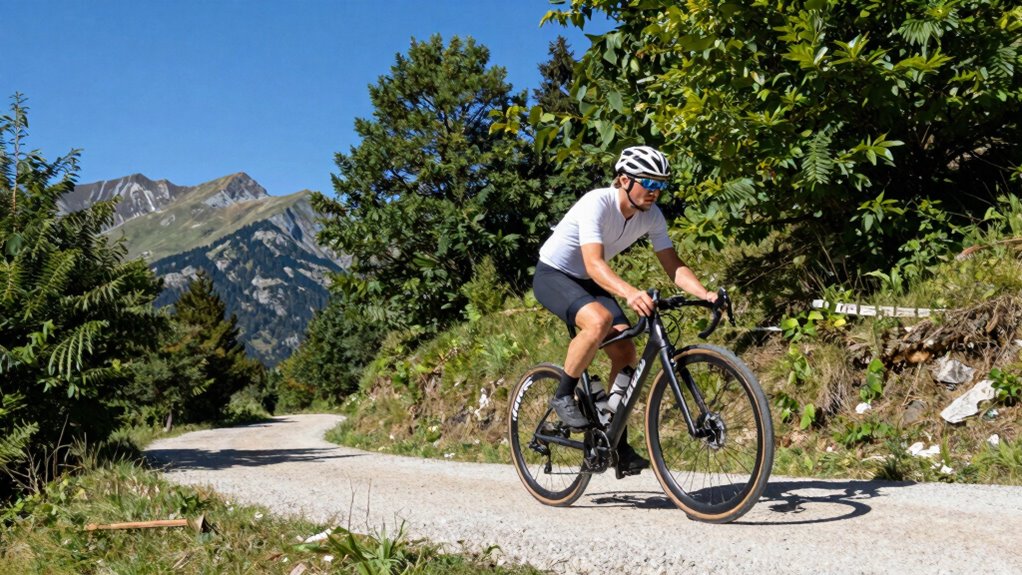

To build better cadence on flats and climbs, focus on maintaining a steady, efficient pedaling rhythm—around 80-100 RPM on flats and slightly lower on climbs. Use the right gears to avoid overexertion and keep your effort consistent. Engage your core and major muscles like glutes and quads to improve control and power. Practice cadence drills and smooth gear changes regularly. Keep working on these techniques to *release* greater efficiency and endurance as you progress.

Get sports gear delivered free with Prime
- Fast, free delivery on millions of items
- Prime Video, Amazon Music and more included
- Member-only deals all year
Key Takeaways
- Maintain a steady cadence of 80-100 RPM on flats and slightly lower on climbs for efficiency.
- Use appropriate gears to keep pedaling smooth and avoid overexertion or early fatigue.
- Engage core muscles and proper pedal stroke techniques to enhance power and control.
- Incorporate cadence drills and practice smooth gear changes to develop consistency.
- Focus on working smarter by optimizing effort, conserving energy, and improving overall riding efficiency.

Have you ever wondered why some teams consistently hit their goals while others struggle to keep pace? The secret often lies in how you build your cadence, especially on flats and climbs. Your cadence isn’t just a number; it’s a reflection of your efficiency and power. To improve it, you need to focus on gear optimization and muscle engagement. When you select the right gear, you reduce unnecessary strain and keep your pedaling smooth. On flats, shifting into a gear that allows you to maintain a steady cadence without overexerting yourself keeps energy conserved. On climbs, gear optimization becomes even more critical, helping you avoid burning out too early or losing momentum. The goal is a cadence that feels natural yet effective, allowing you to sustain effort with less fatigue.
Optimizing gears and engaging muscles boosts efficiency on flats and climbs, conserving energy and improving your cadence.
Once your gear is optimized, the next step is to focus on muscle engagement. Proper muscle engagement means activating the right muscles at the right time, which leads to more efficient pedaling and better cadence control. When you engage your core and leg muscles properly, you’ll find it easier to maintain a consistent rhythm whether climbing or cruising on flats. It’s tempting to rely solely on your legs, but a strong core stabilizes your entire movement, reducing energy wastage. As you pedal, focus on engaging your glutes, quadriceps, and calves in a coordinated manner. This not only boosts power but also prevents fatigue from overusing specific muscle groups. Additionally, understanding how to optimize pedal stroke can significantly enhance your cadence and efficiency. Developing awareness of your pedal stroke technique can help you identify and correct inefficiencies in your movement, leading to more consistent performance across different terrains.
Building better cadence requires a mindful approach. Start by paying attention to your pedaling tempo, aiming for a cadence that feels sustainable yet keeps you moving forward efficiently. Use your gears to fine-tune your effort, shifting smoothly to find that sweet spot where muscle engagement feels balanced. On flats, aim for a cadence around 80-100 RPM; on climbs, you might need to lower it slightly, perhaps around 70-90 RPM, to avoid overexertion. Remember, the key is consistency—staying steady with your cadence helps your muscles adapt and become more efficient over time. Incorporate drills that focus on smooth gear changes and deliberate muscle engagement to reinforce good habits. Practicing cadence drills regularly can help ingrain these improvements into your riding. Keeping your mind attentive to muscle activation can also improve your overall efficiency and endurance.
In the end, building better cadence isn’t about pushing harder; it’s about working smarter. By optimizing your gears and engaging your muscles properly, you’ll find yourself riding more comfortably, conserving energy, and ultimately climbing and cruising with greater control and confidence.
As an affiliate, we earn on qualifying purchases.
Frequently Asked Questions
How Do I Prevent Muscle Fatigue While Increasing Cadence?
To prevent muscle fatigue while increasing cadence, focus on improving muscle endurance through consistent training. Incorporate interval sessions that gradually raise your cadence, allowing your muscles to adapt. Practice fatigue management by maintaining proper nutrition, hydration, and pacing. Strengthen your core and leg muscles to support sustained effort. Listening to your body and gradually progressing helps avoid overexertion, ensuring you build cadence effectively without risking early fatigue.
What’s the Ideal Cadence for Different Cycling Disciplines?
The ideal cadence varies across cycling disciplines. For road racing, aim for 85-100 rpm using training drills to develop efficiency. Track cycling often requires higher cadences, around 110-120 rpm, with pacing strategies focused on quick, controlled spins. Mountain biking favors 70-90 rpm to manage technical terrain. Adjust your cadence based on terrain and race demands, incorporating training drills to refine your pacing strategies and improve overall performance.
How Does Cadence Influence Overall Cycling Efficiency?
Cadence is your secret weapon for cycling efficiency—it’s like tuning a race car for peak performance. When you maintain a *best* cadence, you improve aerodynamics by reducing wind resistance and lower your heart rate, helping you ride longer and faster. A steady cadence minimizes fatigue, allowing your body to work smarter, not harder. Focus on finding that sweet spot, and you’ll see your cycling efficiency skyrocket.
Should Cadence Vary Between Flat and Uphill Riding?
Yes, your cadence should vary between flat and uphill riding to maintain an effective riding rhythm. On flats, aim for a consistent cadence to keep your energy steady, but when climbing, it’s okay to reduce it slightly for better control and power. Focus on maintaining cadence consistency within each terrain to optimize efficiency, allowing your muscles to work smoothly and helping you conserve energy while adapting to changing gradients.
What Gear Ratios Optimize Cadence on Various Terrains?
To optimize cadence on various terrains, choose gear ratios that match your pedal rhythm and terrain demands. For flats, opt for higher gears that let you maintain a steady cadence without sacrificing speed. When climbing, shift to lower gears to keep your pedal rhythm smooth and efficient. Focus on gear selection that allows you to pedal comfortably, avoiding excessive strain or sluggishness, ensuring a consistent and effective cadence regardless of terrain.
Conclusion
By focusing on maintaining a steady cadence on both flats and climbs, you’ll improve your efficiency and endurance. Imagine Emily, a recreational cyclist who struggled uphill but gradually increased her cadence, making climbs feel easier over time. Just like Emily, you’ll notice smoother rides and less fatigue. Keep practicing, stay consistent, and your cadence will become second nature—helping you enjoy every mile more and conquer any terrain with confidence.
Halloween Picks
halloween
As an affiliate, we earn on qualifying purchases.