The best overall cycling backpack for hydration in this lineup is the Osprey Berm Biking Backpack, the clearest bike-specific option for riders who want a purpose-built pack and compatible reservoir. The Everfun 18L stands out when carrying extra layers or ride gear matters, while the Unigear 2L is a simpler, lighter choice for shorter outings. The main tradeoff is between a close, low-bounce fit and enough storage for longer rides; a larger bladder can also add weight when full. Several listings share similar lightweight 2L designs, so differences in cycling-specific fit and practical storage matter more than headline capacity alone. Read on for the full comparison, buying advice, and picks by rider type.

Get sports gear delivered free with Prime
- Fast, free delivery on millions of items
- Prime Video, Amazon Music and more included
- Member-only deals all year
Complete the kit


Key Takeaways
- Bike-specific design separates the leading pick: the Osprey Berm is the only clearly cycling-oriented model in the list, while most alternatives are presented as general hiking or running packs.
- Capacity does not tell the whole story: the Everfun offers 18L of pack space and a 2L/3L bladder option, but that extra carrying room can be unnecessary bulk for short rides.
- Most listings center on a 2L bladder: this makes the choice less about water volume and more about fit, storage, and how stable the pack feels while riding.
- Three listings share the same Maelstrom product name, and four repeat a generic lightweight 2L title: buyers should verify the exact model, fit details, and included components rather than assume each listing represents a distinct design.
- A 3L reservoir brings a real weight tradeoff: the Noola and MARCHWAY suit riders prioritizing longer water supply, but a full reservoir can feel heavier and shift more than a smaller load.


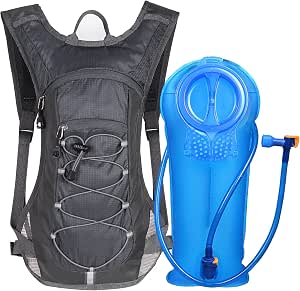


| cycling backpacks for hydration | Weight | Bladder volume | Dimensions |
|---|---|---|---|
| Maelstrom Hydration Backpack w | 1.1 lb | — | — |
| Everfun 18L Hydration Backpack | 1.74 lb | — | 18.5 × 10.5 × 6 in |
| Lightweight 2 Pack Hydration B | — | — | — |
| Lightweight Hydration Backpack | 13 oz | 2 L | 11.8 in W × 16.5 in H |
| Noola Hydration Backpack with | 1.8 lb | — | 11.81 in W × 18.11 in H |
| MARCHWAY Tactical Molle Hydrat | 2 pounds | 3 liters | 8.7 × 19.7 inches |
| Unigear Hydration Pack Backpac | 1.1 pounds | 2 liters | — |
| MIYCOO Hydration Backpack with | 0.67 kg | 2 liters | — |
| Maelstrom Hydration Backpack w | 1.1 pounds | 2 liters | — |
| Osprey Berm Biking Backpack wi | 1.27 pounds (574 g) | — | 16.1 × 8.3 × 7.9 inches |
| Lightweight Hydration Backpack | 8.5 oz | 2 L | — |
| Criuage Hydration Vest Backpac | 750 g | 2 L | 9 in W × 18.5 in H |
| Lightweight Hydration Backpack | 8.5 oz | 2 L | 11.8 in W × 16.5 in H |
| Lightweight Hydration Backpack | 8.5 oz | 2 L | 11.8 in W × 16.5 in H |
More Details on Our Top Picks
Maelstrom Hydration Backpack with 2L Water Bladder, Lightweight Running Vest
The Maelstrom pairs a 2L insulated bladder with helmet storage, making it a practical pick for rides where you need water and a place to stow your helmet off the bike. Its 1.1-pound weight, adjustable chest straps, and reflective strips keep the setup focused on wearable hydration rather than hauling a full day’s gear. Compared with the Everfun 18L Hydration Backpack, it is the simpler, lighter choice, but gives up that pack’s larger cargo space and built-in rain cover. Four pockets can handle ride essentials, though the listed storage may feel tight for layers or longer outings. I’d choose it for cycling convenience and visibility, not for carrying extensive kit; the bladder also needs cleaning after use.
Pros:- 2L insulated, BPA-free PEVA bladder provides hands-free hydration on rides.
- Helmet storage offers a convenient place to carry a helmet off the bike.
- Reflective strips add visibility in low-light conditions.
- Adjustable chest straps support a more secure fit.
Cons:- Limited storage is a poor match for longer rides that require extra clothing or supplies.
- The bladder requires cleaning after use.
- Only black is listed, limiting color choice.
Best for: Day riders who want a lightweight 2L hydration pack with helmet storage and reflective details for road or trail stops.
Not ideal for: Cyclists carrying spare layers, substantial tools, or food for long rides; the four-pocket layout and limited storage are less suited to larger loads.
- Bladder capacity:2 liters
- Pack material:Nylon
- Weight:1.1 lb
- Bladder material:BPA-free PEVA
- Pockets:4
- Adjustable chest straps:Yes
- Reflective strips:Yes
- Helmet storage:Yes
Our verdict“Choose the Maelstrom for a light, helmet-friendly day-riding setup, but pick the Everfun if you need more cargo space or a rain cover.”
Everfun 18L Hydration Backpack with 2L/3L Water Bladder – Lightweight Insulated Pack for Hiking, Biking, Running & Festival
The Everfun makes the most sense when hydration is only part of what you need to carry. Its 18L main compartment and eight pockets give cyclists room to organize ride gear, while the 2L insulated bladder is described as staying cold for up to six hours. A breathable mesh back, reflective strips, and included rain cover add useful details for changing conditions. Compared with the Maelstrom Hydration Backpack, this is the more capable hauler, but it weighs more and is less appealing when you want a compact pack. The bladder remains 2L despite the larger pack, so long, hot rides may still call for refills. Choose it for carrying layers and supplies; skip it if your ride kit is minimal or you prioritize the lightest setup.
Pros:- 18L main compartment and eight pockets offer substantial, organized cargo space.
- Insulated 2L PEVA bladder is described as keeping drinks cold for up to six hours.
- Built-in rain cover helps protect the pack in wet weather.
- Breathable mesh back and adjustable straps support a more comfortable fit.
Cons:- The 2L bladder may need frequent refills on longer rides.
- At 1.74 lb, it is heavier than the Maelstrom and compact 12L option.
- The wide-mouth bladder opening may admit debris if not sealed properly.
Best for: Commuters and day-trip cyclists who carry a layer, tools, food, and other gear alongside their hydration bladder.
Not ideal for: Minimalist riders seeking a compact, light pack or cyclists who need more than 2L of water without stopping to refill.
- Main capacity:18 L
- Bladder capacity:2 L (70 oz)
- Insulated compartment capacity:Up to 3 L
- Weight:1.74 lb
- Dimensions:18.5 × 10.5 × 6 in
- Material:Water-resistant high-density nylon
- Pockets:8 functional pockets
- Additional features:Breathable mesh back, rain cover, reflective strips, adjustable straps
Our verdict“Pick the Everfun when cargo space and weather protection matter more than a small, lightweight riding profile.”
Lightweight 2 Pack Hydration Backpack with 2L Water Bladder for Hiking
This listing stands apart because it supplies two hydration backpacks and two 2L bladders, making it useful for riding partners who want matching basic setups. Each pack is listed at just 170 g, with adjustable straps, breathable mesh, and three pockets for small ride essentials. That low weight favors short rides and training sessions, but the sparse product details give less reassurance about long-term durability than the more fully specified Maelstrom Hydration Backpack. Its three-pocket layout also falls well short of the Everfun 18L for carrying layers or larger gear. I’d treat this as a shared, lightweight hydration option rather than a feature-rich solo pack. The black-only listing and reported durability concerns make it a weaker choice for demanding, frequent use.
Pros:- Includes two backpacks and two 2L bladders for shared use.
- Listed weight of 170 g per pack suits riders prioritizing a light carry.
- Adjustable straps and breathable mesh support a close, comfortable fit.
- Three pockets provide basic organization for small ride items.
Cons:- Three pockets offer less organization and cargo space than the Everfun 18L.
- Product details provide limited reassurance about long-term durability.
- Only black is listed.
Best for: Two riders, such as partners or family members, who want a lightweight 2L hydration pack each for short outings.
Not ideal for: Cyclists who ride frequently in demanding conditions, need extensive storage, or want stronger assurance about long-term durability.
- Pack count:2
- Listed weight:170 g
- Water bladder volume:2 L each
- Pockets:3
- Materials:Nylon and thermoplastic polyurethane (TPU)
- Color:Black
- Adjustable straps:Yes
- Breathable mesh:Yes
Our verdict“Choose this set for two riders wanting a lightweight basic hydration pack each, not for heavy use or gear-heavy rides.”
Lightweight Hydration Backpack with 2L Water Bladder for Running and Hiking
At 13 ounces with 12L of storage, this pack offers a useful middle ground: more room than a minimal hydration vest, without the 18L bulk of the Everfun. Its 2L BPA-free bladder, breathable mesh back, and adjustable straps suit cyclists who want water plus a few ride essentials. The listing describes the nylon as waterproof and tear-resistant, a helpful protection detail for outdoor use, though it does not specify a rain cover. Compared with the NOOLA 3L Tactical Pack, this option is lighter and less bulky, but holds less water and offers fewer listed organization details. The compact capacity limits larger items, and the stated fit may not work for very tall or very small riders. Its single listed blue color also narrows the choice.
Pros:- 13-ounce weight keeps the pack light for longer rides.
- 12L capacity leaves room for essentials beyond the 2L bladder.
- Waterproof, tear-resistant nylon is suited to outdoor riding conditions.
- Breathable mesh back and adjustable straps allow a customizable fit.
Cons:- 12L of storage may not fit larger items or a full set of spare layers.
- The 2L bladder holds less water than the NOOLA’s 3L reservoir.
- Fit may not suit very tall or very small users, and only blue is listed.
Best for: Cyclists who want a light, moderate-capacity pack for water, tools, and a few essentials without carrying a large day bag.
Not ideal for: Riders who need 3L of water, extensive storage, a rain cover, or a fit known to accommodate very small or very tall frames.
- Capacity:12 L
- Bladder volume:2 L
- Weight:13 oz
- Dimensions:11.8 in W × 16.5 in H
- Material:Nylon
- Bladder:BPA-free
- Listed fabric features:Waterproof and tear-resistant
- Additional features:Breathable mesh back, adjustable straps, multiple storage compartments
Our verdict“Choose this 12L pack for a light, moderate-capacity ride setup; move to the NOOLA for more water or the Everfun for more cargo room.”
Noola Hydration Backpack with 3L Water Bladder, Tactical Pack for Hiking
The NOOLA is the clear choice here for riders who want to carry more water: its 3L BPA-free TPU bladder holds a full liter more than the Maelstrom and Everfun reservoirs. A 900D nylon exterior and nine pockets point toward a durable, organized pack, while padded straps and a breathable back system help manage the load. Its tactical, MOLLE-compatible design offers attachment options, but the added capacity and construction come with a cost in weight: at 1.8 pounds before adding water, it is heavier than the 13-ounce 12L pack. That bulk may also be uncomfortable for smaller riders. I’d select it for longer rides where fewer refill stops matter more than a low pack weight; for a lighter cycling setup, the compact 12L option is the better fit.
Pros:- 3L BPA-free TPU bladder offers more water capacity than the other listed packs.
- 900D nylon exterior is designed for abrasion resistance.
- Nine pockets provide several places to organize ride essentials.
- MOLLE compatibility allows attachment of compatible gear.
Cons:- The 1.8-pound pack is heavier before the bladder is filled.
- A full 3L reservoir adds substantial carried weight.
- Its tactical build may feel bulky on smaller riders.
Best for: Cyclists on longer or remote rides who want a 3L reservoir, durable fabric, and multiple pockets for organized gear.
Not ideal for: Smaller riders and weight-conscious cyclists who prefer a compact pack or do not need more than 2L of water.
- Bladder capacity:3 L
- Bladder material:BPA-free TPU
- Pack material:900D nylon
- Weight:1.8 lb
- Dimensions:11.81 in W × 18.11 in H
- Pockets:9
- Additional features:Waterproof, MOLLE compatible, breathable system
- Included component:Water bladder
Our verdict“Choose the NOOLA for longer rides where extra water and rugged organization outweigh pack weight and bulk.”
MARCHWAY Tactical Molle Hydration Pack Backpack with 3L TPU Water Bladder
The MARCHWAY is the strongest fit here for riders who want to carry more water without sizing up to a large daypack. Its 3L TPU bladder holds more than the 2L reservoirs in the Unigear and MIYCOO, which can be useful on longer rides or routes with few refill points. The tradeoff is weight: at 2 pounds, it is heavier before water and gear are added than the Unigear or Maelstrom. Its 1000D water-repellent nylon and MOLLE webbing favor ruggedness and customization over a featherweight cycling setup, while the streamlined shape keeps the pack focused on hydration rather than bulky cargo. I’d choose it for durable, water-heavy outings, but skip it if low carried weight is the main priority.
Pros:- 3L TPU bladder offers more capacity than the 2L reservoirs in several alternatives.
- 1000D water-repellent nylon is suited to rough outdoor use.
- Adjustable straps help secure the pack while riding.
- MOLLE webbing and external pockets support organized add-ons and essentials.
Cons:- At 2 pounds, it is substantially heavier than the Unigear before adding water.
- Compact storage may not fit larger ride gear.
- Tactical styling and limited color choice may not suit riders seeking a low-profile look.
Best for: Cyclists on longer routes with limited refill access who want a durable pack and a 3L water supply.
Not ideal for: Weight-conscious road riders or commuters who carry minimal water and prefer a lighter pack.
- Bladder volume:3 liters
- Material:1000D water-repellent nylon
- Weight:2 pounds
- Dimensions:8.7 × 19.7 inches
- Pockets:2
- Color:Black
- Model number:HYDB01BLA
Our verdict“Choose the MARCHWAY if a larger water supply and rugged construction matter more than keeping your cycling load light.”
Unigear Hydration Pack Backpack with 2L Water Bladder for Hiking & Cycling
For cycling where a low-profile, light carry matters more than spare storage, the Unigear is the clearest choice in this group. At 1.1 pounds with a 2L BPA-free bladder, it weighs less than the MARCHWAY and carries a useful amount of water without its more rugged, heavier build. Its compact shape is a better match for riders who want hydration and a few small essentials rather than a full kit of tools and layers. The cost of that simplicity is the small front pocket; the MIYCOO and Maelstrom offer more pocket organization, and the Osprey Berm has dedicated compartments for ride essentials. The nylon is splash-resistant, not fully waterproof, so I’d choose another option for frequent wet-weather riding.
Pros:- Light 1.1-pound pack keeps the load lower than the MARCHWAY.
- 2L BPA-free bladder provides a practical supply for shorter rides.
- Adjustable straps support a close fit across different users.
- Compact, aerodynamic profile suits cycling better than bulky cargo packs.
Cons:- Small front pocket limits storage for tools and ride necessities.
- Splash-resistant nylon is not fully waterproof.
- Its 2L bladder holds less than the MARCHWAY’s 3L reservoir.
Best for: Road and trail cyclists who want a lightweight, compact pack for water and a few small essentials.
Not ideal for: Riders who need room for tools, spare clothing, or gear organization, or who ride often in heavy rain.
- Bladder volume:2 liters
- Material:100% nylon
- Weight:1.1 pounds
- Pack dimensions:16.5 × 8 × 6 inches
- Bladder:BPA-free; screw cap
- Pocket:Small front pocket
- Weather resistance:Splash-resistant; not fully waterproof
Our verdict“Pick the Unigear for lightweight rides with modest storage needs, but look to the Osprey Berm or MIYCOO if organization matters more.”
MIYCOO Hydration Backpack with 2L Water Bladder
The MIYCOO separates itself from the simpler Unigear by pairing a 2L bladder with insulation and multiple storage pockets. That makes it a more versatile pick for riders carrying snacks, a phone, and small ride items, while the insulated bladder pocket is designed to help keep water cold for hours. Its listed 10L capacity also gives it more room than the Unigear’s small front pocket, though that extra storage makes it less of a stripped-down option. At 0.67 kg, it is not as light as the Unigear’s 1.1-pound figure, and the product details do not include cleaning tools for the bladder. I’d favor it for warmer rides and organized day trips, rather than for cyclists focused on the leanest possible setup.
Pros:- Insulated bladder pocket is designed to keep water cold for hours.
- Multiple pockets provide more gear organization than the Unigear’s small front pocket.
- Breathable mesh shoulder straps support comfort during extended activity.
- Wide bladder opening is described as leak-proof and can make filling easier.
Cons:- The 2L bladder holds less water than the MARCHWAY’s 3L reservoir.
- At 0.67 kg, it is heavier than the Unigear based on listed weights.
- No bladder-cleaning tools are included in the product details.
Best for: Cyclists who want insulated hydration and room to organize snacks and small gear on day rides.
Not ideal for: Riders prioritizing the lightest possible pack or those who need a larger water reservoir for long, remote routes.
- Pack capacity:10 liters
- Bladder volume:2 liters
- Weight:0.67 kg
- Material:Polyester
- Insulation:Insulated bladder pocket
- Shoulder straps:Breathable mesh
- Color:Black
Our verdict“Choose the MIYCOO for insulated water and organized day-ride storage, not for maximum water volume or minimum weight.”
Maelstrom Hydration Backpack with 2L Water Bladder, Lightweight Running Vest
The Maelstrom earns its place for cyclists who value ride-specific convenience over a large cargo compartment. Its helmet storage and reflective strips set it apart from the Unigear, whose compact front pocket is better suited to only a few essentials. Four pockets and adjustable chest straps add useful organization and a more secure fit, while the breathable back panel supports airflow on active rides. The 2L BPA-free PEVA bladder matches the capacity of the MIYCOO and Unigear, so it does not provide the extra water headroom of the MARCHWAY. Storage remains limited for bulky items, and the adjustable straps may need fine-tuning. I’d choose it for rides where visibility and carrying a helmet matter, not for long outings with substantial gear.
Pros:- Helmet storage adds a useful carry option that the Unigear lacks.
- Reflective strips support visibility in low-light conditions.
- Four pockets offer more organization than the Unigear’s small front pocket.
- Breathable back panel and adjustable chest straps support a secure ride fit.
Cons:- 2L bladder capacity is smaller than the MARCHWAY’s 3L reservoir.
- Limited storage space restricts bulky gear.
- Chest straps may need adjustment to achieve a comfortable fit.
Best for: Cyclists who want reflective details, helmet carry, and several small storage pockets for shorter rides.
Not ideal for: Riders carrying bulky layers or larger gear, or those seeking a pack designed for extended, high-intensity outings.
- Bladder volume:2 liters
- Bladder material:BPA-free PEVA
- Pack material:Nylon
- Weight:1.1 pounds
- Pockets:4
- Reflective strips:Yes
- Helmet storage:Yes
- Back panel:Breathable
Our verdict“Choose the Maelstrom for helmet carry and reflective details on shorter rides, but skip it if you need greater water or cargo capacity.”
Osprey Berm Biking Backpack with Hydraulics Reservoir
The Osprey Berm is the most cycling-focused option in this batch: it combines an 8L pack with a 2.5L Hydraulics reservoir, multiple compartments for tools and essentials, and a ventilated back panel. That gives it more ride-ready organization than the compact Unigear, while keeping its listed weight at 1.27 pounds, well below the MARCHWAY’s 2 pounds. Its reservoir also offers more capacity than the 2L bladders in the MIYCOO and Maelstrom, though it cannot match the MARCHWAY’s 3L supply. The tradeoff is a one-size fit that may not work equally well across all body types, plus limited color options. I’d choose the Berm for regular mid-distance rides where comfort and organized tool storage matter more than maximum water capacity.
Pros:- 2.5L Hydraulics reservoir holds more than the 2L bladders in the MIYCOO and Unigear.
- 8L capacity and multiple compartments suit tools and ride essentials.
- Ventilated back panel supports comfort during rides.
- At 1.27 pounds, it is lighter than the MARCHWAY.
Cons:- One-size fit may not suit every body type.
- Reservoir capacity is lower than the MARCHWAY’s 3L bladder.
- 8L capacity limits how much extra clothing or bulky gear it can carry.
Best for: Regular mid-distance cyclists who want a dedicated biking pack with organized tool storage and a ventilated back.
Not ideal for: Riders who need a 3L reservoir, a highly adjustable range of fit options, or a pack for carrying extensive extra gear.
- Pack capacity:8 liters
- Reservoir volume:2.5 liters
- Weight:1.27 pounds (574 g)
- Dimensions:16.1 × 8.3 × 7.9 inches
- Material:Polyester
- Back panel:Ventilated
- Fit:One size
- Color:Botswana Purple Dust Print
Our verdict“Choose the Osprey Berm for a balanced, biking-specific setup with organized storage, unless your rides call for the MARCHWAY’s larger water supply.”
Lightweight Hydration Backpack with 2L Water Bladder for Running and Hiking
At 8.5 ounces, this 12-liter pack is a light option for cyclists who want storage beyond a close-fitting hydration vest without carrying a heavier daypack. Its 2-liter BPA-free bladder covers shorter rides and provides room for accessories in multiple compartments. Compared with the Criuage Hydration Vest Backpack, it offers more stated capacity, while the Criuage’s eight pockets provide more explicit organization. The breathable mesh back and adjustable straps suit steady rides where ventilation and a tunable fit matter. The tradeoff is that 2 liters can run short on long, hot outings, and the description does not give pocket count or dimensions. I’d choose it for modest gear loads, not a remote ride where extra water capacity is a priority.
Pros:- Low stated weight of 8.5 ounces helps limit the load on longer rides.
- 2-liter BPA-free bladder supplies water without a separate bottle setup.
- 12-liter capacity provides more carrying room than the Criuage’s 5-liter vest.
- Breathable mesh back and adjustable straps support ventilation and fit tuning.
Cons:- The 2-liter reservoir may not cover long or hot rides without refill access.
- No dimensions or number of compartments are specified, making fit and organization harder to judge.
- Adult-focused sizing may not suit children.
Best for: Cyclists seeking a very light, 12-liter pack for shorter rides with a few layers and small essentials.
Not ideal for: Riders on long, hot routes who need more than 2 liters of water, or buyers who need confirmed dimensions and pocket count before choosing.
- Weight:8.5 oz
- Capacity:12 L
- Bladder volume:2 L
- Bladder material:BPA-free
- Pack material:PU-coated nylon
- Shoulder strap adjustment:Up to 34 in
- Chest strap adjustment:2.4–7.9 in
- Back panel:Breathable mesh
- Color:Orange
Our verdict“Choose this pack for a light, higher-capacity carry on shorter rides, but look elsewhere if your route calls for more water or clearly specified storage.”
Criuage Hydration Vest Backpack – Lightweight Chest Pack with 2.0 L Water Bladder for Running, Hiking, Cycling, Marathon (Men & Women)
The Criuage is the most organization-focused pick here: its eight pockets make it easier to separate ride essentials than the two-pocket B09TR9LPKN pack. The vest-style layout, wide mesh shoulder padding, and adjustable straps are aimed at a close, secure fit for active riding, while the 2-liter BPA-free PEVA bladder supplies a familiar amount of hydration. Its stated 5-liter capacity keeps this model more compact than the 12-liter options, but that also limits room for spare clothing or larger ride gear. At 750 g, it is substantially heavier than the 8.5-ounce packs in this group, so the pocket count comes with a weight tradeoff. I’d favor it for riders who value accessible, sorted storage over maximum capacity or minimum weight.
Pros:- Eight pockets offer the clearest small-item organization in this group.
- Vest-style design and adjustable straps are intended for a secure fit during movement.
- Wide mesh shoulder padding supports comfort and airflow.
- Includes a 2-liter BPA-free PEVA bladder and a stated two-year warranty.
Cons:- At 750 g, it weighs much more than the 8.5-ounce packs in this lineup.
- Five-liter capacity limits room for spare layers and bulkier ride equipment.
- The pocket-rich vest may feel bulky to riders who prefer a minimalist setup.
Best for: Cyclists who want a close-fitting vest and many separate pockets for tools, snacks, phone, and other small ride essentials.
Not ideal for: Weight-conscious riders or anyone carrying bulky layers; its 750 g weight and 5-liter capacity are less suitable for those needs.
- Weight:750 g
- Capacity:5 L
- Bladder volume:2 L
- Bladder material:BPA-free PEVA
- Number of pockets:8
- Dimensions:9 in W × 18.5 in H
- Model:HVC-01
- Warranty:2 years
Our verdict“Pick the Criuage if separated, accessible pockets matter more than a very low pack weight or larger cargo capacity.”
Lightweight Hydration Backpack with 2L Water Bladder for Running and Hiking
This version pairs a 12-liter stated capacity with just three pockets, giving riders a simple place for essentials without the eight-pocket layout of the Criuage Hydration Vest Backpack. At 8.5 ounces, it is much lighter than the Criuage, and the 2-liter food-grade, BPA-free bladder suits rides where a modest water supply is enough. Its listed dimensions, 11.8 by 16.5 inches, offer more fit context than the B0BW8RSMSR model, whose dimensions are not provided. The tradeoff is a limited reservoir for longer outings, plus straps that may need adjustment for larger users. I’d shortlist it for cyclists who want a light pack with basic organization, but skip it if your gear needs call for more pockets or a larger water supply.
Pros:- At 8.5 ounces, it is lighter than the Criuage vest listed at 750 g.
- Three pockets provide straightforward organization without a more elaborate vest layout.
- Listed dimensions help buyers gauge its size before purchase.
- Includes a 2-liter BPA-free bladder and an adjustable, breathable back setup.
Cons:- The 2-liter bladder may be insufficient for long rides or limited refill access.
- Straps may require adjustment for larger users, which could affect fit.
- Three pockets offer less item separation than the Criuage’s eight.
Best for: Riders who want a lightweight pack with three defined pockets and listed dimensions for carrying basic cycling essentials.
Not ideal for: Cyclists with larger builds who need more adjustable fit information, or those planning long rides that exceed a 2-liter water supply.
- Weight:8.5 oz
- Capacity:12 L
- Bladder volume:2 L
- Bladder material:Food-grade, BPA-free
- Pack material:Nylon
- Dimensions:11.8 in W × 16.5 in H
- Number of pockets:3
- Color:Plaid dark blue
Our verdict“Choose this model for a light, simply organized ride pack, but favor the Criuage for more pocket separation or a higher-capacity pack for extended routes.”
Lightweight Hydration Backpack with 2L Water Bladder for Running and Hiking
Among these similarly light 12-liter packs, this model’s clearest distinction is its stated waterproof, tear-resistant nylon, a useful fabric choice for cyclists who ride through changeable conditions. It weighs 8.5 ounces and includes a 2-liter bladder, keeping the overall setup simple compared with the more pocket-focused Criuage vest. This pack lists just two pockets, fewer than the three on B0B8D52YZM and far fewer than Criuage’s eight, so small items may be harder to separate. The back panel is breathable and the straps are adjustable, but the included components do not list insulation; water temperature control is not part of the offer. I’d choose it for short rides where weather-resistant fabric matters more than detailed organization or a larger hydration reserve.
Pros:- Waterproof, tear-resistant nylon is a distinct benefit for changeable riding conditions.
- The 8.5-ounce stated weight keeps the pack light.
- A 12-liter capacity offers cargo space beyond the included 2-liter bladder.
- Adjustable straps and a breathable mesh back support a tunable, ventilated fit.
Cons:- Two pockets provide less organization than the three-pocket B0B8D52YZM and eight-pocket Criuage.
- The 2-liter bladder may not be enough for extended rides without refills.
- No insulation is included to help control water temperature.
Best for: Cyclists taking short, weather-exposed rides who want a light pack with water-resistant, tear-resistant fabric.
Not ideal for: Riders who need several separate storage pockets, insulated water, or more than 2 liters for long routes.
- Weight:8.5 oz
- Capacity:12 L
- Bladder volume:2 L
- Pack material:Waterproof, tear-resistant nylon
- Dimensions:11.8 in W × 16.5 in H
- Number of pockets:2
- Included components:Hydration backpack with 2 L water bladder
- Back panel:Breathable mesh
Our verdict“Choose this pack for lightweight, weather-resistant carrying on shorter rides, and choose a more pocket-rich or higher-hydration option for longer, gear-heavy outings.”

How We Picked
I ranked these cycling backpacks for hydration by how convincingly each listing addresses the needs of riding: a stable fit, practical access to water, useful storage, and a design that makes sense on a bike. A specifically cycling-oriented pack received an advantage over packs described mainly for hiking, running, or general use, because a riding position and repeated movement make fit and load control especially relevant. I also compared stated reservoir capacity and pack volume, while treating larger capacity as a benefit only when the added carrying weight has a clear use.
The order reflects the amount of cycling-specific information and the range of ride needs each product appears to serve, not an assumption that similar names indicate identical construction. The Osprey Berm ranks first for its stated biking focus; the Everfun and Unigear follow for contrasting storage and lighter-use priorities. General-purpose and tactical options rank lower when the listing gives less reason to prefer them for cycling, and repeated or near-duplicate listings are not treated as proof of distinct advantages. Where details such as fit adjustment, reservoir compatibility, or included accessories are unclear, I avoid assuming them and recommend checking the exact listing before buying.
Factors to Consider When Choosing Cycling Backpacks For Hydration
Choosing a hydration pack for cycling is about more than selecting a bladder size. I would match the pack to ride length, riding posture, what I need to carry, and how much movement I can tolerate on rough ground. These broader checks help distinguish a genuinely useful bike setup from a general-purpose pack that happens to include a reservoir.
Match Reservoir Size to Your Ride, Not a Bigger-Is-Better Rule
A larger reservoir can reduce refill stops, but every extra litre adds weight that rides on your back and may affect comfort as the water shifts. For short commutes or familiar routes with places to refill, a 2L bladder may be a more manageable choice than a 3L one. Longer rides in hot conditions can justify more capacity, especially where water access is limited. Think about how much you actually drink per hour, then include the weight of the bladder itself and any gear you carry. A common mistake is buying the largest option without checking whether the pack can hold it securely. If the listing offers different bladder capacities, confirm which size is included and whether the pack accommodates both.
Check Fit in Your Actual Riding Position
A pack that feels comfortable standing upright may shift when you lean forward over handlebars. Look for fit details that let you secure the load across the torso, and compare sizing guidance with your chest and torso measurements rather than relying only on a unisex label. A close fit can limit bouncing, but overly tight straps may restrict breathing or become uncomfortable on long climbs. Try to judge fit while wearing the layers you usually ride in, since winter clothing changes how straps sit. If you ride technical trails, stability may matter more than extra pockets. When a listing gives little information about adjustment, treat fit as an unknown and check return terms before purchasing.
Decide How Much Storage You Need on the Bike
Hydration packs range from compact carriers to larger bags meant for clothing, food, and ride essentials. More room is useful for all-day rides or changing weather, but an oversized pack can encourage unnecessary loading and feel less stable. Make a short inventory of what you carry: repair kit, phone, food, keys, and an extra layer may call for different storage than a water-only outing. Check whether pockets are reachable while riding or require taking the pack off. Do not assume a large stated capacity means the compartments are well arranged for cycling. Choose enough space for your actual kit, with a little room for weather or route changes.
Prioritize Reservoir Cleaning and Hose Maintenance
A bladder is useful only if it is easy enough to clean and dry after rides. Before buying, check whether the reservoir opening is wide enough for cleaning access and whether the hose and bite valve can be detached or replaced. Narrow openings and hard-to-remove parts can leave moisture trapped, which makes routine care more difficult. Letting the bladder dry fully between uses matters just as much as rinsing it. If you use flavored drinks, plan for more frequent cleaning than you would with water alone. A pack with a larger reservoir may save refill stops but can take longer to clean and dry, so factor maintenance into your routine.
Account for Heat, Weather, and Water Access
The right water supply depends on temperature, route exposure, and how often you can refill, not just distance. Insulated pack features may help limit warming, but they do not replace checking how the specific reservoir and hose are designed. In cold weather, exposed water lines can be more prone to freezing, so consider how the hose sits and whether you can keep it close to your body. On remote routes, carry enough water for delays rather than calculating only for the planned ride time. On populated paths, a smaller setup may reduce weight without creating a hydration problem. Build a route-specific margin instead of assuming one bladder size suits every season.
Verify What Is Included and What Fits Before Ordering
Product names can blur together, and this roundup includes repeated or very similar lightweight 2L listings. Confirm the exact model, reservoir capacity, pack dimensions, and included accessories on the listing rather than relying on a title alone. Check whether the reservoir is supplied, since a pack described as compatible with one may not include it. Also verify the fit range and whether the pack can hold the items you plan to carry. This is especially useful when comparing general hiking packs with a bike-specific model: the label alone does not confirm comfort in a cycling posture. If a detail that matters to your ride is missing, ask the seller or choose a listing with clearer specifications.
Frequently Asked Questions
Is a 2L hydration pack enough for a typical bike ride?
For shorter rides with refill points, a 2L bladder is often a practical starting point because it limits the weight on your back. Whether it is enough depends on your pace, temperature, exertion, and personal hydration needs, so distance alone cannot settle the question. On remote routes or hot days, plan for a larger supply or reliable refill access. The 3L options in this lineup suit riders who value more capacity, but a full bladder adds weight. If you are unsure, start by tracking how much you drink on a comparable ride and leave a margin for delays.
Should I choose a cycling-specific pack or a hiking hydration backpack?
A cycling-specific design is the safer starting point if you ride in a forward-leaning position or on rough trails, because stability and access while riding can matter more than general carrying capacity. A hiking pack may work well for casual rides, commuting, or mixed-use trips, particularly if you want room for extra clothing. Compare how each pack adjusts across the torso and whether its shape suits your posture; a label alone does not guarantee a secure fit. In this roundup, the Osprey Berm is the clearest bike-focused choice, while most other listings are described for broader activities. If cycling is your main use, prioritize fit and ride stability over a longer list of activity labels.
Is an 18L pack too large for cycling if I only need water?
It may be more pack than you need for a short ride where water and a few essentials are the only cargo. The Everfun’s 18L capacity makes more sense when you also carry layers, food, or other equipment, rather than simply filling space for its own sake. Extra room can be helpful on long or variable-weather outings, but a larger load can add bulk and encourage carrying unnecessary weight. Consider the size of your regular kit and whether you want a pack for day trips beyond cycling. If your usual ride is brief and light, a compact option may feel easier to manage.
What should I check when several listings have nearly identical names?
Compare the exact model name, pack dimensions, capacity, reservoir inclusion, and fit adjustments rather than treating similar titles as separate designs. This roundup contains repeated Maelstrom naming and several generic lightweight 2L listings, so the product title alone may not clarify what differs. Look for clear photos of the straps, compartments, bladder opening, and hose routing. Confirm whether replacement parts or a reservoir are included if those details affect your decision. When specifications are missing, do not assume the products are identical or interchangeable; use the seller’s model details to verify the version.
When is a 3L bladder worth the added weight?
A 3L bladder can be worthwhile on long, hot, or remote rides where refilling is difficult and carrying more water reduces risk. It is less compelling when your routes have regular refill points or when you are sensitive to weight and pack movement. A full reservoir adds load high on the body, so the pack needs a secure fit to keep it from shifting as you ride. The Noola and MARCHWAY are the listed 3L-oriented choices, while many alternatives center on 2L capacity. Estimate your water needs for the hardest route you regularly ride, not an unusually long trip you rarely take.
Conclusion
For most riders who want a hydration pack chosen with cycling in mind, I would start with the Osprey Berm as the best overall pick, based on its stated biking focus. The Unigear 2L is my best-value-style choice for riders who want a straightforward, lighter general-purpose setup, while the Everfun 18L is the best option here for carrying extra ride gear. I would point beginners toward a manageable 2L pack and a familiar route with refill access before opting for a heavier 3L load. For longer or more remote rides, the Noola or MARCHWAY 3L options merit a closer look if their fit suits you; for bigger carrying needs, choose the Everfun. There is no clearly specified premium standout beyond the bike-focused Osprey, so I would treat that as the premium-leaning option only if its exact features and fit match your needs. Before ordering any similarly named lightweight listing, confirm the model, included bladder, and fit details.