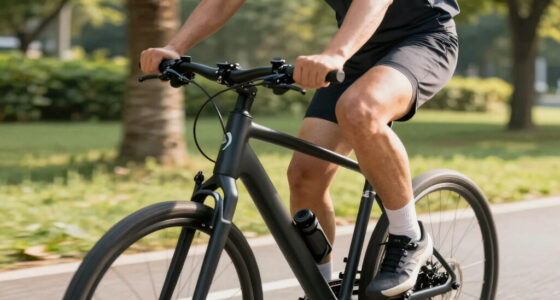
The best overall GPS watch for cyclists in this lineup is the Garmin Forerunner 165, which balances cycling-ready GPS and training features with a clear AMOLED display. The Suunto Race S is a stronger fit for riders who want a sport-focused watch with broad activity support, while the Garmin Instinct 2 Solar suits rough conditions and longer outdoor outings. The main tradeoffs are screen readability, battery needs, cycling-specific functions, and how much you want to spend on features you may not use. A running-first watch can track rides, but it may not replace a dedicated bike computer for route viewing or handlebar controls. Read on for how these nine options compare and which kind of cyclist each one suits.

Get sports gear delivered free with Prime
- Fast, free delivery on millions of items
- Prime Video, Amazon Music and more included
- Member-only deals all year
Complete the kit


Key Takeaways
- Forerunner 165 ranks first for most riders because it offers a more balanced mix of daily usability and sport tracking than the entry-level Forerunner 55 options.
- Suunto Race S is the sports-focused alternative for cyclists who value a broad activity range and an AMOLED screen over a simpler, running-centered watch.
- Instinct 2 Solar prioritizes ruggedness and outdoor endurance, making it a better match for exposed routes and long days out than riders who want a bright, polished display.
- The Forerunner 55 models are the simpler training picks; they make more sense for basic ride logging than for cyclists seeking richer sport features or a dedicated cycling interface.
- The generic GPS watches and renewed Forerunner 165 need closer scrutiny: feature claims and condition can vary, so support, return terms, and the exact functions you need matter.
| Garmin Forerunner 55 GPS Running Smartwatch, Black |  | Best for Straightforward Ride Tracking | Display: 1.04 inches | Satellite navigation: GPS, GLONASS, Galileo | Water resistance: 50 meters | VIEW ON AMAZON | See Our Full Breakdown |
| Garmin vívoactive® 5, Health & Fitness GPS Smartwatch, 42mm, Black |  | Best for Bright, Everyday Ride Readouts | Display: AMOLED | Case size: 42 mm | Display resolution: 390 × 390 | VIEW ON AMAZON | See Our Full Breakdown |
| Garmin Forerunner 55 GPS Running Watch with Daily Suggested Workouts, Up to 2 Weeks Battery Life, Black |  | Best Value for Training Guidance | Display size: 1.04 inches | Display resolution: 208 pixels | Battery life: Up to 2 weeks | VIEW ON AMAZON | See Our Full Breakdown |
| Garmin Instinct 2 Solar Rugged Outdoor GPS Watch – Graphite | 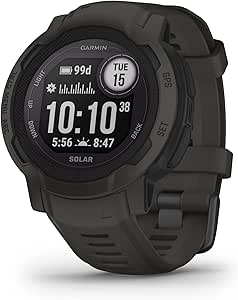 | Best for Long, Rugged Outdoor Rides | Display: 1.27-inch LED, 480 × 272 resolution | Battery life: Unlimited in smartwatch mode with solar charging; up to 48 hours in GPS mode with solar | Water resistance: 100 meters | VIEW ON AMAZON | See Our Full Breakdown |
| Smart Watch for Men and Women with Built-in GPS, Heart Rate & Sleep Monitoring, 2.06″ HD Screen, Waterproof, 120+ Sports Modes |  | Best for a Large Screen and Broad Sport Modes | Display: 2.06-inch HD AMOLED | Water resistance: 50 meters | GPS: Built-in; BeiDou, Galileo, NavIC listed | VIEW ON AMAZON | See Our Full Breakdown |
| GPS Running Watch for Men & Women, Waterproof with Distance, Pace, Heart Rate, and Music Control |  | Best for Bright, Everyday Ride Tracking | Display: 2.06-inch AMOLED | Water resistance: 5ATM / 50 meters | Battery life: Up to 7 days heavy use; 20 days light use; 30 days standby | VIEW ON AMAZON | See Our Full Breakdown |
| Garmin Forerunner 165 Running Smartwatch, 43mm, Black |  | Best for Training-Focused Cyclists | Display: AMOLED touchscreen | Case size: 43 mm | GPS: Built-in | VIEW ON AMAZON | See Our Full Breakdown |
| Suunto Race S GPS Sports Watch, 1.32” AMOLED, 95+ Sports Modes, All Black |  | Best for Navigation and Long Rides | Display: 1.32-inch AMOLED | Weight: 60 g | Battery life: 30 hours | VIEW ON AMAZON | See Our Full Breakdown |
| Garmin Forerunner 165 GPS Smartwatch – Black/Slate Grey (Renewed) | 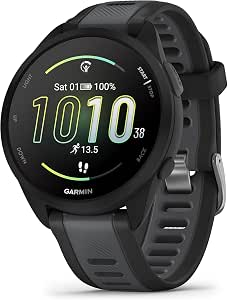 | Best Renewed Training Watch | Model: Garmin Forerunner 165 | Display: AMOLED touchscreen | Case size: 43 mm | VIEW ON AMAZON | See Our Full Breakdown |
| gps watches for cyclist | Battery life | Display | Connectivity | Water resistance |
|---|---|---|---|---|
| Garmin Forerunner 55 GPS Runni | Extended battery life; specific duration not stated | 1.04 inches | Bluetooth | 50 meters |
| Garmin vívoactive® 5 | Up to 11 days | AMOLED | Bluetooth, USB, Wi-Fi | — |
| Garmin Forerunner 55 GPS Runni | Up to 2 weeks | — | Bluetooth | Not specified |
| Garmin Instinct 2 Solar Rugged | Unlimited in smartwatch mode with solar charging; up to 48 hours in GPS mode with solar | 1.27-inch LED, 480 × 272 resolution | Bluetooth, USB | 100 meters |
| Smart Watch for Men and Women | Up to 30 days | 2.06-inch HD AMOLED | — | 50 meters |
| GPS Running Watch for Men & Wo | Up to 7 days heavy use; 20 days light use; 30 days standby | 2.06-inch AMOLED | Bluetooth and GPS | 5ATM / 50 meters |
| Garmin Forerunner 165 Running | Up to 11 days smartwatch mode; 19 hours GPS mode | AMOLED touchscreen | Bluetooth, Wi-Fi, and USB | 50 meters listed; product description also references IPX7 |
| Suunto Race S GPS Sports Watch | 30 hours | 1.32-inch AMOLED | Bluetooth and Wi-Fi | — |
| Garmin Forerunner 165 GPS Smar | Up to 11 days smartwatch mode; 19 hours GPS mode | AMOLED touchscreen | Bluetooth, Wi-Fi, and USB | Listed as not water resistant |
More Details on Our Top Picks
Garmin Forerunner 55 GPS Running Smartwatch, Black
I’d pick the Forerunner 55 for cyclists who want reliable route recording without a feature-heavy watch. Its GPS, GLONASS, and Galileo support gives it multiple satellite systems for tracking rides, while the 50-meter water resistance suits wet-weather use. The small, simple display keeps the experience focused, but it offers less room to inspect ride details than the vívoactive 5’s AMOLED screen. Its running-oriented training suggestions may help riders build general fitness, though the supplied details don’t establish cycling-specific navigation or advanced bike metrics. Compared with the Instinct 2 Solar, this is a lighter, less rugged choice, without solar charging. I’d favor it for basic wrist-based GPS tracking; cyclists who want a large display or outdoor navigation features should look higher in the lineup.
Pros:- GPS, GLONASS, and Galileo satellite support
- Lightweight 37 g design
- Water resistance rated to 50 meters
- Personalized training suggestions and activity tracking
Cons:- Small 1.04-inch display limits at-a-glance ride detail
- No built-in music storage or playback
- Full functionality depends partly on a compatible smartphone
Best for: Cyclists who want a lightweight, uncomplicated GPS watch for recording rides and tracking general fitness
Not ideal for: Riders who need detailed on-wrist route guidance, a large display, or advanced cycling metrics
- Display:1.04 inches
- Satellite navigation:GPS, GLONASS, Galileo
- Water resistance:50 meters
- Weight:37 g
- Connectivity:Bluetooth
- Case material:Resin
- Band material:Silicone
- Battery life:Extended battery life; specific duration not stated
Our verdict“Choose the Forerunner 55 if you want a light, straightforward watch for GPS ride tracking rather than navigation or rich cycling data.”
Garmin vívoactive® 5, Health & Fitness GPS Smartwatch, 42mm, Black
The vívoactive 5 suits cyclists who want a watch that handles rides alongside everyday health tracking. Its AMOLED display and 390 × 390 resolution give alerts and workout information a clearer presentation than the Forerunner 55’s smaller, simpler screen. Built-in GPS covers route recording, while sleep, stress, and heart-rate tracking add value away from the bike. Garmin lists up to 11 days of battery life, a useful balance for frequent wear, though the Forerunner 55 is the more training-focused option with personalized workout suggestions. Music storage and contactless payments make this a better all-day companion, but the product details don’t specify advanced cycling navigation or detailed bike metrics. I’d choose it for display quality and broad daily features, not for a dedicated cycling computer experience.
Pros:- Bright AMOLED display with 390 × 390 resolution
- Built-in GPS for recording rides
- Up to 11 days of battery life
- Music storage, contactless payments, and broad health tracking
Cons:- Cycling-specific navigation and advanced bike metrics are not detailed in the supplied specifications
- Some notifications require a compatible smartphone
- Less focused on training suggestions than the Forerunner 55
Best for: Cyclists who want a bright-screen fitness watch for rides, health tracking, music, and everyday smartwatch tasks
Not ideal for: Riders prioritizing cycling-specific training guidance, detailed navigation, or a watch focused mainly on performance metrics
- Display:AMOLED
- Case size:42 mm
- Display resolution:390 × 390
- Built-in GPS:Yes
- Battery life:Up to 11 days
- Weight:1.31 ounces
- Connectivity:Bluetooth, USB, Wi-Fi
Our verdict“Choose the vívoactive 5 if you want an easy-to-read everyday smartwatch that also records rides, rather than a cycling-first training tool.”
Garmin Forerunner 55 GPS Running Watch with Daily Suggested Workouts, Up to 2 Weeks Battery Life, Black
This Forerunner 55 version is the training-guidance pick for cyclists who also run or cross-train. It explicitly lists cycling among its supported activities, and daily suggested workouts can give riders a simple structure for keeping active between rides. Its stated up to two weeks of battery life is attractive for regular wear, while the 1.04-inch display keeps the watch compact. Compared with the vívoactive 5, it puts more emphasis on workout prompts than on a vivid screen, music storage, or contactless payments. The tradeoff is that its 32 MB storage is limited, and the supplied specs don’t identify satellite systems or water resistance. I’d choose this over the first Forerunner 55 listing when cycling activity support and stated workout guidance matter most, but not for detailed ride navigation.
Pros:- Cycling is listed among supported activities
- Daily suggested workouts provide basic training structure
- Battery life stated as up to two weeks
- Tracks heart rate, distance, pace, and wellness metrics
Cons:- Small 1.04-inch display gives limited room for ride information
- Only 32 MB of memory storage
- Satellite systems and water resistance are not specified in the supplied details
Best for: Cyclists who want daily workout prompts, basic ride tracking, and a watch that also supports running and other activities
Not ideal for: Riders who need confirmed multi-GNSS support, detailed route guidance, or extensive onboard storage
- Display size:1.04 inches
- Display resolution:208 pixels
- Battery life:Up to 2 weeks
- Connectivity:Bluetooth
- Supported activities:Running, cycling, swimming, HIIT, breathwork, and more
- Memory storage:32 MB
- Mounting type:Wrist
- Water resistance:Not specified
Our verdict“Choose this Forerunner 55 if you want cycling support and simple daily training prompts, and can accept limited storage and unspecified navigation details.”
Garmin Instinct 2 Solar Rugged Outdoor GPS Watch – Graphite
For remote routes and rough conditions, the Instinct 2 Solar offers a sturdier tool than either Forerunner 55. Its fiber-reinforced polymer case, scratch-resistant Gorilla Glass, and 100-meter water resistance suit riders who take their watch beyond paved roads. GPS, GLONASS, and Galileo support outdoor tracking, while the barometric altimeter and 3-axis compass add useful context on varied terrain. Solar charging can extend smartwatch use and is listed for up to 48 hours in GPS mode under solar conditions, though that depends on exposure. Compared with the vívoactive 5, this model prioritizes ruggedness and outdoor sensors over a bright AMOLED screen. The 1.27-inch display is less suited to detailed viewing, and solar performance is conditional. I’d pick it for durability and long outdoor outings, not a sleek everyday display.
Pros:- Rugged construction with scratch-resistant Gorilla Glass
- GPS, GLONASS, and Galileo support
- Barometric altimeter and 3-axis compass
- 100-meter water resistance and solar charging support
Cons:- Solar battery gains depend on exposure to suitable light
- 1.27-inch display is less suited to detailed at-a-glance information than the vívoactive 5 AMOLED screen
- Supplied product data lists Android Wear 1.0, which may limit appeal to buyers seeking a newer smartwatch platform
Best for: Gravel and adventure cyclists who ride in rough weather, remote areas, or on long routes where ruggedness and outdoor sensors matter
Not ideal for: Road riders who prefer a bright, high-resolution display or want a slim watch centered on everyday smartwatch features
- Display:1.27-inch LED, 480 × 272 resolution
- Battery life:Unlimited in smartwatch mode with solar charging; up to 48 hours in GPS mode with solar
- Water resistance:100 meters
- Satellite navigation:GPS, GLONASS, Galileo
- Materials:Fiber-reinforced polymer case, Gorilla Glass, silicone band
- Sensors:ABC sensors, Pulse Ox, heart rate, barometric altimeter, 3-axis compass
- Connectivity:Bluetooth, USB
- Memory:16 GB storage, 32 MB RAM
Our verdict“Choose the Instinct 2 Solar for rugged, remote cycling and outdoor sensors, but pick the vívoactive 5 if screen clarity and everyday smartwatch use matter more.”
Smart Watch for Men and Women with Built-in GPS, Heart Rate & Sleep Monitoring, 2.06″ HD Screen, Waterproof, 120+ Sports Modes
This smartwatch stands out for cyclists who want a large 2.06-inch AMOLED display and a wide range of activity modes without committing to a Garmin-focused setup. Built-in GPS lists BeiDou, Galileo, and NavIC, and the stated 50-meter water resistance suits wet rides. Its claimed battery life of up to 30 days is longer on paper than the vívoactive 5’s 11 days, although the supplied details don’t explain how usage affects that figure. Bluetooth calling and voice control extend its everyday role, while 120-plus sport modes give it broad activity coverage. Compared with the Forerunner 55, the screen is far larger, but key details such as weight and the cycling-specific features of its modes are missing. I’d consider it for broad fitness use, not buyers who need well-documented cycling tools.
Pros:- Large 2.06-inch HD AMOLED display
- Built-in GPS with BeiDou, Galileo, and NavIC listed
- More than 120 sports modes
- Claimed battery life of up to 30 days and 50-meter water resistance
Cons:- Weight and dimensions are not provided, making wrist fit harder to judge
- Cycling-specific metrics and navigation capabilities are not detailed
- 256 MB memory may limit onboard storage flexibility
Best for: Casual cyclists who want a large, colorful screen, broad activity tracking, and compatibility with Android or iOS phones
Not ideal for: Performance-focused riders who need clearly documented cycling metrics, route guidance, or detailed fit and weight information
- Display:2.06-inch HD AMOLED
- Water resistance:50 meters
- GPS:Built-in; BeiDou, Galileo, NavIC listed
- Sports modes:120+
- Battery life:Up to 30 days
- Charging time:2 hours
- Memory:256 MB
- Supported devices:Android 9.0+ or iOS 10.0+
Our verdict“Choose this watch for a large display and broad casual activity tracking, but prefer the Forerunner 55 if you want a clearer training-focused cycling choice.”
GPS Running Watch for Men & Women, Waterproof with Distance, Pace, Heart Rate, and Music Control
The 2.06-inch AMOLED display gives this watch a visibility advantage over the smaller screen on the Suunto Race S, making ride stats easier to glance at. Its listed sport modes include biking, and the GPS, heart-rate, and elevation sensors cover useful basics for recording outdoor rides and general fitness. The stated battery life—up to 20 days with light use—also suits riders who do not want to charge after every outing. The tradeoff is limited cycling-specific detail: the listing does not describe route navigation, cycling training tools, or compatibility with bike sensors. It also requires a companion app for full functionality, and its size and weight are not specified. I’d choose it for accessible ride tracking and a large screen, not for advanced cycling analysis.
Pros:- Large 2.06-inch AMOLED display is easy to read at a glance
- Biking is included among the supported sport modes
- Listed battery life reaches 20 days with light use
- 5ATM water resistance supports swimming and wet-weather activity
Cons:- Cycling-specific navigation and training features are not described
- Full functionality depends on a companion app
- Weight and precise fit details are not provided
Best for: Casual cyclists who want a large, easy-to-read screen, basic GPS ride records, and broad health tracking in one watch
Not ideal for: Riders who need detailed route navigation, bike-sensor support, or clearly documented size and weight before buying
- Display:2.06-inch AMOLED
- Water resistance:5ATM / 50 meters
- Battery life:Up to 7 days heavy use; 20 days light use; 30 days standby
- Supported sports:Includes biking, running, walking, hiking, and swimming
- Connectivity:Bluetooth and GPS
- Compatibility:Android and iOS
- Case and band:Aluminum case; silicone and fabric band
- Additional features:Heart rate, blood oxygen, sleep and stress tracking, weather, music control, and SOS
Our verdict“Choose this watch for a large display and basic recorded rides, but pick the Suunto Race S if navigation is a priority.”
Garmin Forerunner 165 Running Smartwatch, 43mm, Black
The Garmin Forerunner 165 is the strongest fit here for cyclists who also follow structured fitness plans. Its built-in GPS, wrist-based heart rate, and training and recovery insights provide more guidance around workouts than the basic ride tracking described for the GPS Running Watch for Men & Women. The AMOLED touchscreen adds clear glanceability, while physical buttons offer an alternative to tapping the screen during a ride. Battery life is listed at up to 19 hours in GPS mode, enough for many day rides, though it trails the Suunto Race S’s stated 30-hour figure. Garmin lists 50-meter water resistance, but the product description also cites IPX7; that inconsistency makes swimming suitability less clear. This is a capable training companion, not a cycling computer with documented route tools or bike-sensor support.
Pros:- Built-in GPS records outdoor activity without relying on a phone for positioning
- Training plans and recovery insights support planned workouts
- AMOLED touchscreen combines with physical buttons for control options
- Incident detection adds a safety feature for compatible connected use
Cons:- Listed GPS battery life is 19 hours, below the Suunto Race S’s 30-hour figure
- Cycling-specific navigation and bike-sensor support are not specified
- Water-resistance information is inconsistent between the 50-meter rating and IPX7 reference
Best for: Cyclists who want GPS ride recording alongside structured training, recovery insights, and incident-detection features
Not ideal for: Long-distance riders who need more than 19 hours of listed GPS use or cyclists seeking documented offline maps and bike-sensor connections
- Display:AMOLED touchscreen
- Case size:43 mm
- GPS:Built-in
- Battery life:Up to 11 days smartwatch mode; 19 hours GPS mode
- Heart-rate monitoring:Wrist-based
- Water resistance:50 meters listed; product description also references IPX7
- Connectivity:Bluetooth, Wi-Fi, and USB
- Memory:4 GB
- Additional features:Training plans, incident detection, Garmin Pay, sleep and recovery insights
Our verdict“Pick the Forerunner 165 if training guidance matters more than long GPS runtime or dedicated cycling navigation.”
Suunto Race S GPS Sports Watch, 1.32” AMOLED, 95+ Sports Modes, All Black
Among these four, the Suunto Race S makes the clearest case for cyclists who ride unfamiliar routes: it lists offline maps, navigation tools, and dual-band GNSS, features the other watches here do not document. Dual-band tracking can help maintain positioning in challenging environments, while offline maps are useful when phone coverage is unavailable. Its listed 30-hour battery life also gives it more GPS-use headroom than the Forerunner 165’s 19-hour figure. The compromise is a smaller 1.32-inch display than the 2.06-inch screen on the general-purpose GPS Running Watch, so ride data has less screen area. At 60 g, it is specified as lightweight, but the provided data does not clarify water resistance or detail cycling-specific sensor compatibility. I’d favor it for navigation over smartwatch breadth.
Pros:- Offline maps and navigation tools support route-led rides
- Dual-band GNSS offers advanced positioning capability
- Listed 30-hour battery life exceeds the Forerunner 165’s GPS runtime
- Lightweight 60 g design and more than 95 sports modes suit varied outdoor training
Cons:- The 1.32-inch display is smaller than the 2.06-inch screen on the GPS Running Watch
- Water-resistance rating is not included in the supplied specifications
- Cycling-specific sensor compatibility is not specified
Best for: Cyclists who ride long or unfamiliar routes and want offline maps, navigation tools, and dual-band GPS positioning
Not ideal for: Riders who prefer a large screen or need clearly stated water-resistance and bike-sensor details before choosing
- Display:1.32-inch AMOLED
- Weight:60 g
- Battery life:30 hours
- Satellite positioning:Dual-band GNSS
- Sports modes:More than 95
- Navigation:Offline maps and navigation tools
- Connectivity:Bluetooth and Wi-Fi
- Storage:32 GB
- Dimensions:1.77 × 1.77 × 0.45 inches
Our verdict“Choose the Suunto Race S when maps, route guidance, and extended GPS use outweigh a larger screen or clearer water-resistance details.”
Garmin Forerunner 165 GPS Smartwatch – Black/Slate Grey (Renewed)
This renewed Garmin Forerunner 165 offers much of the same training-oriented appeal as the standard Forerunner 165: built-in GPS, wrist-based heart rate, workout plans, and up to 19 hours in GPS mode. For cyclists, that means a watch suited to logging rides and supporting broader fitness routines, rather than providing documented bike-computer features such as offline route maps. Compared with the Suunto Race S, it gives up listed navigation tools and longer GPS runtime; compared with the new Forerunner 165, the key added tradeoff is renewed condition and a potentially more limited warranty. The supplied details also say this version is not water resistant, unlike the 50-meter rating listed for the standard model. I’d only choose it if that limitation is acceptable and the renewed condition fits the buyer’s needs.
Pros:- Built-in GPS and wrist-based heart rate support outdoor activity tracking
- AMOLED touchscreen makes workout data easy to view
- Up to 11 days of listed smartwatch battery life
- Training plans, Garmin Coach support, and incident detection add fitness and safety tools
Cons:- Listed as not water resistant, a major limitation for rainy rides
- Renewed condition may come with a limited warranty
- No offline maps or cycling-specific sensor support are specified
Best for: Cyclists seeking Garmin training plans and GPS ride logging who are comfortable buying a renewed watch and riding without rain or swim protection
Not ideal for: All-weather cyclists, swimmers, and buyers who want the standard Forerunner 165’s stated water protection or a clearly stated renewed warranty
- Model:Garmin Forerunner 165
- Display:AMOLED touchscreen
- Case size:43 mm
- GPS:Built-in GPS
- Battery life:Up to 11 days smartwatch mode; 19 hours GPS mode
- Heart-rate monitoring:Wrist-based
- Water resistance:Listed as not water resistant
- Connectivity:Bluetooth, Wi-Fi, and USB
- Additional features:Garmin Pay, incident detection, smart notifications, and activity profiles
Our verdict“Consider this renewed model for Garmin training features only if its lack of stated water resistance and warranty uncertainty suit your riding habits.”

How We Picked
I ranked these watches around the job a cyclist needs them to do: record rides reliably, show useful workout information, hold up to regular outdoor use, and remain straightforward to operate before and during a ride. I also weighed display legibility, battery suitability for typical training, sport versatility, and whether the feature set appears suited to ongoing use rather than a long list of vague claims. A running watch can serve cyclists well, but I treated the absence of clearly cycling-focused functions as a limitation rather than assuming every GPS watch is a bike computer.
The Forerunner 165 leads as the most balanced choice for riders who want a modern everyday sports watch, while the Suunto Race S and Instinct 2 Solar rank higher for more specific priorities: broad sport use and rugged outdoor riding. The Forerunner 55 sits below those options for its simpler feature profile, and the two generic watches rank lower because their listings provide less confidence about cycling-focused software and long-term support. I placed the renewed Forerunner 165 separately from the new model because condition and seller terms affect the buying decision even when the underlying model is similar.
| gps watches for cyclist | Connectivity |
|---|---|
| Garmin Forerunner 55 GPS Runni | Bluetooth |
| Garmin vívoactive® 5 | Bluetooth, USB, Wi-Fi |
| Garmin Forerunner 55 GPS Runni | Bluetooth |
| Garmin Instinct 2 Solar Rugged | Bluetooth, USB |
| Smart Watch for Men and Women | — |
| GPS Running Watch for Men & Wo | Bluetooth and GPS |
| Garmin Forerunner 165 Running | Bluetooth, Wi-Fi, and USB |
| Suunto Race S GPS Sports Watch | Bluetooth and Wi-Fi |
| Garmin Forerunner 165 GPS Smar | Bluetooth, Wi-Fi, and USB |
Factors to Consider When Choosing Gps Watches For Cyclists
Choosing among GPS watches for cyclists is less about chasing the longest feature list and more about matching the watch to how you ride. Before buying, decide whether you need a wrist-based ride recorder, a training companion, or a replacement for some functions of a bike computer.
Decide Whether You Need a Watch or a Bike Computer
A watch records rides and can keep training data with you off the bike, while a handlebar computer is usually easier to read at a glance. If you follow unfamiliar routes, check whether the watch offers usable navigation and map details rather than assuming GPS alone provides turn-by-turn guidance. A basic GPS track can show where you went after the ride without helping you choose the next turn. Some riders use both: the computer for live ride information and the watch for heart rate or all-day activity tracking. Avoid paying for watch navigation if you mainly ride familiar roads and already use a phone or computer for directions.
Match Battery Expectations to Your Longest Ride
Battery life depends on more than the headline estimate: GPS mode, screen use, sensor connections, and notifications can all affect how long a watch lasts. Think about your longest regular ride, not just your weekday loop, and leave room for battery aging and cold-weather use. Solar charging can help in suitable outdoor conditions, but it should not be treated as a guarantee of uninterrupted recording. AMOLED screens offer vivid information, yet riders who keep the display active may need to manage settings more carefully. A watch that lasts through your actual rides is more useful than one with a large advertised number that assumes light use.
Check What Cycling Data You Can Actually Use
GPS distance and pace are not the same as a complete cycling training setup. Riders focused on structured workouts may want clear interval controls, heart-rate support, and compatibility with external sensors such as cadence or power meters. Confirm the exact watch and app support before buying; product listings can emphasize general sports modes without explaining what cycling metrics are available. If you only want a record of distance and route, a simpler device may be enough. If training decisions depend on power or cadence, verify those connections rather than relying on a broad claim of multisport support.
Choose a Screen You Can Read While Riding
Display size and brightness matter most when you need to glance at data outdoors, but a large watch face can feel bulky during everyday wear. Consider whether you will look at the watch while riding or mostly review the activity afterward. A vivid screen can make fields easier to distinguish, while a rugged design may trade a polished appearance for resilience and outdoor practicality. Do not plan to read small numbers while keeping your eyes off the road; stop safely for detailed checks. If you need constant, glanceable information, a handlebar-mounted display is often the better tool.
Think About Fit, Controls, and Glove Use
A watch can feel comfortable on a wrist but become awkward when worn over cycling layers or paired with gloves. Buttons are often easier to operate than touch controls in wet weather, though the best interface depends on how you interact with the watch. Check case dimensions and strap fit if you have a smaller wrist, and think about whether the watch will also be comfortable overnight if you track recovery or sleep. A bulky case may catch on sleeves or feel distracting on long rides. Try to choose a control style that lets you start and stop activities without fumbling.
Treat Generic and Renewed Listings Differently
Broad claims such as many sports modes or built-in GPS do not tell you how well a device supports cycling workouts, route guidance, or sensor connections. Check the companion app, update policy, warranty, and compatibility with the phone you use before choosing a lesser-known watch. For renewed models, inspect the seller’s condition definition, return window, battery coverage, and included accessories. A renewed watch may give access to a stronger model, but it adds condition uncertainty that a new unit avoids. Prioritize dependable software and support if the watch will store training history you want to keep for years.
Frequently Asked Questions
Can a GPS running watch work well for cycling?
Yes, many running watches can record a cycling activity with GPS and heart-rate data. The key question is whether the watch supports the ride details you care about, such as cadence, power, structured workouts, or useful route guidance. A running-first interface may be less convenient to check while riding than a dedicated bike computer. If you mostly want ride logs and basic training records, it can be a practical choice. For live navigation or frequent data checks, compare it with a handlebar unit before deciding.
Should I buy the Forerunner 165 or the Suunto Race S for cycling?
Choose between them by deciding whether you want a balanced everyday training watch or a sport-oriented alternative with broad activity support. The Forerunner 165 is the more straightforward pick for riders who also want an all-day smartwatch and general fitness companion. The Suunto Race S may appeal more if multisport use and its AMOLED presentation are central to your routine. Neither choice should be assumed to replace a bike computer without checking the specific navigation and cycling functions you need. Compare sensor compatibility and app workflows before making the call.
Is a solar GPS watch worth choosing for cycling?
Solar charging is most useful for riders who spend long periods outdoors and are willing to treat extra charge as a bonus rather than a substitute for regular charging. Its benefit depends on exposure, season, and how you use GPS and the display. If your rides are short or mostly under cover, durability and comfort may matter more than solar capability. A rugged solar model can suit remote or multi-day riding, but it may feel less refined than a lighter everyday watch. Match the feature to your riding conditions instead of buying it for the label alone.
Do I need a watch with cadence or power-meter support?
You do not need those connections to record distance, route, and heart rate. Cadence can help riders work on pedaling consistency, while power data is more useful for structured training and comparing effort across conditions. Check that the exact watch supports your sensors and that its app presents the data in a form you will use. If you already own a bike computer that handles those metrics, watch support may be less important. For casual rides, paying extra for unused sensor features is unlikely to improve the experience.
Is the renewed Forerunner 165 a sensible choice over a new watch?
It can make sense if the listing clearly describes the watch’s condition and provides suitable return and warranty terms. The renewed version shares the appeal of the Forerunner 165 model, but battery health, cosmetic wear, and included accessories can vary by seller. Compare those uncertainties with the peace of mind of a new unit before choosing. Ask whether the battery has been checked and confirm that the watch can be returned if its condition is not as described. If you depend on the watch for frequent training, predictable support may be worth more than a lower-risk bargain.
Conclusion
For most cyclists who want one watch for rides and everyday training, I recommend the Garmin Forerunner 165 as the best overall. The best premium-leaning sport alternative is the Suunto Race S for riders who want broad activity support and an AMOLED display; choose the Instinct 2 Solar for rugged outdoor use and long days away from easy charging. Beginners who mainly want GPS ride records and simple training features can start with a Forerunner 55 rather than paying for functions they may not use. The generic GPS models are best only for buyers who verify the app, sensor support, and warranty first, while the renewed Forerunner 165 suits shoppers comfortable checking condition and seller terms. If route viewing and live ride data are your priority, pair a watch with a bike computer instead of expecting a wrist device to do both jobs equally well.