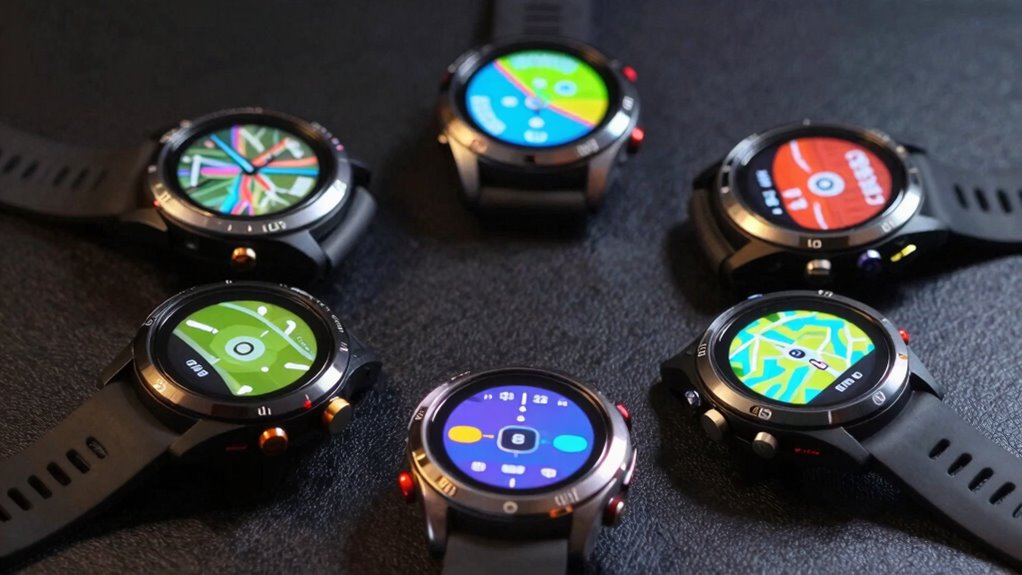

For a single watch to cover swim, bike, and run training, I’d start with the Garmin Forerunner 970, which pairs triathlon-focused features with a premium build. The COROS PACE 4 stands out for athletes who want a lightweight training watch, while the Garmin Forerunner 165 is a more approachable pick for those who value everyday simplicity. The main tradeoffs are multisport depth, battery and display preferences, and how much you want to spend on features you may not use. Some watches here are purpose-built for triathlon, while others are running watches that may suit casual multisport training but offer less specialized support. Read on for the full comparison and guidance on choosing a watch that fits your events and training habits.

Get sports gear delivered free with Prime
- Fast, free delivery on millions of items
- Prime Video, Amazon Music and more included
- Member-only deals all year
Complete the kit


Key Takeaways
- The Forerunner 970 is the roundup’s lead pick for buyers prioritizing a premium watch with explicit triathlon positioning; the similar Forerunner 970 DLC Titanium listing is a separate configuration to compare by materials and bundle.
- PACE 4 and PACE Pro represent different COROS priorities: the PACE 4 emphasizes an ultralight sport-watch format, while the PACE Pro makes its AMOLED touchscreen the more prominent feature.
- The Forerunner 945 and 935 remain distinct older-generation options for shoppers interested in established triathlon-oriented models, but their age and, for the 935, renewed condition deserve extra scrutiny.
- Forerunner 55 and 165 are running-first choices that can appeal to newer or less complex training routines, but buyers should verify the multisport and race-day functions they need before choosing one.
- Garmin’s Forerunner 265S and 570 broaden the middle of the lineup: the 265S offers a smaller 42mm format, while the 570 is a 47mm model, making wrist fit and display preference useful differentiators.
| Garmin Forerunner 970 Running Smartwatch (Carbon Gray) with P-Bank Bundle |  | Best Premium Triathlon Pick | Display: 1.4-inch AMOLED | GPS: Multi-band GPS, SatIQ, built-in maps | Battery life: Up to 15 days smartwatch mode; 26 hours GPS mode | VIEW ON AMAZON | See Our Full Breakdown |
| Garmin Forerunner 165 Running Smartwatch 43mm Black |  | Best for Triathlon Beginners | Case size: 43 mm | Display: AMOLED touchscreen | GPS: Built-in GPS | VIEW ON AMAZON | See Our Full Breakdown |
| COROS PACE 4 Ultralight Sport GPS Watch (Black Silicone, Standard) |  | Best Lightweight Training Pick | Weight: 32 g | Thickness: 11.8 mm | Display: 1.2-inch AMOLED, 600 x 680 resolution | VIEW ON AMAZON | See Our Full Breakdown |
| COROS PACE Pro GPS Sport Watch, 1.3-inch AMOLED Touchscreen – Blue |  | Best for Long Training Blocks | Display: 1.3-inch AMOLED touchscreen | Battery life: Up to 20 days | GPS accuracy: Described as pin-point | VIEW ON AMAZON | See Our Full Breakdown |
| Garmin Forerunner 55 GPS Running Smartwatch, Black |  | Best Simple, Budget-Conscious Pick | Display: 1.04 inches | Satellite navigation: GPS, GLONASS, Galileo | Water resistance: 50 meters | VIEW ON AMAZON | See Our Full Breakdown |
| Garmin Forerunner 265S Running Smartwatch, 42mm, Whitestone/Neo Tropic |  | Best Compact AMOLED Pick | Case size: 42 mm | Display: AMOLED touchscreen | Weight: 39 g | VIEW ON AMAZON | See Our Full Breakdown |
| Garmin Forerunner 945 Premium GPS Running/Triathlon Smartwatch with Music, Black |  | Best for Maps and Stored Music | Display: Full-color display with onboard maps | Battery life: Up to 2 weeks in smartwatch mode; 10 hours in GPS mode with music; up to 60 hours in UltraTrac mode | Water resistance: 50 meters | VIEW ON AMAZON | See Our Full Breakdown |
| Garmin Forerunner 935 Running GPS Watch (Renewed) |  | Best Legacy Multisport Pick | Display: 1.2-inch LCD, approximately 240 × 240 resolution | Weight: 1.76 ounces | Water resistance: IPX7 | VIEW ON AMAZON | See Our Full Breakdown |
| Garmin Forerunner 570, 47mm, Aluminum, Black |  | Best Large AMOLED Training Watch | Case size: 47 mm | Display: AMOLED touchscreen | Bezel: Aluminum | VIEW ON AMAZON | See Our Full Breakdown |
| Garmin Forerunner 55 GPS Running Watch with Daily Suggested Workouts, Up to 2 Weeks Battery, Black |  | Best for First-Time Triathletes | Display: 1.04-inch sunlight-visible transflective MIP, 208-pixel resolution | Battery life: Up to 2 weeks in smartwatch mode; up to 20 hours in GPS mode | Connectivity: Bluetooth | VIEW ON AMAZON | See Our Full Breakdown |
| Garmin Forerunner 970 GPS Running and Triathlon Smartwatch, 47mm, Carbon Gray DLC Titanium |  | Best Premium Triathlon Watch | Case size: 47mm | Case material: Carbon Gray DLC titanium | Lens: Sapphire | VIEW ON AMAZON | See Our Full Breakdown |
| gps watches for triathlon | Display | Battery life | Water resistance | Connectivity |
|---|---|---|---|---|
| Garmin Forerunner 970 Running | 1.4-inch AMOLED | Up to 15 days smartwatch mode; 26 hours GPS mode | 50 meters | Bluetooth, Wi-Fi |
| Garmin Forerunner 165 Running | AMOLED touchscreen | Up to 11 days smartwatch mode; up to 19 hours GPS mode | 50 meters | Bluetooth, USB, Wi-Fi |
| COROS PACE 4 Ultralight Sport | 1.2-inch AMOLED, 600 x 680 resolution | Up to 19 days | Listed as water resistant to 5 meters | — |
| COROS PACE Pro GPS Sport Watch | 1.3-inch AMOLED touchscreen | Up to 20 days | — | Bluetooth |
| Garmin Forerunner 55 GPS Runni | 1.04 inches | Described as extended; duration not specified | 50 meters | Bluetooth, GPS |
| Garmin Forerunner 265S Running | AMOLED touchscreen | Up to 15 days in smartwatch mode; 24 hours in GPS mode | 50 meters | Bluetooth, USB, Wi-Fi |
| Garmin Forerunner 945 Premium | Full-color display with onboard maps | Up to 2 weeks in smartwatch mode; 10 hours in GPS mode with music; up to 60 hours in UltraTrac mode | 50 meters | Bluetooth, GPS |
| Garmin Forerunner 935 Running | 1.2-inch LCD, approximately 240 × 240 resolution | — | IPX7 | Bluetooth |
| Garmin Forerunner 570 | AMOLED touchscreen | Up to 11 days in smartwatch mode; 18 hours in GPS mode | 50 meters | Bluetooth, USB |
| Garmin Forerunner 55 GPS Runni | 1.04-inch sunlight-visible transflective MIP, 208-pixel resolution | Up to 2 weeks in smartwatch mode; up to 20 hours in GPS mode | — | Bluetooth |
| Garmin Forerunner 970 GPS Runn | AMOLED touchscreen with button controls | — | 50 meters | — |
More Details on Our Top Picks
Garmin Forerunner 970 Running Smartwatch (Carbon Gray) with P-Bank Bundle
The Forerunner 970 is the most capable option here for triathletes who want navigation and detailed training tools alongside multisport use. Its multi-band GPS, SatIQ, and built-in maps can help with route accuracy and course planning, while the AMOLED screen makes data easier to read at a glance. Compared with the Forerunner 165, it adds more advanced navigation and a tougher titanium-and-sapphire build, but also brings more features to learn and manage. The 26-hour GPS battery rating suits long training days, though map use and other settings can affect runtime. Its 50-meter water resistance supports swim training, but the supplied details do not confirm dedicated triathlon race features. I’d choose it for a feature-rich training watch, not for simplicity or minimum cost.
Pros:- Multi-band GPS with SatIQ and built-in maps supports route tracking and navigation.
- Sapphire lens and DLC titanium construction offer a durable, lightweight combination.
- AMOLED display makes workout data and maps easy to view.
- Up to 26 hours of GPS-mode battery life supports extended training sessions.
Cons:- Advanced features may take time to set up and learn.
- GPS battery life is shorter than its smartwatch-mode figure and can vary with feature use.
- The product details do not specify dedicated triathlon race-mode capabilities.
Best for: Triathletes who want detailed training metrics, on-watch maps, multi-band GPS, and a durable premium build for varied training routes.
Not ideal for: Beginners who want a simple watch for basic run, bike, and swim tracking, or athletes who do not need maps and advanced training tools.
- Display:1.4-inch AMOLED
- GPS:Multi-band GPS, SatIQ, built-in maps
- Battery life:Up to 15 days smartwatch mode; 26 hours GPS mode
- Water resistance:50 meters
- Materials:DLC titanium, sapphire lens, silicone band
- Sensors:Heart-rate monitor
- Connectivity:Bluetooth, Wi-Fi
- Additional features:LED flashlight, safety tracking, on-wrist calls, voice assistant
Our verdict“Choose the Forerunner 970 if you want the lineup’s strongest navigation and premium materials, and can make use of its extra complexity.”
Garmin Forerunner 165 Running Smartwatch 43mm Black
The Forerunner 165 is a sensible entry point for athletes building a run-bike-swim routine who value straightforward training support over advanced navigation. It combines built-in GPS and wrist-based heart-rate monitoring with a bright AMOLED screen and button and touchscreen controls, so workout handling does not rely on touch alone. Garmin Coach adds guided plans, giving newer runners a clearer path than the more feature-heavy Forerunner 970, which is better suited to athletes who want maps and deeper training tools. The 165 is rated for 50-meter water resistance, but the listed sport types focus on running and general fitness rather than explicitly naming triathlon. Its GPS battery rating is up to 19 hours, less than the 970’s 26 hours, and the supplied description does not detail swim-specific tracking depth.
Pros:- Built-in GPS and wrist-based heart-rate tracking cover core training data.
- AMOLED touchscreen plus physical buttons offers flexible workout control.
- Garmin Coach provides personalized training plans for developing runners.
- Up to 11 days of smartwatch battery life reduces routine charging.
Cons:- Up to 19 hours of GPS battery life is below the Forerunner 970’s listed 26 hours.
- The supplied sport list does not explicitly identify triathlon or swim profiles.
- Some connected features rely on a compatible smartphone and network coverage.
Best for: New triathletes who want GPS, heart-rate tracking, guided running plans, and a manageable interface for structured training.
Not ideal for: Experienced multisport athletes who need on-watch maps, longer GPS sessions, or clearly documented advanced swim and triathlon features.
- Case size:43 mm
- Display:AMOLED touchscreen
- GPS:Built-in GPS
- Battery life:Up to 11 days smartwatch mode; up to 19 hours GPS mode
- Water resistance:50 meters
- Controls:Buttons and touchscreen
- Band and case:Silicone band, fiber-reinforced polymer case
- Connectivity:Bluetooth, USB, Wi-Fi
Our verdict“Pick the Forerunner 165 if you’re starting structured endurance training and want accessible coaching without paying for advanced maps.”
COROS PACE 4 Ultralight Sport GPS Watch (Black Silicone, Standard)
At 32 grams and 11.8 mm thick, the COROS PACE 4 puts comfort first for athletes who dislike a bulky watch during long sessions. Its 1.2-inch AMOLED display and 19-day battery rating make it appealing for frequent training without constant charging. Compared with the Garmin Forerunner 165, the PACE 4 is lighter on the wrist and lists a longer battery life, while the Garmin gives buyers clearer detail on coaching and water resistance. The key concern for triathlon use is the PACE 4’s stated 5-meter water-resistance depth; I would not assume that rating is suitable for routine swim training without confirming the manufacturer’s guidance. Its GPS and health metrics cover broad training needs, but the product information does not specify multi-band GPS or offline maps.
Pros:- 32-gram weight and 11.8 mm thickness keep the watch light and slim.
- AMOLED touchscreen provides a vivid display in a compact format.
- Listed 19-day battery life limits charging interruptions.
- Includes heart-rate and HRV tracking among its health features.
Cons:- Listed water-resistance depth is only 5 meters, a concern for swim training.
- The supplied details do not mention third-party app support.
- GPS type and navigation features are not specified in the product data.
Best for: Athletes who prioritize a very light watch for long training days and want an AMOLED screen with a long stated battery life.
Not ideal for: Triathletes who need clearly documented swim suitability, offline maps, or a listed multi-band GPS system.
- Weight:32 g
- Thickness:11.8 mm
- Display:1.2-inch AMOLED, 600 x 680 resolution
- Battery life:Up to 19 days
- Water resistance:Listed as water resistant to 5 meters
- Storage:4 GB
- Health features:Heart rate, HRV, menstrual-cycle tracking
- Weight and band material:32 g; silicone band
Our verdict“Choose the PACE 4 for a lightweight training watch, but verify its water-resistance suitability before relying on it for triathlon swims.”
COROS PACE Pro GPS Sport Watch, 1.3-inch AMOLED Touchscreen – Blue
The COROS PACE Pro stands out for its 20-day stated battery life, offline maps, and larger 1.3-inch AMOLED display. Those features favor athletes who train on unfamiliar routes and want fewer charging stops; the 32 GB of storage also gives it substantially more listed capacity than the Forerunner 165’s 4 GB. Compared with the Forerunner 970, though, the PACE Pro’s product data is less complete for triathlon buyers: it names navigation and GPS accuracy but does not provide a water-resistance rating, so I can’t confidently recommend it for swim sessions based on these details alone. It is listed as compatible with iPhone, which may narrow its appeal for Android users. I’d shortlist it for route-focused training, then confirm swim suitability and phone compatibility before choosing it as an all-discipline watch.
Pros:- Offline global maps support route guidance away from a phone connection.
- Listed 20-day battery life suits sustained training blocks.
- 1.3-inch AMOLED display gives maps and workout data more screen area than the PACE 4.
- 32 GB of storage is generous compared with the Forerunner 165’s listed 4 GB.
Cons:- No water-resistance rating is supplied, leaving swim suitability unclear.
- Compatibility is listed for iPhone only.
- The product details provide limited information about software updates.
Best for: iPhone-using endurance athletes who value offline maps, generous listed storage, and long intervals between charges.
Not ideal for: Triathletes who need a documented water-resistance rating or Android compatibility confirmed in the product details.
- Display:1.3-inch AMOLED touchscreen
- Battery life:Up to 20 days
- GPS accuracy:Described as pin-point
- Navigation:Global offline maps
- Storage:32 GB
- Connectivity:Bluetooth
- Compatibility:iPhone
- Charging:USB-C
Our verdict“Consider the PACE Pro if offline navigation and long battery life lead your priorities, but confirm swim suitability before using it as your triathlon watch.”
Garmin Forerunner 55 GPS Running Smartwatch, Black
The Forerunner 55 is the simplest choice in this group for athletes who want dependable GPS and basic training tracking without a touchscreen or elaborate navigation. Its GPS, GLONASS, and Galileo support gives it several satellite systems for recording outdoor sessions, and the 50-meter water-resistance rating is more clearly stated than the COROS PACE Pro’s supplied details. Against the Forerunner 165, the 55 has a smaller 1.04-inch display and button-only operation, so it feels more basic; in return, its simpler setup may suit someone focused on essential workout data. The listing describes battery life only as “extended,” without a numeric duration, and its running-focused description does not establish dedicated triathlon features. I’d pick it for straightforward training, not advanced course navigation or rich on-watch feedback.
Pros:- GPS, GLONASS, and Galileo provide multiple satellite navigation options.
- 50-meter water-resistance rating is clearly stated.
- 37-gram weight keeps the watch relatively light for daily wear.
- Supports multiple sports and activity profiles.
Cons:- Small 1.04-inch display may make workout data harder to read at a glance.
- Button-only controls lack the touchscreen option available on the Forerunner 165.
- Battery life is described as extended without a numeric runtime.
Best for: First-time endurance athletes who want basic GPS, multiple satellite systems, and a clearly listed water-resistance rating.
Not ideal for: Triathletes who want a large AMOLED touchscreen, offline maps, detailed navigation, or a specific GPS battery-life estimate.
- Display:1.04 inches
- Satellite navigation:GPS, GLONASS, Galileo
- Water resistance:50 meters
- Weight:37 g
- Materials:Resin case, silicone band
- Connectivity:Bluetooth, GPS
- Battery life:Described as extended; duration not specified
- Dimensions:1.65 x 1.65 x 0.47 inches
Our verdict“Choose the Forerunner 55 if you want a simple, light GPS watch with stated water resistance and can do without advanced triathlon tools.”
Garmin Forerunner 265S Running Smartwatch, 42mm, Whitestone/Neo Tropic
The Forerunner 265S is the compact choice for triathletes who want a bright, easy-to-read screen without a large watch case. Its 42 mm size and 39 g weight are more suited to smaller wrists than the 47 mm Forerunner 570, while multi-band GNSS with SatIQ can help maintain GPS accuracy across changing environments. Multi-sport profiles support swim-bike-run training, and the stated 24-hour GPS battery life gives it more room for extended sessions than the Forerunner 55’s 20 hours.
The tradeoff is a smaller display area than the 570, and its 50-meter water resistance rating is not a deep-diving specification. I’d choose this over the Forerunner 55 for AMOLED visuals and multi-band GPS, but the Forerunner 55 may suit buyers who prefer a simpler, less feature-rich watch. Some features also need smartphone or app setup.
Pros:- Compact 42 mm case and 39 g weight suit smaller wrists and all-day wear.
- AMOLED touchscreen is vibrant and easy to read.
- Multi-band GNSS with SatIQ supports GPS accuracy across varied settings.
- 24-hour GPS-mode battery life and triathlon activity profiles suit multisport training.
Cons:- Smaller display provides less screen area than the 47 mm Forerunner 570.
- 50-meter water resistance is not intended for deep diving.
- Some features require smartphone pairing or app setup.
Best for: Triathletes with smaller wrists who want a lightweight multisport watch, AMOLED screen, and multi-band GPS.
Not ideal for: Athletes who prioritize a larger display or need extensive onboard navigation; the 42 mm case is compact, and the listed specifications do not include onboard maps.
- Case size:42 mm
- Display:AMOLED touchscreen
- Weight:39 g
- GPS:Multi-band GNSS with SatIQ technology
- Battery life:Up to 15 days in smartwatch mode; 24 hours in GPS mode
- Water resistance:50 meters
- Connectivity:Bluetooth, USB, Wi-Fi
- Supported activities:Running, triathlons, cycling, swimming, and more
Our verdict“Choose the Forerunner 265S if you want a lightweight, compact triathlon watch with AMOLED and multi-band GPS rather than the larger Forerunner 570.”
Garmin Forerunner 945 Premium GPS Running/Triathlon Smartwatch with Music, Black
The Forerunner 945 makes the most sense for triathletes who value onboard maps and music storage alongside multisport training. Maps can help with route guidance without relying on a phone screen, while stored music makes it a more self-contained workout companion than the Forerunner 935, whose supplied details do not list music or maps. Its performance monitoring and safety tracking also appeal to athletes who want more than basic swim-bike-run recording.
There are meaningful limits: the listed 10-hour GPS battery life with music is less reassuring for long events than the 935-hour? No—the Forerunner 935’s battery life is not specified in the supplied data, so there is no clear battery advantage to claim. The 945’s GPS-mode figure is also tied to music use, and full music-service functionality may depend on subscriptions. I’d favor it over the Forerunner 265S for maps and music, but skip it if a bright AMOLED display is your priority.
Pros:- Onboard full-color maps support route guidance.
- Music storage allows listening without carrying a phone.
- Performance monitoring and safety tracking add training and ride-day tools.
- Up to two weeks of stated smartwatch-mode battery life.
Cons:- Listed GPS battery life falls to 10 hours with music enabled.
- Some smartphone-connected features need a compatible phone.
- Full functionality with some music services may require subscriptions.
Best for: Triathletes who want onboard maps, stored music, performance monitoring, and safety features in one watch.
Not ideal for: Athletes who prioritize an AMOLED display or need a clearly documented long GPS runtime while using music.
- Display:Full-color display with onboard maps
- Battery life:Up to 2 weeks in smartwatch mode; 10 hours in GPS mode with music; up to 60 hours in UltraTrac mode
- Water resistance:50 meters
- Memory storage:8,000 MB
- Connectivity:Bluetooth, GPS
- Supported features:Performance monitoring, onboard maps, music storage, contactless payments, safety tracking
- Band material:Silicone
- Case material:Fiber-reinforced polymer
Our verdict“Pick the Forerunner 945 if maps and onboard music matter more to your triathlon routine than the Forerunner 265S’s AMOLED screen and compact fit.”
Garmin Forerunner 935 Running GPS Watch (Renewed)
The Forerunner 935 offers a multisport-focused alternative for athletes drawn to established training functions rather than a modern AMOLED display. It includes running, cycling, and swimming modes, wrist-based heart rate, and elevation tracking—useful tools for keeping training data together across disciplines. Compared with the Forerunner 945, the supplied details do not list onboard maps or music storage, so the 935 is the more basic choice for navigation and entertainment features.
This is a renewed model, and its product information gives a 90-day limited warranty. The listed IPX7 rating also deserves care: it is not the same claim as the 50-meter water-resistance ratings supplied for the Forerunner 945 and 265S, so swimmers should verify suitability before buying. Battery-life details are absent, making it harder to judge against the Forerunner 55, which lists up to 20 hours in GPS mode. I’d choose the 935 only when its multisport feature set and renewed condition fit the buyer’s priorities.
Pros:- Dedicated cycling, running, swimming, and training activity support.
- Wrist-based heart rate and elevation tracking are included.
- Interchangeable bands allow a degree of personalization.
- Bluetooth connectivity supports smart notifications.
Cons:- Renewed condition and 90-day limited warranty may not suit buyers seeking a new watch with longer coverage.
- IPX7 rating is less clearly suited to swim training than the 50-meter ratings listed for some alternatives.
- Battery-life details are not provided, limiting confidence for long GPS sessions.
Best for: Budget-conscious triathletes comfortable buying a renewed watch who want multisport modes, wrist-based heart rate, and elevation tracking.
Not ideal for: Swimmers seeking a clearly stated 50-meter rating or athletes who need documented battery life, onboard maps, or music storage.
- Display:1.2-inch LCD, approximately 240 × 240 resolution
- Weight:1.76 ounces
- Water resistance:IPX7
- Supported activities:Cycling, running, swimming, training
- Connectivity:Bluetooth
- Battery:230 mAh lithium-ion; battery life not specified
- Memory:64 MB
- Warranty:90-day limited warranty
Our verdict“Consider the renewed Forerunner 935 if you want a multisport-focused Garmin and accept uncertainty around battery life and swim suitability.”
Garmin Forerunner 570, 47mm, Aluminum, Black
The Forerunner 570 is the larger-screen pick for triathletes who want a bright AMOLED interface and roomier controls on the wrist. Its 47 mm case gives it more screen area than the compact Forerunner 265S, which can make workout data easier to read at a glance. Multi-band GPS and personalized training plans support structured sessions, while its 18-hour GPS-mode claim covers more than the Forerunner 55’s stated 20? Actually, the 55 lists 20 hours, so the 570 offers less GPS runtime on paper. Its microphone and speaker add call functionality when paired with a smartphone.
That larger case is not a universal advantage: smaller-wristed athletes may find the 265S easier to wear, and the 570’s 18-hour GPS battery life trails the Forerunner 55’s 20-hour figure. The 50-meter rating is for water resistance, not deep diving. I’d pick this over the 265S for a larger display and calling features, but not for maximum GPS runtime or a compact fit.
Pros:- Large 47 mm AMOLED touchscreen makes workout data easier to view.
- Built-in multi-band GPS supports location tracking.
- Personalized training plans and multisport tracking support structured preparation.
- Microphone and speaker enable calls when paired with a smartphone.
Cons:- 18-hour GPS-mode battery life is shorter than the Forerunner 55’s listed 20 hours.
- The 47 mm case may feel bulky on smaller wrists.
- Call functionality requires smartphone pairing, and some features need additional setup.
Best for: Triathletes with medium-to-large wrists who want a large AMOLED display, multi-band GPS, training plans, and phone-call functionality.
Not ideal for: Small-wristed athletes or those seeking longer listed GPS runtime; the Forerunner 265S is smaller, and the Forerunner 55 lists two more GPS hours.
- Case size:47 mm
- Display:AMOLED touchscreen
- Bezel:Aluminum
- Battery life:Up to 11 days in smartwatch mode; 18 hours in GPS mode
- GPS:Built-in multi-band GPS
- Water resistance:50 meters
- Connectivity:Bluetooth, USB
- Supported activities:Cycling, fitness, multisport, running, walking
Our verdict“Choose the Forerunner 570 if a large AMOLED screen and paired-phone calling matter more than compact sizing or the Forerunner 55’s longer listed GPS runtime.”
Garmin Forerunner 55 GPS Running Watch with Daily Suggested Workouts, Up to 2 Weeks Battery, Black
The Forerunner 55 is the approachable option for new triathletes who want core GPS training tools without the feature load of the Forerunner 945. Its daily suggested workouts and wellness tracking can help structure run training, and its supported activities include cycling and pool swimming alongside running. The transflective MIP screen is designed for sunlight visibility, while the stated 20-hour GPS battery life is longer than the Forerunner 570’s 18 hours.
Its limits matter for triathlon buyers: the supplied activity list does not identify a dedicated triathlon profile, and the specifications do not include multi-band GPS or onboard maps like the Forerunner 945. The 1.04-inch screen is also more modest than the AMOLED displays on the 265S and 570. I’d choose this over the Forerunner 935 when clear battery-life information and a simpler training watch matter, but athletes seeking advanced multisport tools should look higher in the lineup.
Pros:- Up to 20 hours of GPS-mode battery life is clearly specified.
- Daily suggested workouts offer accessible run-training guidance.
- Activity support includes running, cycling, and pool swimming.
- Sunlight-visible MIP display is suited to outdoor training.
Cons:- The supplied activity list does not specify a dedicated triathlon profile.
- Small 1.04-inch MIP display lacks the vivid AMOLED presentation of the 265S and 570.
- Some smartphone-connected features require a compatible phone and app downloads.
Best for: First-time triathletes building swim-bike-run fitness who want straightforward GPS tracking, suggested workouts, and a clearly stated battery life.
Not ideal for: Experienced racers who need a dedicated triathlon profile, advanced navigation, or the larger AMOLED screens on the Forerunner 265S and 570.
- Display:1.04-inch sunlight-visible transflective MIP, 208-pixel resolution
- Battery life:Up to 2 weeks in smartwatch mode; up to 20 hours in GPS mode
- Connectivity:Bluetooth
- Supported activities:Running, cycling, pool swimming, Pilates, HIIT, breathwork, and more
- Memory storage:32 MB
- Training and wellness:Personalized workouts, respiration tracking, intensity minutes
- Compatible devices:Smartphone
- Model year:2021
Our verdict“Pick the Forerunner 55 for straightforward entry-level training and clear battery specifications, but choose the Forerunner 945 or 265S for more advanced multisport features.”
Garmin Forerunner 970 GPS Running and Triathlon Smartwatch, 47mm, Carbon Gray DLC Titanium
I’d choose the Forerunner 970 for a triathlete who wants advanced training insight and navigation in one watch, rather than a basic run tracker. Its multi-band GPS and full-color maps can help with route guidance on unfamiliar training runs, while the bright AMOLED screen stays easy to read at a glance. Compared with the Forerunner 945, this model adds a sharper display and newer metrics such as running economy and step speed loss; compared with the more modest Forerunner 165, it is much more geared toward performance analysis and multisport training.
The tradeoff is that some data, including step speed loss, needs a separate HRM 600 monitor, and the feature set may be excessive for newer athletes. The 26-hour GPS battery life is substantial, though buyers prioritizing the simplest, most affordable training setup may prefer a less complex Forerunner. Its sapphire lens and titanium bezel add durability without making the watch feel heavy.
Pros:- Multi-band GPS and full-color maps support accurate tracking and route guidance.
- AMOLED touchscreen, sapphire lens, and lightweight titanium bezel combine visibility with durable construction.
- Advanced training features include running economy and training readiness.
- Up to 26 hours of GPS battery life supports long training sessions and race-day use.
Cons:- Some advanced running metrics, including step speed loss, require a separate HRM 600 monitor.
- Its extensive training tools may be unnecessary for beginners or athletes who want simple workout tracking.
- ECG availability varies by country and is subject to age restrictions.
Best for: Performance-focused triathletes who want detailed running metrics, multi-band GPS navigation, and a vivid display for structured training.
Not ideal for: New triathletes seeking straightforward workout tracking, or athletes who want every advanced running metric without buying a compatible external heart-rate monitor.
- Case size:47mm
- Case material:Carbon Gray DLC titanium
- Lens:Sapphire
- Display:AMOLED touchscreen with button controls
- Battery life (smartwatch mode):Up to 15 days
- Battery life (GPS mode):Up to 26 hours
- Water resistance:50 meters
- GPS:Multi-band GPS
- Band material:Silicone
Our verdict“Choose the Forerunner 970 if you want a premium, feature-rich triathlon watch with advanced metrics and maps, and are comfortable with its added complexity and accessory requirements.”

How We Picked
I compared the listed watches through the specific demands of triathlon: support for combining swim, bike, and run sessions; training and navigation features relevant to race preparation; battery considerations across long workouts; usability during activity; and fit for all-day wear. I also weighed build and display choices against the needs of athletes who spend time in open water, on a bike, and running, rather than treating a bright screen or a long feature list as an automatic advantage.
The order favors watches most clearly positioned for triathlon and athletes likely to benefit from broader multisport capability, followed by options that stand out for lighter wear, a particular display or case size, or simpler training needs. Running-focused models are not treated as equivalent to dedicated triathlon choices. Older and renewed watches rank lower because age and condition can affect the ownership decision, and the duplicated Forerunner 55 and 970 listings are kept distinct rather than presented as separate product families.
| gps watches for triathlon | Connectivity |
|---|---|
| Garmin Forerunner 970 Running | Bluetooth, Wi-Fi |
| Garmin Forerunner 165 Running | Bluetooth, USB, Wi-Fi |
| COROS PACE 4 Ultralight Sport | — |
| COROS PACE Pro GPS Sport Watch | Bluetooth |
| Garmin Forerunner 55 GPS Runni | Bluetooth, GPS |
| Garmin Forerunner 265S Running | Bluetooth, USB, Wi-Fi |
| Garmin Forerunner 945 Premium | Bluetooth, GPS |
| Garmin Forerunner 935 Running | Bluetooth |
| Garmin Forerunner 570 | Bluetooth, USB |
| Garmin Forerunner 55 GPS Runni | Bluetooth |
| Garmin Forerunner 970 GPS Runn | — |
Factors to Consider When Choosing Gps Watches For Triathlon
Before choosing, I’d match the watch to the way you train and race, not just the number of features on its spec sheet. A watch that works well for short pool workouts may not suit open-water practice or long days with multiple sports.
Check How You’ll Record Multisport Sessions
Triathlon training can mean separate swim, bike, and run recordings, or one continuous activity with transitions between legs. That difference matters on race day: a dedicated multisport mode can reduce button presses and keep the session organized, while separate activities may require more attention at transitions. Before buying, confirm the exact activity profiles and transition behavior for the watch rather than relying on the phrase “GPS sports watch.” A running-focused model can still support valuable training, but it may not handle a full race workflow as smoothly as a triathlon-oriented watch. Think about how much you value convenience when you are wet, tired, or wearing gloves. If you mostly train one sport at a time, simpler support may be enough.
Match Swim Tracking to Pool and Open Water
Pool swimming and open-water swimming place different demands on a watch. In a pool, lane length and consistent turns help the device interpret distance; outdoors, GPS reception and stroke movement can make recorded routes less tidy. Check that the watch has the swim profiles you plan to use, and learn whether its data can be reviewed in a way that helps you adjust training. A swim-capable watch is not automatically a good fit for every open-water routine. Common buying mistakes include choosing by water resistance alone or assuming every model handles multisport swims identically. If open water is central to your season, prioritize clear swim recording and controls you can operate without fumbling.
Plan Battery Around Your Longest Training Day
Battery needs depend on more than the length of a race: GPS settings, connected sensors, music, navigation, and screen use can all affect runtime. A watch that covers everyday training may still feel limiting if you routinely do long rides followed by a run. Compare battery expectations for the specific GPS mode and features you intend to use, not just a broad maximum-use claim. AMOLED displays can make data easier to read, but display preferences and battery priorities should be weighed together. Leave a margin for older batteries, cold conditions, and extended workouts rather than choosing a device that only fits your shortest event. If you use a bike computer as well, decide whether the watch needs to record the whole session or mainly support swim and run training.
Choose Fit and Controls for Real Training Conditions
A watch that feels comfortable during an easy run may become irritating during a long ride or swim. Case size, weight, strap fit, and button placement affect whether you can check a split or change a screen without disrupting your effort. Touchscreens can be convenient for everyday use, but wet hands and active movement make physical controls useful during workouts. Smaller options such as a 42mm model may suit narrower wrists, while a larger case can offer a more spacious display. Try to judge fit with the strap you expect to wear and consider whether you need to read data at a glance on the bike. The best interface is the one you can use reliably while moving.
Separate Training Extras From Race-Day Needs
Training suggestions, recovery tools, music, mapping, and smart notifications can add value, but not every triathlete needs all of them on the wrist. Start with the information you use to plan sessions and review effort, then decide which extras would change your routine. For example, navigation matters more if you train on unfamiliar roads or trails, while music may matter less if you already carry a phone or use a bike computer. Avoid paying attention only to feature count: a tool that is hard to interpret can add clutter instead of helping you train. Also check compatibility with sensors or training platforms already in your setup. A simpler watch can be a better choice when it records your sessions clearly and fits your habits.
Weigh Older and Renewed Models Carefully
Older models can still appeal when their feature set matches a buyer’s routine, but age changes the ownership calculation. Check software support, battery condition, included accessories, and the seller’s return terms before choosing a renewed watch. A lower-generation device may lack newer training or display features, even when its original positioning was premium. Compare it with current alternatives based on the functions you will actually use, not the reputation it had when first released. The Forerunner 935 listing is explicitly renewed, so condition and warranty deserve particular attention. If reliable battery life and long-term support matter more than an older model’s capabilities, a newer option may be the safer fit.
Frequently Asked Questions
Do I need a triathlon-specific watch, or can a running watch work?
A running watch may be enough if you mainly want GPS records for individual workouts and do not need one continuous swim-bike-run activity. For race preparation, check whether the model supports the multisport profiles and transition workflow you expect to use. The Forerunner 55 and 165 are running-first choices in this lineup, so I would verify their exact activity support before buying for a full triathlon. A more explicitly triathlon-positioned option can reduce race-day handling and keep the workout record together. The right choice depends on whether convenience across all three legs matters to you.
Is an AMOLED display a good choice for triathlon training?
An AMOLED screen can make workout data and menus easier to see, particularly when you value a vivid display for daily wear. It is not automatically the best choice for every athlete, since battery use, screen settings, and your preferred way of checking data also matter. In this lineup, the PACE Pro makes AMOLED a defining point, while the PACE 4 emphasizes an ultralight sport-watch format. Consider whether you read detailed screens during activity or mostly review workouts afterward. If you train for long stretches, compare battery expectations under the settings you plan to use.
Should I choose the 42mm Forerunner 265S or a larger watch?
The 265S’s 42mm case may be easier to wear on a smaller wrist and less obtrusive during swim and run sessions. A larger watch, such as the 47mm Forerunner 570 or 970 listing, may offer a screen size some athletes prefer for reading data quickly. Case size alone does not tell you how comfortable a watch will feel, since strap fit, thickness, and weight matter too. If possible, compare the physical dimensions and try the watch with the strap adjusted for training. Choose the smallest size that still lets you read the fields you rely on.
Is a renewed Forerunner 935 a sensible triathlon purchase?
It can make sense for a buyer who specifically wants an older triathlon-oriented watch and is comfortable checking its condition closely. The listing is renewed, so I would pay particular attention to battery health, warranty coverage, included charging accessories, and the return policy. Compare its available functions with newer choices before deciding, especially if you rely on current training tools or long-term software support. A renewed device may not be the best fit for someone who wants predictable battery performance for long events. Treat the seller’s condition information as part of the product decision, not a minor detail.
Are the two Forerunner 970 listings different enough to compare separately?
Both listings identify the Forerunner 970, but one specifies a Carbon Gray P-Bank Bundle and the other a 47mm Carbon Gray DLC Titanium configuration. That makes the exact contents and materials worth checking rather than assuming the two listings are interchangeable. Confirm what accessories are included, how the case is described, and whether the listing’s size and configuration match your preference. Their core model identity is shared, so the choice should come down to the specific configuration and seller details. If those differences do not matter to you, compare them as versions of the same watch rather than as separate feature classes.
Conclusion
I’d choose the Garmin Forerunner 970 as the best overall for athletes who want a premium watch positioned for triathlon, and consider the DLC Titanium listing when that stated configuration suits their preferences. For a lighter sport-watch direction, the COROS PACE 4 is my standout alternative; the PACE Pro is the better fit if an AMOLED touchscreen is high on your list. For beginners who want a more straightforward training companion, the Forerunner 165 is a sensible place to start, while the Forerunner 55 keeps the choice simpler for running-led routines. Choose the Forerunner 265S for a smaller case, the 570 if you prefer a 47mm model, or the older 945 and renewed 935 only after checking their feature fit and condition. My rule is simple: match the watch’s multisport support, fit, and battery expectations to your actual training before prioritizing extras.